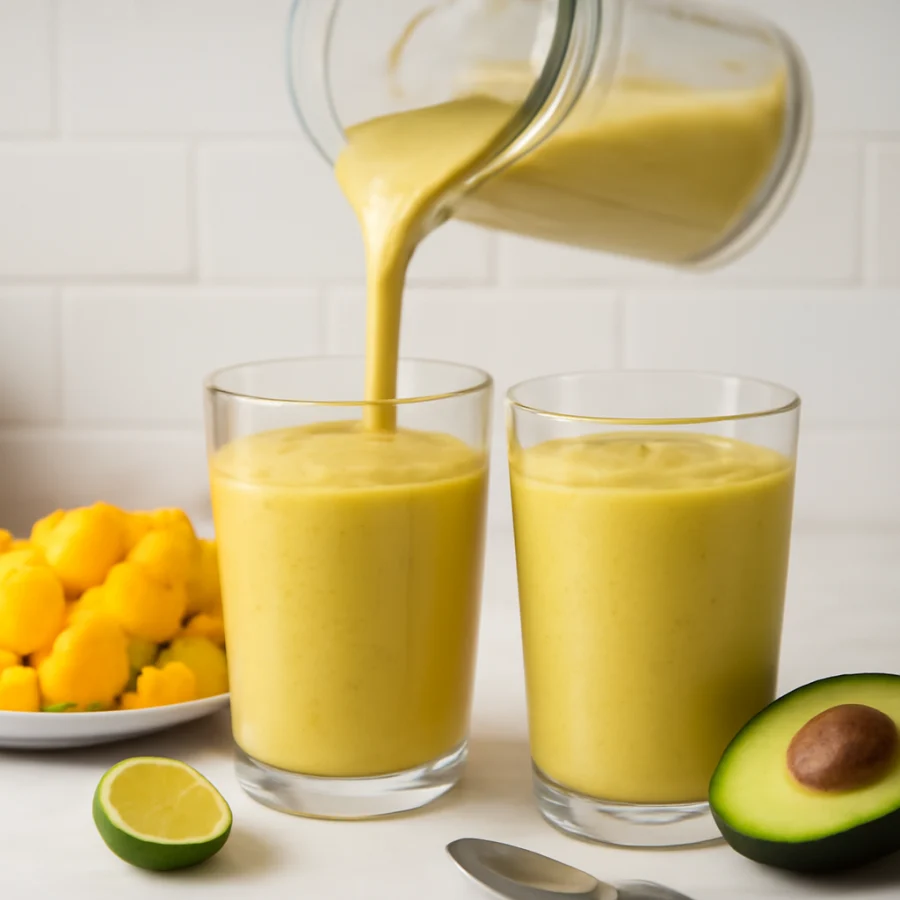
The secret to perfect smoothie textures is balancing liquid, frozen ingredients, and creamy ingredients before the blender starts working. This mango-avocado lime smoothie uses frozen mango for a cold, thick base, avocado for body, Greek yogurt for a silky finish, and lime for brightness. It is a useful recipe to try when you want a smoothie that feels creamy without relying on ice alone. For more recipes and practical drink guidance, visit homemade detox drinks.
Unlike a thin fruit drink, this blend is designed to be smooth and substantial while still being easy to pour. The method also shows how small choices—such as adding liquid first and pausing to scrape the pitcher—can make a noticeable difference. For more blending ideas, browse the Juicing & Blending section.
Mango-Avocado Lime Smoothie at a Glance
- Prep time: 10 minutes
- Total time: 10 minutes
- Servings: 2
- Texture: Thick, creamy, and spoon-coating
- Main search phrase: perfect smoothie textures
Ingredients
- 2 cups frozen mango chunks
- 1/2 medium ripe avocado, peeled and pitted
- 3/4 cup plain Greek yogurt
- 3/4 cup unsweetened milk or unsweetened nondairy milk
- 1 tablespoon fresh lime juice
- 1 teaspoon finely grated lime zest, optional
- 1 tablespoon honey or maple syrup, optional
- 1/2 cup ice, optional
The avocado should be ripe enough to mash easily but not brown, watery, or visibly spoiled. Frozen mango is convenient and helps chill the smoothie without requiring a large amount of ice. If your mango pieces are very large, cutting them into smaller chunks can make blending easier.
How to Make This Smoothie for Perfect Smoothie Textures
- Prepare the ingredients. Measure the milk, yogurt, lime juice, and mango before blending. If using fresh mango instead of frozen, chill it first and expect to use additional ice for a cold drink. Scoop the avocado into a measuring cup so you can keep the creamy ingredient in balance with the fruit.
- Add liquid ingredients first. Pour the milk into the blender pitcher, then add the yogurt and lime juice. Starting with liquid helps the blades circulate the mixture instead of immediately pressing dry fruit against the bottom of the pitcher.
- Add the avocado and mango. Place the avocado in next, followed by the frozen mango. If you are using lime zest or a sweetener, add it now. Putting softer ingredients closer to the blades and firmer frozen pieces above them usually supports a more even blend.
- Blend gradually. Begin on low speed for about 15 to 20 seconds, then increase to medium-high or high. Blend for 45 to 60 seconds, stopping when the mixture looks uniform. Avoid running the blender longer than necessary because excess blending can warm the drink and may create a looser texture.
- Check the consistency. Turn off the blender and inspect the mixture. If you see dry pockets or pieces clinging to the sides, use a spatula to move the mixture toward the blades. Never place a utensil into a running blender.
- Adjust in small amounts. For a thinner smoothie, add 1 tablespoon of milk at a time and blend briefly after each addition. For a thicker smoothie, add a few more frozen mango pieces or a small amount of ice. Blend only until the adjustment is incorporated.
- Taste and serve. Add a little more lime juice for tang or a small amount of honey or maple syrup if the fruit is not sweet enough. Pour into two glasses and serve right away.
Why These Ingredients Create a Creamy Blend
Frozen mango
Frozen mango provides both fruit flavor and structure. Because it is cold and firm, it can thicken the drink without the dilution that comes from adding a large amount of ice. It also blends into a relatively smooth puree when the pieces are not too large.
Avocado
Avocado contributes a naturally rich, soft texture. It is best used in a moderate amount so it supports the smoothie without dominating the mango and lime. If the avocado is very large, use only the amount listed in the recipe and save the rest for another dish.
Greek yogurt
Plain Greek yogurt adds creaminess and a mild tang. Whole-milk, reduced-fat, or nonfat versions can work, although the final mouthfeel may vary. Choose an unsweetened yogurt if you want control over the sweetness. Check the current package label for ingredient and allergen information, since formulations can change.
Milk or nondairy milk
The liquid determines how easily the ingredients circulate. Start with the listed amount rather than pouring in all the liquid at once. Unsweetened oat, soy, almond, or cashew milk can be used, but each may produce a slightly different flavor and body. If using a sweetened milk, taste before adding any optional sweetener.
Common Texture Problems and Quick Fixes
The smoothie is too thin
Add more frozen mango a few pieces at a time, then blend briefly. You can also add a little more avocado, but keep in mind that it will change the flavor and color. Avoid trying to correct a thin smoothie with a large quantity of ice; too much ice can make the drink watery as it melts.
The smoothie is too thick
Add milk one tablespoon at a time. A small adjustment is easier to control than adding another half cup and ending up with a thin drink. Pause between additions so the blender can fully incorporate the liquid.
The smoothie has icy pieces
Large or very hard frozen fruit pieces may need extra blending time or a short rest on the counter before blending. Do not leave perishable ingredients at room temperature for an extended period. If your blender struggles, use smaller frozen pieces and add enough liquid to keep the mixture moving.
The smoothie separates after blending
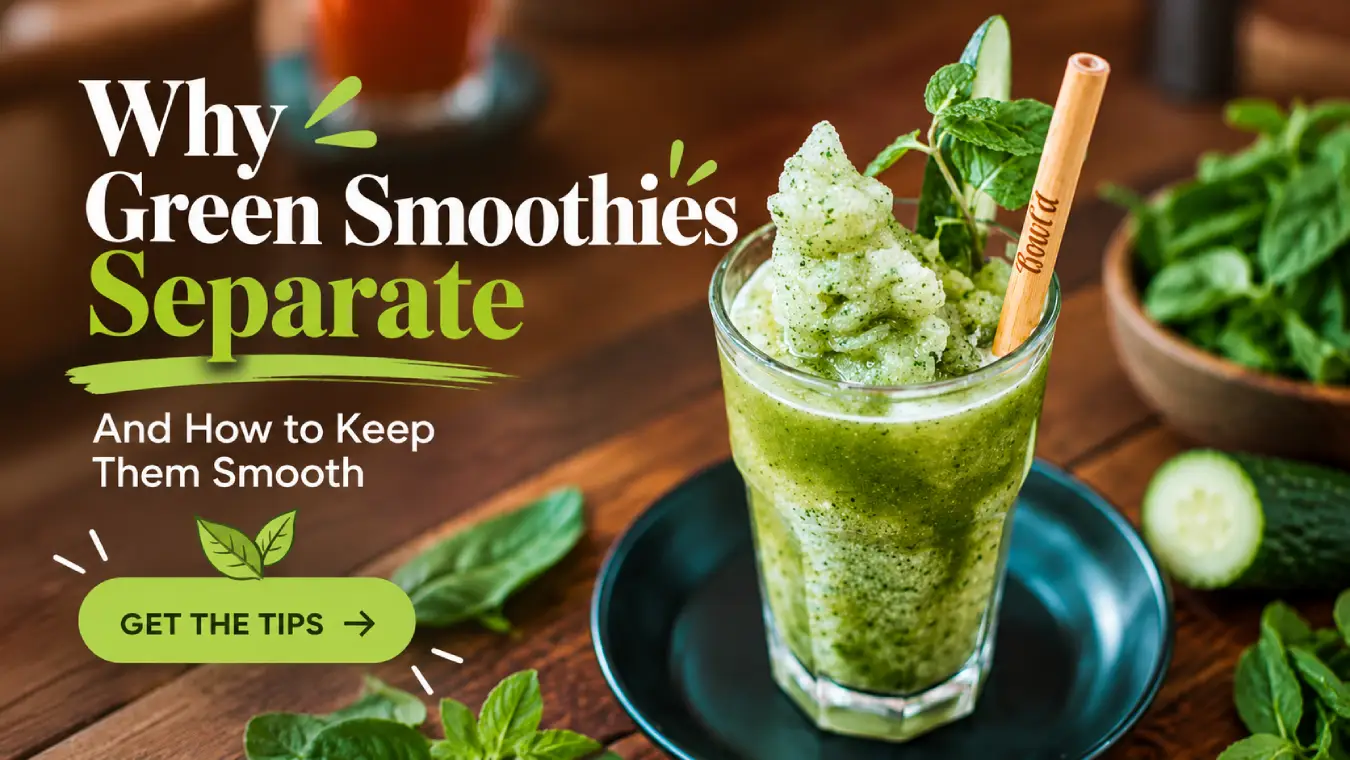
Separation can happen when the drink sits, especially when it contains fruit and liquid with different densities. Stir or shake it before serving. A thicker formula, thorough blending, and prompt serving can reduce visible separation, but no homemade smoothie remains perfectly uniform indefinitely. For another explanation of this issue, see why smoothies separate.
Ingredient Alternatives
- No dairy: Use a plain nondairy yogurt and unsweetened plant milk. Soy yogurt may provide a fuller body, while coconut-based options can add a noticeable coconut flavor.
- No avocado: Use a small frozen banana for thickness. The result will be sweeter and more banana-forward.
- No mango: Substitute frozen peaches or pineapple. Peaches create a softer, less tart profile, while pineapple makes the drink sharper and more acidic.
- No added sweetener: Leave out the honey or maple syrup and rely on the mango. The ripeness and brand of frozen fruit can affect sweetness.
- More citrus flavor: Add a little extra lime zest rather than a large amount of juice, which can make the smoothie too tart or thin.
Serving Suggestions
Serve this smoothie immediately in chilled glasses for the best texture. A small lime wedge, a few mango pieces, or a pinch of lime zest can add a simple visual finish. For a thicker bowl-style serving, reduce the milk to 1/2 cup and blend with care; you may need to stop and scrape the pitcher more often. Add toppings just before eating so they remain crisp.
This drink can fit alongside breakfast or a snack, but it is not intended to replace a varied eating pattern or professional nutrition guidance. If you are managing a medical condition, food allergy, or ingredient intolerance, choose substitutions based on advice appropriate for your situation.
Storage and Food Safety
Smoothies are best when consumed soon after blending. If you need to hold this one briefly, transfer it to a clean, covered container, refrigerate it promptly, and stir before drinking. Keep the refrigerator at a reliably cold temperature and follow current guidance from dependable food-safety authorities for refrigerated leftovers.
Do not store the smoothie in the blender pitcher uncovered, and do not leave it at room temperature for long periods. Wash the blender jar, lid, blade assembly, cutting board, knife, and other tools after preparation. For additional guidance, visit the Food Safety & Storage section.
Frequently Asked Questions
Can I make this smoothie without ice?
Yes. Frozen mango provides coldness and thickness, so ice is optional. Omitting it may produce a smoother, less diluted texture, especially if the fruit is well frozen.
Can I use fresh mango?
Yes, but the smoothie may be warmer and thinner. Chill the mango first and add ice if needed. Add ice gradually because too much can mute the fruit flavor as it melts.
What blender speed should I use?
Start low to combine the liquid and soft ingredients, then increase the speed once the frozen mango begins moving. If the blender has a pulse function, short pulses can help reposition stubborn pieces without prolonged blending.
How can I make the smoothie less sweet?
Skip the optional sweetener and add a little more lime juice. Plain yogurt can also provide tang. Avoid adding a large amount of extra liquid, since that changes the texture more than the flavor.
Why does my smoothie taste bitter?
Older avocado, too much lime zest, or an overly tart batch of fruit can contribute bitterness. Use a fresh avocado, zest only the colored outer peel, and adjust lime gradually. If the avocado smells sour or has extensive dark, slimy areas, discard it.
Perfect smoothie textures come from controlled adjustments rather than one secret ingredient. Begin with a measured liquid base, combine soft ingredients with frozen fruit, blend in stages, and correct the consistency one tablespoon or a few fruit pieces at a time. This mango-avocado lime recipe gives you a practical starting point for applying that method to other smoothies.
Comments
0No comments yet. Be the first to share a helpful note or question.
Leave a Comment
Your email address will not be published. Comments are reviewed before appearing on the site.