
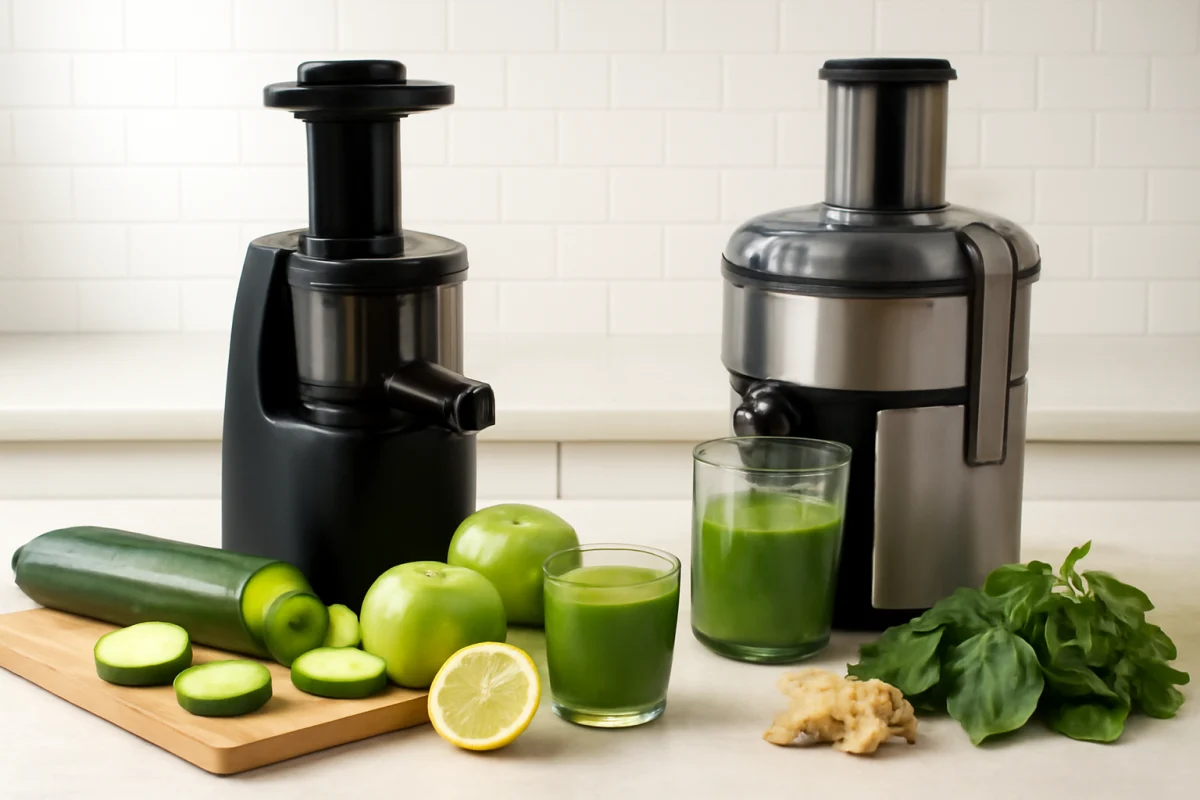
The most useful way to understand juicer specifications is to connect each number or feature to a real drink. This crisp apple, cucumber, and ginger juice is a practical example because it includes firm produce, watery ingredients, leafy herbs, and a small amount of fibrous ginger. As you prepare it, you can evaluate feed-chute size, motor information, speed settings, pulp handling, cleaning requirements, and juice yield without relying on vague marketing language. For more recipes and practical drink guidance, visit detox drink ideas.
This recipe makes a fresh drink with a bright, lightly spicy flavor. It does not promise detoxification, weight loss, or treatment of any health condition. Think of it as a refreshing way to use produce and learn whether a juicer fits your kitchen routine. For more background, you can browse the juicing and blending guides before comparing models.
Apple, Cucumber, Ginger, and Mint Juice
Preparation time: 15 minutes
Total time: 20 minutes
Servings: 2, about 10 to 12 fluid ounces each
Ingredients
- 2 medium apples, about 12 ounces total
- 1 large English cucumber, about 12 ounces
- 1-inch piece of fresh ginger, peeled if desired
- 1/2 medium lemon, peeled and seeded
- 1/4 cup loosely packed fresh mint leaves
- 1 cup cold water, optional for a lighter drink
- Ice, for serving
How to Make It
- Wash the apples, cucumber, lemon, ginger, and mint under cool running water. Use a clean produce brush for firm produce if needed. Dry the mint and inspect all ingredients for damaged areas.
- Read your juicer’s instructions before preparing the produce. Remove apple stems and cut the apples into pieces that fit comfortably through the feed chute. Do not put apple seeds, pits, or other parts prohibited by the manufacturer into the machine.
- Cut the cucumber into sections if necessary. Peel the lemon and divide the ginger into smaller pieces. Keep the ingredients near the juicer in separate groups so you can alternate firm and juicy produce.
- Place a collection container under the juice outlet and a pulp container under the pulp ejector. Feed a few pieces of cucumber, followed by apple, ginger, lemon, and mint. Alternate softer ingredients with firmer pieces rather than forcing a large handful into the chute.
- Use the tamper only as directed. Let the machine process each portion before adding more. If the motor sounds strained, pause and check whether produce is lodged in the feed tube.
- Stir the juice. Add the optional cold water if you prefer a milder flavor or a larger serving. Pour over ice and serve promptly.
How This Recipe Helps You Read Juicer Specifications
Feed-chute size
A wide feed chute can reduce chopping for larger apples and cucumbers, but the measurement alone does not tell you exactly what will fit. Check the manufacturer’s instructions for maximum produce dimensions and whether hard items must be cut before processing. A narrower chute may require more preparation, while a wider chute can make a difference if you value speed during busy mornings.
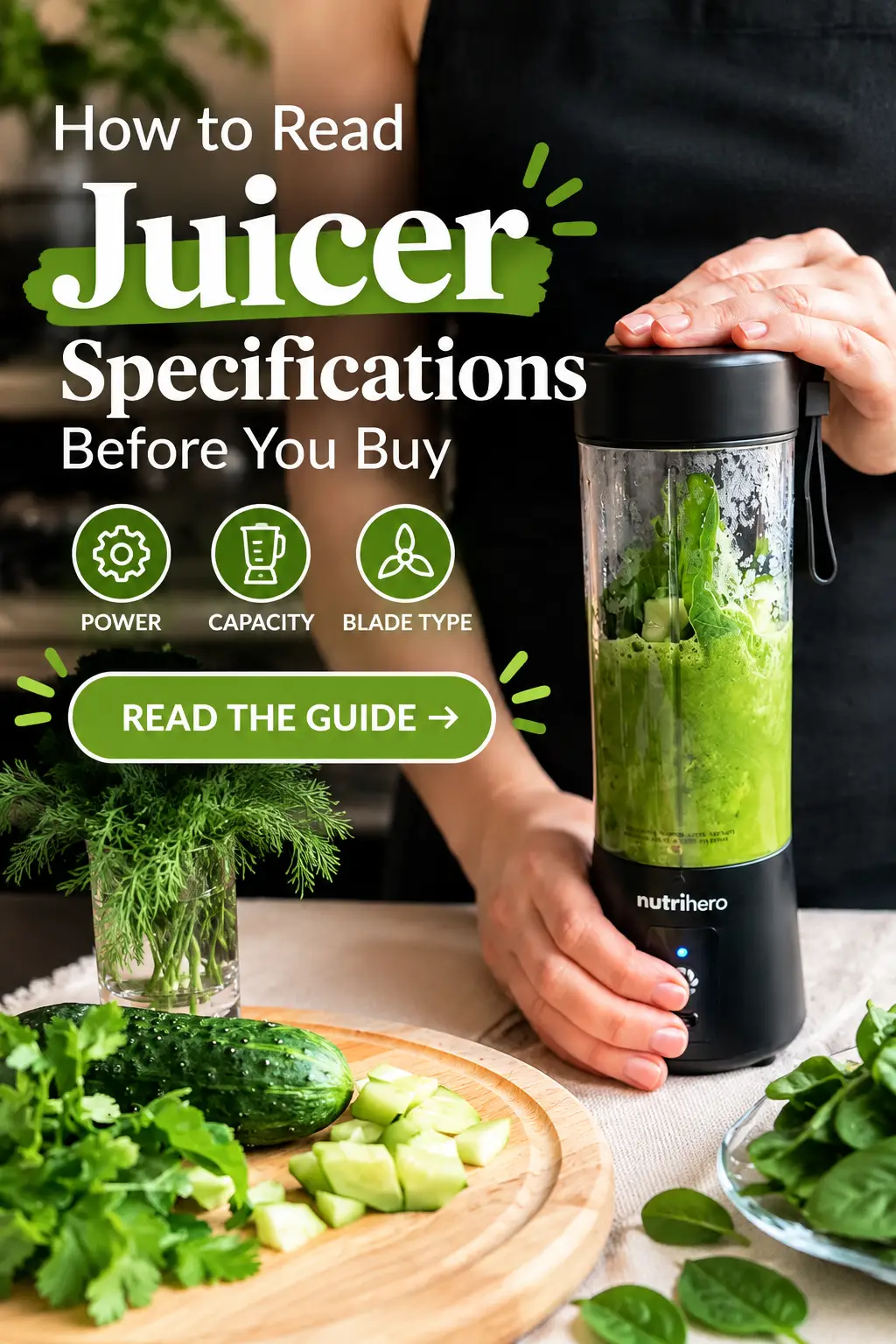
Do not assume a large opening means every ingredient can be added whole. Apples may still need their stems removed, citrus usually needs to be peeled, and long pieces of ginger or leafy herbs may need to be shortened. Safe preparation takes priority over convenience.
Motor power and wattage
Wattage describes electrical power consumption under the conditions specified by the manufacturer. It is not a complete measure of juice quality, quietness, durability, or performance with every ingredient. Two machines with similar wattage can behave differently because of auger design, blade construction, speed, controls, and overload protection.
For this recipe, the motor must handle firm apples and ginger along with cucumber and mint. Instead of choosing based on the biggest number, look for clear information about recommended ingredients, operating time, rest periods, and what to do if the machine jams. If a specification sheet does not explain how its figures were measured, treat comparisons cautiously.
RPM and speed settings
RPM means revolutions per minute. A centrifugal juicer may operate at higher speeds, while a slow or masticating model may use a slower crushing process. RPM can help describe how a machine works, but it does not independently predict flavor, foam, yield, shelf life, or cleaning time.
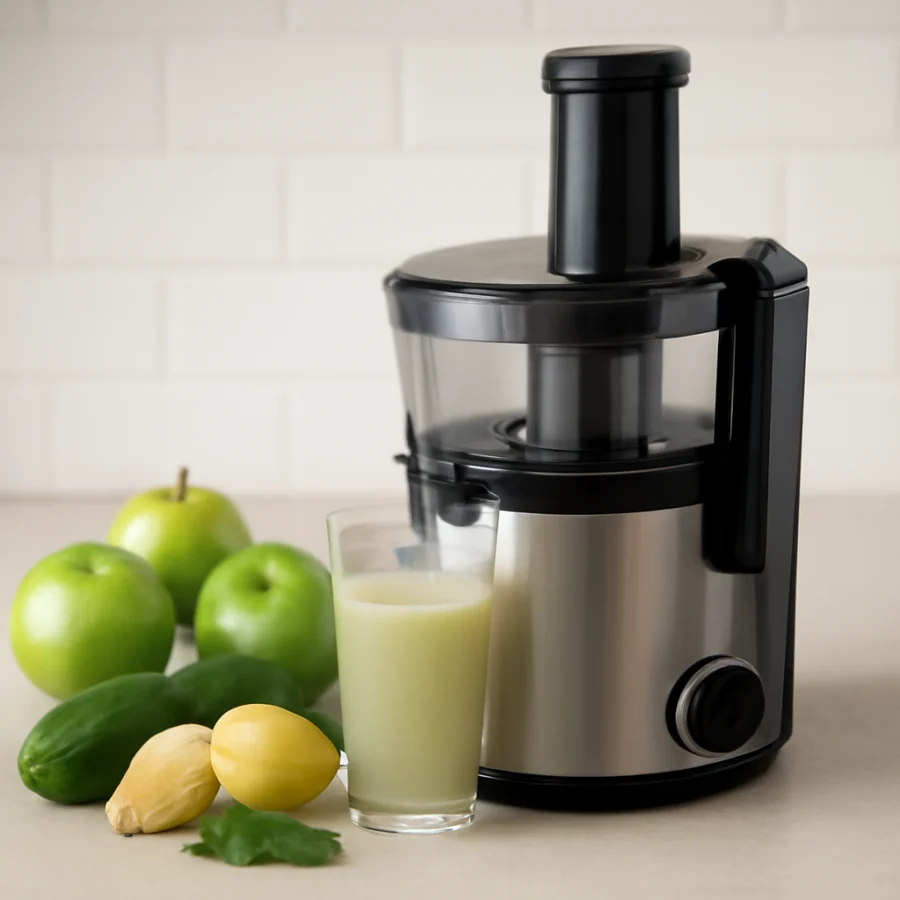
Multiple speed settings may be useful when a machine provides clear guidance for soft, firm, or leafy ingredients. In this drink, cucumber and lemon are relatively juicy, apples are firmer, and mint is light and leafy. Follow the manual rather than guessing that the highest setting is always best. Some models are designed to process leafy ingredients more effectively when combined with denser produce.
Juice yield claims
Yield is the amount of liquid collected from a specific quantity of produce. A yield percentage is meaningful only when you know the test ingredients, their size and ripeness, preparation method, speed setting, and whether foam or sediment was included. Produce naturally varies in water content, so your results may differ from a product page or package insert.
When comparing machines, look for transparent test conditions instead of treating a single yield figure as a guarantee. A juicer that extracts more liquid may also produce wetter pulp, more foam, or a longer cleanup process. Consider the whole routine, including produce cost, preparation time, and the amount of pulp you are comfortable handling.
Continuous feed and pulp ejection
Continuous-feed designs send pulp into a separate container while juice flows into another vessel. This can be convenient for making two servings or processing several ingredients in sequence. Check the stated pulp-bin capacity and whether the manual recommends stopping to empty it.
A small pulp container is not necessarily a flaw if you usually make one serving, but it may interrupt larger batches. Also check whether the pulp outlet is easy to reach. Compact spaces, narrow counters, and awkward container placement can matter more than a small difference in technical specifications.
Cleaning and dishwasher information
Cleaning instructions are among the most practical specifications. Review how many parts must be removed, whether a cleaning brush is included, which parts are dishwasher-safe, and whether the manufacturer gives a recommended cleaning schedule. Dishwasher-safe does not mean every component can go in the dishwasher, so verify the current manual for your model.
Rinse removable parts soon after making this juice. Mint fibers and ginger can cling to screens, while lemon pulp may dry around seals. Never place the motor base in water. Unplug the appliance before disassembly and follow the manufacturer’s instructions for clearing a blockage.
Ingredient Alternatives and Flavor Adjustments
- For a less sweet drink: Replace one apple with an additional 4 ounces of cucumber.
- For a sharper flavor: Add another small lemon segment, but remove the peel and seeds.
- For a milder ginger note: Use a 1/2-inch piece instead of 1 inch.
- For a different herb: Substitute a small handful of basil for the mint.
- For no added water: Omit the water and serve the juice over ice.
- For a blender instead of a juicer: Blend the ingredients with 1 cup of water, then strain only if you prefer a thinner texture. A blender retains more of the whole produce, so the result will not have the same texture as extracted juice.
Serving and Storage Guidance
Serve the juice immediately for its freshest flavor and texture. If you need to hold it briefly, transfer it to a clean, food-safe container with a tight-fitting lid and refrigerate it promptly. Keep the container cold and follow current food-safety guidance for refrigerated fresh foods. Because homemade juice is not commercially pasteurized, do not treat it like a shelf-stable packaged beverage.
When preparing drinks for children, older adults, pregnant people, or anyone with a weakened immune system, use especially careful produce washing, clean equipment, and prompt refrigeration. For broader handling guidance, see the site’s food safety and storage resources.
Juicer Buying Checklist
Before buying, write down how you actually plan to use the machine. If you mostly make one small serving, a compact design with simple cleanup may be more useful than a large model with many controls. If you prepare drinks for several people, compare feed-chute dimensions, pulp capacity, operating limits, and the size of the included collection containers.
Also review the warranty terms, replacement-part information, electrical requirements, noise descriptions supplied by the manufacturer, and the full cleaning procedure. Product details can change, so verify the current label, manual, and manufacturer information before purchasing. Avoid relying on an isolated rating or a dramatic performance claim that does not describe its testing method.
Frequently Asked Questions
What specification matters most when choosing a juicer?
There is no single best specification for every kitchen. Feed-chute size, cleaning design, ingredient guidance, pulp handling, and operating limits are often more useful than motor wattage alone. Match the machine to your ingredients, batch size, counter space, and willingness to clean it promptly.
Is a higher RPM always better?
No. RPM describes rotational speed, not overall drink quality or value. A machine’s design, controls, produce preparation requirements, and cleanup process also affect the experience.
Can I put whole apples into a juicer?
Only if the manufacturer permits it and the apples fit safely. Remove stems and follow the manual regarding seeds, size, and preparation. Never force oversized produce through the chute.
Why does my juice look different from another person’s?
Differences in produce ripeness, variety, temperature, cutting size, machine design, and speed can change color, foam, pulp, and volume. These variations do not necessarily indicate a machine problem.
Should I buy a centrifugal or slow juicer?
Choose based on your routine. Centrifugal models may suit people who prioritize quick processing, while slower models may appeal to people who prefer a different extraction process or quieter operation. Compare the complete instructions and cleaning demands rather than using one category label as a guarantee.
This apple, cucumber, ginger, and mint recipe gives you a simple test batch for comparing real-world convenience with technical data. The best juicer is the one whose preparation, operation, cleanup, storage, and safety instructions fit how you will actually make drinks.
Comments
0No comments yet. Be the first to share a helpful note or question.
Leave a Comment
Your email address will not be published. Comments are reviewed before appearing on the site.