
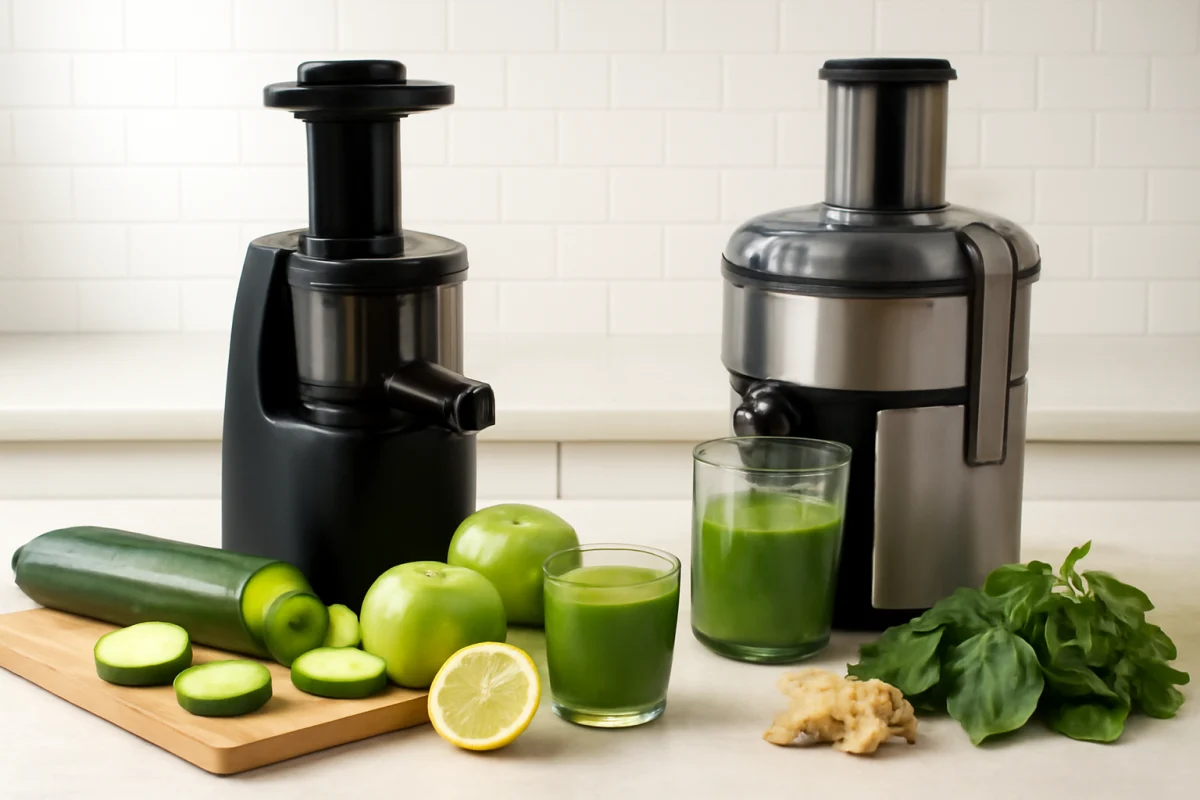
Masticating vs. centrifugal juicers comes down to your priorities: choose a centrifugal model if you want speed and a generally lower upfront cost, or choose a masticating model if you value quieter operation, leafy greens, and a slower extraction process. Neither machine makes a drink that replaces a balanced diet, but both can help you prepare fresh juice at home when used safely and realistically. For more recipes and practical drink guidance, visit refreshing detox drinks.
This comparison uses a refreshing cucumber, apple, lemon, and ginger green juice as a practical example. The recipe works with either type of juicer, while the preparation details show where the two machines differ. Before shopping, consider what you plan to juice most often, how much time you have for cleanup, and whether you will drink the juice immediately.
Quick comparison: masticating vs. centrifugal juicers
| Feature | Masticating juicer | Centrifugal juicer |
|---|---|---|
| Extraction method | Uses a slow auger to crush and press produce | Uses a fast spinning basket and cutting blade |
| Typical strengths | Leafy greens, herbs, soft produce, quieter operation | Speed, convenience, and many firm fruits and vegetables |
| Preparation | May accept smaller or larger pieces depending on the feed chute | Often accepts larger pieces, but produce still needs sensible preparation |
| Noise | Usually quieter, though the exact sound varies by model | Often louder because of the high-speed motor |
| Cleanup | Can involve several parts and a fine screen | Can be quick, but the mesh basket may require careful brushing |
| Best fit | People who juice leafy greens or prefer a slower process | People who want juice quickly and plan to drink it soon |
These are broad categories rather than guarantees. Features differ by design, and a specific model may perform differently from another machine in the same category. Read the current manufacturer instructions for feed-chute limits, approved ingredients, dishwasher guidance, warranty conditions, and cleaning requirements.
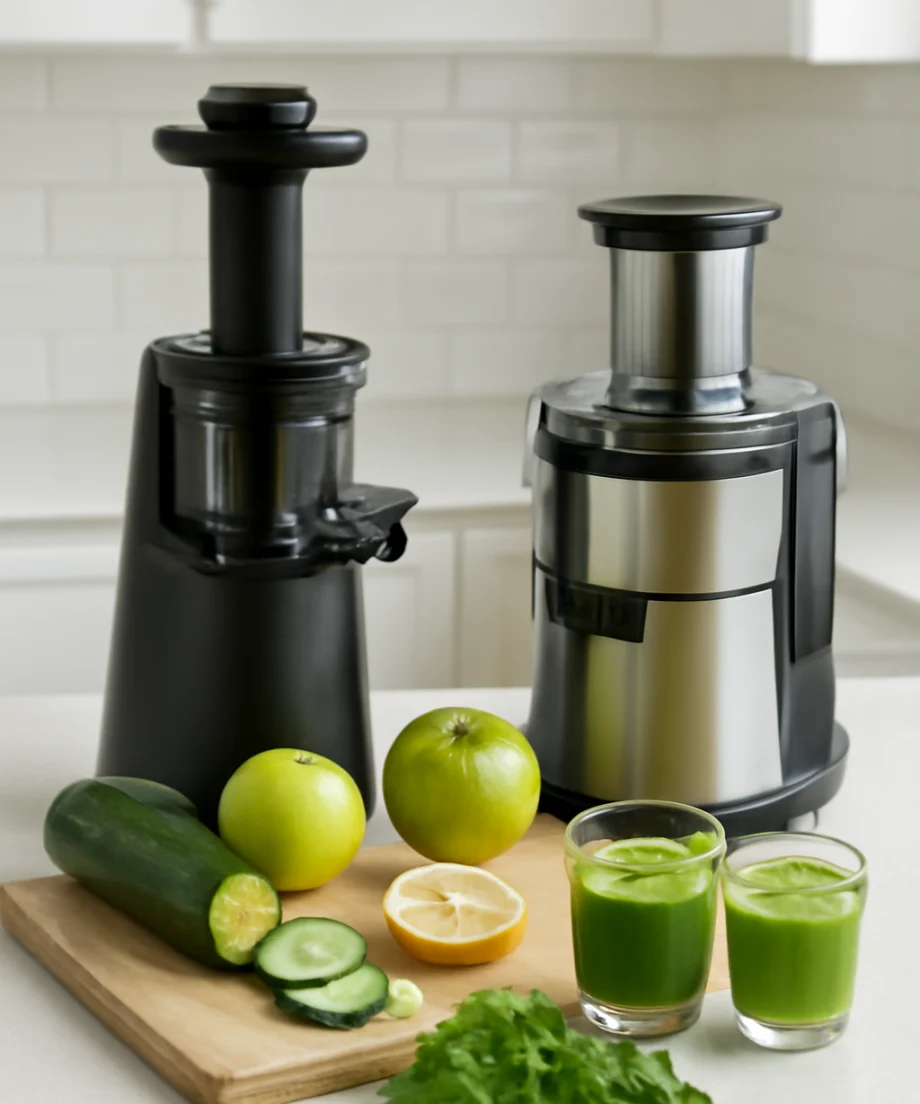
Simple cucumber-apple green juice
This recipe is a useful test for a new juicer because it includes firm produce, watery produce, citrus, and a small amount of fibrous ginger. It makes a bright, lightly spicy drink without relying on added sweeteners.
Preparation details
- Prep time: 10 minutes
- Juicing time: 5 to 10 minutes, depending on the machine and batch size
- Total time: About 20 minutes
- Servings: 2 small servings
Ingredients
- 1 medium cucumber, about 8 ounces, rinsed
- 2 medium green apples, about 12 ounces total, rinsed
- 2 packed cups fresh spinach, rinsed and drained
- 1 medium lemon, peeled and cut into sections
- 1 small piece fresh ginger, about 1/2 inch, scrubbed and peeled if desired
- 1/2 cup cold water, optional for thinning after juicing
- Ice, optional, for serving
How to make it
- Wash the produce. Rinse the cucumber, apples, spinach, lemon, and ginger under cool running water. Scrub firm produce with a clean produce brush if needed. Washing does not make damaged or spoiled produce safe, so discard anything with mold, an off odor, or extensive soft spots.
- Prepare the ingredients. Remove the apple stems and cut the apples into pieces that fit your juicer. Remove the cucumber ends and cut it into manageable sections. Peel the lemon completely, removing as much bitter white pith and seeds as practical. Do not put hard lemon peel into the machine unless the manufacturer specifically permits it. Cut the ginger into small pieces.
- Check the manual. Confirm that your juicer can process spinach, ginger, citrus sections, and the size of your produce pieces. Some machines recommend alternating soft leafy ingredients with firmer pieces. Follow the instructions for your particular model.
- Juice the produce. For a masticating juicer, feed the spinach and ginger gradually, alternating them with cucumber or apple pieces to help move the softer ingredients through the chamber. For a centrifugal juicer, feed the spinach in small handfuls and follow it with cucumber or apple. Use the pusher only as directed; never force produce into the feed chute with your hands or another object.
- Stir and adjust. Stir the finished juice in a food-safe pitcher. Add up to 1/2 cup cold water if you prefer a lighter flavor. Taste before adding anything else. The apples provide sweetness, while lemon and ginger add acidity and spice.
- Serve promptly. Pour the juice over ice if desired and serve immediately. Straining is optional, but it will remove some pulp and may change the texture.
- Clean the machine. Unplug the juicer before disassembling it. Rinse removable parts promptly and clean the screen, blade area, auger, seals, and pulp container according to the manual. Allow parts to dry fully before reassembling or storing them.
How the recipe behaves in each juicer
Using a masticating juicer
A masticating machine may be a better match if you regularly prepare spinach, kale, parsley, or other leafy ingredients. Its slower crushing action can handle delicate greens in a controlled way, although you may need to roll or fold loose leaves before feeding them. The drink may have a fuller texture, especially if the machine allows more pulp to pass through.
Work patiently with ginger and other fibrous ingredients. Too much fiber at once can contribute to clogging in some models. If the machine begins to slow, stop and follow the manufacturer’s procedure for clearing the chamber. Do not continue operating a machine that is straining, overheating, or producing an unusual smell.
Using a centrifugal juicer
A centrifugal machine is convenient when you want to prepare juice quickly. Apples and cucumber generally move through this style of juicer efficiently, while spinach may be more challenging because light leaves can collect around the basket or pass into the pulp. Feeding leafy greens with firmer produce can help, but results vary by model.
Because the basket spins at high speed, foam may form on top of the juice. This is normal for many centrifugal designs. Stir the drink before serving, or skim the foam if you prefer a smoother appearance. Centrifugal juicers are often most practical when you plan to drink the juice soon after making it.
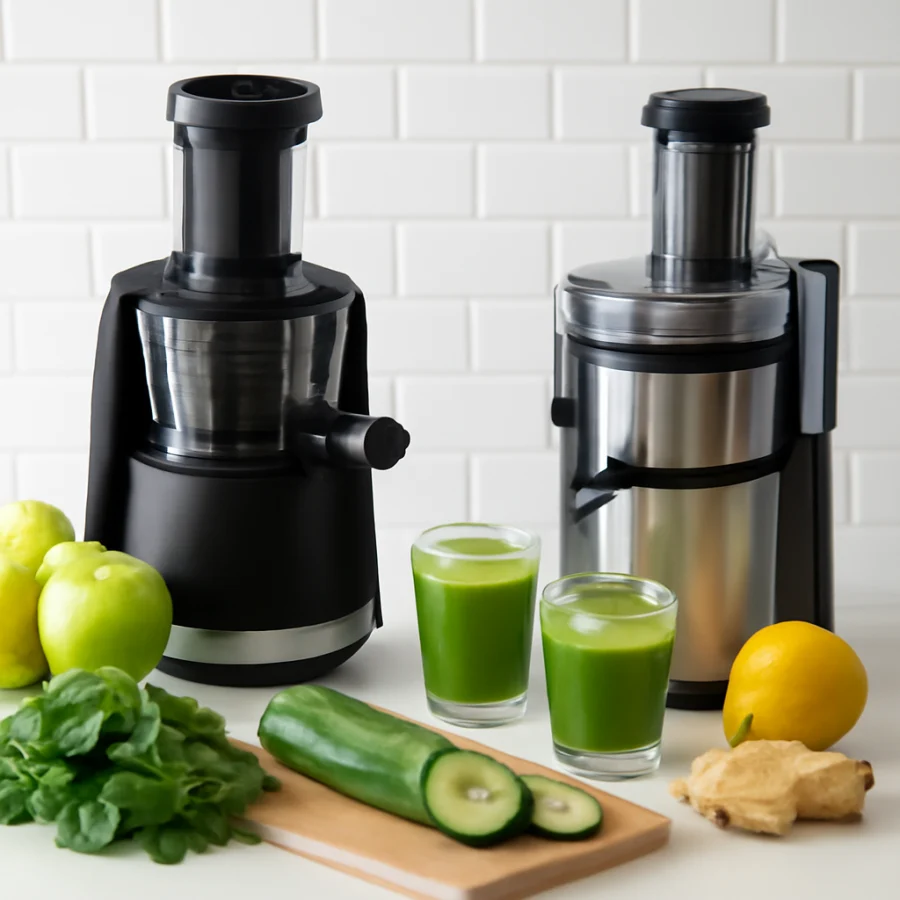
What to look for before buying
1. Your usual ingredients
Make a list of the produce you expect to use most often. If your recipes emphasize apples, carrots, cucumbers, and firm vegetables, a centrifugal model may meet your needs. If you frequently use leafy greens, herbs, or softer produce, compare masticating models and read the manufacturer’s ingredient guidance carefully.
2. Chute size and preparation time
A wide feed chute may reduce cutting time, but it does not eliminate preparation. Produce should still be rinsed, trimmed, and cut when necessary. Check whether the chute accommodates the items you commonly buy and whether the manual specifies maximum piece sizes.
3. Cleanup and storage
A machine that is difficult to clean may be used less often, regardless of its extraction method. Look for removable parts that are easy to identify and a screen or basket that can be brushed thoroughly. Confirm whether any component is dishwasher-safe rather than assuming it is. Consider the machine’s height and countertop footprint if you plan to leave it assembled.
4. Noise and household timing
If you share a small home, juice early in the morning, or prefer a quieter kitchen, compare manufacturer information and reliable retailer specifications for sound-related details when available. Do not assume every masticating model is silent or every centrifugal model is excessively loud; motor design and construction affect the experience.
5. Pulp and texture
Juice texture depends on the machine, the produce, the screen, and your straining preferences. If you prefer a very smooth drink, check whether the model includes appropriate strainers or whether you are comfortable pouring the juice through a separate fine-mesh strainer. Remember that removing pulp also changes the drink’s mouthfeel and may leave more solid material behind.
6. Safety features and support
Look for a secure lid, stable base, clear assembly instructions, overload protection if offered, and accessible manufacturer support. Verify current warranty terms and replacement-part information on the manufacturer’s website before purchasing. Product details can change, so confirm the current label and specifications rather than relying on an old listing.
Tips, substitutions, and serving ideas
- Replace spinach with a small amount of romaine, parsley, or another well-rinsed leafy ingredient if your machine’s manual allows it. Flavor and yield will vary.
- Use a pear instead of one apple for a softer, floral flavor. Choose firm, ripe fruit rather than bruised or overripe produce.
- Reduce the ginger for a milder drink, or omit it if you prefer a simple cucumber-apple juice.
- Add a few mint leaves only if your juicer instructions permit herbs and you can wash them thoroughly.
- Serve in small glasses with ice and a lemon wedge. Keep garnishes clean and discard them if they have been sitting at room temperature for an extended period.
- For a thicker beverage, blend the juice with a small amount of plain yogurt or soft fruit after juicing, if that fits your eating preferences. This creates a different drink, so use a blender rather than placing those ingredients in the juicer.
Safe storage and realistic limitations
Fresh juice is perishable. For best quality, drink it soon after preparation. If you need to store it, transfer it immediately to a clean, covered container, refrigerate it at 40°F or below, and follow reliable current food-safety guidance for refrigerated leftovers. Avoid leaving fresh juice at room temperature for long periods, especially in a warm kitchen. Discard juice that develops an unusual odor, flavor, appearance, or signs of fermentation.
Juicing also does not make spoiled produce safe, and a juicer does not remove every food-safety concern. Wash produce, prevent contact with raw meat or poultry, clean equipment promptly, and keep hands, counters, and utensils clean. For more general guidance, visit the Food Safety & Storage section.
Juice can be part of a varied eating pattern, but it is not a complete substitute for meals. Whole fruits and vegetables provide textures and components that may be reduced or removed during juicing. Think of homemade juice as one beverage option, not as a guaranteed cleanse, treatment, or weight-loss method.
Frequently asked questions
Is a masticating juicer better than a centrifugal juicer?
Neither is universally better. Masticating machines may suit people who prioritize leafy greens, a slower process, and potentially quieter operation. Centrifugal machines may suit people who prioritize speed and simple preparation. Your ingredient choices, cleanup tolerance, and budget should guide the decision.
Which juicer is better for green juice?
A masticating juicer is often a practical choice for recipes with substantial amounts of leafy greens or herbs, but the exact results depend on the model. A centrifugal machine can still make enjoyable green juice when greens are fed in small amounts with firm produce.
Can I put citrus peel in either juicer?
Do not assume that citrus peel is acceptable. It can be bitter and may affect the machine. Peel lemons, limes, oranges, and grapefruit unless your specific manual clearly says otherwise.
How long does homemade juice last?
It is best consumed promptly. If stored, refrigerate it immediately in a clean, covered container and use cautious food-safety practices. When in doubt about time, temperature, or spoilage, discard it.
Should I buy a juicer or a blender?
Choose a juicer if you want a strained beverage made from extracted liquid. Choose a blender if you prefer to keep the produce’s pulp and make thicker drinks such as smoothies. Neither appliance is automatically the right choice for every recipe.
A practical buying decision
For a fast weekday apple-and-cucumber drink, a centrifugal juicer may be the more convenient option. For frequent leafy-green recipes and a slower, quieter routine, compare masticating machines. In either case, prioritize safe operation, manageable cleanup, appropriate capacity, and a design you will realistically use. The best juicer is not simply the one with the most features; it is the one that fits your ingredients, kitchen, schedule, and expectations.

Comments
0No comments yet. Be the first to share a helpful note or question.
Leave a Comment
Your email address will not be published. Comments are reviewed before appearing on the site.