

Why green smoothies separate usually comes down to settling, trapped air, ingredient density, or a blend that is too thin. The good news is that separation is generally easy to fix: use enough liquid to keep the blades moving, blend dense ingredients thoroughly, and serve the smoothie soon after preparation. This bright spinach, mango, and banana smoothie is a practical way to apply those techniques while creating a creamy drink with a fresh, mild flavor. For more recipes and practical drink guidance, visit detox beverage ideas.
A separated smoothie is not automatically spoiled. Blended fruits and vegetables contain water, fiber, plant particles, and air, and those parts can naturally shift after blending. A quick stir or short reblend may restore the texture. However, separation that comes with an unpleasant odor, unusual bubbling, mold, or other signs of spoilage is a reason to discard the drink.
Spinach, Mango, and Banana Green Smoothie
This recipe makes two modest servings and is designed to stay creamy without dairy. Banana and mango provide body, while spinach adds color and a mild vegetable flavor. The optional chia seeds can add thickness, but they also absorb liquid as the drink sits, so the smoothie may become thicker over time.
Preparation and serving information
- Prep time: 10 minutes
- Total time: 10 minutes
- Servings: 2
Ingredients
- 1 cup cold water, unsweetened soy milk, or unsweetened oat milk
- 1 packed cup baby spinach, rinsed and dried
- 1 medium ripe banana, peeled and sliced
- 1 cup frozen mango chunks
- 1 tablespoon fresh lemon juice
- 1 tablespoon chia seeds, optional
- 4 to 6 ice cubes, optional, depending on the texture you want
How to Make This Green Smoothie
- Prepare the produce. Rinse the spinach under cool running water and dry it well. Peel and slice the banana. If you are cutting fresh mango instead of using frozen mango, remove the pit and cut the flesh into chunks.
- Add liquid first. Pour the water or plant-based milk into the blender. Starting with liquid gives the blades room to circulate and can reduce the need to stop and scrape the sides.
- Add the spinach. Place the spinach over the liquid. Blending leafy greens near the bottom helps break them down before the frozen ingredients make the mixture thick.
- Add the remaining ingredients. Add the banana, frozen mango, lemon juice, optional chia seeds, and ice. Avoid filling the blender beyond its recommended capacity.
- Blend gradually. Begin on a low speed, then increase to high. Blend for about 45 to 60 seconds, or until the smoothie looks evenly green and no large pieces remain. If the blades stop circulating, turn off the blender, loosen the mixture with a spatula, and add 1 to 2 tablespoons of liquid before continuing.
- Check the texture. Taste the smoothie with a clean spoon. Add a small amount of liquid for a thinner drink, or add a few more frozen mango pieces for a thicker one. Blend briefly after each adjustment.
- Serve promptly. Pour the smoothie into clean glasses and serve right away. If it must sit briefly, stir before drinking.
Why Green Smoothies Separate
Different ingredients have different densities
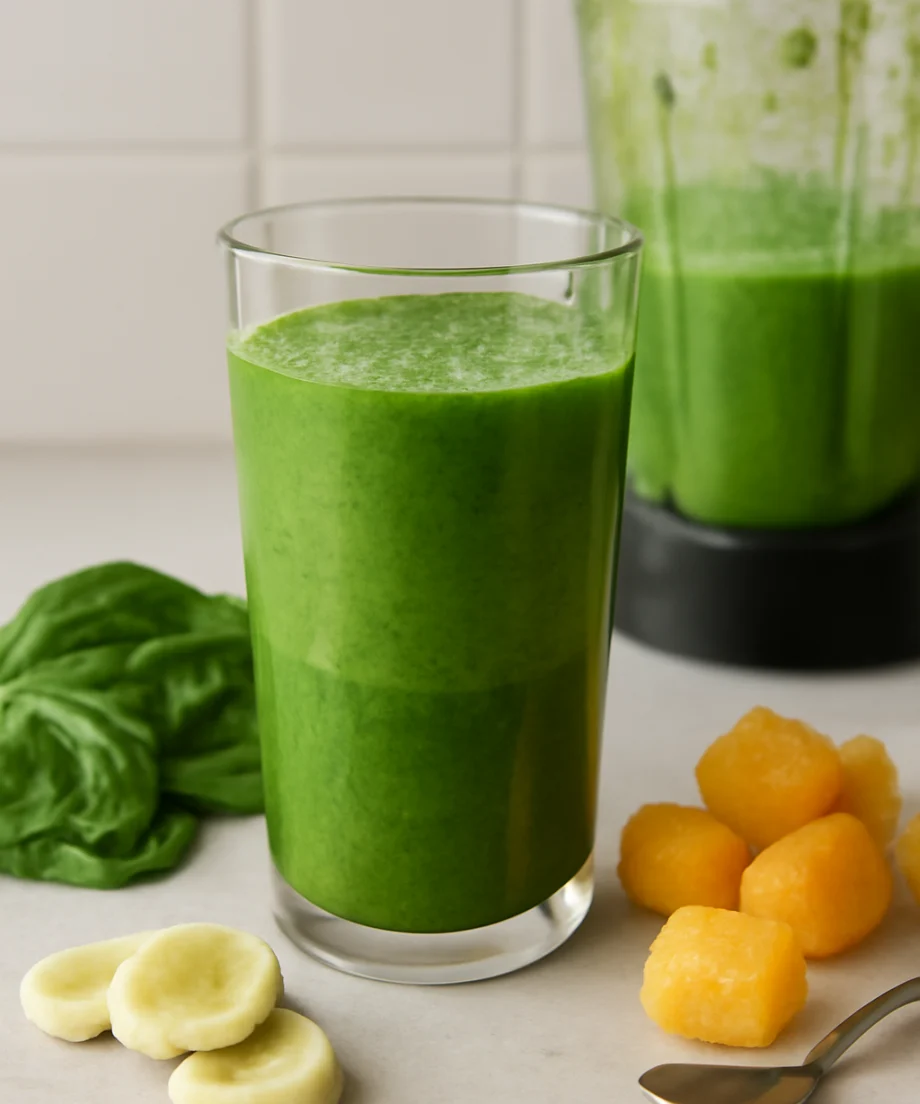
Water-rich ingredients, fruit pulp, leafy greens, seeds, and air do not remain perfectly suspended forever. Heavier particles can settle toward the bottom while lighter foam or liquid stays near the top. This is a normal physical change, not necessarily a sign that something went wrong.
The smoothie contains too much liquid
A smoothie with a large amount of water, juice, or milk may look thin from the beginning. When there is less fruit fiber or blended plant material to hold the liquid in place, separation becomes more noticeable. Add liquid gradually rather than pouring in the full amount at once.
The ingredients were not blended evenly
Large chunks of frozen fruit, fibrous greens, or whole seeds can create an uneven mixture. Some pieces remain suspended while others settle. Cutting fresh produce into smaller pieces and blending in stages can improve consistency.
The smoothie warmed up
Frozen fruit helps create a thick texture. As it melts, the smoothie becomes more fluid, and the liquid portion may separate more quickly. A drink that is smooth when first blended may look looser after sitting on the counter.
Air and foam rose to the surface
High-speed blending pulls air into the mixture. That air can form a foamy layer at the top, especially when leafy greens are included. Letting the drink rest for a minute may reduce the foam, but a gentle stir is usually the fastest solution.
How to Fix a Separated Green Smoothie
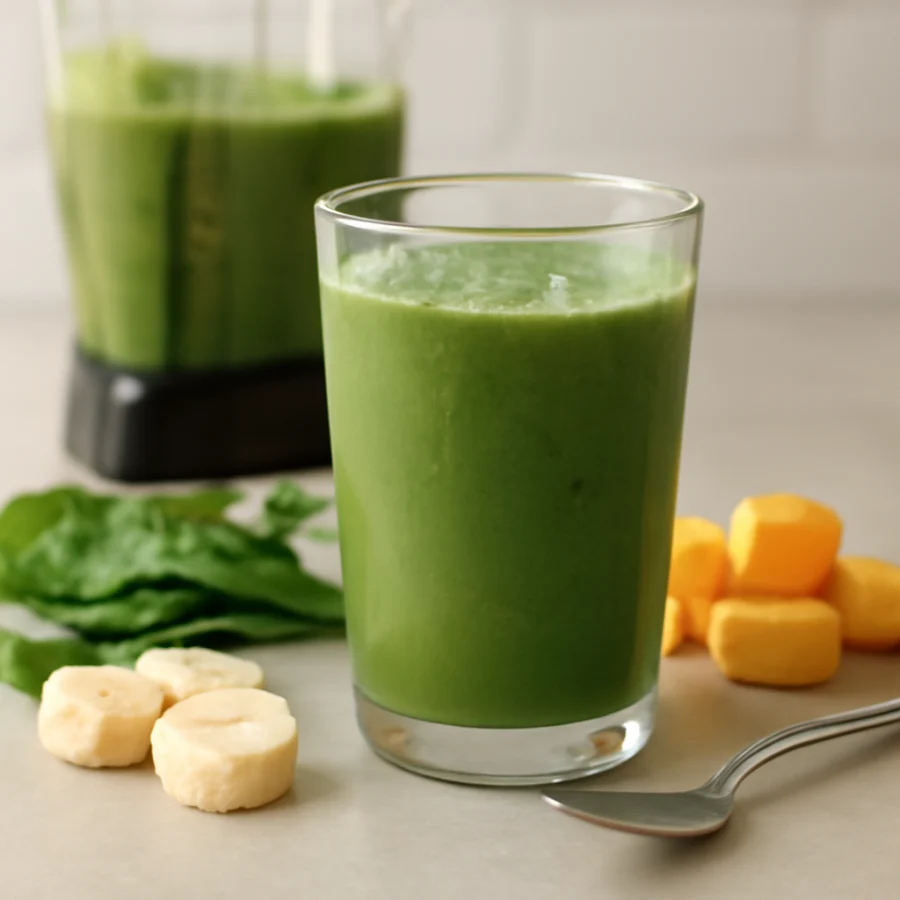
Start with the simplest fix: stir the drink thoroughly with a clean spoon. If the ingredients recombine, the smoothie is ready to serve. For a more noticeable split, pour it back into the blender and pulse for 5 to 10 seconds. Avoid blending for much longer than needed, because extended blending can warm the drink and create more foam.
If the smoothie is watery, add a few frozen mango pieces or part of a frozen banana and blend again. If it is too thick, add water or unsweetened plant milk one tablespoon at a time. Chia seeds can help create a thicker texture, but use them sparingly and allow a few minutes for their effect to develop.
If the smoothie tastes overly grassy, use less spinach next time or combine spinach with a sweeter fruit such as mango, pineapple, or banana. Lemon juice can brighten the flavor, but it will not prevent separation by itself.
Ingredient Alternatives
- Leafy greens: Use tender kale leaves with the tough stems removed, romaine, or a small amount of arugula. Stronger greens can change the flavor significantly.
- Fruit: Substitute frozen pineapple or peaches for the mango. Choose unsweetened frozen fruit when possible so you can control the drink's sweetness.
- Banana: For a banana-free option, use additional frozen mango, avocado, or a few tablespoons of plain yogurt if dairy fits your preferences and dietary needs.
- Liquid: Water keeps the flavor light. Unsweetened soy milk creates a fuller texture, while unsweetened oat milk adds mild sweetness and creaminess.
- Seeds: Ground flaxseed can replace chia seeds, though it may create a slightly different texture. Skip seeds if you prefer a smoother drink.
Tips for a Smoother, More Stable Blend
- Use frozen fruit rather than relying on a large amount of ice. Frozen fruit contributes flavor and body as well as chill.
- Blend leafy greens with the liquid before adding dense frozen ingredients if your blender struggles with fibrous pieces.
- Keep the liquid moderate. It is easier to thin a thick smoothie than to correct one that is already watery.
- Use ripe banana for a naturally creamy texture and a mild flavor.
- Pour the smoothie into smaller glasses if you plan to serve it immediately. A large glass leaves more room for the layers to become visible.
- Stir before serving if the drink has been sitting for more than a few minutes.
Serving and Storage
Serve this green smoothie immediately for the freshest color and texture. If you need to prepare it ahead, transfer it to a clean, covered container and refrigerate it promptly. Leave as little empty space as practical to limit air exposure, but do not rely on a sealed container to keep a smoothie fresh indefinitely.
Before drinking a refrigerated smoothie, shake or stir it and check its appearance and smell. Follow current guidance from reliable food-safety authorities for refrigerated leftovers and prepared foods, and keep perishable ingredients cold. Do not leave the smoothie at room temperature for extended periods. When in doubt about its safety, discard it rather than tasting it to decide.
For more practical storage guidance, see these Food Safety & Storage resources. You can also browse additional drink recipes for other blending ideas.
Frequently Asked Questions
Is a separated green smoothie safe to drink?
Separation alone is usually a texture issue. Stir or briefly reblend the smoothie and inspect it first. Discard it if it has an off smell, mold, unusual fermentation, or another clear sign of spoilage.
Why does my green smoothie separate overnight?
Overnight, blended particles settle and frozen ingredients melt. Plant-based milk, juice, water, fruit fiber, and seeds can also separate at different rates. Stirring or shaking may restore the texture, although it may not look exactly like a freshly blended drink.
Does adding chia prevent separation?
Chia can absorb liquid and make a smoothie thicker, but it does not guarantee that the drink will stay perfectly blended. It may also create a gel-like texture if the smoothie sits for a while.
Should I use fresh or frozen spinach?
Fresh baby spinach blends easily when rinsed and dried. Frozen spinach can work, but it may add more water and a stronger vegetable flavor. Thawing and draining it first can make the texture easier to control.
Can I make this smoothie without a high-powered blender?
Yes. Use smaller pieces, add the liquid first, and blend the spinach with the liquid before adding frozen fruit. Stop the blender when needed to scrape down the sides, and add liquid gradually rather than forcing the motor to run on a thick mixture.
A Simple Way to Keep Your Smoothie Enjoyable
When you know why green smoothies separate, the solution becomes straightforward: balance the liquid, break down dense ingredients, blend in a useful order, and serve soon after mixing. Some settling is natural and does not need to be eliminated completely. A quick stir, a short reblend, or a small texture adjustment is often all it takes to turn a layered drink into a smooth, refreshing glass.

Comments
0No comments yet. Be the first to share a helpful note or question.
Leave a Comment
Your email address will not be published. Comments are reviewed before appearing on the site.