
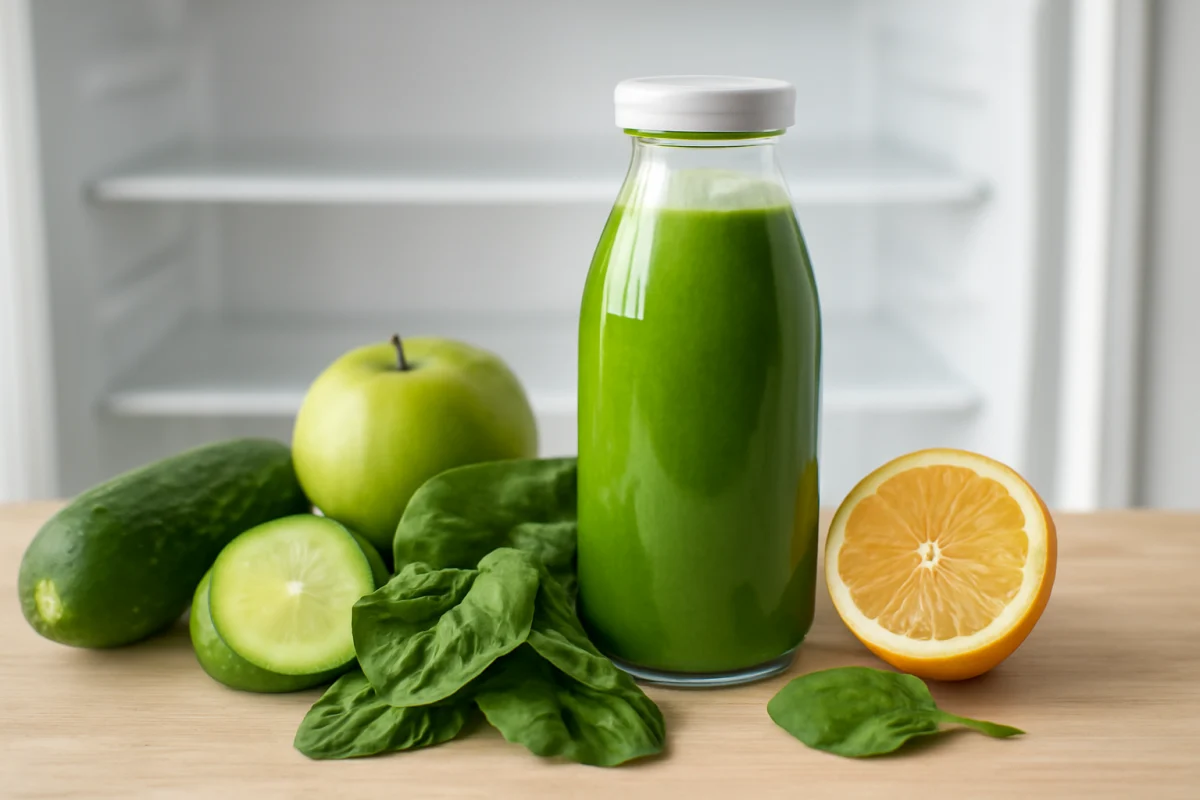
The best way to store fresh juice is to refrigerate it promptly in a clean, tightly sealed container and drink it as soon as practical—ideally the same day. For a refreshing example, this cucumber, apple, and spinach juice is easy to prepare, bright in flavor, and well suited to short-term refrigerated storage. Proper handling matters because fresh juice is perishable, and refrigeration helps slow quality loss without making it shelf-stable. For more recipes and practical drink guidance, visit homemade detox drinks.
This guide explains how to store fresh juices properly, beginning with a practical recipe and then covering containers, timing, ingredients, preparation, serving ideas, and food-safety limits. Fresh juice can be a convenient way to enjoy produce, but it should complement a balanced eating pattern rather than replace regular meals.
Cucumber, Apple, and Spinach Juice
This lightly sweet green juice combines crisp cucumber, tart apple, leafy spinach, and lemon. It is a good recipe for learning how storage affects fresh juice because its flavor is clean and its color is best when the drink is consumed soon after blending or juicing.
Prep time: 10 minutes
Total time: 15 minutes
Servings: 2, about 10 ounces each
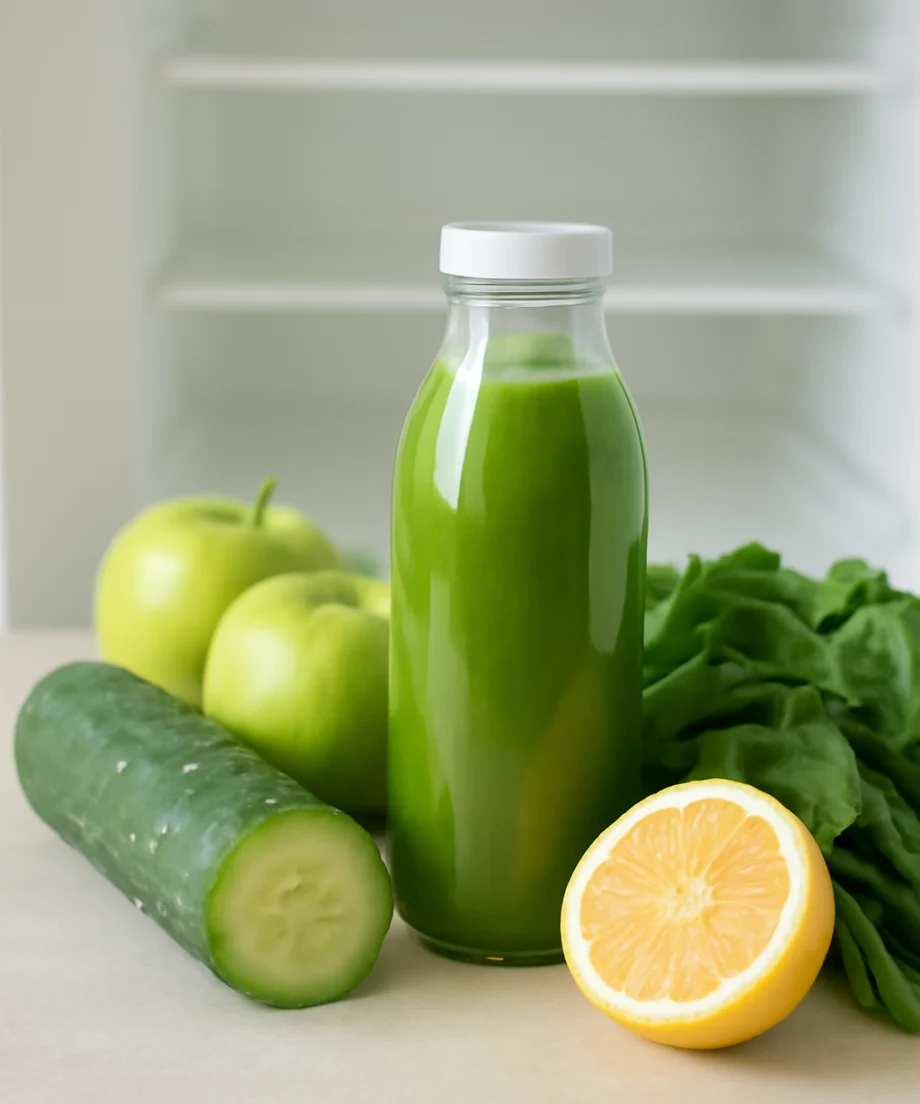
Ingredients
- 1 medium English cucumber, about 12 ounces, rinsed and cut into chunks
- 2 medium sweet-tart apples, rinsed, cored, and cut into pieces
- 2 packed cups baby spinach, rinsed well and drained
- 1 tablespoon fresh lemon juice
- 1/2 cup cold water, only if using a blender
- 1 cup ice, for serving if desired
Preparation method
- Wash your hands, work surface, knife, cutting board, produce, juicer parts, blender jar, and storage containers. Use clean running water for produce, and scrub firm fruits and vegetables gently. Do not use soap or household cleaners on food.
- Prepare the cucumber, apples, spinach, and lemon. Remove apple cores and seeds. Leaving the cucumber peel on is fine if it has been washed thoroughly, although peeling is an option if the skin is damaged or very waxy.
- If using a juicer, process the cucumber, apples, and spinach according to the appliance instructions. Stir in the lemon juice after juicing.
- If using a blender, add the cucumber, apples, spinach, lemon juice, and water. Blend until smooth. Pour the mixture through a fine-mesh strainer if you prefer a thinner juice, pressing gently with a clean spoon.
- Serve immediately over ice, or transfer the juice to clean storage containers without leaving it at room temperature longer than necessary.
For another green drink idea, see this easy cucumber, apple, and spinach green juice recipe. The ingredients and texture can be adjusted, but the same storage principles apply.
How to Store Fresh Juices Properly
1. Refrigerate juice promptly
Fresh juice should go into the refrigerator soon after preparation. Keep it at 40°F or below, and avoid leaving it on the counter while you complete other tasks. As a general food-safety practice, perishable foods should not remain at room temperature for more than two hours, or more than one hour when the surrounding temperature is above 90°F.
Refrigeration slows the growth of microorganisms and helps preserve flavor, but it does not eliminate food-safety risks. Freshly made juice is not the same as commercially processed, pasteurized juice. If a recipe will be served to young children, older adults, pregnant people, or anyone with a weakened immune system, take extra care and consider choosing a commercially pasteurized product instead.
2. Use a clean, airtight container
Glass jars or food-safe plastic bottles with secure lids work well. Choose a container that is close to the amount of juice you are storing so there is less empty space at the top. Extra air can contribute to faster color and flavor changes, especially in juices containing apples, leafy greens, or citrus.
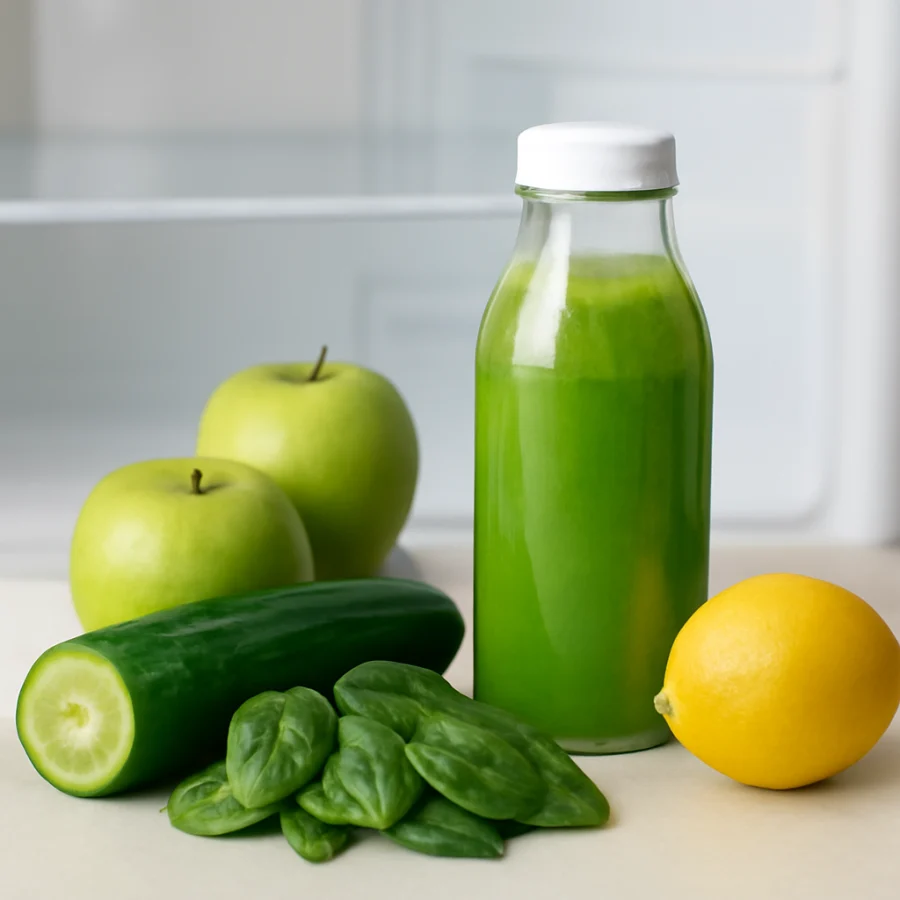
Wash containers with hot, soapy water, rinse them well, and let them dry completely before use. Do not pour fresh juice into a container that still has residue from an older batch. A narrow bottle can reduce exposure to air, but it must still be easy to clean thoroughly.
3. Label the container
Write the preparation date and the main ingredients on the container. This simple step prevents confusion when several juices are in the refrigerator. It is also helpful if you make variations with ingredients that may cause an allergic reaction or if another household member will be drinking the juice.
4. Drink it as soon as practical
For the best flavor and color, drink fresh juice the day it is made. If you need to store it, a cautious quality-focused approach is to use it within 24 hours. Some homemade juices may remain appealing for up to 48 hours when handled carefully and kept consistently cold, but quality can decline, and storage time does not make raw juice safer.
Before drinking stored juice, check for an unusual smell, unexpected bubbling, swelling in the container, mold, or a major change in appearance. Do not taste juice to decide whether it is safe. When in doubt, discard it.
Ingredient choices that affect storage
Different ingredients change how quickly a juice separates, browns, or loses its fresh flavor. Apples and pears can darken after cutting, while lemon juice may help maintain a brighter taste. Citrus, cucumber, and watermelon add liquid but can also make a drink separate more noticeably. Leafy greens may settle at the bottom, particularly when the juice is blended rather than extracted.
Separation is not automatically a sign of spoilage. Gently shake or stir refrigerated juice before serving if it has separated normally. However, an unpleasant odor, fermentation-like fizz, or container pressure is a reason to discard it rather than remix it.
For a sweeter flavor, replace one apple with a ripe pear. For a more tart version, add another teaspoon of lemon juice. Romaine lettuce can replace some of the spinach, and parsley can provide a stronger herbal note. Use produce that is fresh and free from visible mold, soft rot, or damaged areas that cannot be trimmed away safely.
Blender versus juicer for stored juice
A juicer separates liquid from much of the pulp, creating a thinner drink that pours easily. A blender keeps more of the whole produce, so the result may be thicker and may separate faster. Straining blended juice can create a smoother texture, but it also removes some of the pulp.
Neither method makes a homemade drink shelf-stable. Clean equipment, prompt refrigeration, and a short storage period remain important. Follow the manufacturer’s instructions for taking apart and cleaning your appliance, especially around gaskets, screens, blades, and small crevices.
Practical serving and storage tips
- Chill produce before preparation if you want a cold drink without relying on a large amount of ice.
- Pour only the amount you plan to drink, then return the remaining juice to the refrigerator promptly.
- Use a straw or covered glass if you want to reduce splashing, but wash reusable straws carefully because their interiors can retain residue.
- Serve the juice alongside breakfast or a snack rather than treating it as a complete replacement for meals.
- Do not freeze juice in a sealed glass container unless the container is specifically designed for freezing and enough expansion room is left. Thawing can also affect texture and flavor.
- If transporting juice, use an insulated cooler with ice packs and keep it cold throughout the trip.
For broader guidance on containers, refrigeration, and handling, visit these food safety and storage resources. You can also browse more drink recipes for ideas that fit your routine.
Frequently asked questions
How long does fresh juice last in the refrigerator?
For best quality, drink it the same day. If stored promptly at 40°F or below in a clean, sealed container, use it within about 24 hours when possible. Longer storage may reduce quality, and raw juice can still carry food-safety risks.
Can I store fresh juice in a plastic bottle?
Yes, a clean, food-safe plastic bottle with a tight lid can be used. Avoid containers that are scratched, difficult to clean, or previously used for nonfood substances. Glass is also suitable when handled carefully.
Why does my fresh juice separate?
Separation is common when juice contains pulp, leafy greens, or blended whole produce. Stir or shake it gently before serving. Separation alone does not necessarily mean the juice has spoiled.
Can I leave fresh juice out for a few hours?
It is safer to avoid extended room-temperature storage. Refrigerate juice promptly, and follow current guidance from reliable food-safety authorities for perishable foods. If the juice has been left out too long or you are unsure how warm it became, discard it.
Does lemon juice make homemade juice safe to store longer?
Lemon juice can brighten flavor and may slow browning, but it does not make raw homemade juice shelf-stable or remove all food-safety concerns. Keep the drink refrigerated and use it promptly.
Make freshness part of the preparation
Good storage begins before the juice reaches the refrigerator: choose sound produce, wash hands and equipment, prepare the drink efficiently, and use a clean container. This cucumber, apple, and spinach recipe is best enjoyed soon after it is made, but careful refrigeration can help preserve a portion for later the same day. Fresh juice can be convenient and enjoyable, as long as realistic storage limits and safe handling remain part of the routine.



Comments
0No comments yet. Be the first to share a helpful note or question.
Leave a Comment
Your email address will not be published. Comments are reviewed before appearing on the site.