
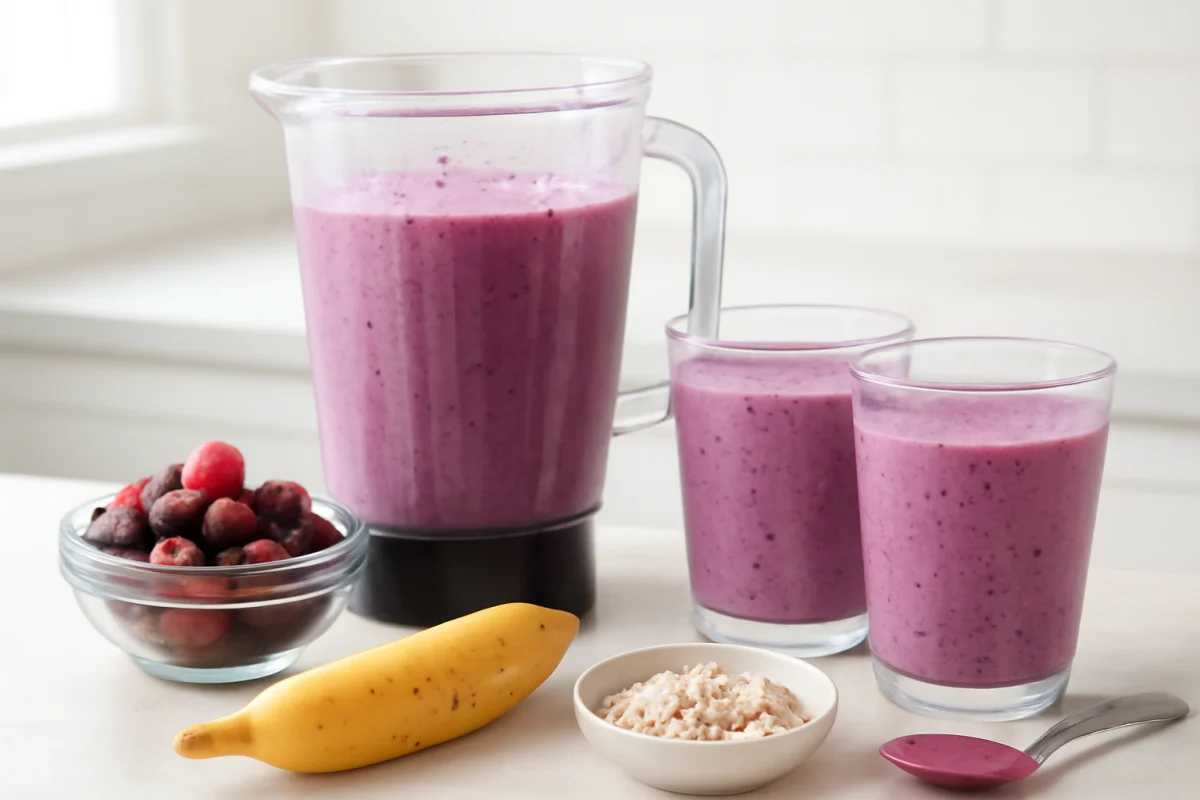
The quickest way to prevent smoothie separation is to balance liquid, fruit, and thickening ingredients, then drink the smoothie soon after blending. A smoothie can separate when water-rich fruit releases liquid, tiny particles settle, or the ingredients are not fully emulsified. This is usually a texture issue rather than a sign that the smoothie is unsafe. For more recipes and practical drink guidance, visit detox beverage ideas.
This creamy berry oat smoothie is a useful recipe for learning how to control separation. Frozen berries provide body, oats add thickness, and Greek yogurt helps create a smoother mixture. The recipe is easy to adjust, does not require unusual ingredients, and works well as a satisfying drink alongside a meal or snack. For more ideas, browse the Drink Recipes section.
Creamy Berry Oat Smoothie at a Glance
- Prep time: 5 minutes
- Total time: 5 minutes
- Servings: 2
- Main focus: A thick, blended smoothie with less visible separation
Ingredients
- 1 cup unsweetened milk or unsweetened non-dairy milk
- 1 cup frozen mixed berries
- 1/2 cup plain Greek yogurt
- 1/4 cup old-fashioned rolled oats
- 1/2 medium banana, preferably frozen in slices
- 1 tablespoon smooth peanut butter or almond butter
- 1/2 teaspoon vanilla extract
- 1 to 2 teaspoons honey or maple syrup, optional
- 4 to 6 ice cubes, optional and only if the mixture needs more chill
How to Make the Smoothie
- Check the ingredients. Use frozen berries and, if possible, frozen banana slices. Measure the milk before adding it so you can control the final consistency. If your berries are especially icy or your blender is smaller, allow them to sit for a few minutes rather than adding a large amount of extra liquid.
- Add the liquid first. Pour the milk into the blender jar. Starting with liquid helps the blades move the ingredients more easily and may reduce the need to stop and scrape the sides.
- Add the soft ingredients. Add the Greek yogurt, peanut or almond butter, vanilla, and optional sweetener. These ingredients help create a more cohesive texture when blended.
- Add the oats and banana. Place the oats and banana over the liquid ingredients. Oats can thicken the smoothie, while banana contributes body and a naturally creamy texture.
- Add the frozen berries last. Frozen fruit chills the smoothie without requiring as much added ice. If you use ice, add only a few cubes at this stage.
- Blend gradually. Start on a low speed for several seconds, then increase to a medium or high speed. Blend for about 30 to 60 seconds, or until the mixture looks uniform. Stop the blender if needed and scrape down the sides with the blender turned off.
- Adjust carefully. If the smoothie is too thick, add milk 1 tablespoon at a time. If it is too thin, add a few more frozen berries, a little yogurt, or a small amount of oats. Blend briefly after each adjustment.
- Serve promptly. Pour the smoothie into chilled glasses and stir if it sits for more than a few minutes. A short rest can allow some settling, even in a well-blended drink.
Why Does My Smoothie Separate?
Separation happens because a smoothie is a mixture of liquids, fruit fibers, starches, fats, proteins, and air. These parts do not always remain evenly distributed. Several common causes are responsible.
Water-rich ingredients release liquid
Fresh berries, citrus, melon, cucumber, and leafy greens contain substantial water. Once blended, their cells are broken apart and that water becomes part of the drink. Over time, heavier pulp and fiber may settle while clearer liquid rises to the top. This is normal in many homemade smoothies.
The smoothie does not contain enough structure
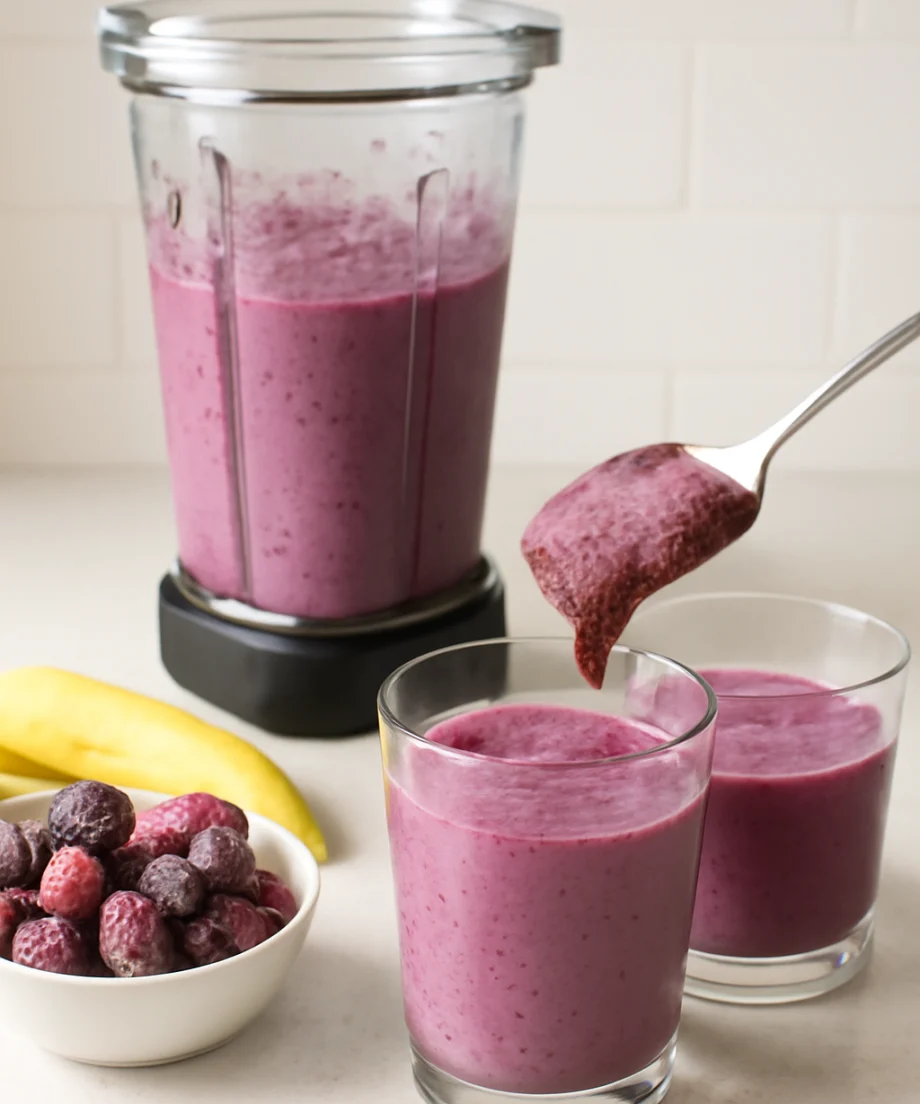
A drink made mostly from juice, water, and soft fruit often separates faster than one containing yogurt, oats, nut butter, banana, or another thickening ingredient. These ingredients add solids that help the smoothie feel more uniform. They do not permanently prevent separation, but they can slow it down.
The ingredients are blended at different temperatures
Warm or room-temperature ingredients can soften a smoothie and make it seem thinner. Frozen ingredients usually provide a thicker starting texture. However, using too much ice can create a watery drink as the ice melts, especially if the smoothie sits before serving.
The blender needs more time or better circulation
Large frozen pieces, dry oats, leafy greens, or a crowded blender jar may not circulate properly. You may see small particles, streaks, or a liquid layer because the mixture was not blended evenly. Adding ingredients in a practical order and using short pauses to scrape the sides can help.
Ingredient Choices That Help Reduce Separation
Choose frozen fruit for body and temperature
Frozen berries and banana help create a cold, thick texture without adding a large volume of water. If using frozen fruit, check the package for added sugar or other ingredients if that matters to your recipe. Packaged product details can change, so verify the current label when needed.
Use a modest amount of liquid
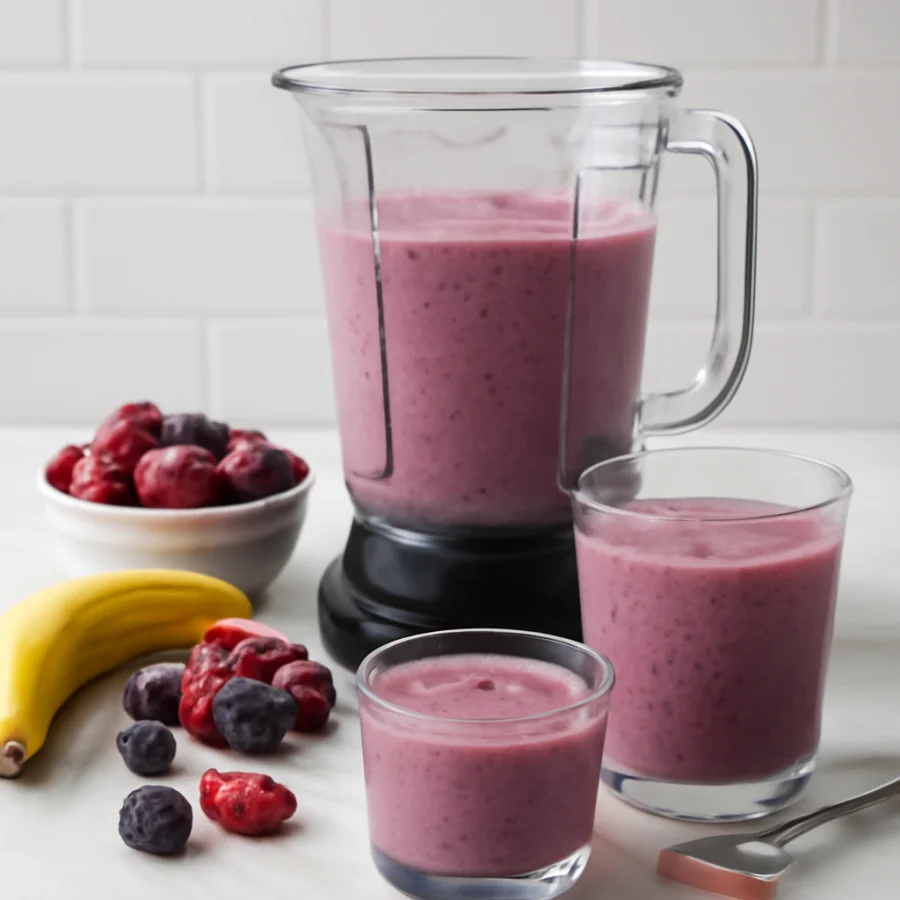
It is easier to thin a thick smoothie than to rescue one that is too watery. Begin with the smaller amount of milk listed in a recipe or hold back a few tablespoons. Add more only after blending. This approach is particularly helpful when fruit contains a lot of ice or when yogurt is thinner than expected.
Add a creamy or thickening ingredient
Greek yogurt, silken tofu, nut butter, avocado, banana, and oats can contribute body. Each changes the flavor and texture, so use an amount that fits the rest of the recipe. Nut and seed butters may make a smoothie richer, while oats create a more substantial mouthfeel.
Be cautious with large amounts of ice
Ice can make a smoothie cold, but it is not the same as a thickening ingredient. As it melts, it adds water. Frozen fruit is often a better first choice for chill and thickness. If you use ice, add a small amount and blend only until smooth.
Helpful Alternatives
- Dairy-free: Use unsweetened soy, oat, almond, or pea milk and choose a dairy-free yogurt. The flavor and thickness will vary by product, so adjust the liquid gradually.
- Lower-sugar option: Leave out the honey or maple syrup and use unsweetened milk. Riper banana may provide enough sweetness for your taste.
- Berry-free option: Replace the berries with frozen peaches or mango. These fruits can create a thick texture, although their flavor and natural sweetness differ.
- Nut-free option: Use sunflower seed butter or omit the nut butter. If you omit it, the smoothie may be slightly less rich.
- Yogurt-free option: Add a little more frozen banana or a small portion of silken tofu. Blend thoroughly and adjust the milk one tablespoon at a time.
Blending and Serving Tips
Do not fill the blender beyond its recommended capacity. An overfilled jar can leave pockets of unmixed ingredients and may strain the motor. For a smoother result, cut fresh fruit into small pieces and soften very hard frozen pieces for a few minutes before blending. Never use a utensil to stir ingredients while the blades are moving.
If you are making more than two servings, blend in batches when necessary. A smaller batch often circulates more effectively than a crowded container. For a thicker smoothie bowl texture, reduce the milk slightly and use a tamper only if your blender manufacturer says it is safe for that model.
Serve the smoothie in a chilled glass with a spoon or reusable straw. A sprinkle of oats, a few berries, or a thin drizzle of nut butter can add texture, but toppings may also settle or change the drink as it sits. For additional blending guidance, see the Juicing & Blending category.
Storage and Food Safety
A smoothie is best immediately after blending, when the texture is most uniform. If you need to hold it briefly, pour it into a clean, covered container and refrigerate it promptly. Leave as little empty space as practical to limit air exposure, and shake or stir before drinking.
Do not leave a dairy-based or plant-based smoothie at room temperature for an extended period. Use clean hands, clean equipment, and ingredients that have been stored according to their labels. If the smoothie develops an unusual odor, flavor, appearance, or texture, discard it rather than tasting it repeatedly. For more general guidance, visit Food Safety & Storage.
Frequently Asked Questions
Is separation a sign that my smoothie has gone bad?
Not necessarily. A liquid layer or settled fruit may simply reflect normal separation. Smell, flavor, appearance, storage time, and temperature all matter. When in doubt, discard the smoothie and follow current food-safety guidance.
Can I blend a smoothie again after it separates?
Yes. If it has been stored safely, blend or shake it briefly before serving. Reblending may make the texture uniform again, although some separation can return as the drink sits.
Why is my smoothie watery even though I used frozen fruit?
You may have added too much milk, used fruit with a high ice content, or blended in too much melting ice. Add more frozen fruit, yogurt, banana, or a small amount of oats instead of immediately adding more liquid.
Can oats make a smoothie gritty?
They can if the smoothie is under-blended or if you use a large amount. Use old-fashioned rolled oats, keep the portion modest, and blend until the drink looks smooth. You can also soak the oats briefly in the milk before blending.
Should I use fresh or frozen berries?
Either works. Frozen berries generally make a thicker, colder smoothie, while fresh berries may require less blending but can produce a thinner drink. If using fresh fruit, reduce the milk slightly or add a few ice cubes.
A More Consistent Smoothie Starts With Balance
When a smoothie separates, the solution is usually not a special powder or complicated technique. Start with enough structure from frozen fruit, yogurt, oats, banana, or nut butter; add liquid gradually; blend in a sensible order; and serve soon after preparation. Some settling is still normal, but these steps can produce a creamier berry oat smoothie with a more consistent texture.
Comments
0No comments yet. Be the first to share a helpful note or question.
Leave a Comment
Your email address will not be published. Comments are reviewed before appearing on the site.