
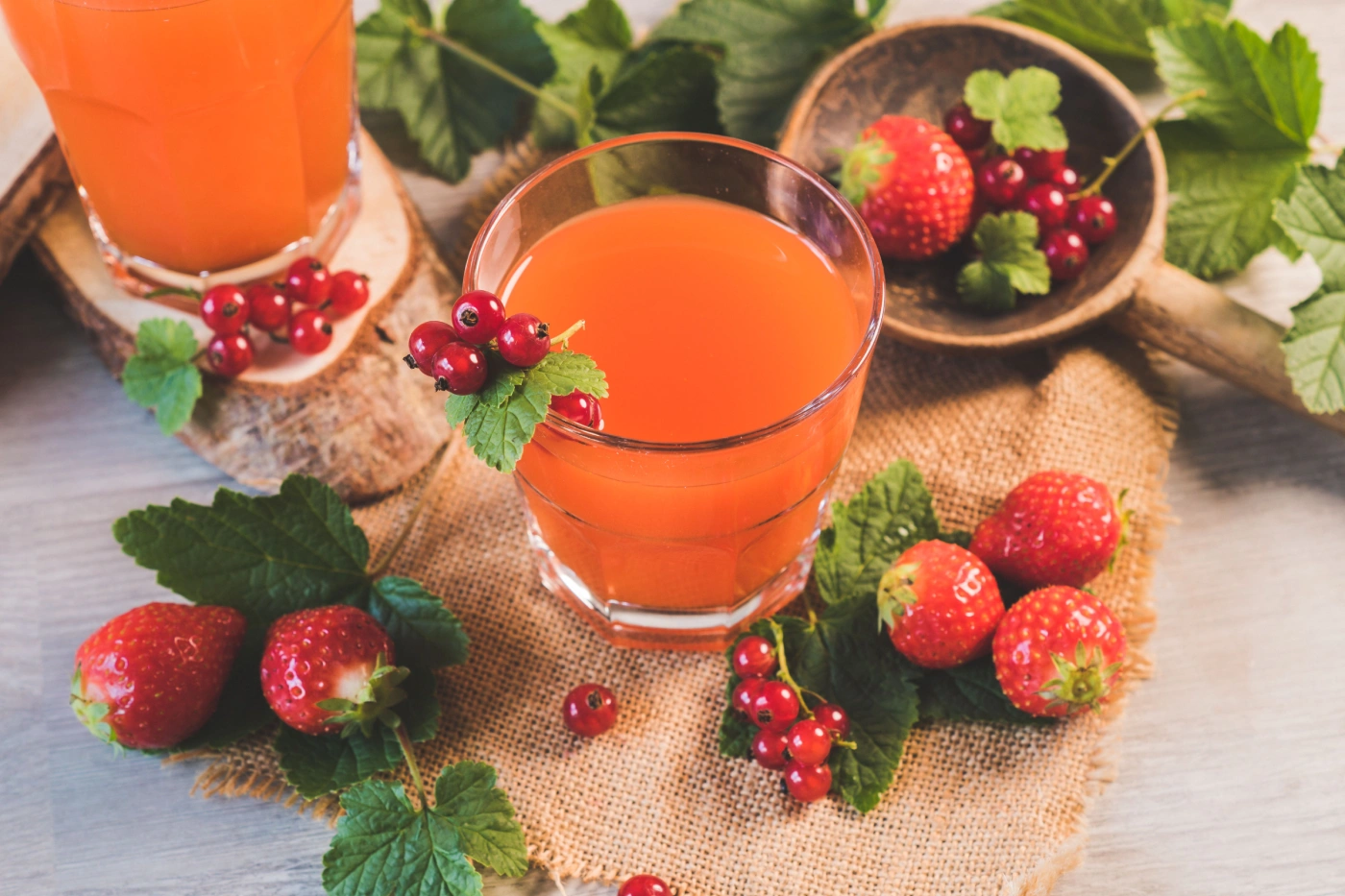
The best fruits for morning juice blends are those that bring a pleasant balance of sweetness, acidity, aroma, and liquid. For an easy starting point, combine oranges, strawberries, pineapple, and a small apple to make a bright citrus-berry juice blend without added sweeteners. This recipe is refreshing, simple to adjust, and flexible enough for a juicer or blender. For more recipes and practical drink guidance, visit homemade detox drinks.
A homemade fruit drink can be an enjoyable way to add variety to breakfast or a midmorning routine. It is not a substitute for a balanced meal, and juicing changes the texture and fiber content of whole fruit. Still, a thoughtfully prepared blend can offer fresh flavor and a convenient way to use ripe produce.
Citrus-Berry Morning Juice Blend at a Glance
- Prep time: 15 minutes
- Total time: 15 minutes with a juicer, or about 20 minutes with a blender
- Servings: 2 small servings, about 8 ounces each
- Equipment: Juicer or high-speed blender, knife, cutting board, and fine-mesh strainer if blending
Ingredients
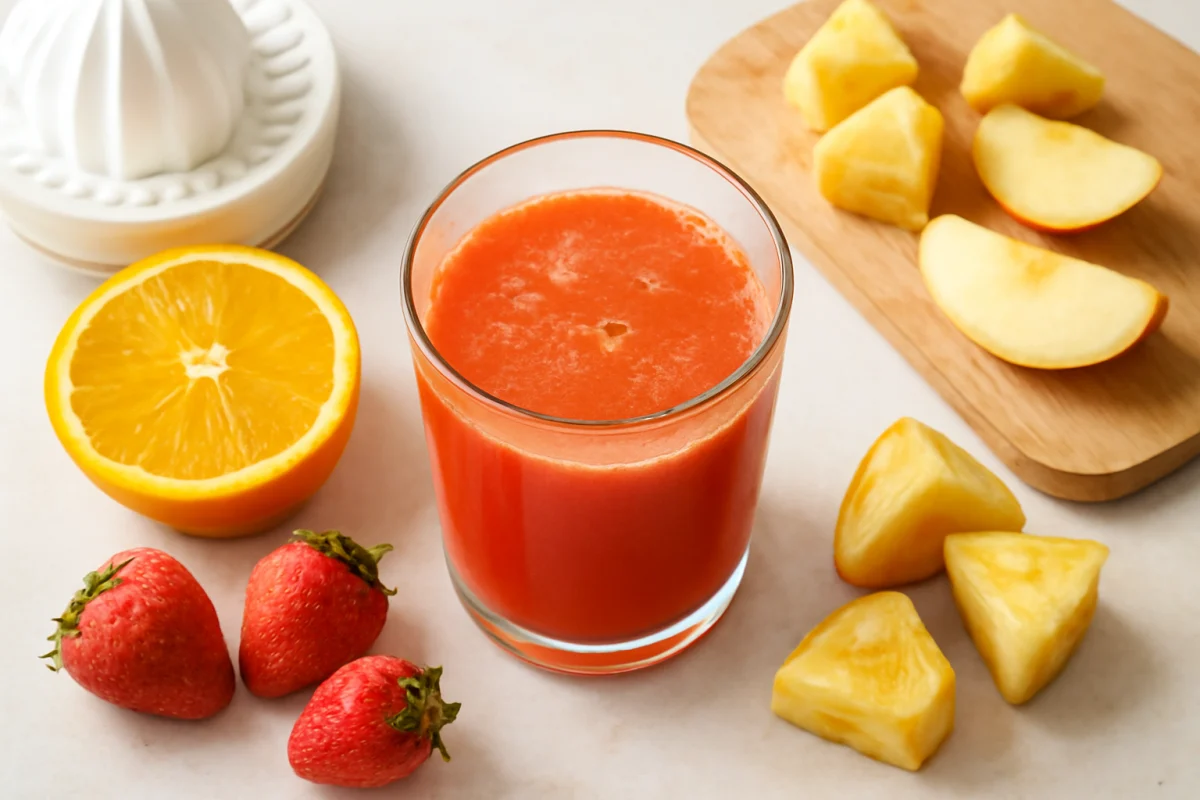
- 3 medium navel oranges, peeled and separated into sections
- 1 cup strawberries, hulled and rinsed
- 1 cup pineapple chunks, fresh or thawed from frozen
- 1 small apple, cored and cut into wedges
- 1 tablespoon fresh lemon juice, optional
- 1/2 cup cold water, only if using a blender
- Ice, for serving, optional
Choose ripe fruit that smells fresh and has no visible mold, leaking areas, or extensive bruising. The oranges provide a juicy, tangy base. Strawberries add a soft berry flavor and color, pineapple contributes tropical acidity, and apple rounds out the blend with mild sweetness. Lemon juice is optional; use it when the fruit tastes especially sweet or flat.
How to Make the Morning Juice Blend
- Wash the produce. Rinse the oranges, strawberries, pineapple, and apple under cool running water before cutting or peeling. Clean your hands, knife, cutting board, and equipment as well.
- Prepare the fruit. Peel the oranges and remove obvious seeds. Hull the strawberries. Cut away the pineapple rind and core if using a whole pineapple. Core the apple and cut it into pieces that fit your juicer feed chute or blender jar.
- Juice the ingredients. Feed the oranges, strawberries, pineapple, and apple through the juicer according to the appliance manufacturer's instructions. Alternate softer fruit with firmer apple pieces if your juicer handles that combination more smoothly.
- Add lemon if desired. Stir in the lemon juice after juicing. Taste the blend and adjust with a little more orange, apple, or pineapple if needed. Avoid adding sugar unless you have a specific reason; ripe fruit usually supplies enough sweetness.
- Blend instead of juice. If you do not have a juicer, place the prepared fruit and 1/2 cup cold water in a blender. Blend until smooth, then pour through a fine-mesh strainer if you prefer a thinner drink. Press gently with a spoon rather than forcing the pulp through.
- Serve promptly. Pour into two glasses and serve chilled, with ice if you like. Stir before drinking because natural fruit particles can settle quickly.
Why These Are Some of the Best Fruits for Morning Juice Blends
Oranges
Oranges are a practical foundation because they contain plenty of juice and have a familiar sweet-tart flavor. Navel oranges are easy to peel and typically have few or no seeds, although any sweet orange can work. If you use a juicing machine, remove the peel and as much of the thick white pith as you prefer. A small amount of pith is not a safety problem, but too much can make the drink more bitter.
Strawberries
Strawberries bring color and a gentle berry aroma. They can be softer than apples or pineapple, so a juicer may produce a thicker or more pulpy stream. Very ripe berries are flavorful, but discard any with mold rather than trimming around the affected spot. Frozen strawberries can be used in a blender after thawing, though they may make the drink thicker and colder.
Pineapple
Pineapple adds tropical character and enough acidity to keep the drink from tasting one-dimensional. Fresh pineapple works especially well, but unsweetened canned pineapple packed in juice can be a convenient alternative. Drain canned fruit before blending or juicing, and check the label if you want to avoid added syrup or sweeteners. The flavor of canned pineapple may be softer and sweeter than fresh pineapple.
Apple
Apple helps balance tart ingredients and adds a clean, familiar finish. Crisp varieties can produce a lighter flavor, while sweeter apples make the blend more dessert-like. Always remove the core and seeds before processing. Apples can brown after cutting, but mixing them promptly with citrus juice helps the drink retain a fresher appearance.
Useful Tips and Ingredient Alternatives
- Adjust the sweetness naturally: If the blend is too tart, add more apple or orange rather than table sugar. If it is too sweet, add lemon juice or a few extra strawberries.
- Use mango for a softer texture: Replace half the pineapple with 1 cup chopped ripe mango. Mango is better suited to a blender because its flesh can be thick and fibrous.
- Try grapefruit carefully: Replace one orange with half a grapefruit for a more bitter, grown-up flavor. Grapefruit can interact with some medications, so people who take prescription drugs should check with a pharmacist or clinician before consuming it regularly.
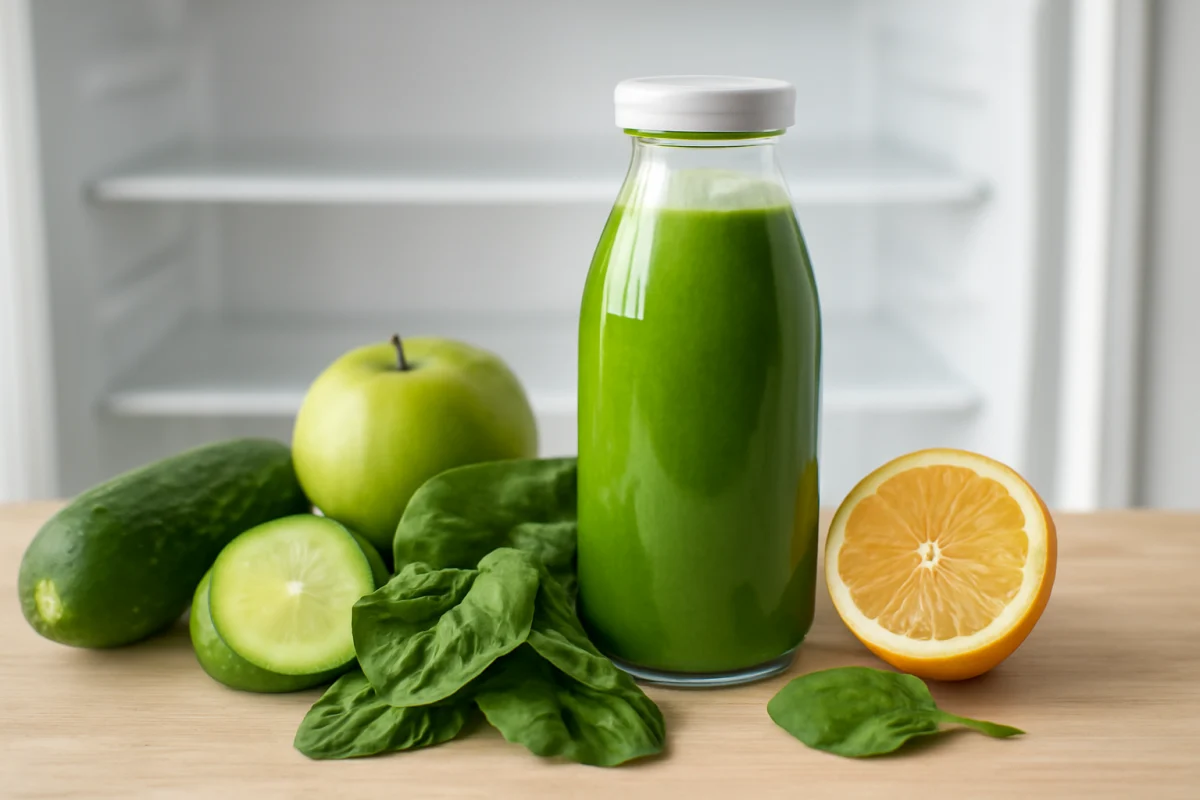
- Add cucumber for a lighter profile: Use 1/2 cup peeled cucumber in place of half the apple. This makes the drink less sweet and more refreshing.
- Include leafy greens in a blender: A small handful of baby spinach can be blended with the fruit. It may change the color and flavor, so start with a modest amount.
- Do not overload the juicer: Cut large pieces to fit the feed chute and follow the manufacturer's guidance for soft fruit, pulp, and cleaning.
- Keep the texture you prefer: Straining removes some pulp, while leaving the drink unstrained produces a thicker beverage with more of the fruit's original texture.
For more combinations, see this guide to beginner-friendly fruits and vegetables for juice. You can also compare this recipe with an easy cucumber, apple, and spinach green juice if you prefer a less tropical flavor.
Juicer or Blender: Which Method Is Better?
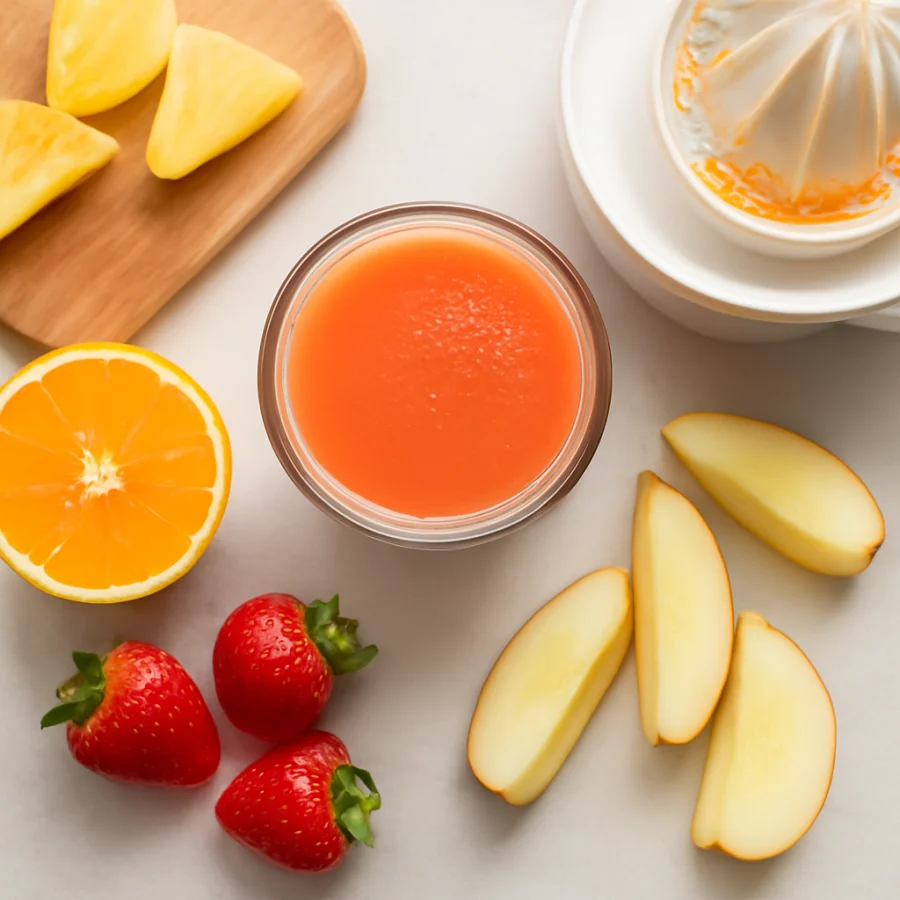
Neither method is automatically best; the right choice depends on the texture and cleanup you want. A juicer separates liquid from much of the pulp, creating a thinner drink that is easy to sip. A blender keeps more of the fruit's structure, but it usually needs extra water and may require straining for a juice-like result.
Blending is useful when you want to use frozen fruit or avoid buying another appliance. Juicing can be convenient when you are preparing several servings and prefer a smooth beverage. In either case, wash produce and equipment carefully, and follow the appliance's care instructions.
Serving Suggestions
Serve this blend in a small glass alongside a balanced breakfast such as oatmeal with nuts, plain yogurt with whole-grain toast, or eggs with vegetables. The drink is also suitable as a refreshing afternoon option. Pour it over ice for a colder texture, or chill the prepared fruit before processing to avoid dilution.
Because the recipe is fruit-forward, a small serving may be more satisfying than a large glass. If you want a more substantial blended drink, leave the pulp in and add plain yogurt or oats. Those additions change the recipe from juice into a smoothie, so blend until creamy and serve immediately.
Storage and Food Safety
Freshly prepared juice is best served right away for flavor and texture. If you need to store it, transfer it to a clean, covered container, refrigerate it promptly, and use it within a short period according to current food-safety guidance. Keep the container cold, and discard the drink if it develops an unusual smell, flavor, appearance, or excessive fermentation.
Do not leave fresh juice at room temperature for extended periods. Wash produce before cutting, refrigerate cut fruit, and clean the juicer or blender promptly after use. For additional guidance, review these food safety and storage practices and follow reliable current food-safety recommendations.
Frequently Asked Questions
Can I make this recipe without a juicer?
Yes. Blend the prepared fruit with 1/2 cup cold water, then strain it if you want a thinner drink. You can also keep the pulp for a thicker smoothie-style beverage.
What fruit can replace strawberries?
Raspberries, blueberries, peaches, or ripe mango can work. Softer fruit may produce more pulp, while frozen fruit should be thawed partially or fully before blending.
Can I prepare the fruit the night before?
You can wash and cut the fruit in advance, then refrigerate it in a covered container. For the best flavor and texture, process the ingredients in the morning. Keep cut produce cold and use clean utensils.
Is this juice a complete breakfast?
No. It is primarily a fruit beverage and does not provide the full range of foods and nutrients found in a balanced meal. Pair it with foods such as yogurt, eggs, nuts, whole grains, or another protein source if you want it as part of breakfast.
Can I use bottled orange juice?
Yes, but the flavor and texture will differ from freshly juiced oranges. If using a packaged product, check the current label for ingredients, added sugars, and storage instructions because product details can change.
A Flexible Recipe for Fresh Morning Flavor
This citrus-berry blend shows why oranges, strawberries, pineapple, and apples are among the best fruits for morning juice blends: each contributes a distinct flavor while remaining easy to find and prepare. Start with the listed proportions, then adjust the acidity, sweetness, and texture to suit your preferences. Keep portions practical, pair the drink with nourishing foods, and prepare it with careful produce handling for a simple addition to your morning routine.

Comments
0No comments yet. Be the first to share a helpful note or question.
Leave a Comment
Your email address will not be published. Comments are reviewed before appearing on the site.