
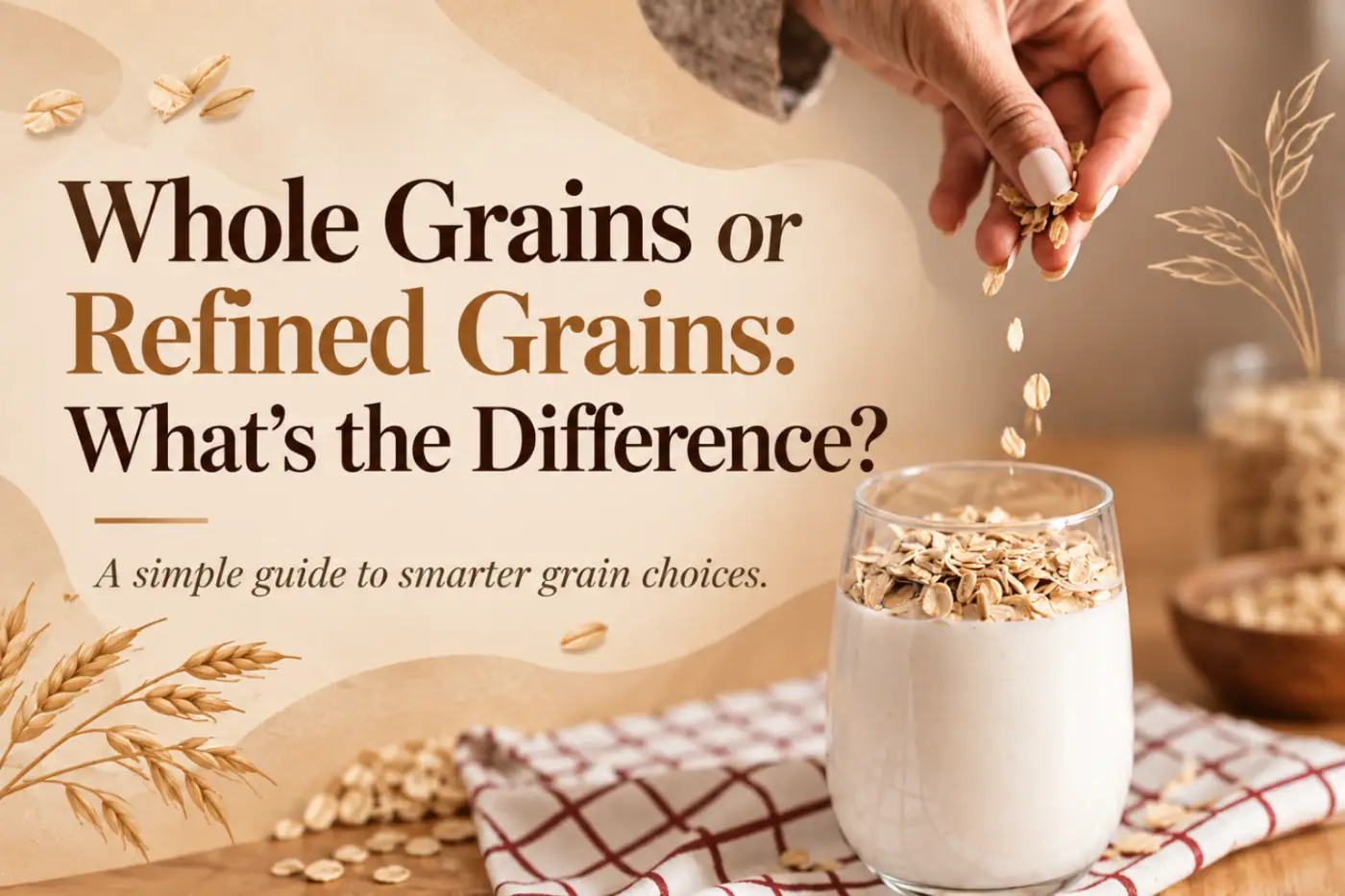
Whole grains contain all three parts of the grain kernel, while refined grains have had the bran and germ removed during processing. That difference affects the grain’s texture, flavor, and nutritional profile. A simple way to explore the distinction is with a creamy apple oat smoothie made with old-fashioned oats, yogurt, cinnamon, and milk. For more recipes and practical drink guidance, visit cleanse drink ideas.
This drink is worth trying because it turns a familiar whole-grain ingredient into a smooth, satisfying beverage without requiring a special powder or complicated equipment. It can work as part of breakfast or a snack, but it is not meant to replace a varied diet or a complete meal in every situation. For more ingredient education, visit the Drink & Ingredient Guides category.
What Is the Difference Between Whole Grains and Refined Grains?
A whole grain keeps the three main parts of the original kernel:
- Bran: The outer layer, which contains fiber and other naturally occurring nutrients.
- Germ: The part that can grow into a new plant and contains various nutrients and plant compounds.
- Endosperm: The starchy inner portion that supplies much of the grain’s carbohydrate.
Refined grains are milled to remove the bran and germ, leaving mostly the endosperm. This process can create a lighter color, softer texture, and longer shelf stability, but it also removes some of the grain’s naturally occurring components. Some refined grain products are enriched, meaning selected nutrients are added back after processing. Enrichment does not necessarily restore every component removed during refining.
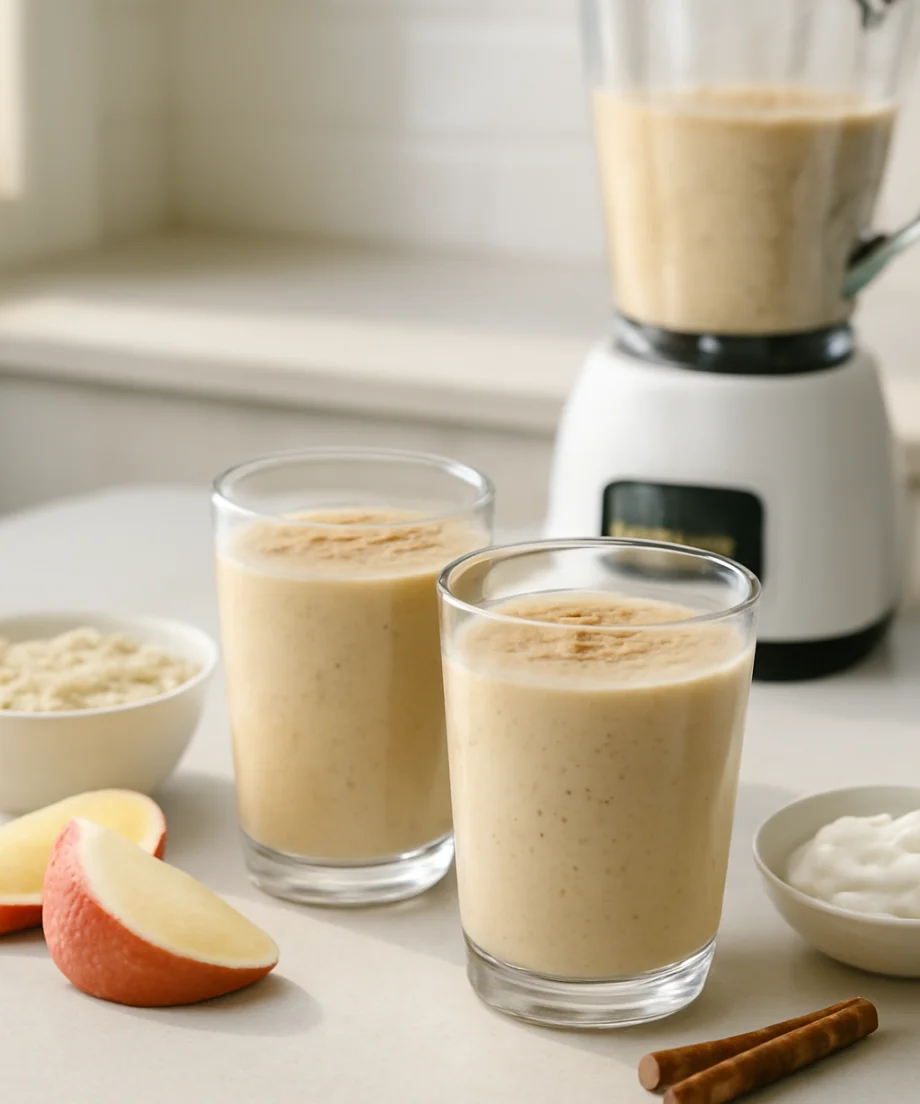
Common whole-grain foods include oats, brown rice, whole-wheat flour, popcorn, quinoa, barley, and whole-grain cornmeal. Examples of refined grains include white flour, white rice, and many breads, crackers, and cereals made primarily from refined flour. The ingredient list and package wording matter because a dark color or rustic appearance alone does not prove that a product is whole grain.
Apple Oat Smoothie at a Glance
- Prep time: 8 minutes
- Total time: 8 minutes
- Servings: 2
- Equipment: Blender, measuring cups, knife, and cutting board
Ingredients
- 1 medium apple, cored and chopped
- 1/2 cup old-fashioned rolled oats
- 1 cup plain yogurt, Greek or regular
- 1 cup cold milk or unsweetened fortified non-dairy milk
- 1/2 teaspoon ground cinnamon
- 1/4 teaspoon vanilla extract
- 1 tablespoon smooth peanut butter or sunflower seed butter, optional
- 4 to 6 ice cubes
- 1 to 2 teaspoons maple syrup, optional, depending on the sweetness of the apple and yogurt
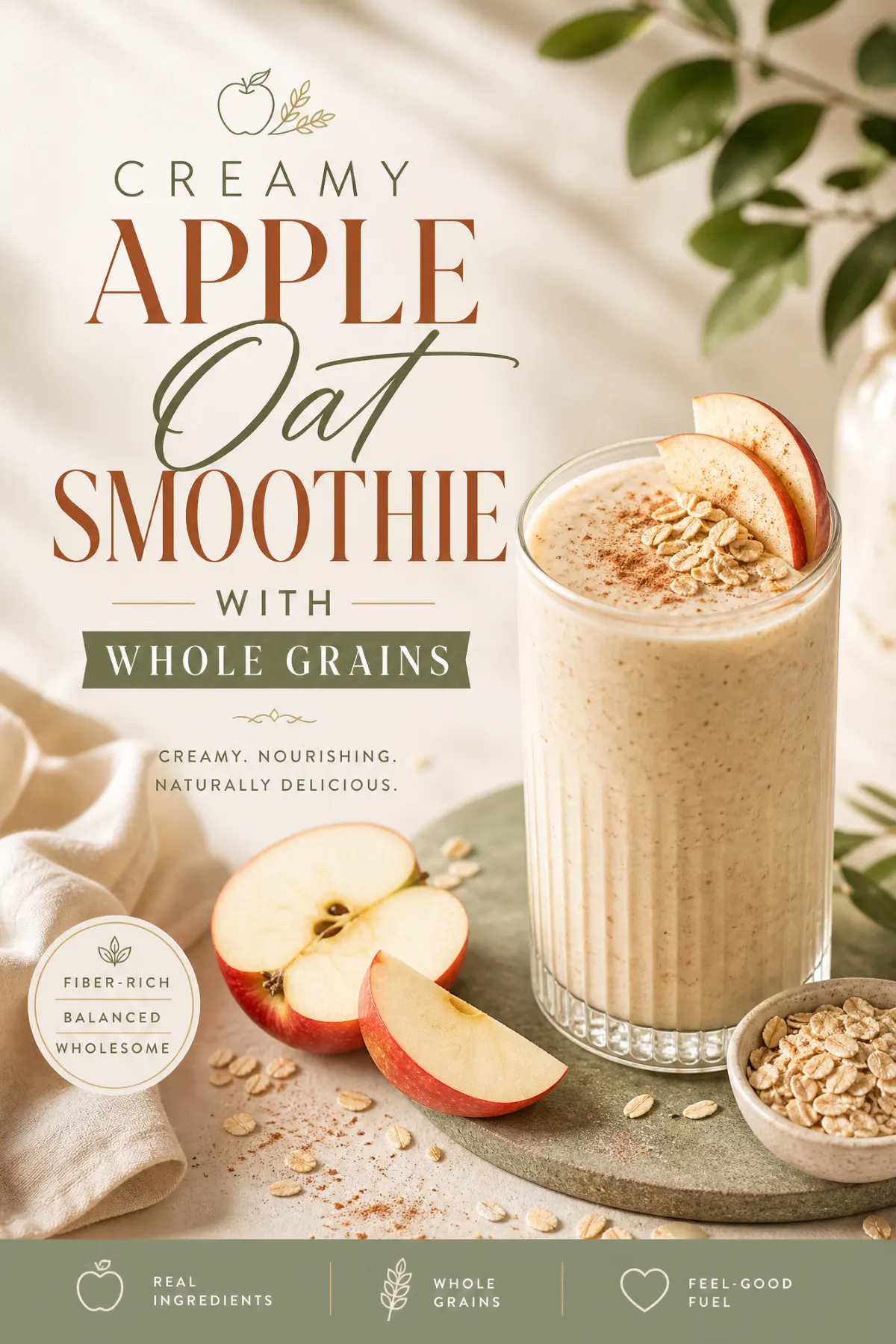
How to Make the Whole-Grain Apple Oat Smoothie
- Prepare the apple. Rinse the apple under running water, dry it, remove the core and seeds, and chop it into small pieces. Peeling is optional; leaving the peel on can add color and a slightly more textured finish.
- Add the liquid first. Pour the milk into the blender. Adding liquid before the solid ingredients can help the blades circulate the mixture more easily.
- Build the smoothie. Add the yogurt, rolled oats, chopped apple, cinnamon, vanilla, optional nut or seed butter, ice, and maple syrup if using.
- Blend until smooth. Start on a low speed and gradually increase to high. Blend for about 45 to 60 seconds, or until the oats are finely incorporated and the drink reaches your preferred texture.
- Adjust and serve. If the smoothie is too thick, blend in a few tablespoons of additional milk. If it is too tart, add a small amount of maple syrup. Pour into two glasses and serve promptly.
Why Rolled Oats Work in This Recipe
Rolled oats are whole grains because the grain is processed by steaming and flattening rather than by removing the bran and germ. Their mild flavor pairs well with apple and cinnamon, and their soft, flat shape blends more easily than some larger or tougher grains.
Steel-cut oats are also whole grains, but they are chopped rather than rolled. They can produce a coarse texture when blended from their dry state. If you want to use steel-cut oats, soaking them in the milk for several hours in the refrigerator may soften them, although the result can still be more textured than a smoothie made with rolled oats.
Instant oats may also be made from whole oat groats, but products vary. Check the ingredient list, especially if you are trying to avoid added sugar or flavored oat packets. A plain product with oats as the primary ingredient gives you the most control over the recipe.
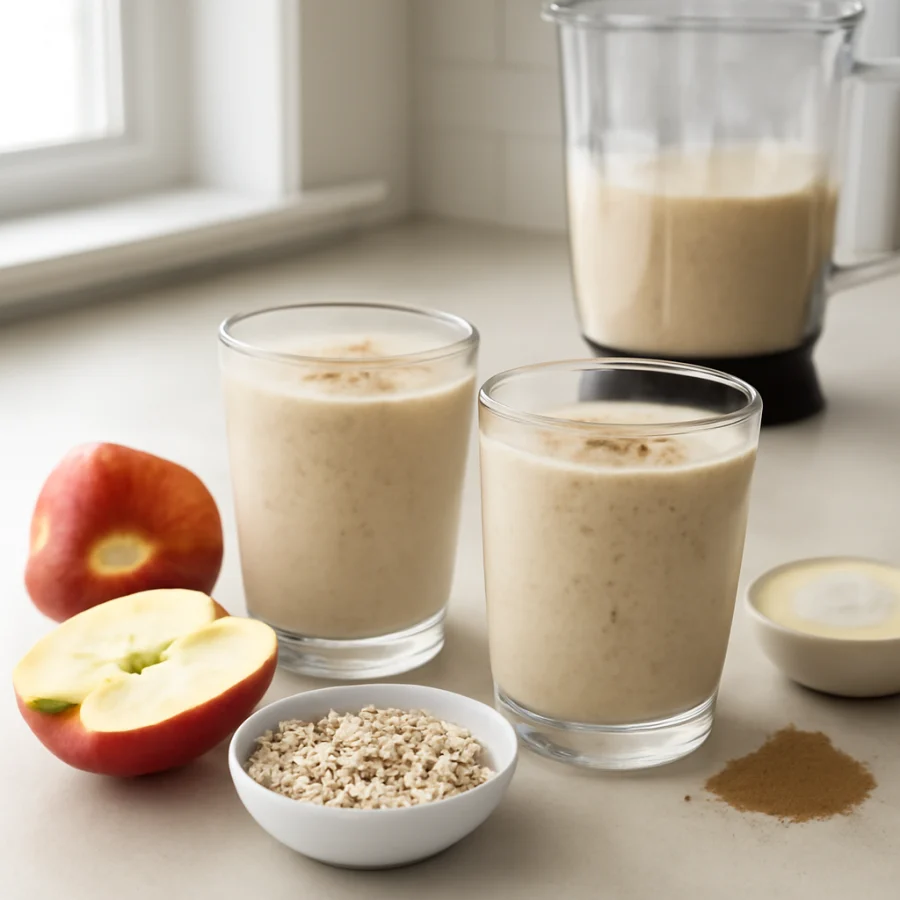
Ingredient Alternatives and Flavor Ideas
Choose a different fruit
Pear can replace the apple for a softer, floral flavor. Frozen peaches create a sweeter, cooler smoothie, while a small ripe banana adds sweetness and thickness. If using a very sweet fruit, you may not need maple syrup.
Change the dairy or non-dairy base
Plain kefir can replace some or all of the yogurt for a thinner drink with a tangy flavor. Unsweetened soy milk is a practical non-dairy option with a creamy body. Almond, oat, or pea-based beverages can also work, but their sweetness and thickness differ by product. Review the current package label for added sugars and allergen information.
Adjust the spices
Cinnamon is the main spice here, but a small pinch of ground ginger, cardamom, or nutmeg can create a different profile. Start with a modest amount because strong spices can quickly overpower the apple and yogurt.
Make it nut-free
Leave out the peanut or seed butter, or use sunflower seed butter if it fits your dietary needs. If the drink will be served to others, check the labels and kitchen surfaces for allergen cross-contact concerns.
Tips for a Better Texture
- Use cold ingredients and ice for a refreshing drink.
- Blend the oats thoroughly rather than pulsing briefly.
- Cut the apple into small pieces so the blender has less work to do.
- For a smoother result, soak the oats in the milk for 10 to 15 minutes before blending.
- For a thicker smoothie, use frozen apple pieces or reduce the milk slightly.
- For a thinner drink, add milk one tablespoon at a time rather than pouring in a large amount at once.
Whole-Grain and Refined-Grain Label Tips
When shopping, look for a whole grain listed clearly in the ingredient list, such as “whole wheat,” “whole oats,” “whole-grain corn,” or “brown rice.” Phrases such as “multigrain,” “wheat,” or “made with grain” do not automatically mean that a product is mostly whole grain. The Nutrition Facts label can provide fiber information, but fiber alone does not identify every grain ingredient or explain how much of a product is whole grain.
For packaged smoothie ingredients, such as granola, oat beverages, or flavored yogurt, review the current label for added sugar, serving size, allergens, and storage instructions. Formulas can change, so information printed on the package is more reliable than an old product description.
Serving Suggestions
Serve this apple oat smoothie in a chilled glass with a light sprinkle of cinnamon. For a more substantial breakfast, pair it with a boiled egg, fruit, or whole-grain toast rather than assuming the drink supplies every nutrient you need. If you are serving the smoothie to children, use a secure cup and consider blending the mixture until completely smooth.
You can also pour the smoothie into a small bowl and top it with sliced apple, pumpkin seeds, or a spoonful of plain yogurt. Keep toppings modest if you want the drink to remain easy to blend and drink.
Storage and Food Safety
This smoothie is best served immediately because the oats continue to absorb liquid and the apple may gradually darken. If necessary, place leftovers in a clean, covered container and refrigerate them promptly. Use them within 24 hours, shake or stir before drinking, and discard the smoothie if it develops an unusual odor, appearance, or texture.
Wash produce under running water before cutting, keep the blender and utensils clean, and refrigerate dairy or other perishable ingredients according to their package directions. Do not leave the finished smoothie at room temperature for an extended period. For more practical guidance, see the Food Safety & Storage resources.
Frequently Asked Questions
Are oats whole grains?
Yes. Plain rolled oats, steel-cut oats, and oat groats are generally whole-grain forms of oats because they retain the bran, germ, and endosperm. Always check flavored or instant products for added ingredients.
Is brown rice always better than white rice?
Brown rice is a whole-grain option, while white rice is refined. Neither choice needs to be treated as the only acceptable option. Personal preference, budget, cooking time, texture, and the rest of the meal can all matter.
Can I use oat flour in this smoothie?
Yes, but check the label to confirm whether it is made from whole oats. Use about 1/3 cup oat flour in place of the 1/2 cup rolled oats and blend as directed. The drink may become thicker and smoother.
Can I prepare this smoothie ahead of time?
You can blend it earlier the same day and refrigerate it in a covered container, but the texture may thicken as the oats absorb liquid. Stir or shake it before serving and follow safe refrigeration practices.
Does this smoothie replace a balanced meal?
Not necessarily. It contains several useful ingredients, but nutritional needs vary. Consider it one option within a varied eating pattern, and add other foods when you need a more complete meal.
Understanding whole grains and refined grains makes it easier to choose ingredients based on texture, flavor, and label information. This apple oat smoothie offers a straightforward way to use a whole-grain ingredient while keeping the recipe flexible and easy to prepare.


Comments
0No comments yet. Be the first to share a helpful note or question.
Leave a Comment
Your email address will not be published. Comments are reviewed before appearing on the site.