

To make low-sugar vegetable juice, combine water-rich vegetables with leafy greens, lemon, and fresh herbs instead of relying on fruit for sweetness. This cucumber, celery, spinach, and lemon juice is bright, crisp, and easy to adjust. It is a practical option when you want a fresh drink with a savory flavor and less natural sugar than a fruit-heavy juice. For more recipes and practical drink guidance, visit detox drink ideas.
The recipe makes two small servings and can be prepared with a juicer or a blender. It does not replace a balanced meal, and the amount of natural sugar will vary with the vegetables and any optional ingredients you use. Think of it as a flavorful drink to enjoy alongside regular meals and snacks.

Low-Sugar Vegetable Juice at a Glance
- Prep time: 10 minutes
- Total time: 10 minutes with a juicer; about 15 minutes with a blender
- Servings: 2 small servings, about 8 ounces each
- Equipment: Juicer or high-speed blender, knife, measuring cup, and fine-mesh strainer or cheesecloth if blending
Ingredients
- 1 large English cucumber, about 10 to 12 ounces, rinsed and cut into pieces
- 3 celery stalks, rinsed and cut into pieces
- 2 packed cups baby spinach, rinsed and drained
- 1 small handful fresh parsley or cilantro, rinsed
- 1 tablespoon fresh lemon juice
- 1/2-inch piece fresh ginger, peeled, optional
- 1/4 teaspoon kosher salt, optional
- 1/2 cup cold water, only if using a blender
- Ice, for serving
How to Make Low-Sugar Vegetable Juice
Juicer method
- Wash your hands and produce. Rinse the cucumber, celery, spinach, herbs, lemon, and ginger under cool running water. Scrub firm produce where needed. Clean your work surface and follow your juicer manufacturer's instructions for disassembly and cleaning.
- Prepare the ingredients. Cut the cucumber and celery into pieces that fit your juicer's feed chute. Trim any damaged portions. You can leave the cucumber peel on if it is clean and your juicer handles it well. Peel the ginger because its skin can add a rough texture.
- Juice the vegetables. Process the cucumber, celery, spinach, parsley or cilantro, and ginger in batches if necessary. Alternating leafy greens with pieces of cucumber or celery can help move the greens through some juicers.
- Finish with lemon. Stir the fresh lemon juice into the extracted juice. Add the optional salt and taste. If the flavor is too strong, add a small amount of cold water rather than adding fruit juice.
- Serve promptly. Pour the juice over ice and serve immediately for the freshest flavor and texture.
Blender method
- Add the cucumber, celery, spinach, herbs, ginger, lemon juice, salt, and cold water to a blender.
- Blend on high until the mixture is as smooth as your blender can make it. Stop to scrape down the sides if needed.
- Pour the mixture through a fine-mesh strainer lined with cheesecloth, or use a nut-milk bag. Press gently to collect the liquid. For a thicker, more filling drink, skip straining and serve it as a vegetable smoothie instead.
- Taste and adjust with a little more lemon, water, or herbs. Serve over ice.
Why These Ingredients Work
Cucumber supplies most of the liquid and gives the drink a clean, mild base. Celery adds a savory note and a slightly salty character. Spinach contributes color and a green flavor without requiring a large amount of fruit. Lemon provides acidity, which helps sharpen the flavor and balance the vegetables. Parsley or cilantro adds freshness, while ginger gives the juice gentle warmth.
This combination is deliberately fruit-light. Apples, grapes, pineapple, and oranges can make vegetable juice taste sweeter, but they also increase the drink's natural sugar. If you are trying to keep the recipe lower in sugar, use herbs, citrus, ginger, or a pinch of salt for flavor instead of adding several pieces of fruit.
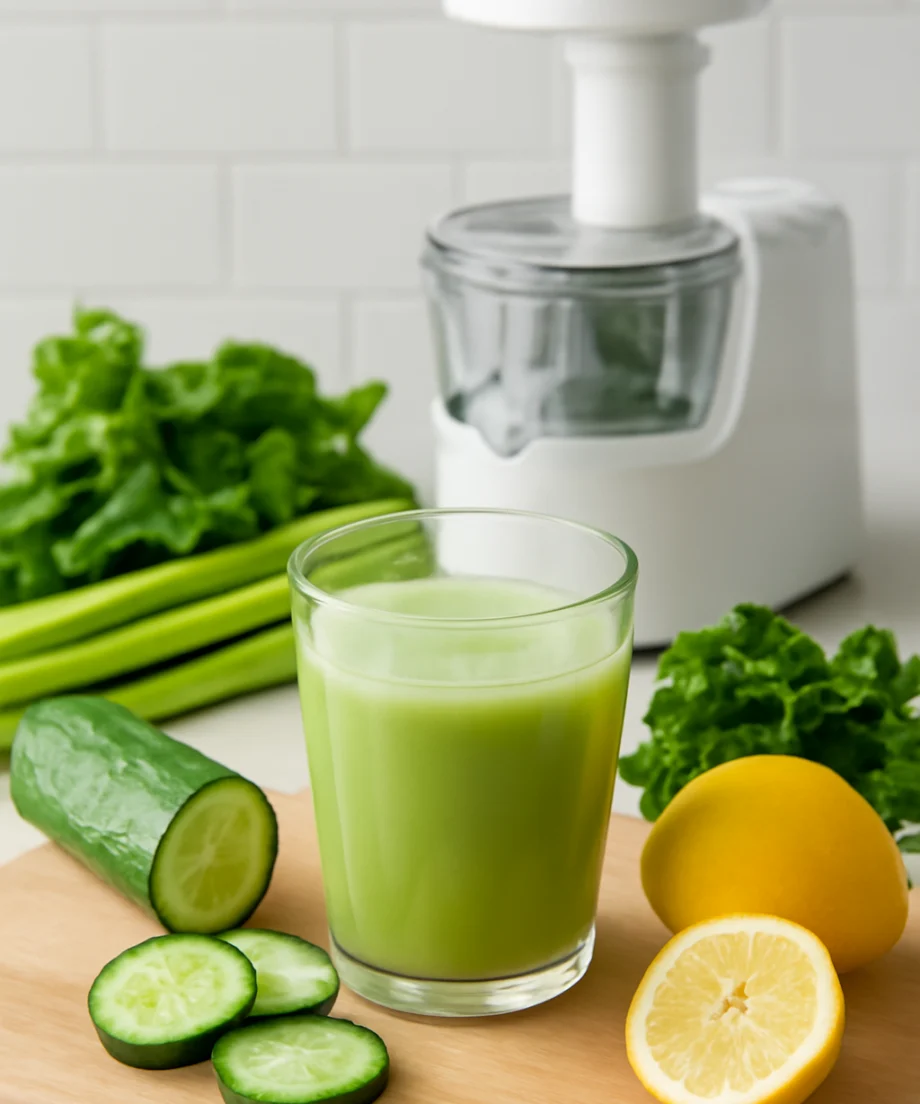
For more information about how different produce works in drinks, browse the site's drink and ingredient guides. You can also compare this recipe with an easy cucumber, apple, and spinach green juice if you prefer a sweeter variation.
Helpful Tips for Better Flavor
- Chill the produce first. Cold vegetables make the juice more refreshing and reduce the need for a large amount of ice.
- Use lemon gradually. Start with 1 tablespoon, then add more if the drink tastes flat. Lemon size and acidity vary.
- Balance bitterness. Older greens or a large amount of celery can taste assertive. Add more cucumber, water, or herbs before reaching for sweet fruit.
- Do not overblend. Excessive blending can warm the mixture and create more foam. Blend only until the ingredients are combined.
- Strain according to preference. Straining produces a thinner juice, while leaving the pulp in gives the drink more texture and retains more of the produce's fiber.
- Taste before salting. Celery is naturally savory, so you may not need additional salt.
Ingredient Alternatives
If you do not have every ingredient, the recipe is flexible. Replace some or all of the spinach with romaine lettuce, kale, or tender Swiss chard. If using kale or chard, remove tough stems and expect a stronger flavor. Zucchini can replace part of the cucumber, although the finished drink may taste less crisp.
Fresh mint can replace parsley or cilantro for a cooler flavor. If you dislike ginger, leave it out or use a very small amount of turmeric for an earthy note. Lime juice can replace lemon juice, but it may be more tart, so add it gradually. For a modest increase in sweetness, add a few cucumber slices or a small piece of green apple rather than a large amount of fruit.
Serving Suggestions
Serve this low-sugar vegetable juice in a small glass over ice with a cucumber ribbon, celery leaf, or lemon wedge. It pairs well with breakfast foods, a grain bowl, a sandwich, or a snack containing protein and carbohydrates. Because juicing removes or reduces much of the produce's fiber, serving the drink with a balanced meal can make it more satisfying than drinking it by itself.
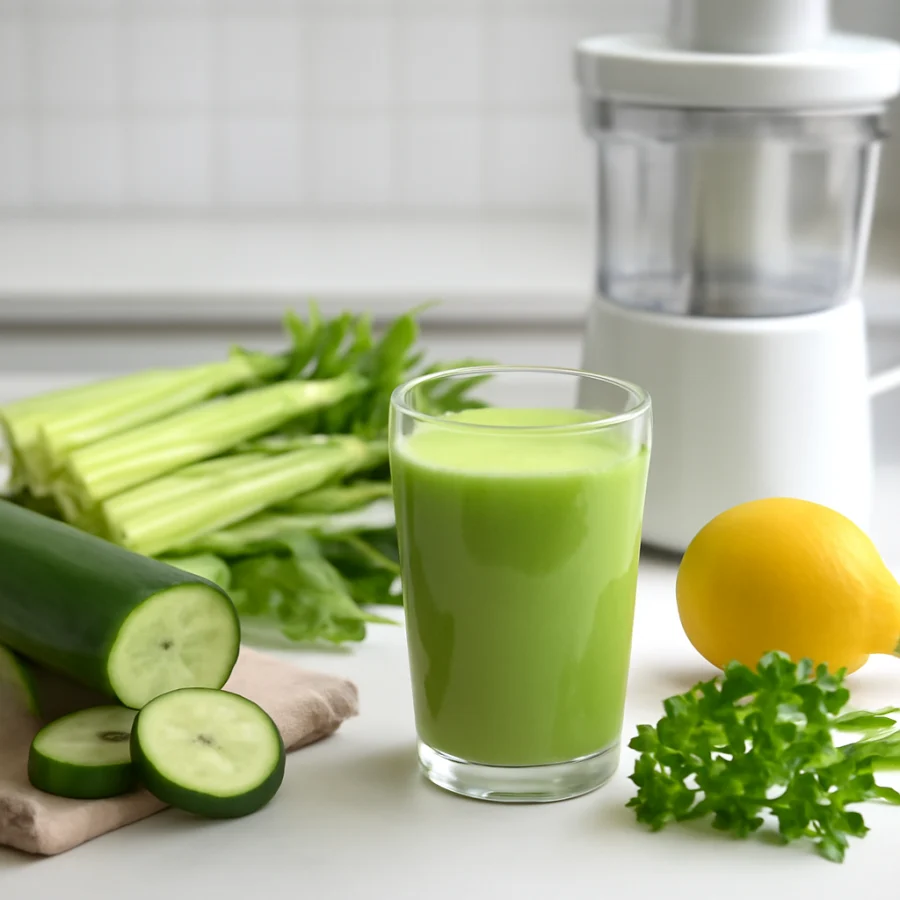
For a lighter sparkling version, pour a serving over ice and top it with a splash of plain, unsweetened sparkling water. Add the sparkling water just before serving so the drink stays lively. Avoid adding sweetened soda or flavored syrups if keeping the recipe low in sugar is your priority.
Storage and Food Safety
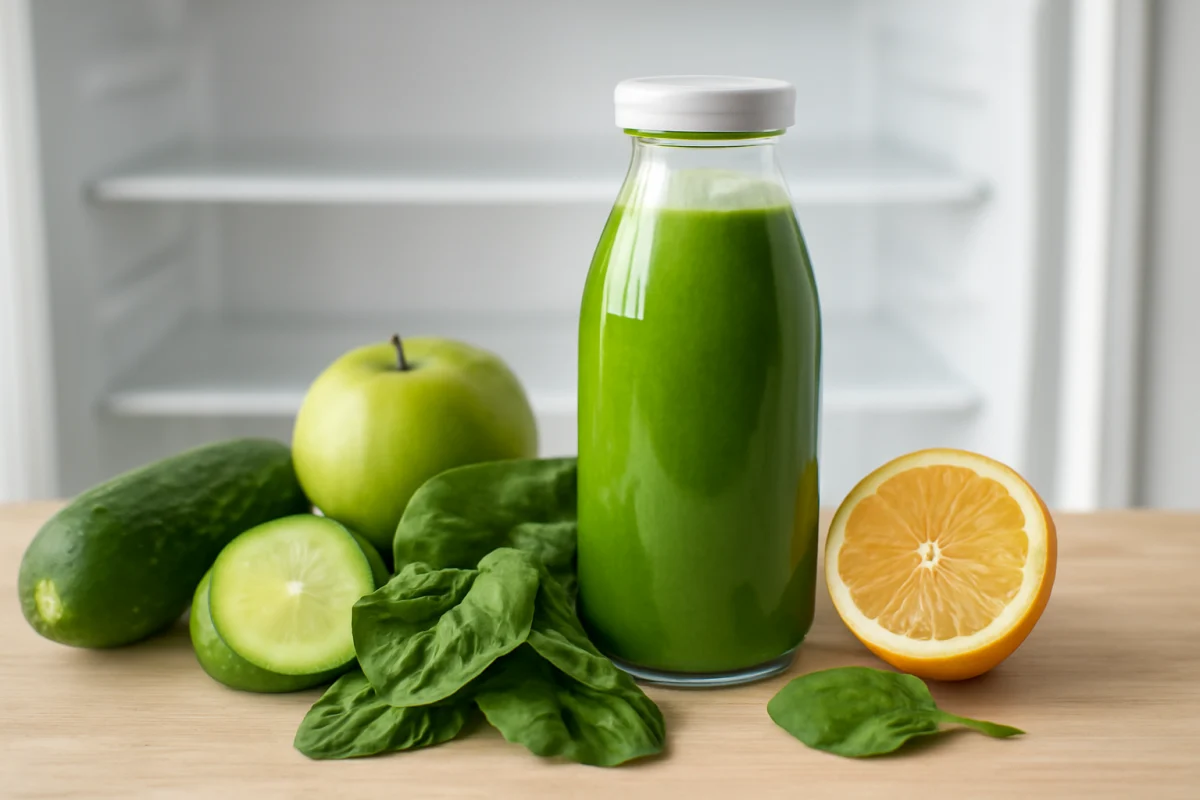
Fresh juice is perishable. For best quality, drink it right after preparation. If you need to store it, transfer it to a clean, food-safe container with a tight-fitting lid, refrigerate it promptly, and use it within a short period according to current food-safety guidance. Keep the container cold and do not leave the juice sitting at room temperature.
Do not store juice in a container that has not been washed, and do not return a partially consumed serving to the main container. Wash the juicer, blender, strainer, knife, and cutting board after use, following the equipment manufacturer's cleaning instructions. For additional guidance, see the site's food safety and storage guide and consult reliable current food-safety sources.
Unpasteurized homemade juice may carry food-safety risks, particularly for people who are pregnant, young children, older adults, or anyone with a weakened immune system. These readers should ask a qualified health professional about whether fresh unpasteurized juice is appropriate for them.
Frequently Asked Questions
Is vegetable juice naturally sugar-free?
No. Vegetables contain varying amounts of naturally occurring sugar. This recipe is designed to be lower in sugar than many fruit-forward juices, but it is not sugar-free. The final amount depends on the produce sizes and any substitutions.
Can I make this juice without a juicer?
Yes. Blend the ingredients with the listed water, then strain the mixture through a fine-mesh strainer or cheesecloth. You can also leave it unstrained and enjoy it as a thicker vegetable smoothie with more texture.
Can I add fruit and still keep the drink relatively low in sugar?
You can add a small amount of fruit, such as a few slices of green apple, for sweetness. Keep the portion modest and taste the drink before adding more. Citrus juice is useful for brightness, but it still contributes natural sugar.
Why does my vegetable juice taste bitter?
Bitterness can come from mature greens, kale stems, certain herbs, or an unusually strong batch of celery. Use tender leaves, remove tough stems, add more cucumber, and balance the flavor with lemon, water, or a small amount of mint.
Can I drink this instead of eating vegetables?
It is better to treat juice as one part of your overall eating pattern, not a replacement for whole vegetables or balanced meals. Whole produce provides fiber and a different eating experience, while strained juice is primarily a beverage.
For more practical drink ideas, visit the site's Juicing & Blending section and adjust recipes to suit your taste, available produce, and everyday routine.


Comments
0No comments yet. Be the first to share a helpful note or question.
Leave a Comment
Your email address will not be published. Comments are reviewed before appearing on the site.