
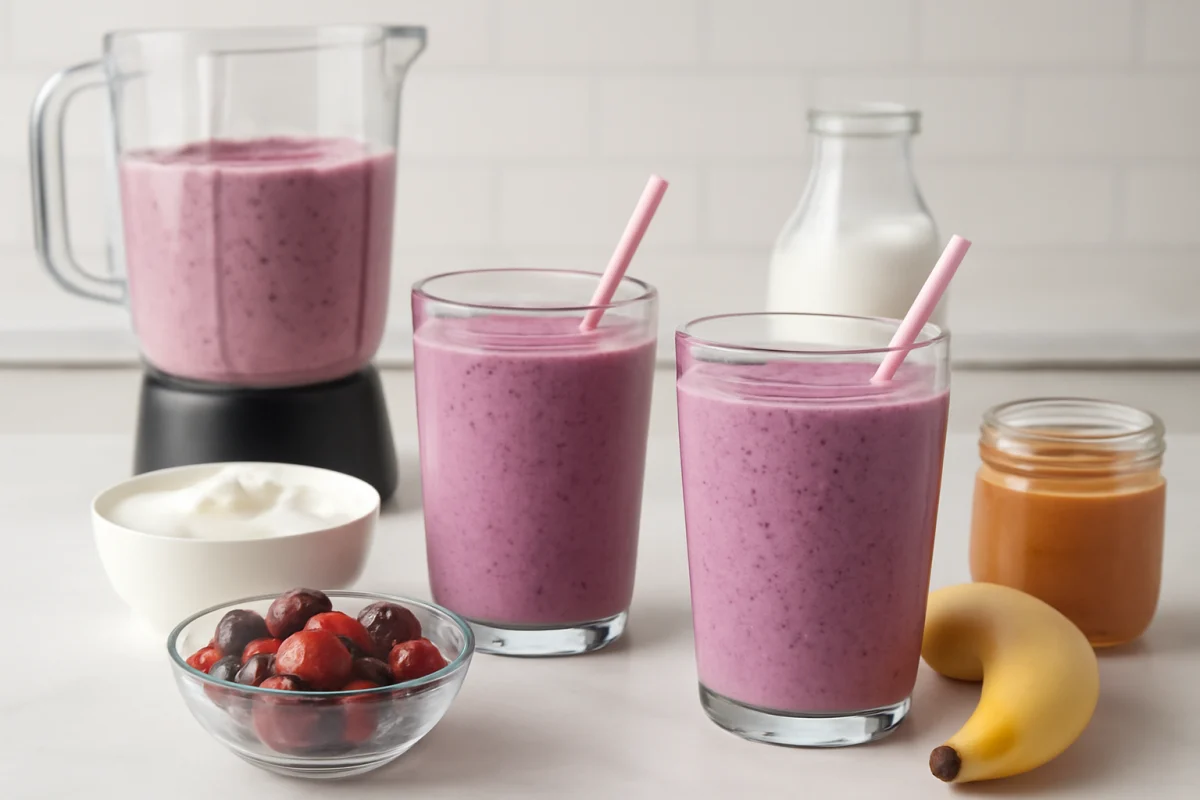
To compare protein content in everyday foods, start by checking the serving size, grams of protein, and the amount of food that serving represents. This high-protein berry yogurt smoothie makes that comparison practical: Greek yogurt and milk provide the main protein, while berries, banana, and nut butter add flavor, texture, and other nutrients. It is a convenient drink for breakfast or a snack, but it is not intended to replace a varied eating pattern or serve as a restrictive cleanse. For more recipes and practical drink guidance, visit cleanse drink guide.
Why Try This High-Protein Berry Yogurt Smoothie?
Protein amounts can look very different on a nutrition label because foods are sold and served in different portions. A single container of Greek yogurt may provide more protein than a much larger portion of a low-protein beverage, while a spoonful of nut butter contributes some protein along with fat and calories. Looking at the whole serving helps you make a more useful comparison than focusing on one ingredient alone.
This smoothie combines familiar foods without requiring protein powder. Greek yogurt supplies a thick, creamy base, milk helps the blender move smoothly, and frozen berries add flavor without needing much sweetener. Peanut butter or another nut or seed butter rounds out the texture. The recipe is easy to adjust if you prefer dairy-free ingredients, have a nut allergy, or want to use the foods already in your kitchen.
Recipe at a Glance
- Prep time: 5 minutes
- Total time: 5 minutes
- Servings: 2
- Best for: Breakfast, an afternoon snack, or a post-activity drink alongside other foods
Ingredients
- 1 cup plain Greek yogurt
- 1 cup milk of choice
- 1 1/2 cups frozen mixed berries
- 1 small ripe banana, peeled
- 2 tablespoons peanut butter or sunflower seed butter
- 1 tablespoon chia seeds, optional
- 1/2 teaspoon ground cinnamon, optional
- 4 to 6 ice cubes, optional, depending on the thickness you prefer
Choose unsweetened yogurt and milk if you want more control over the smoothie’s sweetness. If your berries are especially tart, you can add a small amount of honey or maple syrup, but taste the blended drink first. Sweetened yogurt and flavored milk may contain added sugar, so check the current Nutrition Facts label when comparing products.
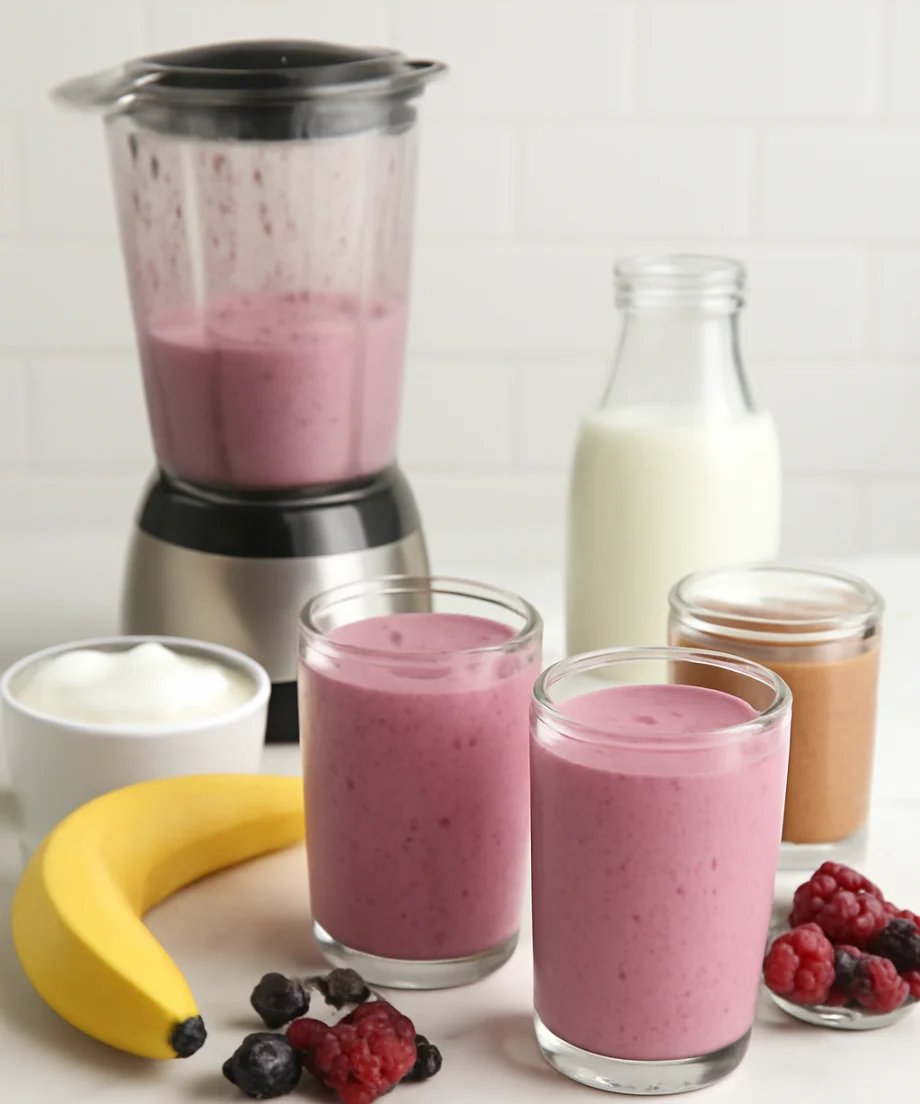
How to Make the Smoothie
- Prepare the ingredients. Peel the banana and measure the yogurt, milk, berries, and nut or seed butter. Frozen fruit usually gives the smoothie a thicker texture than fresh fruit.
- Add the liquid first. Pour the milk into the blender. Adding liquid before thicker ingredients can help the blades begin circulating the mixture.
- Layer in the remaining ingredients. Add the yogurt, berries, banana, nut or seed butter, and any optional chia seeds or cinnamon.
- Blend until smooth. Start on a lower speed and increase gradually. Blend for about 30 to 60 seconds, or until the berries are fully broken down and the texture is creamy.
- Adjust the consistency. Add a splash of milk if the smoothie is too thick. If it is thinner than you prefer, add a few more frozen berries or ice cubes and blend again.
- Taste and serve. Pour into two glasses and serve promptly. If you use chia seeds, the smoothie may thicken slightly as it stands.
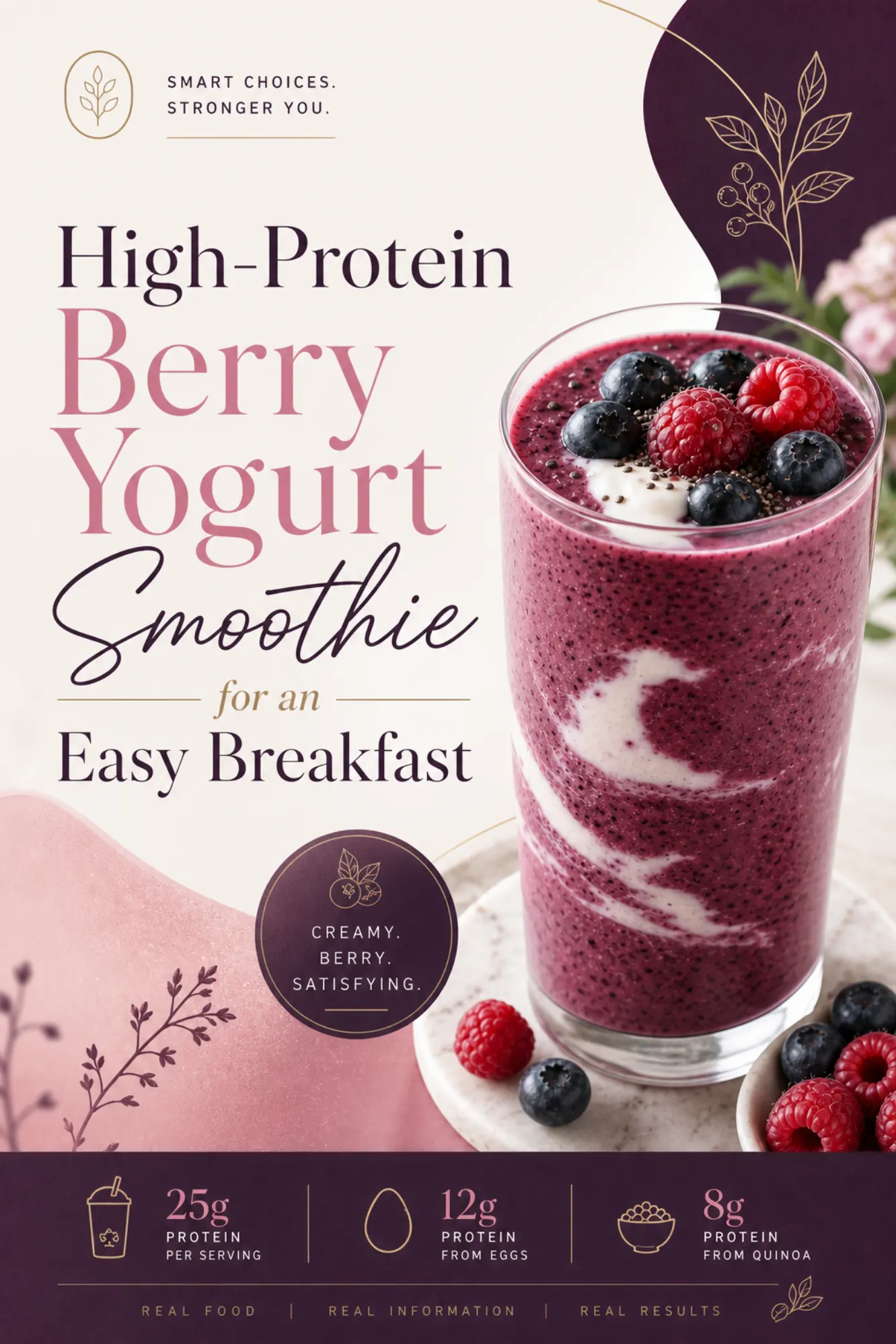
How to Compare Protein Content in Everyday Foods
The most useful comparison begins with the serving size listed on the package. For example, one product may list a serving as 3/4 cup, while another lists a single 5-ounce container. Comparing only the protein number without considering those portions can lead to an inaccurate impression.
Check protein per serving
Look for “Protein” in the Nutrition Facts panel. Record the grams per serving, then consider whether the amount you actually eat is larger or smaller. If you use half of a listed serving, you will generally receive about half the listed protein, although mixed recipes can make exact portions less obvious.
Compare similar amounts when possible
For a closer comparison, compare foods using similar household portions, such as 1 cup of milk versus 1 cup of a milk alternative, or one yogurt container versus another container of a similar size. You can also compare protein by weight when labels provide enough information, but household portions are often easier for everyday meal planning.
Consider the entire food, not just protein
Protein is only one part of a food’s nutrition profile. Check added sugars, saturated fat, sodium, fiber, calcium, and ingredient lists according to your preferences and dietary needs. A food with more protein is not automatically the best choice in every situation. This smoothie includes fruit and dairy or a dairy alternative, but it works best as one part of a varied diet that includes vegetables, grains, legumes, nuts, seeds, and other foods.
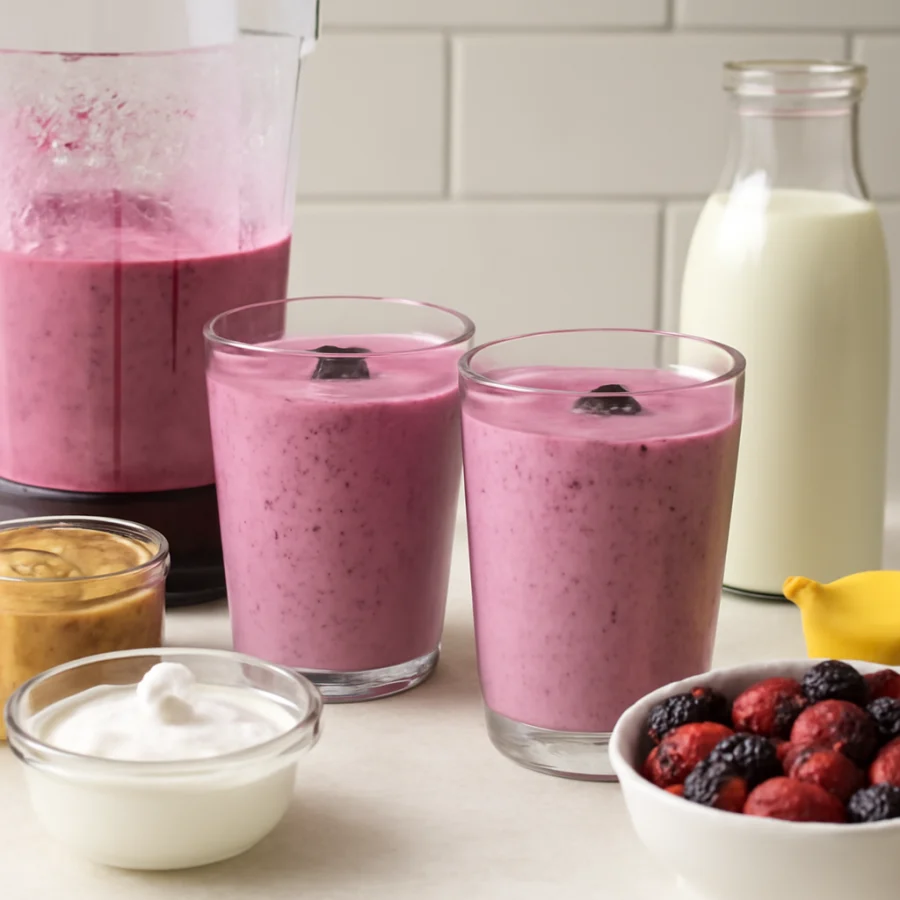
Use the recipe to practice label comparisons
Try comparing plain Greek yogurt with regular yogurt, cow’s milk with unsweetened soy milk, and peanut butter with sunflower seed butter. Products in the same category can differ in protein, added sugar, and serving size. Formulas also change, so verify the current label rather than relying on an old package or a general assumption about a brand.
Ingredient Alternatives
Dairy-free options
Use an unsweetened, fortified soy beverage and a dairy-free yogurt. Soy beverages often provide more protein than many other plant-based beverages, but amounts vary by product. Oat, almond, coconut, and other alternatives can work for flavor and texture, though their protein content may be different. Read the label and adjust your expectations when making substitutions.
Nut-free options
Replace peanut butter with sunflower seed butter or pumpkin seed butter. If allergies are a concern, check the package for allergen statements and use equipment and ingredients that have not been exposed to the relevant allergen. A spoonful of seed butter may change the flavor and thickness, so add a little more milk if needed.
Lower-sweetness options
Use plain yogurt, unsweetened milk, and berries without added sugar. A ripe banana contributes sweetness and helps create a smooth texture. If you prefer a tarter drink, reduce the banana slightly and add more berries. Avoid assuming that “fruit-flavored” means unsweetened; check the added sugars line on the label.
Extra texture and flavor
Ground cinnamon, a small amount of unsweetened cocoa powder, or a few tablespoons of rolled oats can change the flavor and body. Oats may make the smoothie thicker and add carbohydrate and fiber, but they do not turn the drink into a complete meal by themselves. If you add dry ingredients, blend thoroughly and drink the smoothie soon after preparation.
Helpful Preparation and Serving Tips
- Use frozen berries for a cold, thick smoothie without relying on much ice.
- Cut a fresh banana into pieces before blending if your blender has difficulty with large chunks.
- For two evenly sized servings, blend the full recipe and divide it between glasses rather than estimating each glass separately.
- Serve with whole-grain toast, oatmeal, or a piece of fruit if you want a more substantial breakfast.
- If serving children, check that the texture is smooth and account for any food allergies or age-related choking concerns.
- Do not add raw eggs to a smoothie. Uncooked eggs can create a food-safety risk, and they are unnecessary for this recipe.
For more ingredient and label guidance, visit the Drink & Ingredient Guides section. You can also browse the site’s Drink Recipes for additional preparation ideas.
Storage and Food Safety
This smoothie is best served immediately because the fruit can separate and the texture can become thicker over time. If you need to prepare it ahead, pour it into a clean, covered container, refrigerate it promptly, and use it within one day. Shake or stir before drinking. Discard it if it develops an unusual smell, appearance, or flavor.
Keep yogurt, milk, and the finished smoothie cold. Do not leave a dairy-based smoothie at room temperature for extended periods. Wash produce before preparation, clean the blender according to the manufacturer’s instructions, and follow reliable current food-safety guidance for refrigerated foods. More general information is available in the Food Safety & Storage section.
Frequently Asked Questions
Does this smoothie provide a specific amount of protein?
The total depends on the exact yogurt, milk, nut or seed butter, and serving sizes you use. Add the protein grams from each product label, then divide the total by two. Because packaged products vary, use the current labels rather than a generic estimate.
Is Greek yogurt always higher in protein than regular yogurt?
Greek yogurt is often more concentrated in protein, but the amount varies among products. Compare the serving size and protein line on both labels. Flavored versions may also contain more added sugar.
Can I use fresh berries?
Yes. Fresh berries work well, although the smoothie may be less cold or thick. Add ice cubes gradually, or use a portion of frozen fruit for a colder texture.
Can I make this smoothie without banana?
Yes. Replace the banana with additional frozen berries, a peeled and chopped pear, or a small amount of unsweetened applesauce. The sweetness and thickness will change, so adjust the milk gradually.
Is a high-protein smoothie a complete meal?
Not necessarily. A smoothie can contribute protein and other nutrients, but nutritional needs vary. Consider what else you eat during the day and include a broad range of foods rather than relying on one drink to provide everything you need.
Comments
0No comments yet. Be the first to share a helpful note or question.
Leave a Comment
Your email address will not be published. Comments are reviewed before appearing on the site.