
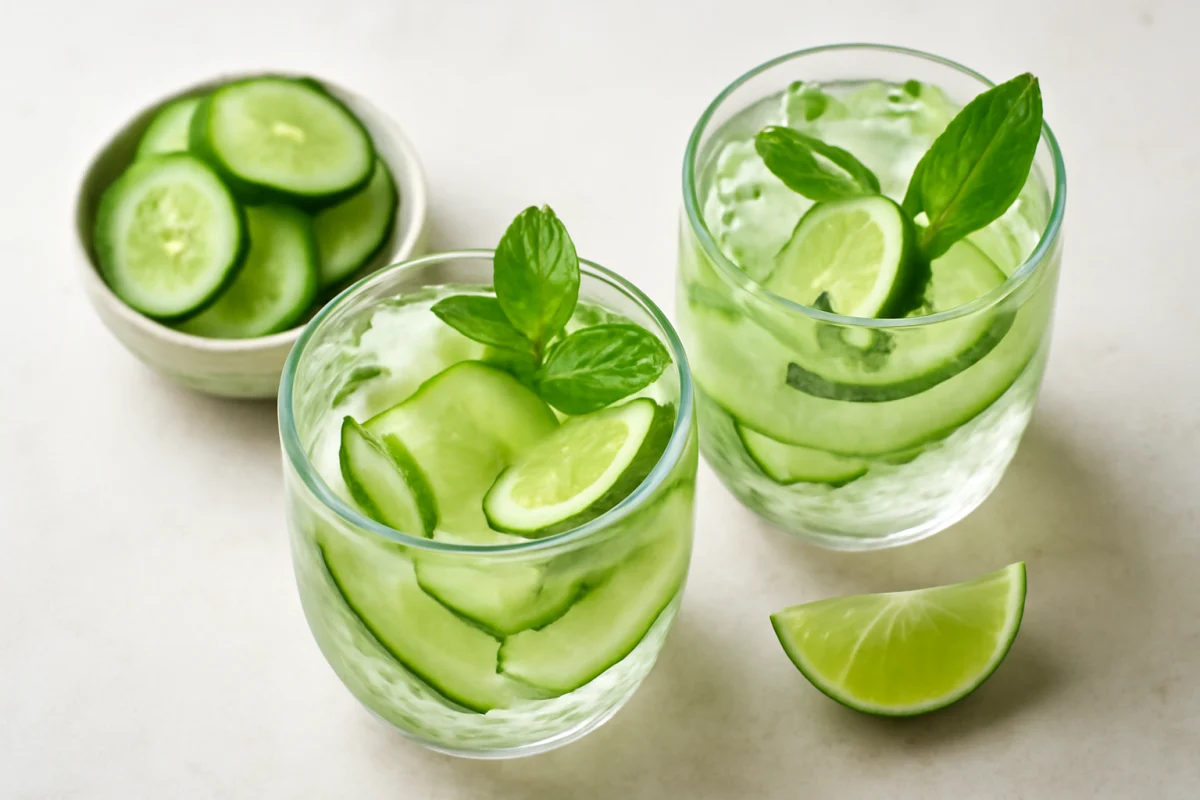
What does “added sugar” mean on a food label? It means sugar added to a food or drink during processing, preparation, or packaging. The term does not include the naturally occurring sugars in whole fruit, vegetables, or plain milk. A simple cucumber lime spritzer is a useful way to apply this information because it can be made with unsweetened ingredients and adjusted to your taste without relying on a sweetened soda or syrup. For more recipes and practical drink guidance, visit refreshing detox drinks.
This crisp, nonalcoholic drink combines cucumber, lime, mint, and sparkling water. It is quick to prepare, easy to customize, and suitable for readers who want to compare labels while building a refreshing beverage. It is not a detox treatment or a replacement for balanced meals, but it can be a practical option when you want a flavorful drink with no added sweetener in the recipe.
Cucumber Lime Spritzer at a Glance
- Preparation time: 10 minutes
- Total time: 10 minutes, plus optional chilling time
- Servings: 2
- Primary focus: Understanding added sugar on a food label
Ingredients
- 1 medium English cucumber, divided
- 1 medium lime
- 8 fresh mint leaves, plus more for serving
- 2 cups chilled unflavored sparkling water
- 1 cup ice
- Optional: 1 to 2 teaspoons maple syrup or granulated sugar, added to taste
- Optional garnish: thin cucumber ribbons and lime wedges
The base recipe contains no added sugar unless you choose the optional sweetener. If you use a packaged sparkling water, check that the product is unflavored or unsweetened. “Natural flavor” does not necessarily mean a drink contains sugar, but the Nutrition Facts label and ingredient list provide the best way to confirm what is in the specific product.
How to Make a Cucumber Lime Spritzer
- Prepare the cucumber. Rinse the cucumber under cool running water and dry it with a clean towel. Cut half into chunks for blending or muddling. Use a vegetable peeler to make a few thin ribbons from the remaining half if you want a decorative garnish.
- Make the cucumber mixture. Add the cucumber chunks, the juice of half the lime, and 6 mint leaves to a blender. Pulse briefly until the cucumber is mostly broken down. For a chunkier drink, muddle the cucumber and mint in a pitcher instead of blending.
- Strain if desired. Pour the mixture through a fine-mesh strainer into a small bowl or pitcher. Press gently with a spoon to extract the liquid. Leaving the pulp in the drink adds texture, so straining is optional.
- Build the drinks. Divide the ice between two glasses. Pour the cucumber mixture evenly into the glasses, then add the remaining lime juice.
- Add sparkling water. Slowly pour 1 cup of chilled sparkling water into each glass. Stir once or twice with a long spoon to combine without quickly flattening the bubbles.
- Taste and adjust. If the drink needs more acidity, add a small squeeze of lime. If you decide to use sweetener, dissolve it in a tablespoon of warm water before adding it, or stir in a small amount of liquid sweetener so it distributes evenly.
- Garnish and serve. Add a cucumber ribbon, lime wedge, and mint leaf. Serve immediately while the sparkling water is fizzy.
What “Added Sugar” Means on a Food Label
On a U.S. Nutrition Facts label, added sugars are listed under total sugars. Total sugars include both naturally occurring sugars and added sugars. The added sugars line identifies sugars introduced during manufacturing or preparation, including sugars from syrups, honey, and concentrated fruit or vegetable juices used for their sweetening properties.
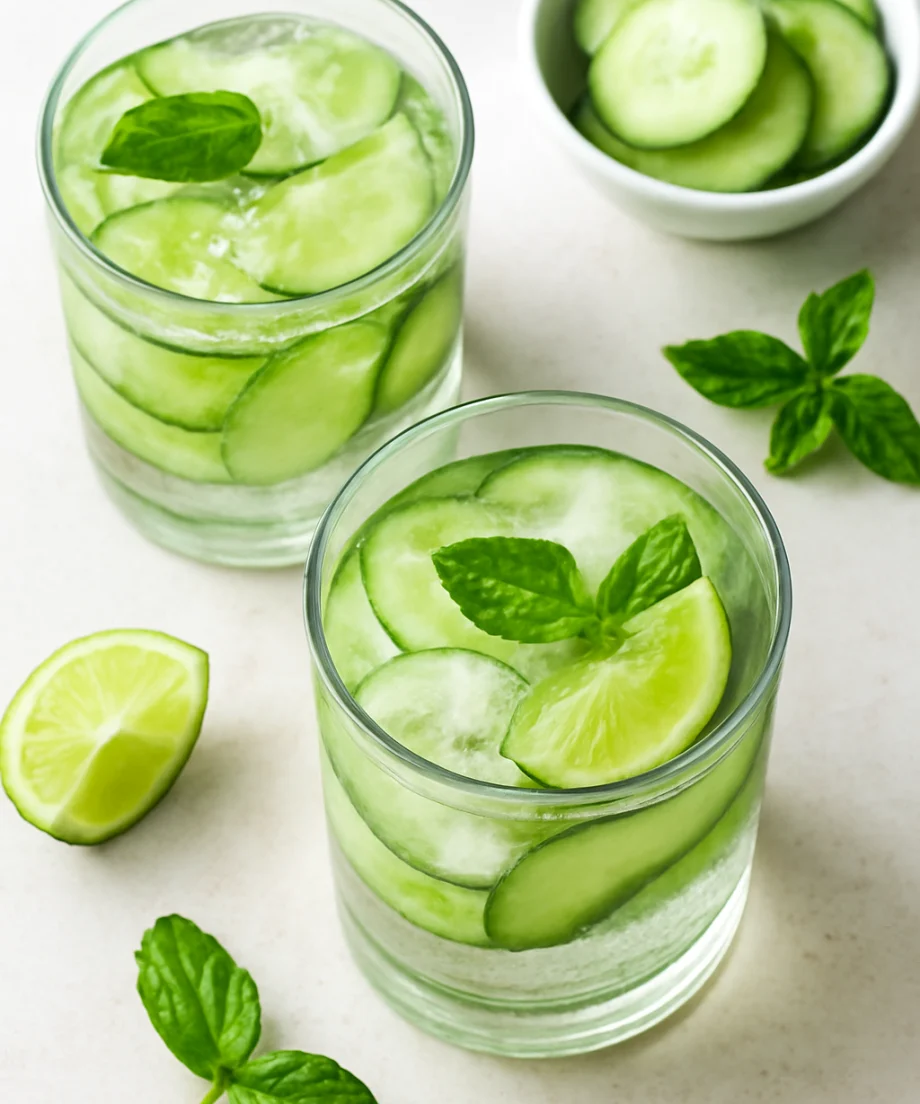
Examples can include table sugar, brown sugar, cane sugar, corn syrup, high-fructose corn syrup, agave nectar, honey, molasses, maple syrup, and ingredients with names ending in “-ose,” such as glucose, fructose, dextrose, or sucrose. This does not mean every ingredient with a technical name is automatically a problem. It means the ingredient contributes to the added-sugar amount shown on the label.
Sugars naturally present in a whole apple, cucumber, or plain milk are not counted as added sugars. However, a flavored yogurt, bottled tea, fruit drink, or sweetened sparkling beverage may contain both natural and added sugars. Reading the label helps distinguish the two.
How to Read the Label for Sparkling Water and Mixers
Start with the serving size. A bottle or can may contain more than one serving, so the listed sugar amount may not represent the entire container. Next, look at total sugars and added sugars. If both numbers are zero grams, the beverage contains no sugar according to the label’s rounding rules. If total sugars are higher than added sugars, some sugar may occur naturally from ingredients such as fruit juice or milk.
Then review the ingredient list. Ingredients are listed by weight, from greatest to least. Look for sweeteners such as cane sugar, syrup, honey, agave, fruit juice concentrate, or another sugar source. A drink can appear light or refreshing while still containing added sugar, particularly if it is labeled as a fruit beverage, tea drink, mixer, or lemonade.
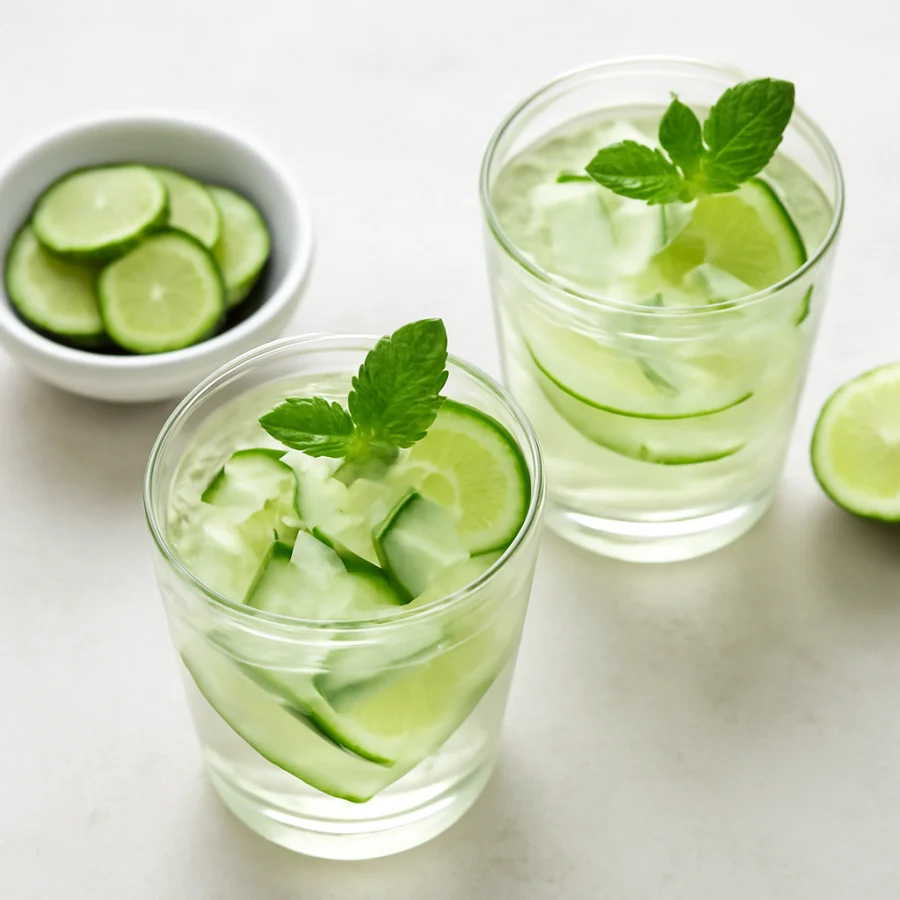
For this spritzer, plain sparkling water is the simplest choice. If you use flavored sparkling water, verify the current package label because formulations can change. A product described as “zero sugar” may use a non-sugar sweetener, while an “unsweetened” product should not contain added sweeteners. These terms are not interchangeable, so check the full label rather than relying only on the front of the package.
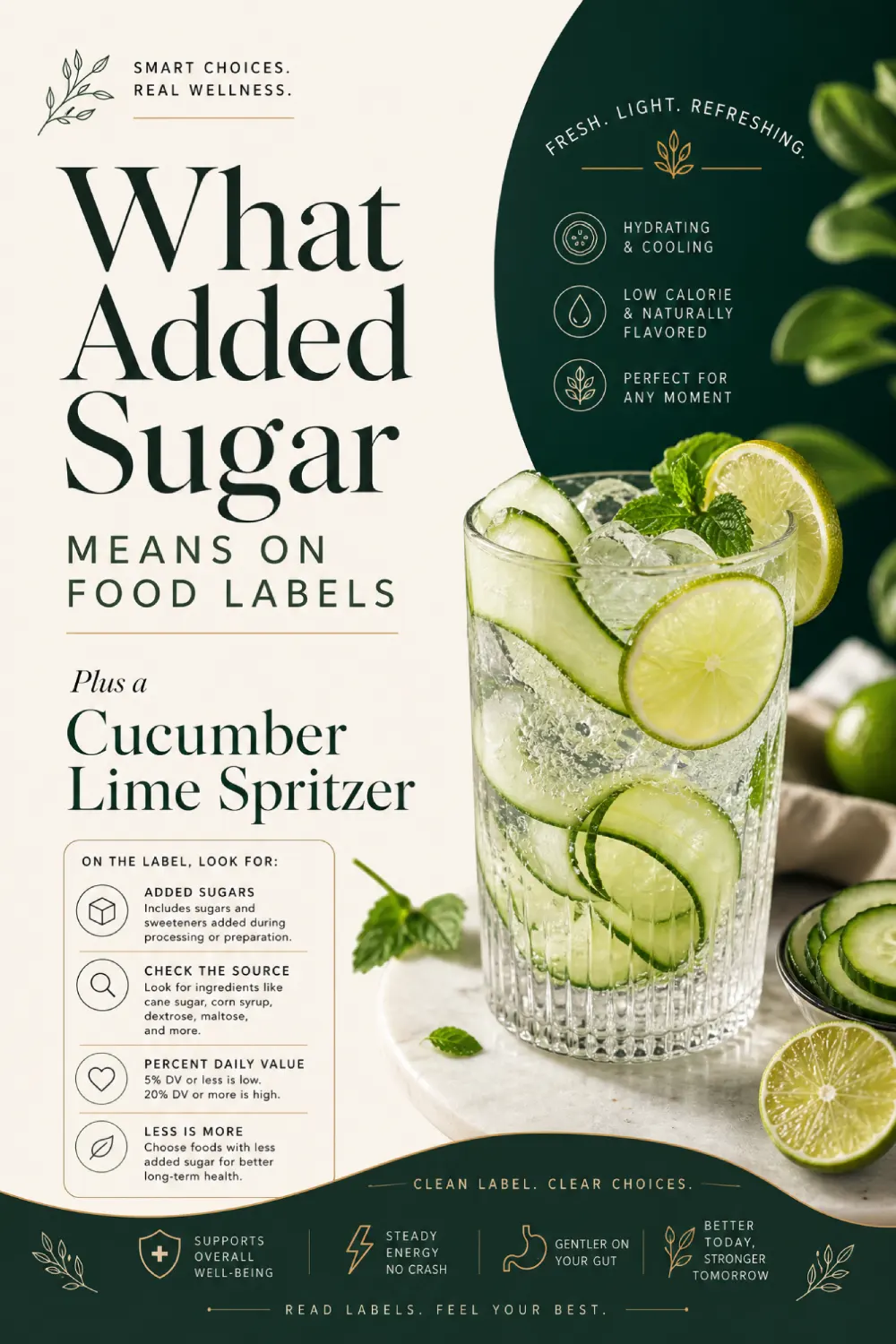
Helpful Ingredient Alternatives
Use still water
Replace sparkling water with chilled still water for a quiet, refreshing version. You can also serve the cucumber lime mixture over ice and add water gradually to control its strength.
Change the herbs
Fresh basil, cilantro, or a small amount of rosemary can replace mint. Use assertive herbs carefully because they can overpower the cucumber and lime.
Add fruit without adding sweetener
Drop a few raspberries, strawberries, orange slices, or grapefruit pieces into the glasses. Whole fruit contributes naturally occurring sugars, but it does not become “added sugar” simply because it is placed in the drink. Juice, purée, or a sweetened fruit mixer may tell a different story, so check the label when using packaged products.
Sweeten deliberately
If you prefer a sweeter drink, add a measured amount of maple syrup, honey, or sugar. These ingredients still count as added sugar when used in a homemade beverage. Adding the sweetener yourself makes the amount visible and easier to adjust, but it does not change how the sugar is classified.
Preparation and Serving Tips
- Chill the cucumber, lime, and sparkling water before assembling the drink so you do not need to rely on excessive ice.
- For a clearer drink, strain the cucumber mixture through a fine-mesh strainer. For more texture, leave it unstrained.
- Add sparkling water at the end. Blending or shaking carbonated water can create pressure and cause spills.
- Use fresh lime juice for a sharper flavor. Bottled lime juice can work, but compare labels if it contains added ingredients.
- For a pitcher, combine the cucumber mixture and lime juice first. Add sparkling water just before serving to preserve carbonation.
- If you are serving guests, place optional sweetener on the side so each person can decide whether to add it.
Storage and Food Safety
For best flavor and carbonation, serve the spritzer immediately. You can prepare the cucumber-lime mixture in advance and refrigerate it in a covered container, then add ice and sparkling water when ready to serve. Use clean equipment and keep cut produce refrigerated rather than leaving it at room temperature for an extended period.
Discard prepared ingredients if they develop an unusual odor, appearance, or texture. Store leftovers according to current guidance from reliable food-safety authorities, especially if the drink has been left out or has been handled by multiple people. A refrigerated cucumber mixture may separate naturally; stir it before serving and use your judgment about freshness.
For more practical handling guidance, see these food safety and storage tips. You can also browse additional drink recipes for other preparation ideas.
Frequently Asked Questions
Is natural sugar the same as added sugar?
No. Natural sugar is present in foods such as whole fruit and plain milk. Added sugar is introduced during processing or preparation. A food or drink may contain both, so check the separate lines for total sugars and added sugars.
Does honey count as added sugar?
Yes. Honey contributes added sugar when it is mixed into a beverage or used in a packaged food. The same applies to maple syrup, agave, molasses, and similar sweeteners.
Does fruit juice count as added sugar?
It depends on how it is used. Sugar naturally present in 100% fruit juice is not necessarily classified as added sugar when the juice is sold as a beverage. However, concentrated fruit juice used to sweeten another food or drink can be included in added sugars. Check the Nutrition Facts label and ingredients for the specific product.
Can this recipe be made without added sugar?
Yes. The cucumber lime spritzer is designed to work without optional sweetener. Cucumber, lime, mint, ice, and unsweetened sparkling water provide flavor without adding sugar to the recipe.
Is a drink with zero added sugar always the healthiest choice?
Not automatically. Added sugar is one part of a food or drink’s overall picture. Consider the full ingredient list, serving size, caffeine or other ingredients, and how the beverage fits your usual eating and hydration habits. Product labels can change, so verify current information before buying.
Understanding what added sugar means on a food label can make drink choices clearer without requiring extreme rules. This cucumber lime spritzer offers a straightforward example: begin with unsweetened ingredients, check packaged labels, and add sweetener only if you want it and can account for it.

Comments
0No comments yet. Be the first to share a helpful note or question.
Leave a Comment
Your email address will not be published. Comments are reviewed before appearing on the site.