
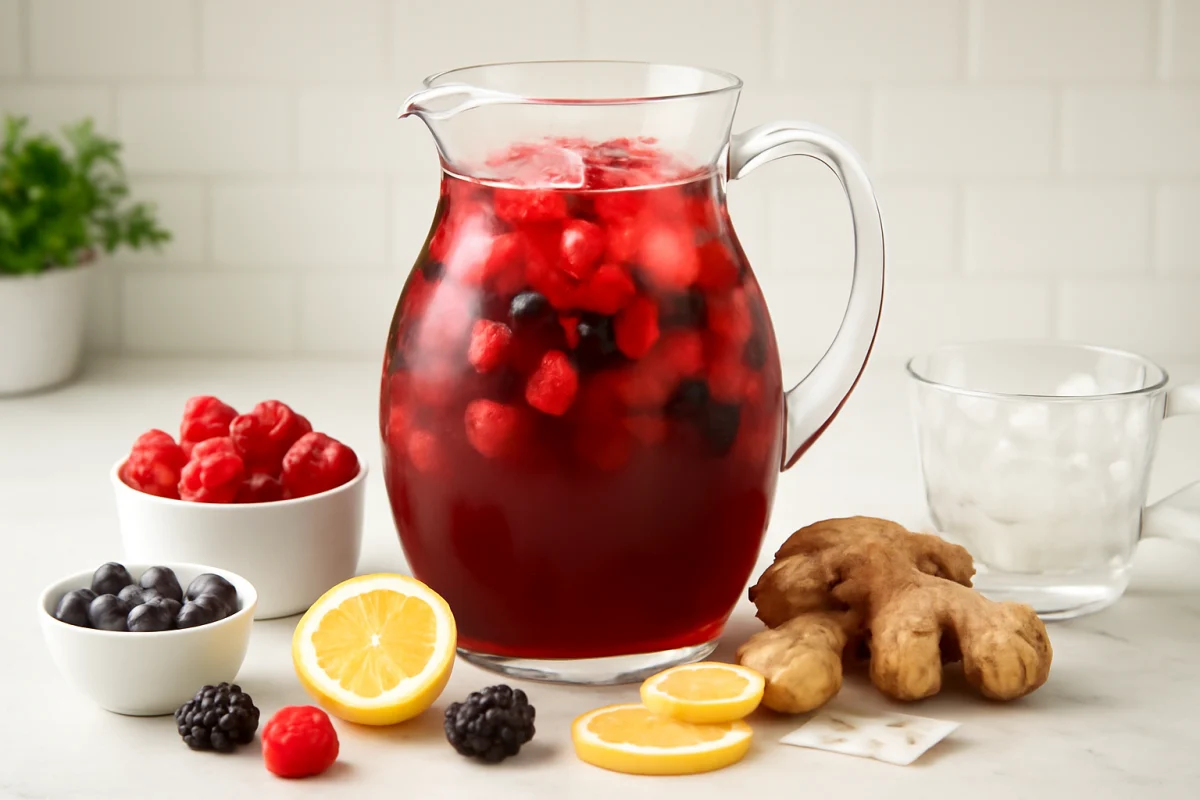
What does “added sugar” mean on a food label? It means sugar added to a food or drink during processing, preparation, or packaging, rather than sugar that naturally occurs in an ingredient. A practical way to understand the difference is to prepare a drink whose sweetness comes from fruit instead of syrup, honey, or another sweetener. This berry ginger iced tea is a refreshing, unsweetened recipe that lets you compare the ingredient list with the Nutrition Facts label while making a flavorful drink for everyday hydration. For more recipes and practical drink guidance, visit healthy detox drinks.
The recipe combines black tea, frozen berries, fresh ginger, lemon, and cold water. It does not require a cleanse, fasting, laxatives, or a restrictive eating plan. It is simply a homemade beverage with a bright fruit flavor and no added sweetener. If you are monitoring sugar for a health reason, use the nutrition information on your specific ingredients and follow advice from your qualified health professional.
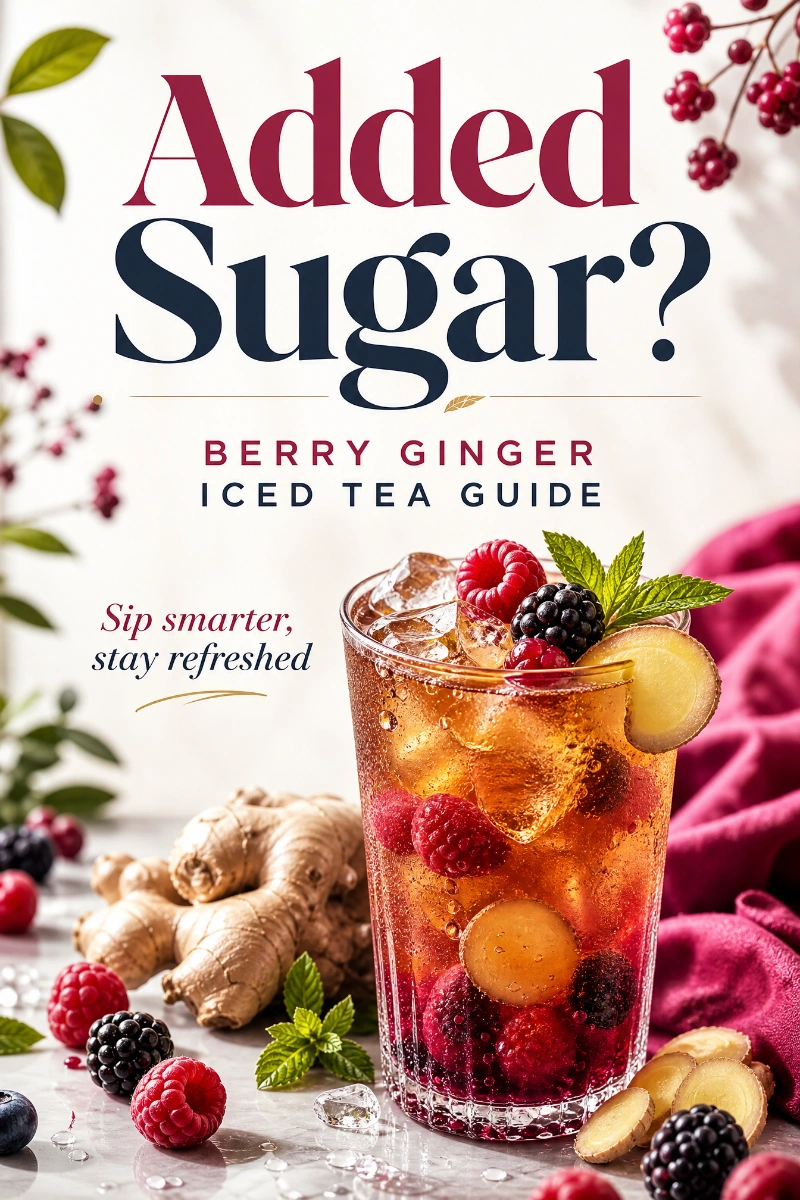
What “added sugar” means on a food label
On a U.S. Nutrition Facts label, “Total Sugars” includes both naturally occurring sugars and added sugars. “Added Sugars” is a separate line that identifies sugars added during manufacturing or preparation. The amount is listed in grams, and the label also shows a Percent Daily Value. The Daily Value is based on a 2,000-calorie diet, so your individual needs may differ.
Naturally occurring sugars are found in foods such as whole fruit and plain milk. Added sugars can include table sugar, brown sugar, corn syrup, honey, maple syrup, agave nectar, molasses, fruit juice concentrates, and other sweetening ingredients. Although honey and maple syrup may sound less processed, they still count as added sugar when used to sweeten a packaged product or recipe.
For packaged drinks, check both the ingredient list and the Nutrition Facts panel. The ingredient list can reveal where sweetness comes from, while the label tells you how much total sugar and added sugar are in one serving. Also check the serving size: a large bottle may contain more than one serving, and drinking the entire container can provide more sugar than the front of the package suggests.
Why try this berry ginger iced tea?
This recipe is worth trying if you want a flavorful alternative to sweetened tea, soda, or a bottled fruit drink. Frozen berries provide color and a tart fruit note, while ginger and lemon add aroma and sharpness without requiring sugar. Because the berries are steeped and lightly pressed rather than blended into a thick smoothie, the result is a clear, easy-to-pour iced tea.
The recipe also makes label reading more concrete. If you compare it with a packaged berry tea, look for “Added Sugars” on the Nutrition Facts label and scan the ingredients for sweeteners. A drink can have a fruit image on the front and still contain added sugar. Packaging and formulas can change, so verify the current label or manufacturer information before making a purchase.
Berry Ginger Iced Tea at a glance
- Prep time: 10 minutes
- Steeping and chilling time: About 35 minutes
- Total time: About 45 minutes
- Servings: 4, about 10 fluid ounces each
- Added sweetener: None
- Best for: A chilled, fruit-forward tea served with a meal or as a nonalcoholic beverage
Ingredients
- 4 cups cold water, divided
- 4 black tea bags, or 4 teaspoons loose-leaf black tea in a filter
- 1 cup unsweetened frozen mixed berries
- 1 tablespoon thinly sliced fresh ginger
- 2 tablespoons fresh lemon juice
- 1 cup ice, plus more for serving
- Fresh lemon wheels or a few extra berries for garnish, optional
Choose plain tea and unsweetened frozen berries. Flavored tea blends and frozen fruit products may contain sweeteners or other ingredients, so read the package label. The berries supply naturally occurring sugar, but the recipe does not add sugar, honey, syrup, or another sweetener.
How to make berry ginger iced tea
- Heat the water. Bring 2 cups of the water to a boil. Remove it from the heat and let it stand briefly so the water is hot but not aggressively boiling when it meets the tea.
- Steep the tea and ginger. Place the tea bags and sliced ginger in a heat-safe pitcher or large measuring container. Pour in the hot water and steep according to the tea package directions, usually several minutes. Avoid prolonged steeping if you dislike a strong or bitter flavor.
- Add the berries. Remove the tea bags. Add the frozen berries to the warm tea and let them steep for about 10 minutes. Press the berries gently with the back of a spoon to release some color and flavor, but do not crush them into a purée.
- Strain if desired. Pour the tea through a fine-mesh strainer into a clean pitcher if you prefer a smoother drink. You can leave the berries in the pitcher for a more rustic presentation.
- Brighten the flavor. Stir in the lemon juice and the remaining 2 cups of cold water. Taste only after the mixture has cooled somewhat. The flavor should be tart, fruity, and lightly spicy rather than candy-sweet.
- Chill and serve. Refrigerate the tea until cold, or pour it over 1 cup of ice for faster cooling. Serve over additional ice and garnish with lemon wheels or a few berries, if desired.
How to keep the drink unsweetened
Use the ingredient list as your first check. Tea bags, ginger, lemon, and plain frozen berries generally allow you to control what goes into the pitcher, but packaged products vary. Avoid berry blends labeled sweetened, glazed, candied, or prepared with syrup. Some bottled lemon juice products may contain additional ingredients, so review the label if you are trying to avoid added sweeteners.
If the finished tea tastes too tart, do not assume you need a large amount of sugar. First try more cold water, additional ice, or a few more berries. You can also use a naturally sweeter berry mix, such as one with more strawberries, while still checking the package. If you choose to add honey, maple syrup, sugar, or another sweetener, the drink will no longer be free of added sugar. That is not automatically a problem, but measure it and account for it when reading the recipe or comparing beverages.
Ingredient alternatives
Tea options
Green tea creates a lighter drink, while decaffeinated black or green tea works for people avoiding caffeine. Herbal teas such as hibiscus, rooibos, or caffeine-free berry blends can also work. Follow the package steeping instructions because different teas vary in strength and recommended water temperature.
Fruit options
Use fresh berries when they are firm, clean, and in good condition. Frozen berries are convenient and help cool the drink, but they can make the tea cloudier. Chopped peaches, cherries, or sliced citrus can replace part of the berries. Fruit changes the flavor and naturally occurring sugar content, so check the ingredient package when using prepared or frozen products.
Flavor options
Replace the ginger with a small amount of bruised fresh mint, basil, or a strip of lemon peel. Remove citrus peel after steeping if it makes the drink bitter. A small pinch of salt can make tart flavors seem more rounded, but it is optional and should be used sparingly.
Helpful preparation and serving tips
- Prevent bitterness: Do not over-steep the tea. A bitter base can tempt you to add more sweetener.
- Balance slowly: Add cold water a little at a time and taste between additions. Berry acidity varies from batch to batch.
- Use a clear pitcher: The color makes it easy to see whether the berries have released enough flavor.
- Serve with food: Pair the tea with a sandwich, grain bowl, salad, or a snack containing protein and fiber. The drink is not intended to replace balanced meals.
- Make individual servings: Pour the chilled tea into a glass with ice and add a lemon wheel just before serving.
Storage and food safety
Transfer the finished tea to a clean, covered pitcher and refrigerate it promptly. For the best quality, use it within about 3 days. If the drink has been left at room temperature for an extended period, especially in warm conditions, discard it rather than relying on smell or taste to determine whether it is safe. Do not return partially consumed glasses to the main pitcher.
Wash your hands, utensils, pitcher, ginger, lemon, and fresh fruit before preparation. Keep the tea cold during storage, and use clean ice made from safe drinking water. For more general guidance, review these food safety and storage tips. When preparing drinks for children, older adults, pregnant people, or anyone with a weakened immune system, use especially careful food-handling practices and follow current guidance from reliable food-safety authorities.
How to compare this recipe with a packaged drink
Start with the serving size. Then compare Total Sugars and Added Sugars, rather than looking only at the front label. If Total Sugars is higher than Added Sugars, some of the sugar may come naturally from fruit or another ingredient. If both numbers are high, the drink may contain substantial sugar from added sweeteners, naturally sugary ingredients, or both.
Next, read the ingredients from highest to lowest weight. Look for sugar, cane sugar, syrup, honey, agave, molasses, dextrose, fructose, maltose, and juice concentrates. A packaged beverage can still fit into an overall eating pattern, but understanding the label helps you choose intentionally. For more ingredient explanations, visit the drink and ingredient guides.
Frequently asked questions
Does fruit sugar count as added sugar?
Sugar naturally present in whole fruit is not added sugar. However, fruit juice concentrate, purée, or another fruit-based ingredient used as a sweetener may be counted as added sugar depending on how it is used and labeled. Check the current Nutrition Facts panel and ingredient list.
Is honey added sugar?
Yes. Honey is considered an added sugar when it is added to a recipe or packaged food for sweetness. The same applies to maple syrup, agave nectar, brown sugar, and table sugar.
Does this iced tea contain sugar?
It contains naturally occurring sugar from the berries, but the recipe has no added sweetener. The exact total sugar amount depends on the berries and tea products you use. For precise information, consult the labels on your ingredients.
Can I make the recipe with herbal tea?
Yes. Hibiscus, rooibos, mint, and caffeine-free berry teas can work well. Use the steeping directions for the specific tea, then adjust the lemon and water to taste.
Can I blend the berries instead of steeping them?
You can, but blending creates a thicker drink with more fruit pulp and may make the texture less like iced tea. If you blend, use clean equipment and refrigerate the drink promptly. Strain it if you prefer a smoother result.

Comments
0No comments yet. Be the first to share a helpful note or question.
Leave a Comment
Your email address will not be published. Comments are reviewed before appearing on the site.