
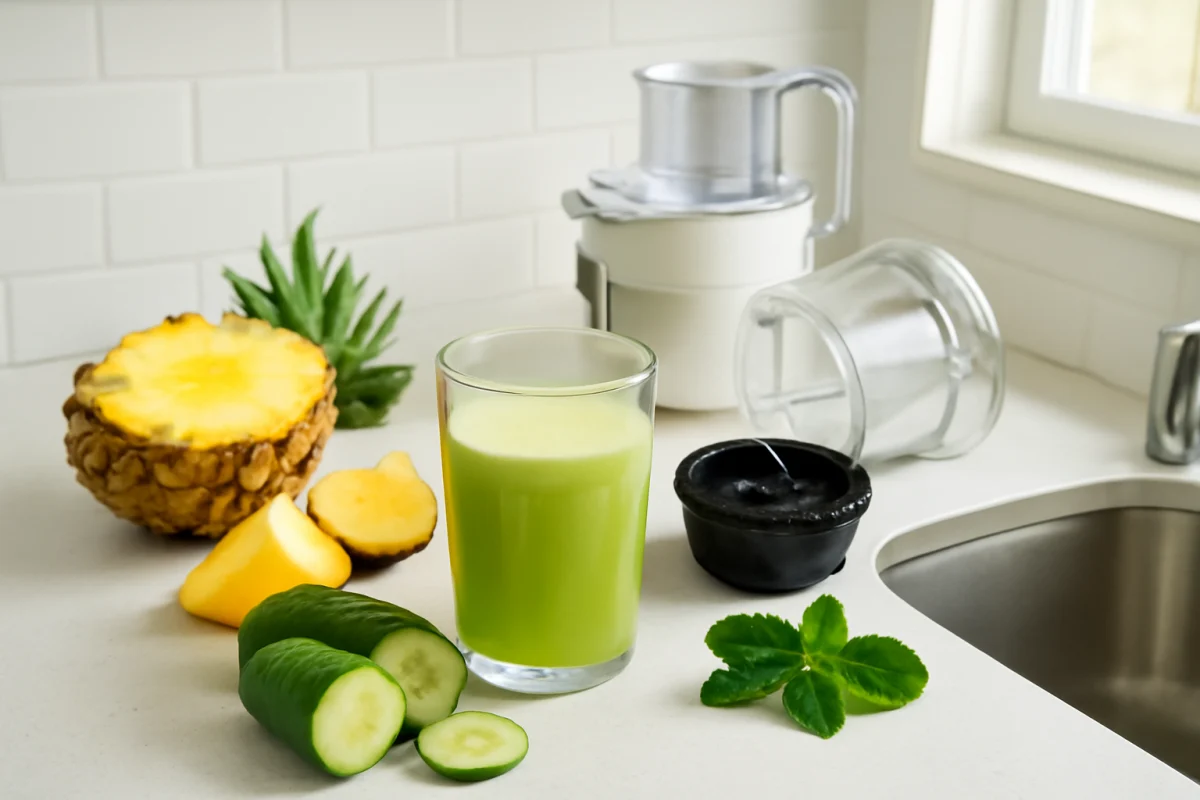
The fastest way to clean a juicer is to start immediately after pouring your drink, before fruit pulp and juice residue dry onto the parts. This pineapple-cucumber-mint juice is a useful recipe for practicing that habit because it takes only a few minutes to prepare, has a fresh flavor, and leaves a manageable amount of pulp when the ingredients are cut correctly. Make the juice, serve it cold, and use the short cleanup routine below while the juicer is still fresh from the recipe. For more recipes and practical drink guidance, visit cleanse drink guide.
Pineapple-Cucumber-Mint Juice at a Glance
- Prep time: 10 minutes
- Total time: 15 minutes, including a quick cleanup
- Servings: 2
- Best equipment: A centrifugal or masticating juicer, a cutting board, a fine-mesh strainer if desired, and a soft cleaning brush
Ingredients
- 2 cups peeled pineapple chunks, cut into pieces that fit your juicer feed chute
- 1 medium English cucumber, washed and cut into sections
- 1 small green apple, washed, cored, and cut into wedges
- 8 to 10 fresh mint leaves, washed
- 1 tablespoon fresh lime juice, optional
- Ice, for serving, optional
This recipe makes approximately 2 cups of juice, though the final amount will vary with the size, ripeness, and juiciness of the produce and the type of juicer you use. The pineapple supplies a sweet-tart base, while cucumber keeps the flavor light. Apple adds additional sweetness, and mint and lime provide a crisp finish without requiring syrups or added sugar.
How to Make the Pineapple-Cucumber-Mint Juice
- Wash your hands and produce. Rinse the pineapple after peeling, and wash the cucumber, apple, mint, and lime under cool running water. Use a clean produce brush on firm produce if needed. Clean produce before cutting so dirt is not transferred from the outside to the inside.
- Prepare the ingredients. Remove the pineapple peel and tough core. Cut the pineapple into small pieces. Trim the cucumber ends, core the apple, and separate the mint leaves from thick stems. Follow your juicer manual for any size limits or ingredients it does not accept.
- Set up the juicer. Place the pulp container and juice cup securely on the machine. Check that the strainer, cutting basket, lid, and locking arm are correctly positioned before switching on the appliance.
- Juice in a sensible order. Start with a few cucumber pieces, then alternate pineapple, apple, cucumber, and mint. Soft mint leaves can sometimes cling to the inside of a juicer, so feeding them between firmer pieces may help move them through. Never push food into the chute with your fingers; use the pusher supplied with the appliance.
- Finish the drink. Stir in the lime juice if using. Taste the fresh juice and add a small amount of cold water if you prefer a lighter flavor. Serve over ice immediately, or pour it into a clean covered container for short-term refrigeration.
- Begin cleanup right away. Turn off and unplug the juicer before removing any parts. Pour out remaining juice, scrape the pulp container into the trash or compost where appropriate, and take the removable components to the sink.
Quick Tips for Cleaning Your Juicer Fast
1. Keep the sink ready before you juice
A clear sink and a soft brush remove friction from the cleanup process. Set out a clean dish towel, a nonabrasive sponge, and the brush designed for the juicer’s strainer or filter basket. If the sink is full of dishes, you are more likely to leave the machine sitting with wet pulp inside. A two-minute setup can prevent a much longer scrub later.
2. Rinse removable parts immediately
Run the removable parts under cool or lukewarm water as soon as possible. This loosens pineapple fibers, apple pulp, and mint fragments before they become sticky. Do not use very hot water on parts unless the manufacturer permits it, because heat can make some fruit residues tackier and may affect certain plastic components.
3. Brush the filter basket instead of relying on a sponge
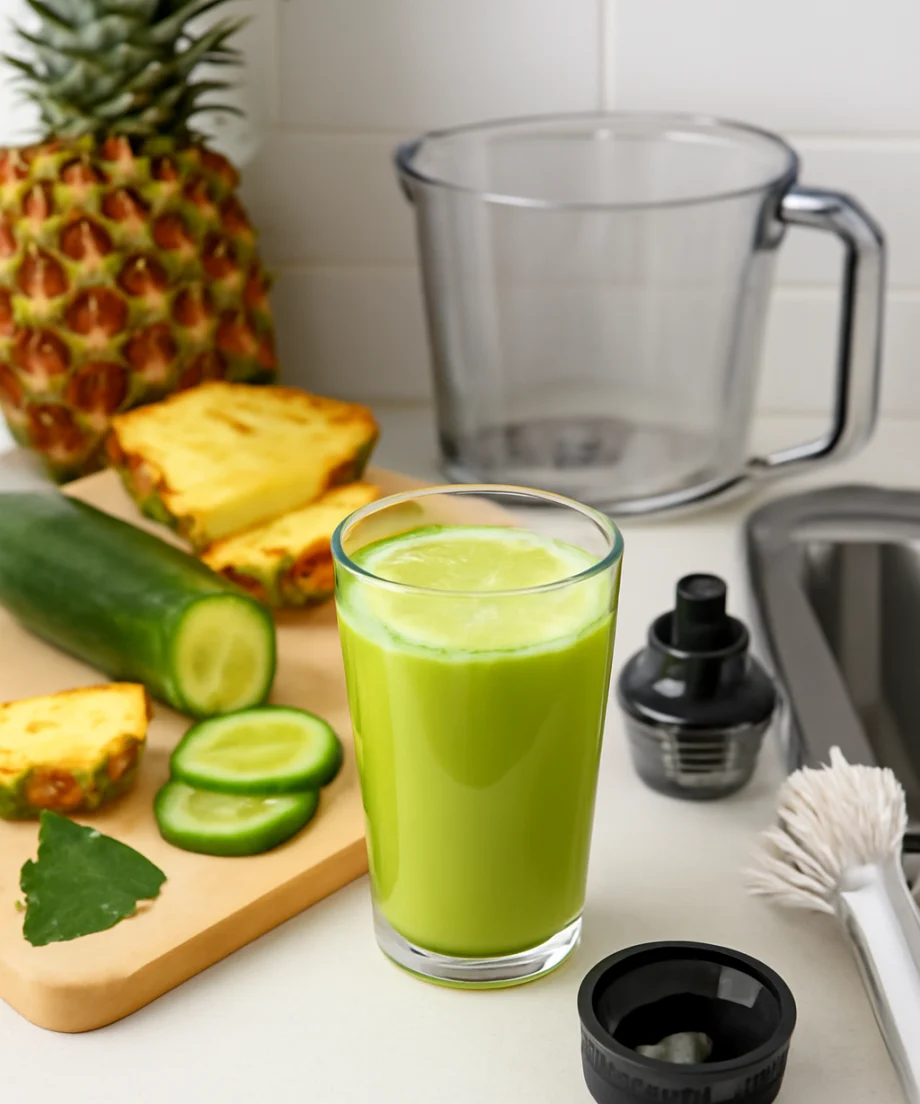
The fine holes in a strainer or filter basket can trap pulp even when the surface looks clean. Hold the basket under running water and brush gently from the outside, following the appliance instructions. Avoid metal scouring pads and aggressive scraping, which can damage the surface. If residue remains, soak the part only as long as the manufacturer recommends.
4. Clean the feed chute, lid, and pulp container separately
These larger pieces usually need only a rinse and a soft scrub. Check the underside of the lid and the rim around the feed chute, where pulp can collect unnoticed. Empty the pulp container before washing it so loose fibers do not clog the drain. If your model has a silicone seal or small rubber plug, remove and rinse it according to the manual.
5. Wipe the motor base rather than immersing it
Unplug the motor base and wipe it with a damp cloth. Keep water away from electrical openings, buttons, and the cord connection. Never submerge the motor base unless the manufacturer specifically says it is designed for immersion.
6. Let parts dry fully before reassembly
Place washed parts on a clean drying rack or towel with space for air to circulate. Reassembling wet parts can trap moisture in seams and around seals. Once everything is dry, store the brush with the juicer so it is ready for the next recipe.
Ingredient Alternatives and Flavor Adjustments
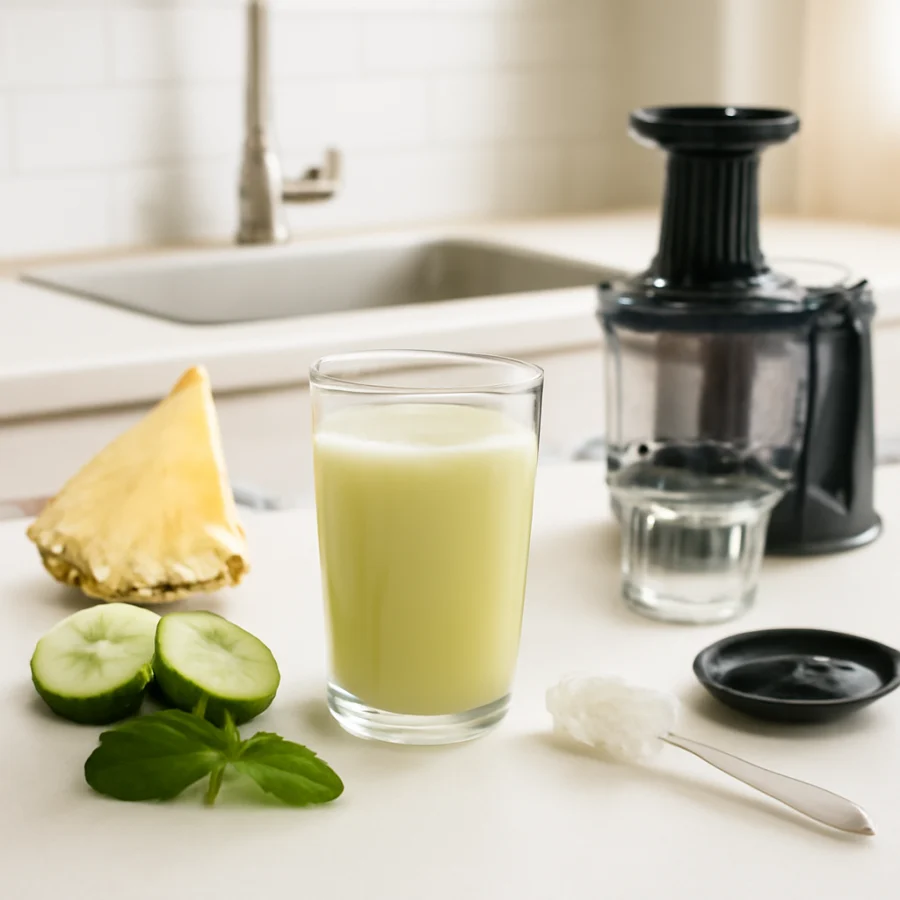
You can replace the English cucumber with two smaller standard cucumbers, although they may have more seeds and a stronger cucumber flavor. Pear can replace the apple for a softer, floral sweetness. A small piece of fresh ginger adds heat, but use it sparingly because its fibers can be noticeable in the pulp and its flavor can quickly dominate the drink.
If pineapple is too tart, choose a ripe pineapple with a fragrant aroma and golden color, but do not depend on smell alone to judge ripeness. You can also reduce the lime juice or leave it out. For a less sweet drink, use more cucumber and less apple. These changes affect flavor and yield, so add ingredients gradually rather than trying to correct the entire batch at the end.
Serving Suggestions
Serve the juice in chilled glasses with a cucumber ribbon, a small mint sprig, or a thin lime wheel. Stir before serving because fresh juice can separate naturally. This drink works well alongside breakfast or a snack, but it is not a substitute for a balanced meal. If you want a more filling option, serve it with foods that provide protein, fiber, and healthy fats.
Storage and Food-Safety Notes
Fresh juice is perishable. Pour it into a clean, covered container and refrigerate it promptly. Keep the refrigerator at 40°F or below, and use the juice as soon as practical rather than storing it for an extended period. Discard juice that has been left at room temperature too long, smells unusual, develops an unexpected appearance, or has been handled with an unclean container. Do not rely on refrigeration to restore the safety of juice that was left warm.
Wash produce, utensils, cutting boards, and removable juicer parts after use. Keep raw produce away from foods that are ready to eat, and follow current guidance from reliable food-safety authorities for handling fresh, unpasteurized juice. If you are serving juice to someone who is pregnant, very young, older, or immunocompromised, consider the additional precautions recommended by current public-health guidance.
For more practical guidance, browse these food safety and storage tips and explore additional fresh drink recipes. You can also review the site’s juicing and blending guides for equipment and preparation basics.
Frequently Asked Questions
Can I clean my juicer in the dishwasher?
Some juicers have dishwasher-safe removable parts, while others do not. Check the current instruction manual before placing any component in the dishwasher. The motor base should not go in the dishwasher.
What should I do if pineapple pulp dries onto the filter?
Unplug the juicer, remove the filter, and rinse it under lukewarm water. Use the supplied soft brush with gentle pressure. If the manual allows soaking, follow its recommended time. Do not use sharp tools or abrasive cleaners.
Why does my juice contain foam?
Foam is common with some juicers, especially when processing apples and pineapple. Let the juice sit briefly, stir it, or skim the foam if you prefer a clearer surface. Foam does not necessarily indicate a problem with the machine.
Can I save the leftover pulp?
Some pulp can be used in recipes such as muffins, sauces, or vegetable stock, depending on the ingredients and texture. Refrigerate it promptly in a clean, covered container and use it soon. Discard pulp that has been left warm or shows signs of spoilage.
How can I make cleanup even faster?
Prepare the sink first, cut produce to the correct size, empty the pulp container promptly, and rinse every removable part before sitting down to enjoy the drink. The most important habit is not letting wet pulp dry inside the juicer.


Comments
0No comments yet. Be the first to share a helpful note or question.
Leave a Comment
Your email address will not be published. Comments are reviewed before appearing on the site.