
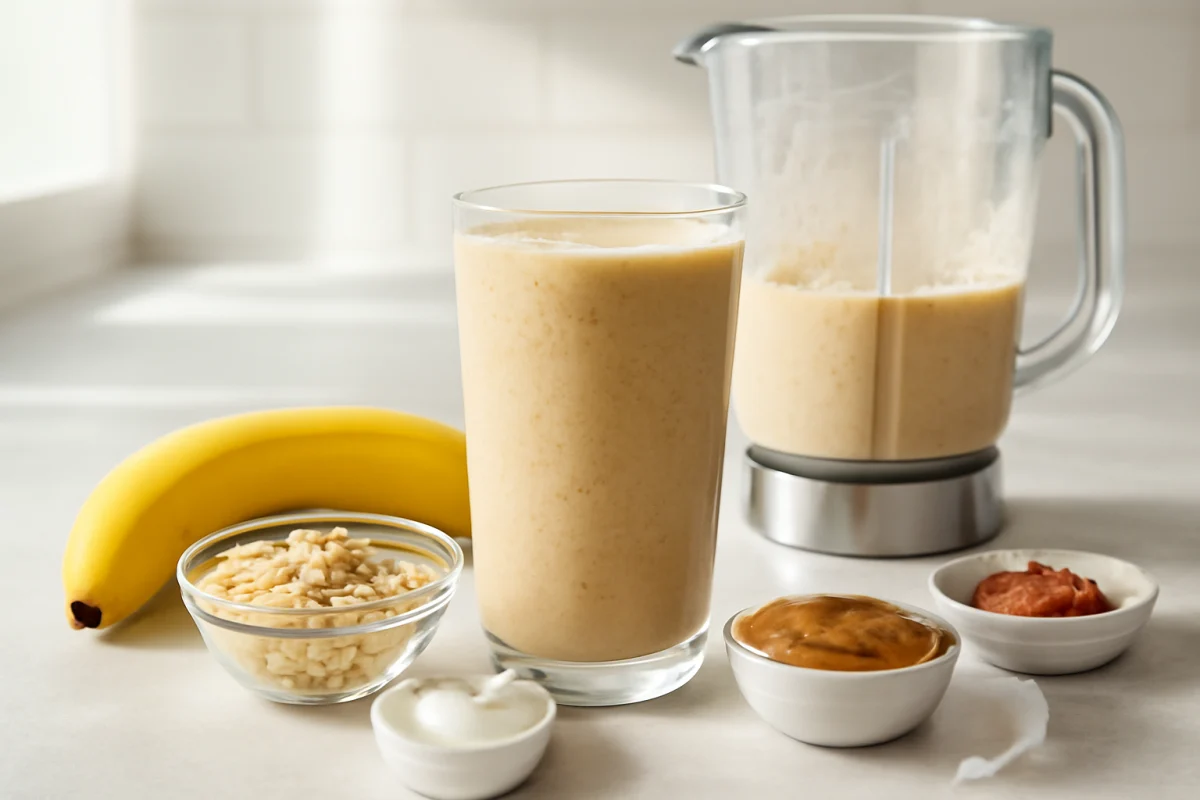
A morning protein smoothie can be a simple way to combine protein, fruit, oats, and liquid in one convenient drink. This banana, peanut butter, and oat version has a creamy texture, gentle sweetness, and enough substance to work alongside a balanced breakfast routine. It is easy to adjust for dairy-free preferences, nut allergies, or the ingredients already in your kitchen. For more recipes and practical drink guidance, visit cleanse drink guide.
The recipe uses Greek yogurt and peanut butter for protein, banana for sweetness and body, and rolled oats for a thicker texture. It does not promise a cleanse, detoxification, or weight-loss result, and it is not intended to replace varied meals every day. Instead, think of it as a flexible smoothie recipe for mornings when a blended drink fits your schedule.
Morning Protein Smoothie at a Glance
- Prep time: 5 minutes
- Total time: 5 minutes
- Servings: 1 large smoothie or 2 small servings
- Best for: A quick breakfast accompaniment or substantial snack
- Equipment: High-speed blender, measuring cups and spoons, and a serving glass
Ingredients
- 1 medium ripe banana, peeled
- 3/4 cup plain Greek yogurt
- 3/4 cup milk of choice, plus more if needed
- 2 tablespoons creamy peanut butter
- 1/4 cup old-fashioned rolled oats
- 1/2 teaspoon ground cinnamon
- 1/2 teaspoon vanilla extract
- 1 cup ice
Choose plain yogurt and unsweetened milk if you want more control over the sweetness. If the banana is very ripe, it may provide all the sweetness you need. If it is less ripe, you can add a small amount of maple syrup, but taste the finished smoothie before doing so.
How to Make This Morning Protein Smoothie
- Prepare the ingredients. Peel the banana and measure the yogurt, milk, peanut butter, oats, cinnamon, vanilla, and ice. If your blender has a smaller container, cut the banana into several pieces so it blends more easily.
- Add the liquid first. Pour the milk into the blender before adding thicker ingredients. This can help the blades move the mixture more smoothly and may reduce the need to stop and scrape the sides.
- Layer in the remaining ingredients. Add the yogurt, banana, peanut butter, oats, cinnamon, vanilla, and ice. Keeping the ice near the top can make it easier for the liquid and soft ingredients to circulate underneath.
- Blend gradually. Start on a low setting, then increase to high. Blend for about 45 to 60 seconds, or until the oats are no longer noticeably coarse and the drink looks evenly creamy.
- Adjust the texture. If the smoothie is too thick, add milk 1 tablespoon at a time and blend briefly after each addition. If it is too thin, add a few ice cubes or another spoonful of yogurt.
- Taste and serve. Check the flavor before pouring. Add a little more cinnamon or vanilla if desired, then serve immediately for the smoothest texture.
Why These Ingredients Work Together
Banana
Banana contributes natural sweetness and helps create a thick, soft texture without requiring a large amount of ice. A frozen banana makes the smoothie colder and thicker, while a fresh banana produces a lighter drink when paired with ice.
Greek yogurt
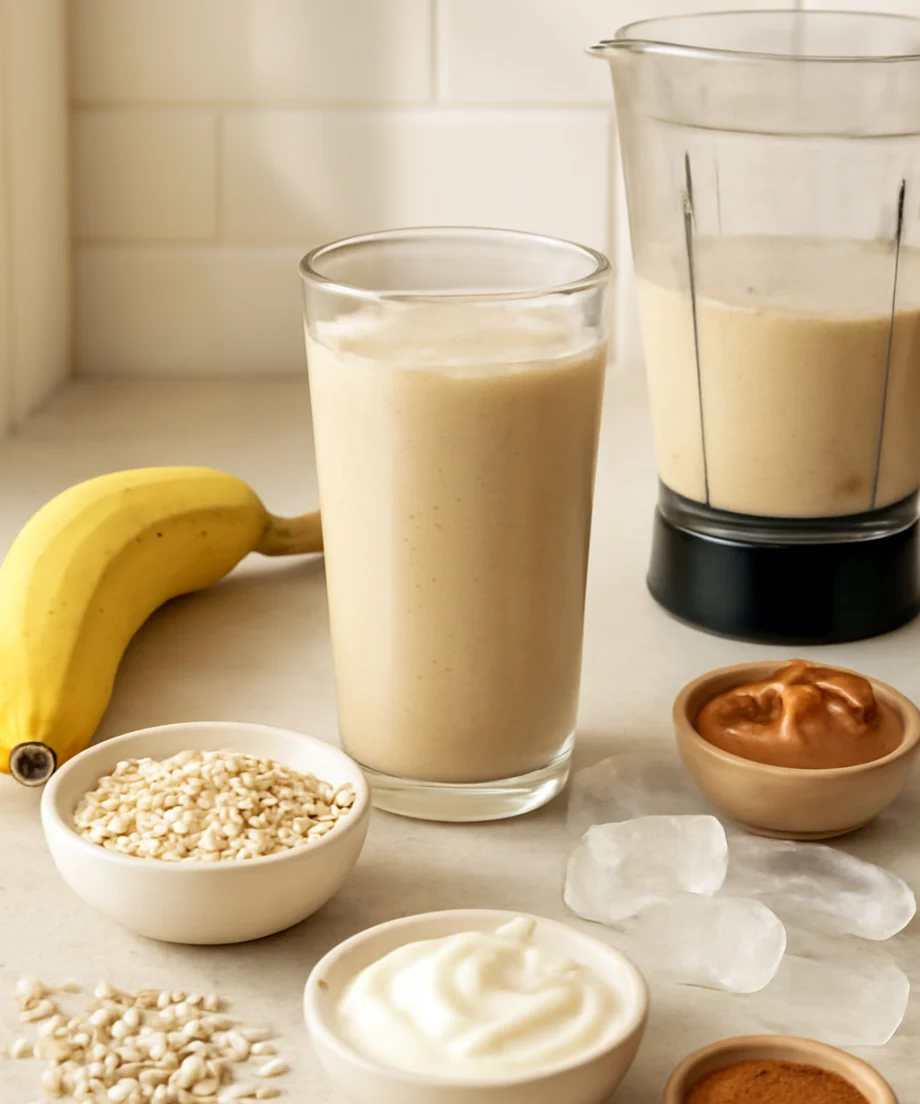
Plain Greek yogurt adds a tangy flavor and creamy consistency. It also contributes protein, but the exact amount varies by brand and serving size. Read the current Nutrition Facts label if protein content matters to your meal planning.
Peanut butter
Peanut butter brings a roasted flavor and a smooth, rich mouthfeel. Different products vary in sweetness, salt, and texture. Stir natural peanut butter before measuring if the oil has separated, and check the ingredient label if you need to avoid added sugar or specific allergens.
Rolled oats
Old-fashioned rolled oats thicken the drink and add a mild grain flavor. They usually blend more smoothly than steel-cut oats in a quick smoothie. For more information about ingredient choices and nutrition labels, browse the site’s drink and ingredient guides.
Helpful Substitutions
For a dairy-free smoothie: Use an unsweetened, plant-based yogurt and a milk alternative. Soy milk can provide a more substantial texture, while almond, oat, or coconut beverages may change the flavor and thickness. Check labels because protein levels differ widely among products.
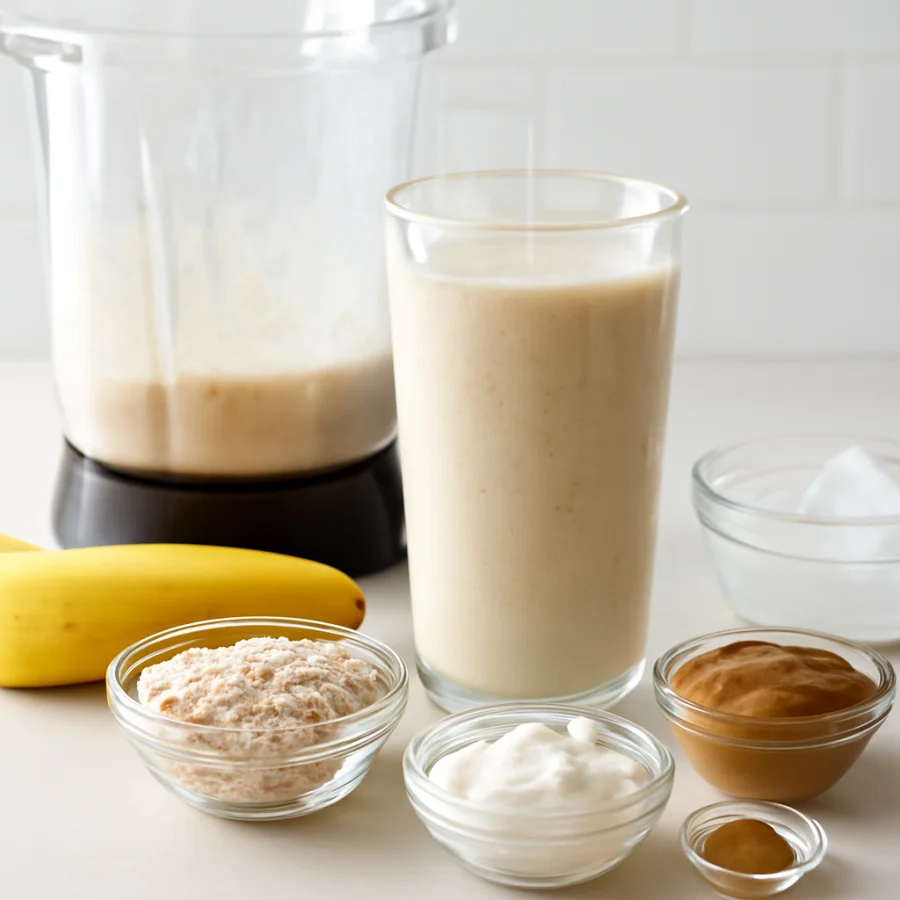
For a peanut-free option: Replace the peanut butter with sunflower seed butter, tahini, or another seed butter that fits your needs. If serving someone with a food allergy, avoid cross-contact by using clean equipment and ingredients that are clearly labeled for the relevant allergen.
For a less sweet drink: Use half a banana and add extra ice or a small handful of frozen cauliflower. Frozen cauliflower has a mild flavor but can make the smoothie thicker. You may need a little more liquid to blend it.
For a chocolate variation: Add 1 tablespoon of unsweetened cocoa powder. Cocoa can make the smoothie taste less sweet, so balance it with a fully ripe banana or a small amount of maple syrup if necessary.
For a fruitier variation: Add 1/2 cup of frozen strawberries or blueberries. Extra fruit may increase the thickness and coldness, so adjust with a splash of milk. If you enjoy experimenting with blended drinks, the drink recipes collection offers more ideas.
Blending Tips for a Smoother Drink
- Use a ripe banana for better blending and natural sweetness.
- Put liquid in the blender first, followed by yogurt and softer ingredients.
- Give oats a few extra seconds of blending if your blender is not high powered.
- Do not fill the blender beyond the manufacturer’s recommended capacity.
- If the motor strains, stop the blender, unplug it if needed, and add more liquid before continuing.
- For a colder smoothie, freeze peeled banana pieces in a sealed freezer-safe container ahead of time.
Serving Suggestions
Pour the smoothie into a glass and drink it shortly after blending. For a more complete breakfast, serve it with foods that add variety, such as whole-grain toast, fruit, eggs, or another option that suits your preferences. You can also divide the recipe into two smaller servings rather than treating the full amount as one portion.
For a thicker bowl-style version, reduce the milk to 1/2 cup and blend carefully. Spoon the mixture into a bowl and add toppings such as sliced banana, pumpkin seeds, or a small sprinkle of oats. Eat toppings promptly, especially if they contain perishable ingredients.
Storage and Food Safety
This smoothie is best immediately after blending because oats continue to absorb liquid and the texture may become thicker or separated over time. If you need to prepare it ahead, pour it into a clean, covered container and refrigerate it promptly. Keep it cold and use it within the timeframe recommended by current food-safety guidance and the storage directions for the ingredients used.
Shake or stir refrigerated smoothies before drinking, and discard the drink if it has been left at room temperature for an extended period, develops an unusual odor, or shows other signs of spoilage. Do not store a partially consumed smoothie for later because contact with the mouth can introduce bacteria. Wash the blender jar, lid, blade assembly, measuring tools, and work surface after preparation. For broader guidance, see the food safety and storage guide.
When freezing bananas, peel them first and store the pieces in a sealed freezer-safe bag or container. Wash fresh produce under running water before cutting or blending, and follow the package instructions for yogurt, milk, nut butter, and other refrigerated ingredients. People with allergies, medical conditions, or special nutrition needs should review ingredient choices with an appropriate health professional.
Frequently Asked Questions
Can I make this morning protein smoothie without protein powder?
Yes. This recipe uses Greek yogurt and peanut butter instead of protein powder. The final protein amount depends on the brands and quantities you choose, so check the product labels for specific information.
Can I use a fresh banana instead of a frozen banana?
Yes. Add the listed ice to keep the smoothie cold. A frozen banana usually creates a thicker texture, while a fresh banana may blend a little more easily.
Why is my smoothie too thick?
Oats, yogurt, frozen fruit, and seed or nut butter all absorb liquid or add thickness. Blend in 1 tablespoon of milk at a time until the consistency suits you.
Can I use quick oats?
Yes. Quick oats generally blend well and may produce a softer texture. Avoid using dry steel-cut oats unless your blender and recipe specifically support them, because they can remain gritty.
Can I prepare the ingredients the night before?
You can portion the dry ingredients and freeze banana pieces ahead of time. Store refrigerated ingredients safely, then blend in the morning. Keeping the liquid and yogurt cold helps the finished drink stay refreshing.
Is this smoothie a complete meal?
That depends on your appetite, energy needs, and the rest of your eating pattern. The recipe provides several food groups, but it may not meet everyone’s needs as a stand-alone meal. Consider serving it with additional foods when appropriate rather than relying on one drink to cover every nutritional need.
For another blended breakfast approach, compare this recipe with the site’s banana-oat berry smoothie. With a few practical substitutions, this morning protein smoothie can fit different tastes while remaining quick, creamy, and easy to prepare.
Comments
0No comments yet. Be the first to share a helpful note or question.
Leave a Comment
Your email address will not be published. Comments are reviewed before appearing on the site.