
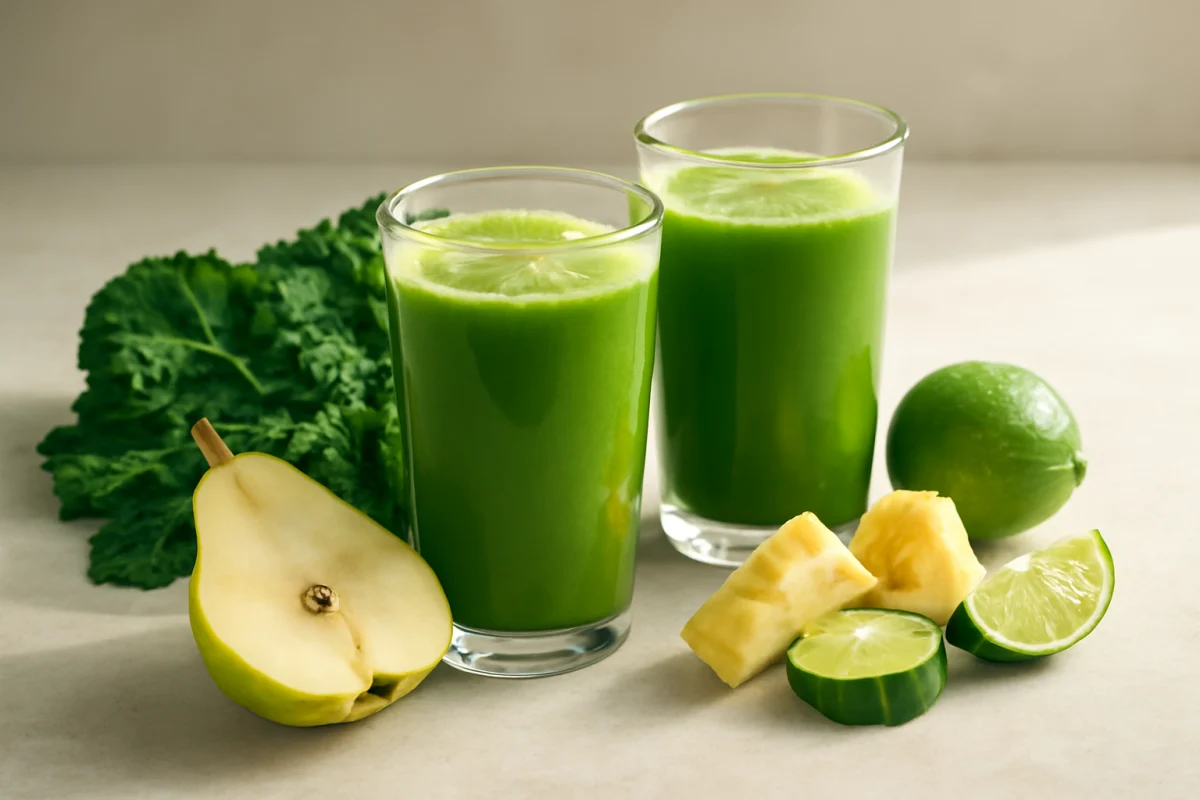
The easiest way to sweeten bitter green juices naturally is to pair strongly flavored greens with ripe fruit, cucumber, citrus, and plenty of cold water or ice. This Pear, Pineapple, and Lime Green Juice uses a modest amount of fruit to soften the bitterness of kale and parsley without relying on added sugar. It is bright, refreshing, and flexible enough for a juicer or blender. For more recipes and practical drink guidance, visit cleanse drink guide.
Bitter greens can taste intense when they are used alone, especially if the leaves are mature or the juice contains parsley, arugula, dandelion greens, or a large amount of kale. Instead of covering every sharp note with sweetener, this recipe builds balance: pear contributes mellow sweetness, pineapple adds a fuller tropical flavor, cucumber supplies freshness, and lime makes the finish taste cleaner. The result is a practical drink to serve with breakfast or alongside a snack, not a replacement for a balanced meal.
Pear, Pineapple, and Lime Green Juice at a Glance
- Prep time: 10 minutes
- Total time: 10 minutes with a juicer; about 15 minutes with a blender
- Servings: 2 small servings, about 8 ounces each
- Method: Juicer or blender
- Flavor: Fresh, lightly tropical, tart, and naturally sweet
Ingredients
- 2 packed cups baby kale or tender kale leaves, washed and tough stems removed
- 1 cup fresh pineapple chunks, peeled and cored
- 1 ripe Bartlett or Anjou pear, cored and cut into pieces
- 1 small English cucumber, cut into pieces
- 1 tablespoon fresh lime juice, plus more to taste
- 1/2 cup cold water, only if using a blender
- Ice, for serving if desired
Choose a pear that gives slightly when pressed near the stem. A firm, underripe pear will contribute less sweetness, while an overripe pear can make the drink cloudy and grainy. Fresh pineapple is useful when available, but unsweetened canned pineapple packed in juice can work as an alternative. Drain it before blending or juicing, and check the label so you do not accidentally use pineapple packed in syrup.
How to Make Bitter Green Juice Taste Sweeter
- Wash and prepare the produce. Rinse the kale, cucumber, pear, and pineapple under cool running water. Scrub the cucumber gently if needed. Remove the pear core, pineapple peel and core, and any thick kale stems. Cut larger pieces so they fit comfortably into your juicer or blender.
- Start with the mellow ingredients. For a juicer, feed the cucumber and pear through first. Their water content and mild flavor help create a smoother base before the kale and parsley-like flavors are added. If using a blender, add the water, cucumber, pear, and pineapple first.
- Add the greens and pineapple. Juice the kale and pineapple, alternating handfuls when possible. In a blender, add the kale and pineapple after the liquid ingredients. Blend on high until the mixture is as smooth as your appliance allows.
- Finish with lime. Stir in the lime juice after juicing or blend it in briefly. Taste the drink before adding more. Lime should brighten the sweetness and soften the grassy flavor, but too much can make the juice sharply sour.
- Strain if preferred. A blender will produce a thicker drink with more pulp. Pour it through a fine-mesh strainer if you prefer a juice-like texture, pressing gently with a spoon. You can also leave the pulp in for a fuller texture.
- Serve right away. Pour into two glasses over ice, if desired. Stir immediately before drinking because natural separation can occur.
Why These Ingredients Help Balance Bitter Greens
Pear
Pear has a gentle sweetness and a soft floral flavor that blends well with greens. It is less sharp than some citrus fruits and usually does not overpower kale. Ripe pears are the best choice because they bring more flavor with less need for additional fruit.
Pineapple
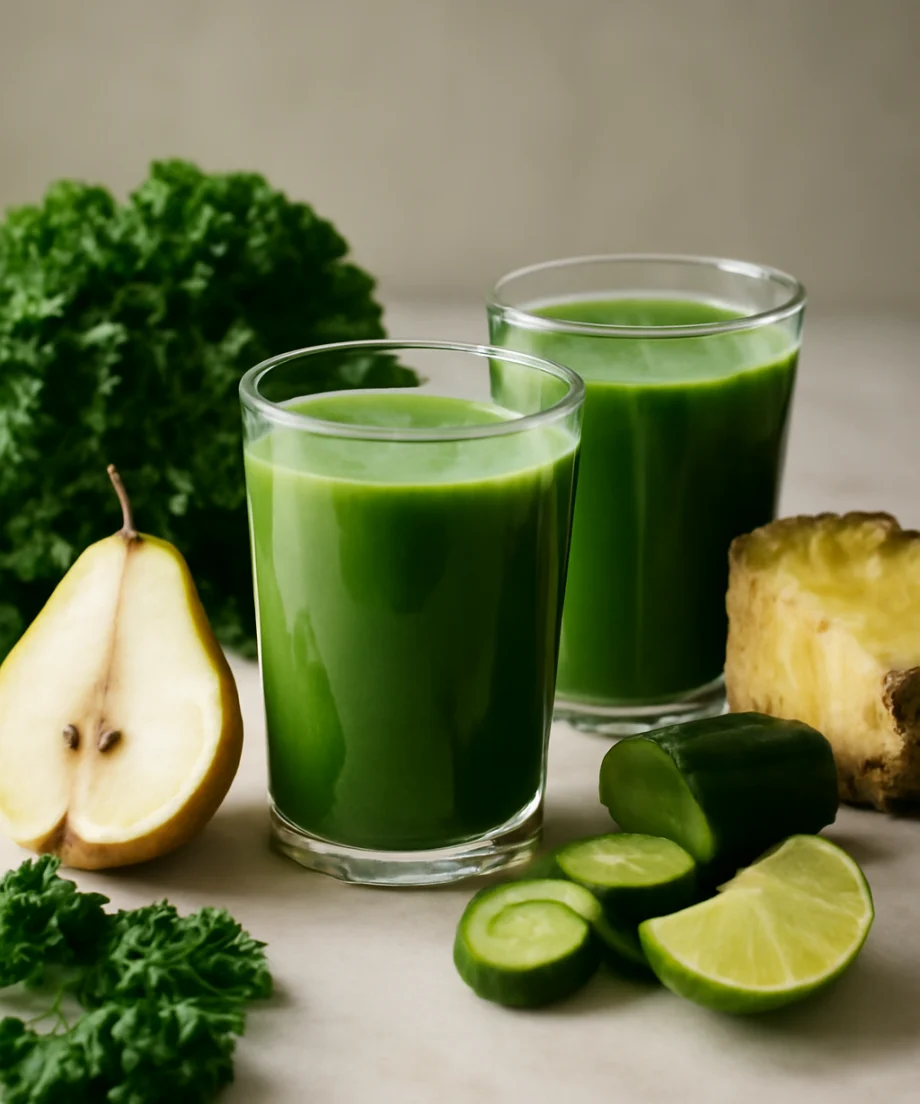
Pineapple adds a pronounced sweet-tart character that can make a green juice more approachable. Because its flavor is strong, a little can go a long way. If you prefer a less tropical drink, replace half of the pineapple with another pear or a few chunks of green apple.
Cucumber
Cucumber is not especially sweet, but it adds water and a cool, mild flavor that dilutes bitterness without requiring much fruit. English cucumbers are convenient because they have small seeds and thin skin, although other cucumbers can also be used after washing.
Lime
Lime does not sweeten a drink, but acidity can make flavors taste more balanced. It helps reduce the heavy, grassy impression that some greens leave behind. Add it gradually so the drink remains refreshing rather than sour.
Juicer and Blender Methods
A juicer creates a thinner drink and separates much of the pulp. Feed soft ingredients such as pear and cucumber between firmer pieces when your machine’s instructions allow it. Kale leaves may juice more effectively when rolled into a compact bundle. Always follow the operating and cleaning instructions supplied with your appliance.
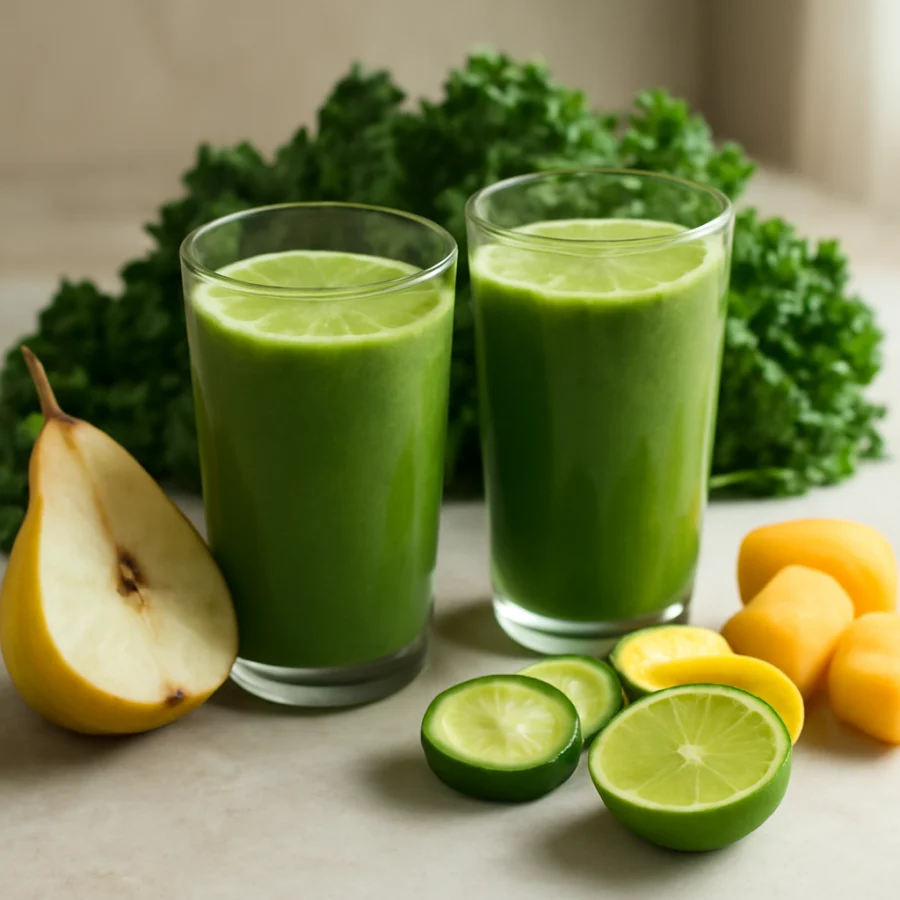
A blender keeps the produce pulp, so the finished drink will be thicker and more filling in texture. The added water helps the blades move, but start with less and add more only if needed. If the mixture remains difficult to blend, stop the machine, scrape down the sides with the appliance turned off, and continue in short intervals.
If you want a drink with a texture between juice and a smoothie, blend the ingredients with 1/4 cup of water and strain only part of the mixture. This keeps some body while removing the roughest fibers.
Ingredient Alternatives
- For a milder green flavor: Replace half of the kale with baby spinach. Spinach is generally softer in flavor, though its taste can still vary by freshness and quantity.
- For extra sweetness: Use a very ripe pear or add 1/2 cup of seedless red grapes. Taste before adding more fruit.
- For a less sweet version: Replace some pineapple with additional cucumber or celery.
- For a spicier finish: Add a thin slice of fresh ginger. Start with a small amount because ginger can become dominant quickly.
- For an apple-based blend: Substitute one crisp, sweet apple for the pear. Remove the seeds and stem before processing.
- For no citrus: Use a small splash of unsweetened pineapple juice or a few extra cucumber pieces, recognizing that the drink may taste less bright.
Tips for Reducing Bitterness Without Added Sugar
Use fresh greens and remove thick stems, which can taste more assertive than tender leaves. Begin with a smaller quantity of bitter greens and increase it gradually as you learn what you enjoy. Chilling the ingredients before preparation can also make the drink seem more refreshing.
Balance matters more than simply adding sweet fruit. If the drink tastes grassy, add a little more pear or pineapple. If it tastes too sweet, add cucumber, lime, or a few ice cubes. If it tastes too sour, add more pear rather than extra water, which can dilute the flavor without correcting the balance.
Do not rely on concentrated sweeteners to hide a flavor you dislike. Honey, maple syrup, and agave are still added sugars and can make it harder to judge the natural balance of the ingredients. If you choose to use one, keep the amount small and treat it as an optional flavor choice, not a requirement.
Serving Suggestions
Serve this juice cold in small glasses with breakfast, a sandwich, or a simple snack. It also works as a nonalcoholic option at a casual brunch. Garnish with a thin lime wheel, a small cucumber ribbon, or a few pineapple pieces. For a more substantial drink, blend rather than strain so the beverage retains more of its natural pulp.
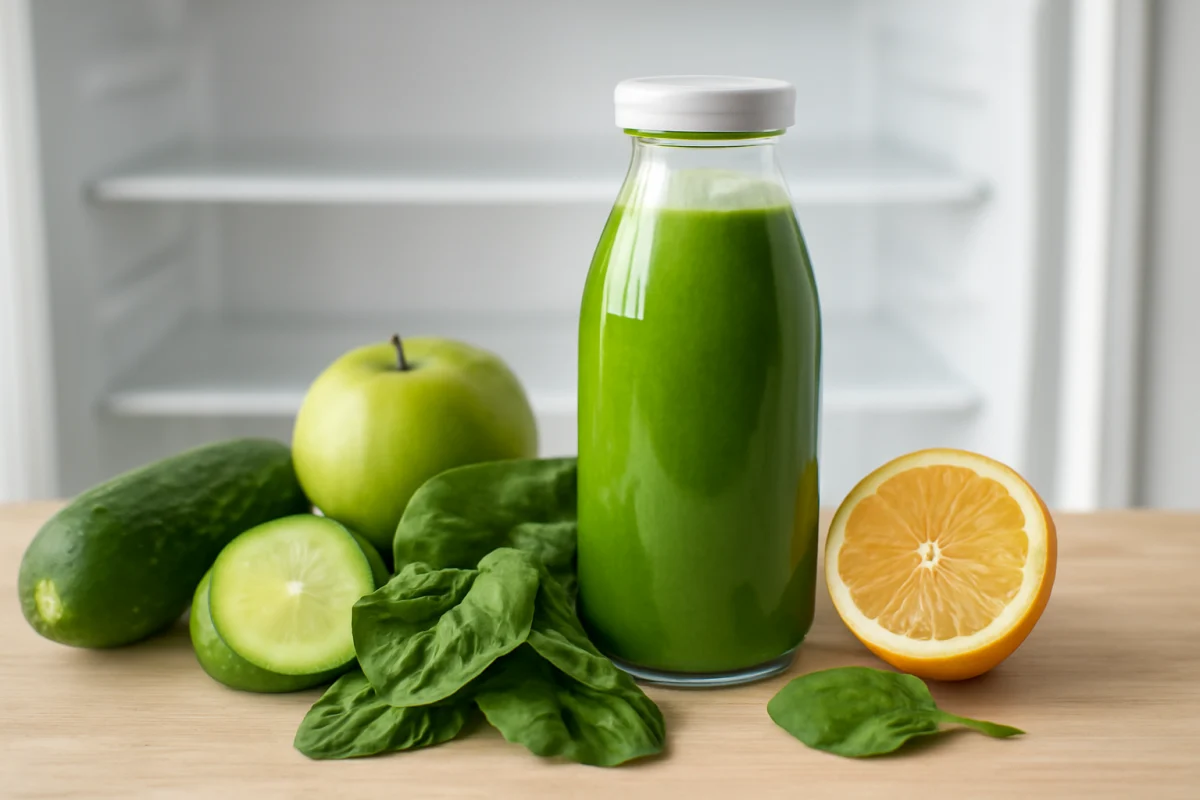
For more ideas, browse these juicing and blending guides or try this cucumber, apple, and spinach green juice. Different greens and fruits vary in intensity, so small test batches are a useful way to find your preferred ratio.
Storage and Food Safety
Fresh juice is best served immediately. If you need to hold it briefly, pour it into a clean, covered container, refrigerate it promptly, and use it within 24 hours for the best flavor and quality. Keep the container cold and discard the drink if it develops an unusual odor, appearance, or taste.
Wash produce under cool running water before cutting or juicing, even when the peel will be removed. Use clean equipment, clean hands, and a clean cutting surface. Do not leave fresh juice at room temperature for extended periods. For additional guidance, review these food safety and storage tips.
Frequently Asked Questions
What is the best fruit for sweetening bitter green juice?
Ripe pears, sweet apples, pineapple, grapes, and mango can all soften bitter greens. Pear is a particularly gentle choice because it adds sweetness without making the drink strongly acidic or tropical.
Can I make this recipe without pineapple?
Yes. Replace the pineapple with another ripe pear, a sweet apple, or 1/2 cup of grapes. The final flavor will be milder, so adjust the lime gradually.
Why does my green juice taste bitter even after adding fruit?
The greens may be especially mature, the fruit may be underripe, or the mixture may contain too much kale or another bitter ingredient. Add cucumber and ripe pear in small amounts, then adjust with lime. Chilling the drink can also improve its overall impression.
Can I use frozen pineapple?
Yes. Thaw it enough for your appliance to process safely, or use it in a blender with the water. Frozen pineapple can make the drink colder, but it may also add less liquid than fresh pineapple.
Is this juice a meal replacement or a detox treatment?
No. This is a produce-based beverage intended for flavor and refreshment. It does not remove toxins, treat illness, guarantee weight loss, or replace balanced meals or professional medical care. Enjoy it as part of an overall eating pattern that includes a variety of foods and adequate hydration.


Comments
0No comments yet. Be the first to share a helpful note or question.
Leave a Comment
Your email address will not be published. Comments are reviewed before appearing on the site.