

To prevent green juice from browning, use very fresh produce, add a small amount of lemon juice, limit air exposure, and refrigerate the drink promptly in a tightly sealed container. These steps will slow the color change, but they cannot stop natural oxidation forever. For the best flavor and appearance, prepare green juice shortly before serving. For more recipes and practical drink guidance, visit natural cleanse drinks.
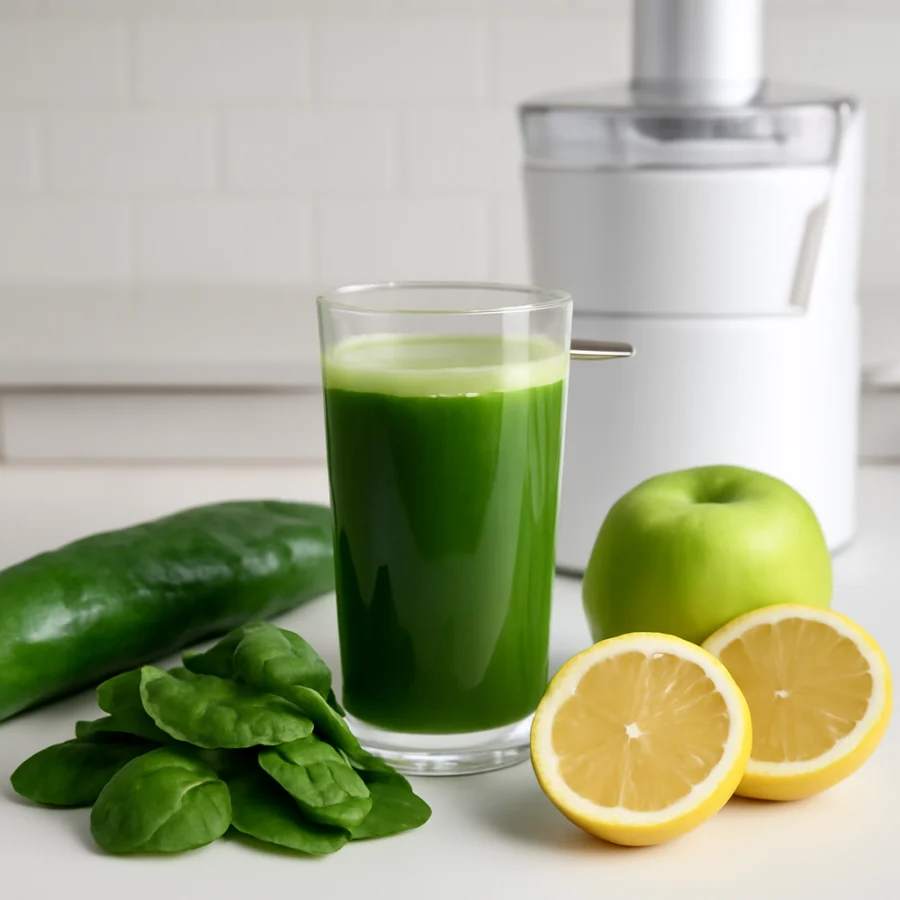
This cucumber, spinach, apple, and lemon green juice is a practical recipe for learning how to prevent green juice from browning without relying on complicated equipment or unusual ingredients. It has a clean, lightly sweet flavor and works well as a fresh beverage alongside a meal or snack. As with any homemade juice, it is a drink rather than a replacement for a balanced eating pattern.
Why green juice turns brown
Browning usually happens when cut produce is exposed to oxygen. Cutting, shredding, blending, and juicing break open plant cells, allowing oxygen to interact with naturally occurring compounds. Apples are especially likely to brown after cutting, while leafy greens can gradually lose their bright color as the juice sits.
Time, warmth, light, and air in the container can all make the change more noticeable. A brownish tint does not automatically mean the juice is unsafe, but color change can happen along with a decline in fresh flavor and aroma. Sour, fermented, fizzy, or unpleasant smells are reasons to discard the drink rather than trying to correct it.

Cucumber-Spinach Green Juice with Lemon
This recipe uses lemon juice for brightness and to help slow browning. It is designed for a centrifugal or masticating juicer, but you can also use a blender and strain the mixture if needed.
Preparation details
- Prep time: 10 minutes
- Total time: 15 minutes
- Servings: 2, about 8 ounces each
Ingredients
- 1 large English cucumber, about 12 ounces, rinsed and cut into pieces
- 2 packed cups fresh baby spinach, rinsed
- 1 medium crisp apple, rinsed, cored, and cut into wedges
- 1 medium lemon, peeled and seeded
- 1/2-inch piece fresh ginger, peeled, optional
- 1/2 cup cold water, only if using a blender
How to make green juice and slow browning
- Wash your hands and produce. Rinse the cucumber, spinach, apple, lemon, and ginger under cool running water. Use a clean produce brush on firm produce if needed. Do not use soap or household cleaners on fruits and vegetables.
- Chill the ingredients. Cold produce can help keep the juice refreshing and may slow the pace of quality changes. Pat the spinach dry so excess water does not dilute the flavor.
- Prepare the lemon early. Peel and seed the lemon. Citrus is included both for flavor and because its acidity can help slow browning in cut fruit. If your lemon is especially large or tart, begin with half and add more to taste.
- Juice the ingredients. Feed the cucumber, spinach, apple, lemon, and ginger through the juicer according to the appliance manufacturer's directions. Alternating soft spinach with cucumber or apple can help move leafy greens through some juicers.
- Stir briefly. Stir the finished juice with a clean spoon just long enough to combine it. Avoid vigorous whisking, which can incorporate more air.
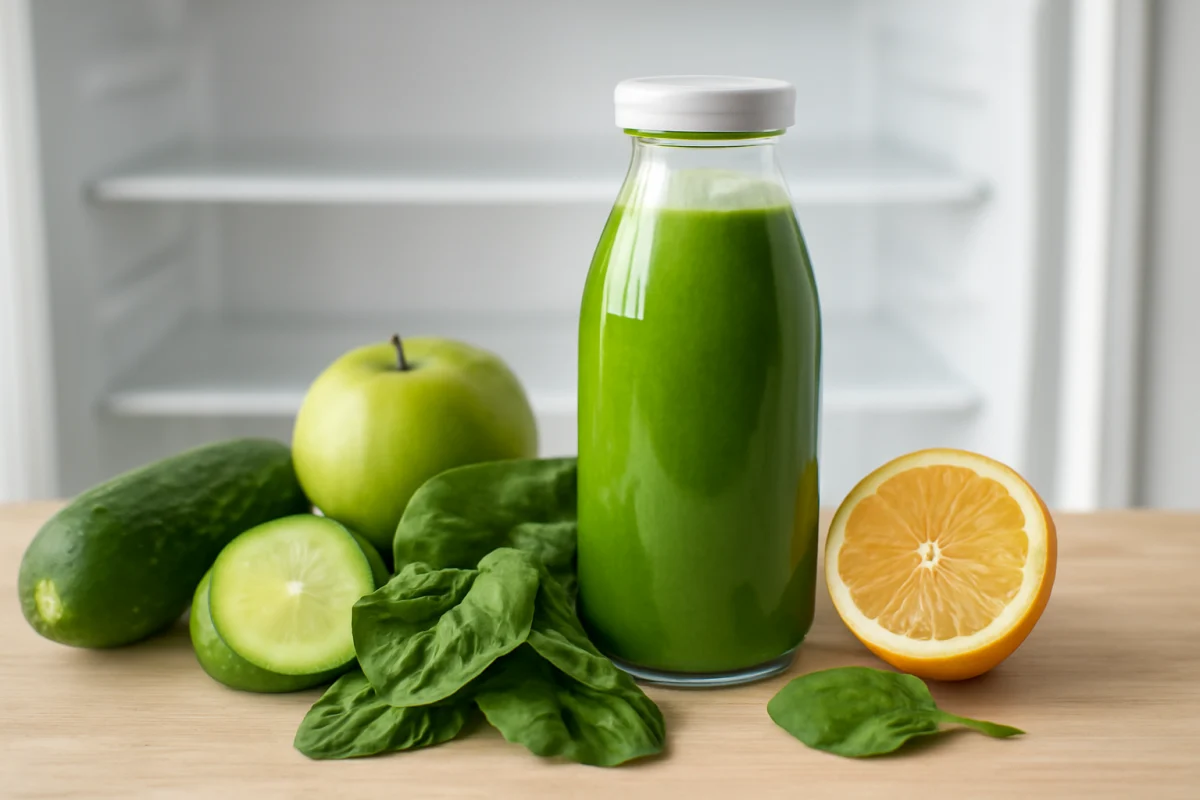
- Serve right away or store carefully. Pour the juice into clean glasses for immediate serving. If you are saving it, transfer it to a clean, food-safe container with a tight lid, leaving as little air space as practical, and refrigerate it promptly.
Blender method
Add the cucumber, spinach, apple, lemon, ginger, and cold water to a blender. Blend until smooth, then pour the mixture through a fine-mesh strainer or clean juice bag if you prefer a thinner drink. Press gently rather than squeezing aggressively, since forceful handling can make the finished drink cloudy and foamy. Transfer it to a covered container and chill immediately.
Best ways to prevent green juice from browning
Use lemon or lime in moderation
Lemon juice is one of the simplest additions for slowing browning in apple-based green juice. It also balances sweet ingredients and sharpens the flavor of cucumber and spinach. Lime juice can be used as an alternative, although its stronger flavor may be more noticeable. Add citrus gradually so the drink remains pleasant rather than overly sour.
Reduce air exposure
Pour juice into the serving glass or storage bottle soon after preparation. A container that is much larger than the amount of juice leaves more air above the drink, while a tightly fitting lid helps limit continued exposure. Do not shake the juice repeatedly, and avoid leaving it uncovered on the counter.
Keep the drink cold
Refrigerate fresh juice promptly instead of allowing it to sit at room temperature. Cold storage helps preserve quality, but it does not make raw juice shelf-stable. For general handling and storage guidance, consult current recommendations from reliable food-safety authorities and see these food safety and storage guides.
Prepare produce just before juicing
Pre-cut apples, leafy greens, and herbs begin changing as soon as their interior surfaces are exposed to air. You can wash and organize ingredients ahead of time, but cutting and juicing them close to serving will usually give you a brighter-looking drink. Remove bruised or damaged sections before preparation.
Choose ingredients that hold their color
Cucumber, celery, romaine, and fresh herbs can create a green base, while lemon helps balance the flavor. Apples add sweetness but are more prone to browning after cutting. If appearance is your priority, use a smaller amount of apple and increase cucumber or celery instead. Spinach gives a mild flavor, while kale creates a stronger, more vegetal drink.
Ingredient alternatives
- For a milder drink: Replace some of the spinach with romaine lettuce or additional cucumber.
- For more sweetness: Use a sweet apple variety, such as a Fuji or Gala, without adding refined sugar.
- For a sharper flavor: Add a little extra lemon or use lime.
- For a more herbal profile: Add a small handful of parsley or mint, keeping in mind that herbs can quickly dominate the drink.
- For a juice without apple: Use cucumber, celery, lemon, and spinach. The result will be less sweet and more savory.
- For a blender-friendly version: Keep the water cold and strain the finished mixture if you do not want a smoothie-like texture.
Serving suggestions
Serve the juice cold in a small glass with a lemon wedge. Pour it just before serving to preserve its freshest color. It pairs well with breakfast foods, a sandwich, grain bowl, or a light snack. If you use ice, add it directly to the glass rather than blending a large amount into the juice, which may dilute the flavor.
For more recipe ideas and preparation approaches, browse the Juicing & Blending section. You can also compare this recipe with an easy cucumber, apple, and spinach green juice.
Storage and food-safety notes
Fresh homemade juice is perishable because it is uncooked and contains moisture-rich produce. Store it in a clean, covered container in the refrigerator and use it as soon as possible for the best quality. Follow your refrigerator's recommended temperature and current guidance from a reliable food-safety source. If the juice has been left out for an extended period, has an unusual odor, develops unexpected fizz, or tastes fermented, discard it.
Wash juicer parts, blender components, knives, cutting boards, and storage containers thoroughly after use. Disassemble equipment according to the manufacturer's instructions so pulp does not remain in hidden areas. If you are serving juice to someone who is pregnant, older, immunocompromised, or very young, use extra care with raw produce and follow current food-safety advice.
Frequently asked questions
Does lemon juice completely stop green juice from browning?
No. Lemon juice may slow browning, but it cannot prevent all color changes. Freshness, temperature, air exposure, the type of produce, and storage time all affect the result.
Why did my green juice turn brown so quickly?
The likely causes include older produce, a browning-prone apple, extended blending, a large amount of air in the container, or storage at room temperature. Use fresh ingredients, add citrus, chill the juice, and seal it promptly.
Can I make green juice the night before?
You can prepare it ahead, but the color and flavor may be less fresh by the next day. Store it immediately in a clean, tightly sealed container in the refrigerator and check its smell and appearance before drinking.
Is brown green juice automatically unsafe?
No. Browning alone is generally a quality change, not proof of spoilage. However, an unpleasant smell, fermented taste, unexpected carbonation, mold, or questionable storage history means the juice should be discarded.
Should I peel the cucumber or apple?
Peeling is optional when the produce is properly rinsed. Leaving the peel on can add color and flavor, while peeling may create a smoother-tasting drink. Remove stickers, damaged areas, and apple seeds before juicing.
The most reliable approach to preventing green juice from browning is simple: start with fresh produce, include lemon or lime, minimize air, keep the drink cold, and serve it soon after making it. These habits improve appearance and flavor without promising that the juice will remain bright indefinitely.


Comments
0No comments yet. Be the first to share a helpful note or question.
Leave a Comment
Your email address will not be published. Comments are reviewed before appearing on the site.