
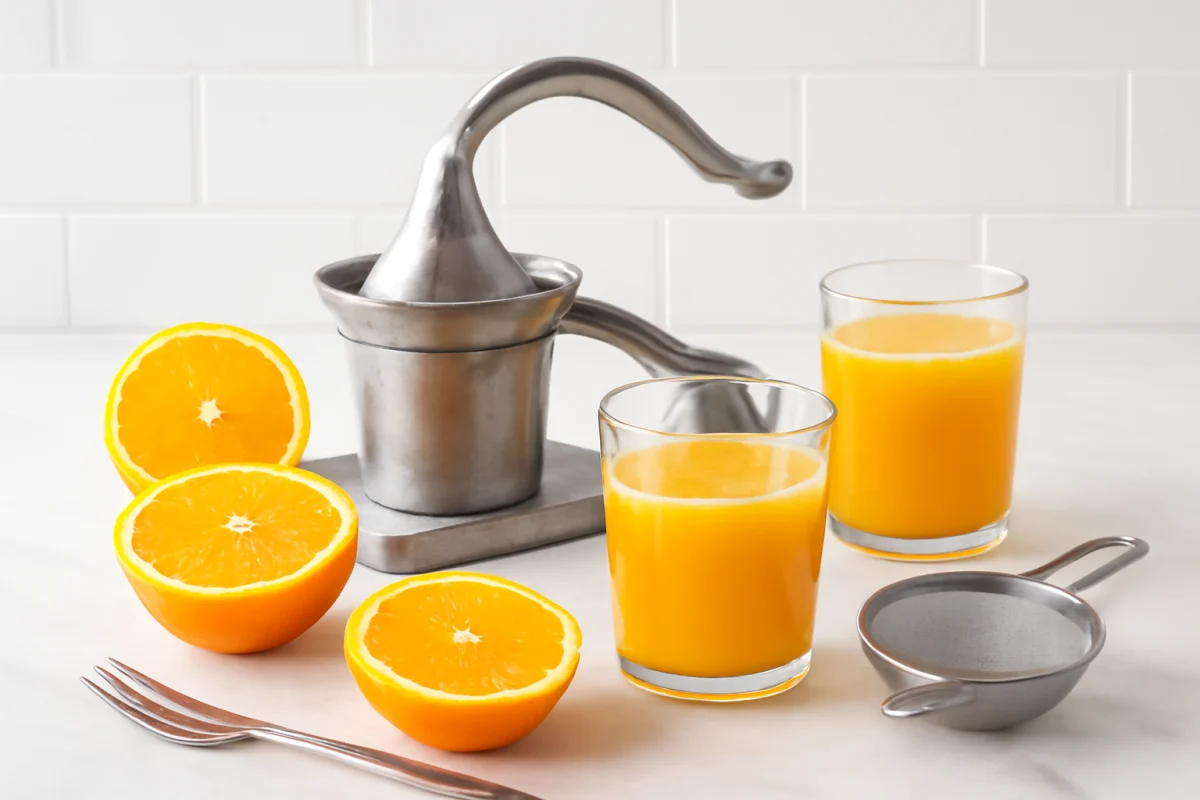
To make fresh orange juice without a juicer, roll ripe oranges on the counter, cut them in half, and squeeze them with your hands, a fork, or a citrus press over a bowl. Strain the juice if you prefer a smoother drink, then serve it cold or over ice. This simple method requires basic kitchen tools and produces a bright, fresh-tasting drink in about 10 minutes. For more recipes and practical drink guidance, visit natural cleanse drinks.
Fresh orange juice is worth trying when you want a flavorful beverage made from a short ingredient list. It works well for breakfast, brunch, mocktails, and recipes that call for citrus juice. Since you control the preparation, you can adjust the pulp, sweetness, and serving temperature to suit your preference without relying on specialized equipment.
Fresh Orange Juice Without a Juicer: At a Glance
- Prep time: 10 minutes
- Total time: 10 minutes
- Servings: 2
- Estimated yield: About 2 cups, depending on the oranges
- Best tools: Citrus press, fork, blender, fine-mesh strainer, or clean hands
Ingredients
- 6 medium oranges, preferably seedless and chilled
- 1 to 2 tablespoons cold water, optional for a lighter texture
- Ice, optional, for serving
Oranges vary in size and juiciness, so the final amount may differ. Navel oranges are a convenient choice because they are usually seedless and easy to find. Valencia oranges are also useful for juicing and may provide a particularly juicy result when they are in season. Choose fruit that feels heavy for its size and has a fragrant citrus aroma. Avoid oranges with soft, leaking, or visibly moldy spots.
How to Make Fresh Orange Juice Without a Juicer
1. Wash and prepare the oranges
Rinse the oranges under cool running water and gently rub the peels with clean hands. Dry them with a clean towel. Even though you will not eat the peel, washing the fruit helps reduce the chance of transferring surface dirt to the cut side or your kitchen tools.
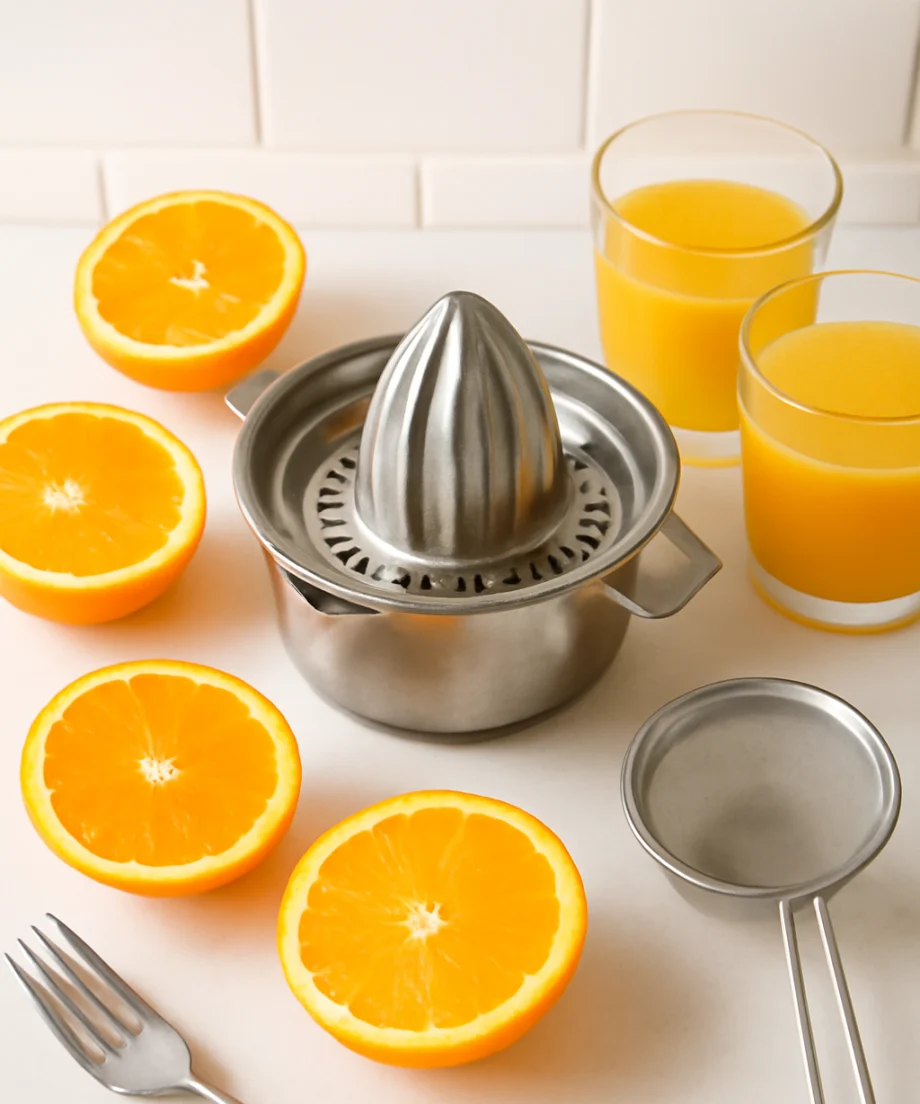
For easier juicing, let refrigerated oranges sit at room temperature for a short time, or roll each orange firmly on the counter with your palm for several seconds. Do not press so hard that the peel breaks. Rolling helps loosen some of the juice inside the fruit.
2. Cut the oranges in half
Use a clean cutting board and a sharp knife to slice each orange crosswise. A crosswise cut exposes the segments and makes the fruit easier to squeeze. If you notice seeds, remove them with the tip of a clean knife or a spoon before or during squeezing.
3. Choose a squeezing method
The easiest method is a hand-held citrus press. Place half an orange cut-side down in the press and squeeze it over a bowl or large measuring cup. A reamer or manual citrus squeezer also works well.
If you do not have a citrus tool, hold one orange half over a bowl and squeeze it with your hand. Then use a fork to twist and loosen the remaining pulp while continuing to press the fruit. Rotate the orange half as you work so you extract juice from different sections.
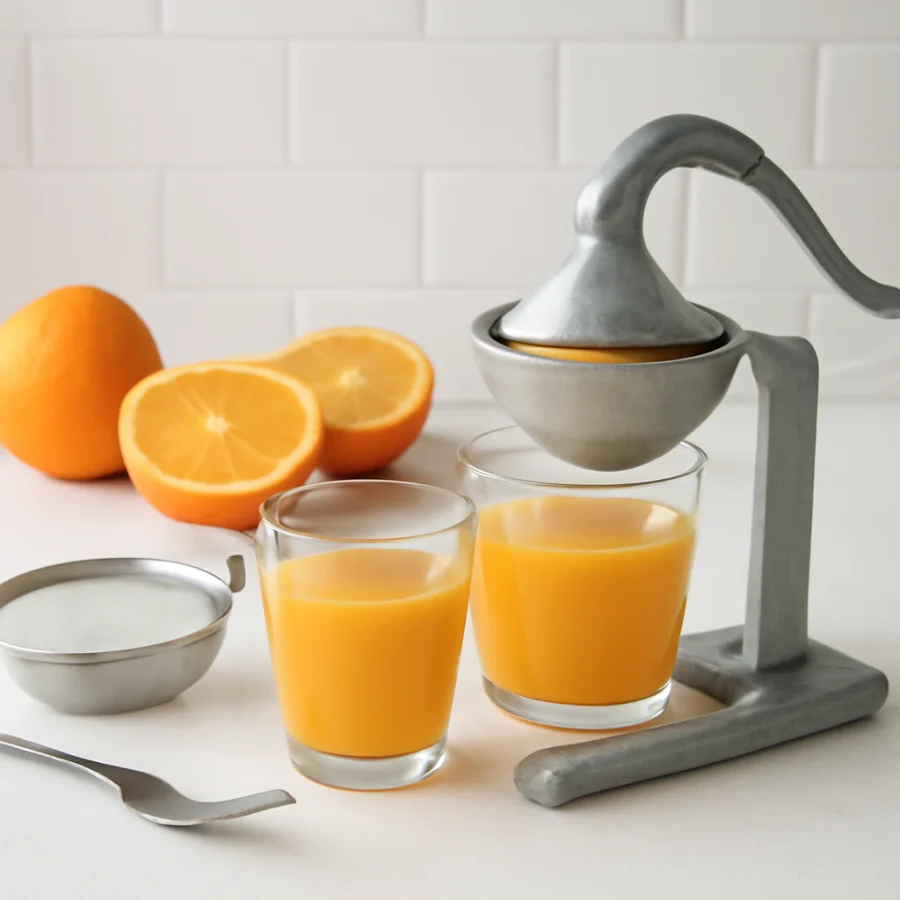
For a blender method, peel the oranges, remove as much white pith and visible seeds as practical, and separate the fruit into segments. Add the segments to a blender and pulse briefly until the fruit is broken down. Avoid blending for too long, since excessive blending can make the juice foamy and may give it a rougher texture.
4. Strain the juice if desired
Pour the juice through a fine-mesh strainer into a pitcher or bowl if you prefer a smoother drink with less pulp. Press gently with a spoon to help the liquid pass through, but do not force every bit of thick pulp into the juice. For pulp-free juice, strain it a second time through a clean, finer strainer.
If you enjoy pulp, skip this step. Some pulp will naturally settle in the glass, so stir the juice before serving.
5. Adjust the texture and serve
Taste the juice before adding anything. If it is very concentrated or thick, stir in 1 tablespoon of cold water at a time until it reaches the texture you like. Pour it over ice for a chilled drink, or refrigerate it briefly before serving.
Fresh orange juice is often naturally sweet and does not need added sugar. If the oranges are tart, you can combine the juice with a small amount of another naturally sweet fruit juice, such as apple or pineapple juice. Add-ins are optional and can change the flavor significantly.
Tips for Better Homemade Orange Juice
Use the right oranges
Fruit at a ripe stage usually produces more flavorful juice than fruit that is underripe. Look for oranges with firm skin, a heavy feel, and no signs of spoilage. Green patches on the peel do not always mean the fruit is unusable, but the interior should smell fresh and taste pleasant.
Keep the process clean
Wash your hands before preparing the oranges, and use clean tools, bowls, and glasses. Keep the juice away from raw meat, poultry, seafood, and unwashed produce. For more general guidance, review these food safety and storage tips.
Control the pulp
A citrus press usually leaves more pulp than a fine strainer, while a blender creates a thicker drink unless the juice is strained. You can combine methods by squeezing the oranges first and straining only part of the batch. This lets you serve different textures without making separate drinks.
Do not overwork the peel
The white pith and outer peel can add bitterness if large amounts enter the drink. A small amount of pulp is fine, but avoid scraping the peel aggressively. If you want a citrus aroma, add a little finely grated orange zest to a serving rather than blending the peel into the juice.
Ingredient Alternatives and Flavor Ideas
Fresh orange juice can be customized without making the recipe complicated. Stir in a small splash of lemon juice for a sharper flavor, or add a few crushed mint leaves for a refreshing finish. A little grated ginger can provide warmth, although its strong flavor may quickly dominate the orange.
For a sparkling version, pour the strained juice into glasses and top each serving with chilled plain sparkling water. Add the sparkling water just before serving so the drink stays fizzy. You can also mix orange juice with unsweetened iced tea for a brunch-style beverage.
For a creamy smoothie, blend the juice with peeled orange segments, plain yogurt, and ice. This is a different preparation from simple orange juice and will be thicker and more filling. If you are serving it as part of a meal, remember that a drink does not need to replace a balanced variety of foods.
Serving Suggestions
Serve fresh orange juice in small glasses with ice and an orange wedge. For a brunch table, place the juice in a chilled pitcher and provide sparkling water, mint, and extra citrus wedges on the side. A strip of orange zest can add visual appeal, but remove it before drinking if it becomes bitter.
The juice also works as an ingredient in salad dressings, marinades, sauces, and nonalcoholic mixed drinks. If using it in a recipe, strain out seeds first and measure the amount after straining.
Storage and Food Safety
Freshly squeezed juice is best served soon after preparation. If you need to store it, transfer it to a clean, covered container and refrigerate it promptly. Keep the container cold and use the juice within a short period rather than leaving it at room temperature for extended service. When in doubt, follow current guidance from a reliable food-safety authority and discard juice that smells fermented, looks unusual, or has been handled unsafely.
Do not store the juice in an uncovered glass beside raw foods. Pour only what you plan to serve, and return the remaining covered juice to the refrigerator. If you are preparing juice for children, older adults, pregnant people, or anyone with a weakened immune system, take extra care with washing, refrigeration, and clean equipment.
Frequently Asked Questions
How many oranges make 2 cups of juice?
About 6 medium oranges may yield 2 cups, but the result depends on the variety, size, ripeness, and juiciness of the fruit. Keep one or two extra oranges available if you need a precise amount for a recipe.
Can I make orange juice with a blender?
Yes. Peel and segment the oranges, remove visible seeds, and pulse briefly. Strain the blended fruit if you want a thinner drink. A blender may produce more pulp and foam than a manual citrus press.
Should I add water or sugar?
Neither is required. Add a small amount of cold water if the juice is too thick or intense. Taste it before considering a sweetener, since ripe oranges often provide enough sweetness on their own.
Why does homemade orange juice taste bitter?
Bitterness can come from the white pith, peel, seeds, or oranges that are underripe or past their best quality. Strain out seeds and excess pulp, avoid blending the peel, and use fresh fruit with a pleasant aroma.
Can I freeze fresh orange juice?
Freezing is possible, although the texture and flavor may change after thawing. Leave room in a freezer-safe container for expansion, thaw it in the refrigerator, and stir well before serving. Do not refreeze juice that has fully thawed.
With a bowl, a fork, and a few ripe oranges, you can make fresh orange juice without a juicer in minutes. Start with clean fruit and tools, choose the texture you like, and serve the juice soon after squeezing for the brightest flavor.


Comments
0No comments yet. Be the first to share a helpful note or question.
Leave a Comment
Your email address will not be published. Comments are reviewed before appearing on the site.