
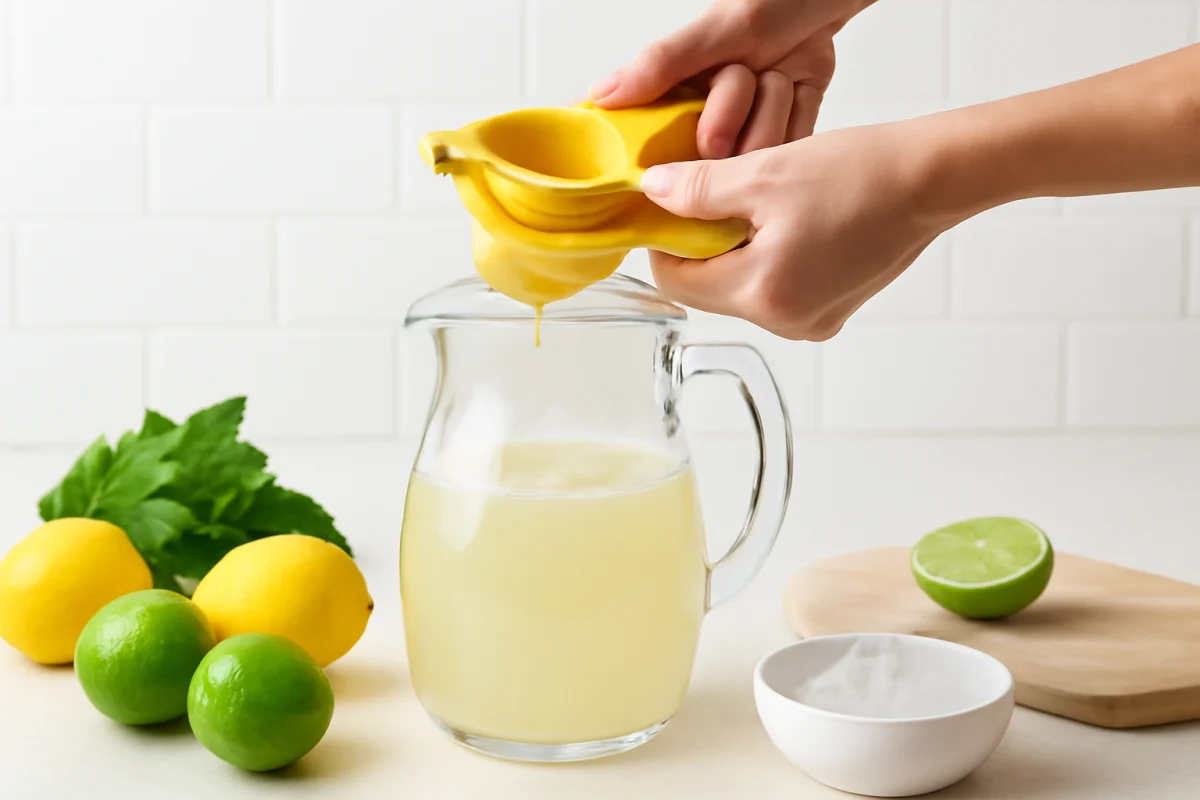
To get more juice from lemons and limes, let them reach room temperature, roll them firmly on the counter, and use a hand-held citrus reamer or juicer. These simple steps help loosen the juice-filled segments before you squeeze. This guide turns that freshly extracted juice into a balanced lemon-lime hydration drink with water, a small amount of maple syrup, and optional fresh herbs. For more recipes and practical drink guidance, visit natural cleanse drinks.
The recipe is worth trying because it makes practical use of citrus that might otherwise be difficult to squeeze, while giving you a refreshing alternative to plain water. It is not a detox treatment or a substitute for meals or professional care, but it can be a flavorful drink to serve with breakfast, lunch, or a casual gathering. For more ideas, explore the Juicing & Blending section.
Lemon-Lime Citrus Hydration Drink at a Glance
- Prep time: 10 minutes
- Total time: 10 minutes, plus optional chilling
- Servings: 4
- Best served: Cold over ice
Ingredients
- 4 medium lemons
- 4 medium limes
- 4 cups cold water
- 2 tablespoons pure maple syrup, or adjust to taste
- 1 cup cold sparkling water, optional
- 1 cup ice, plus more for serving
- 1 small handful fresh mint leaves, optional
- Thin lemon or lime wheels, optional garnish
The amount of juice produced by citrus varies with fruit size, ripeness, temperature, and variety. This recipe uses approximately 1 cup of combined lemon and lime juice, but you do not need to force every last drop. If your fruit produces less juice, add a little more water. If it produces more, reserve the extra for cooking, salad dressing, or another drink.
How to Get More Juice from Lemons and Limes
1. Choose fruit that is heavy for its size
When shopping, pick lemons and limes that feel firm but not rock-hard and seem relatively heavy for their size. Heavier fruit often contains more moisture than fruit that feels unusually light. The skin should not have large soft spots, mold, or extensive shriveling. A slightly glossy, intact peel is generally a practical choice for juicing.
Color can provide clues, but it is not the only factor. Limes may vary from deep green to yellow-green as they mature, and lemons can have different shades depending on variety and handling. Focus on freshness, weight, and a yielding texture rather than selecting fruit based only on color.
2. Warm the citrus gently
Cold citrus can be more difficult to juice. If the lemons and limes are refrigerated, leave them on the counter for about 20 to 30 minutes before squeezing. For a faster option, place one piece of fruit in your hands and roll it gently between your palms for a short time. You can also place whole fruit in warm, not hot, water for a few minutes.
Avoid microwaving whole citrus. Heating can affect the texture and may cause hot spots or a burst fruit. The goal is simply to take the chill off, not to cook the fruit.

3. Roll each fruit before cutting
Place a lemon or lime on a clean counter and press down with the heel of your hand. Roll it back and forth several times using steady pressure. This can help break up some of the internal membranes and make the juice easier to release.
Do not press so hard that the peel splits. A firm but controlled roll is enough. Cut the fruit crosswise rather than lengthwise, which usually gives a reamer or handheld juicer better access to the segments.
4. Use the right juicing tool
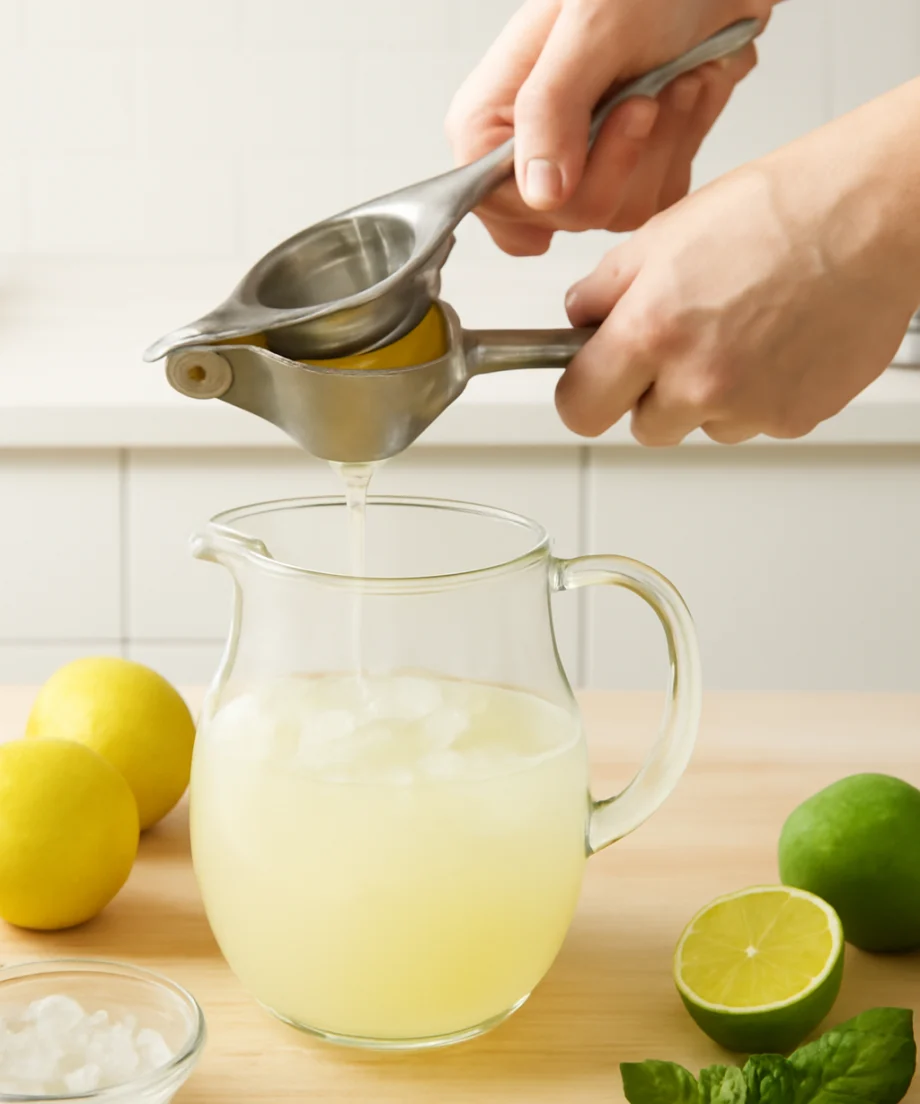
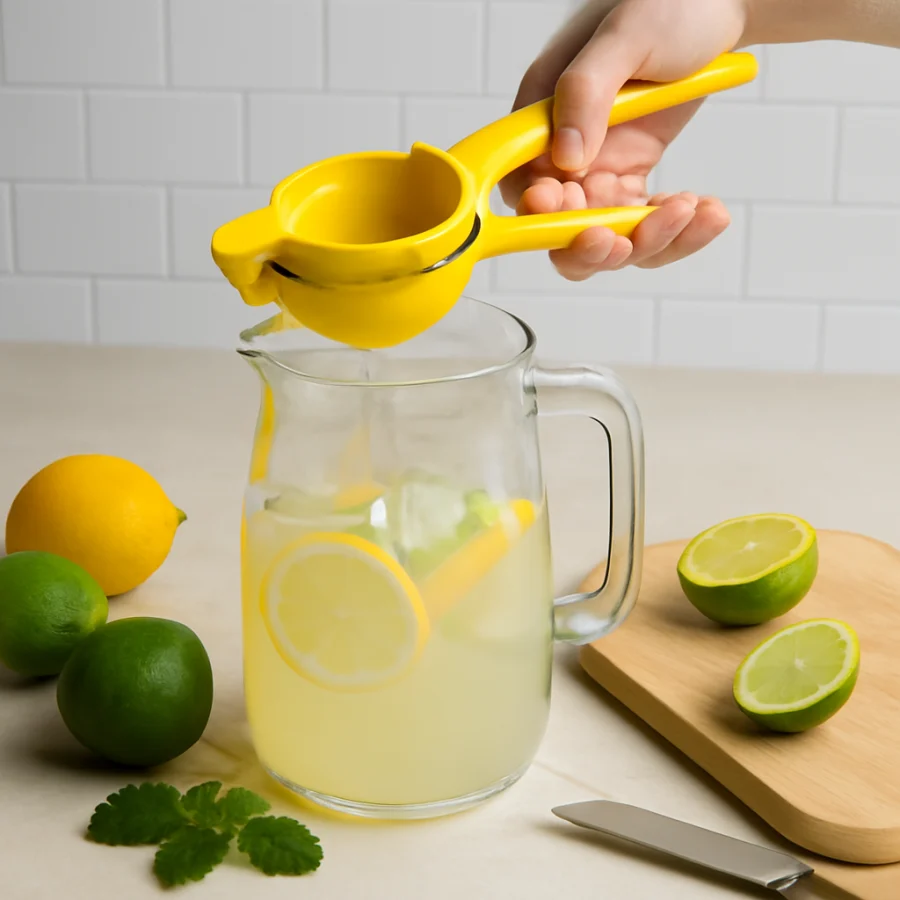
A handheld reamer works well for small amounts of citrus. Place the cut side over a bowl, press the pointed end into the center, and twist while applying moderate pressure. A hinged citrus press can be faster when you are juicing several fruits. Place the cut side facing down in the press if the shape of the tool allows it, then squeeze the handles together.
Strain the juice through a fine-mesh strainer if you want to remove seeds and larger pieces of pulp. If you enjoy pulp, strain only the seeds. For the clearest drink, strain the juice once, then pour it through the strainer again if needed.
How to Make the Lemon-Lime Drink
- Wash the fruit. Rinse the lemons and limes under cool running water and gently rub the peels with clean hands. Dry them with a clean towel before cutting. Washing the peel is useful even when you plan to squeeze the fruit, because the knife can transfer surface residue to the inside.
- Prepare the juice. Bring the fruit to room temperature if possible, roll it on the counter, cut it crosswise, and squeeze it with a reamer or citrus press. Remove seeds with a strainer. Measure approximately 1 cup of combined juice.
- Dissolve the sweetener. Pour the citrus juice into a large pitcher. Add the maple syrup and stir until fully blended. Because cold liquids can make sweeteners harder to mix, stirring the syrup into the juice first helps distribute it evenly.
- Add the water. Pour in 4 cups of cold water and stir. Taste the mixture before adding ice, since ice will dilute it as it melts.
- Adjust the flavor. Add more water for a gentler drink, more lemon or lime juice for extra tartness, or a small amount of additional maple syrup for sweetness. Make changes gradually so the citrus remains bright rather than overpowering.
- Finish and serve. Add the optional sparkling water just before serving if you want light carbonation. Pour over ice and add mint leaves or citrus wheels if desired.
Helpful Tips for Better Citrus Juice
Use a combination of lemons and limes
Lemons usually provide a rounder, more familiar tart flavor, while limes contribute a sharper, more aromatic note. Combining them creates a drink with more dimension than using either fruit alone. You can change the ratio depending on what you have available. For a softer flavor, use more lemon. For a brisker flavor, increase the lime.
Juice before zesting
If you need zest for another recipe, grate the peel before squeezing the fruit. A whole lemon or lime is easier to hold while zesting. Use only the colored outer layer, since the white pith underneath can taste bitter. Store unused zest in an airtight container in the refrigerator for short-term use, or freeze it for a later recipe.
Do not overwork the peel
Pressing too aggressively can force more bitter oils from the peel into the juice. It may also add excess pulp or small pieces of peel. Moderate pressure and a good tool are usually more useful than squeezing with maximum force.
Make a small sweetener adjustment
Citrus acidity varies, so the same amount of sweetener may taste different from one batch to another. Start with 2 tablespoons of maple syrup, then taste. You can replace maple syrup with simple syrup, agave nectar, or a small amount of sugar dissolved in warm water. If using sugar, dissolve it completely before chilling the drink.
Ingredient Alternatives and Flavor Variations
For a less sweet drink, leave out the maple syrup and add extra water. You can also muddle a few mint leaves in the pitcher, though crushing them too aggressively may make the flavor slightly grassy. Basil, cucumber slices, or a few thin slices of fresh ginger can provide different flavor profiles without requiring a new base recipe.
For a still drink, use only water. For a sparkling version, replace up to 1 cup of the water with sparkling water immediately before serving. Do not add sparkling water too early if you want to preserve its carbonation. You can also freeze some of the lemon-lime drink in ice cube trays and use the cubes in later servings, provided the juice mixture has been handled and stored safely.
Serving Suggestions
Serve the drink in chilled glasses with plenty of ice and a thin citrus wheel. It pairs well with grilled vegetables, sandwiches, salads, beans, rice dishes, and lightly seasoned seafood. For a gathering, keep the drink in a covered pitcher and add sparkling water to individual glasses rather than the entire batch.
If you are serving children or guests who prefer milder flavors, dilute individual portions with additional water. Citrus juice is acidic and can be intense, so a smaller amount of juice with more water may be more comfortable for some people. A straw can reduce contact with teeth, but it does not eliminate the effects of acidic beverages. Rinsing your mouth with plain water afterward is a simple option; avoid brushing immediately after acidic drinks.
Storage and Food Safety
Refrigerate the prepared drink in a clean, covered pitcher or container. For best flavor, use it within a few days and stir before serving because ingredients can settle. Add ice and sparkling water only to the portion you plan to drink. Discard the drink if it develops an unusual odor, visible mold, unexpected fermentation, or an off flavor.
Wash hands, utensils, cutting boards, and pitchers before preparation. Keep cut citrus and prepared beverages refrigerated rather than leaving them at room temperature for extended periods. For additional guidance, see the site’s Food Safety & Storage resources and follow current advice from reliable food-safety authorities.
Frequently Asked Questions
Does rolling a lemon or lime really help it release more juice?
Rolling can loosen some of the internal segments and make the fruit easier to squeeze. It is not a guarantee of a specific amount of juice, but it is a quick technique that may improve extraction, especially when combined with room-temperature fruit and a suitable juicer.
Should lemons and limes be refrigerated?
Whole citrus can be stored at room temperature for short-term use or refrigerated to extend freshness. Refrigerated fruit may be firmer and harder to juice, so let it warm slightly before squeezing. Cut fruit and fresh juice should be refrigerated in covered containers.
Can I make this drink without maple syrup?
Yes. The drink can be made with citrus juice and water alone. You can also use simple syrup or another sweetener that fits your preferences. Add sweetener gradually because the acidity and natural flavor of the fruit can vary.
How can I make the drink less tart?
Add more cold water and adjust the sweetener in small increments. Using a higher proportion of lemon than lime can also create a softer flavor. Avoid adding a large amount of sweetener all at once, since it may mask the citrus rather than balance it.
Can I prepare it ahead of time?
Yes. Prepare the still drink ahead and refrigerate it in a covered container. Add ice, mint, and sparkling water just before serving for the freshest flavor and best texture.
Practical Limits of Fresh Citrus Juice
Even with careful preparation, fruit size and condition determine how much juice you get. Some lemons and limes are naturally drier, and no technique can produce more liquid than the fruit contains. If you need an exact amount for a recipe, juice one extra piece of citrus and reserve any surplus rather than trying to extract every last drop from a dry fruit.
The result should be a refreshing, flexible beverage—not a cure, cleanse, or replacement for balanced food. Use the extraction tips whenever a recipe calls for lemon or lime juice, and adjust the finished drink to suit the fruit and the people you are serving.


Comments
0No comments yet. Be the first to share a helpful note or question.
Leave a Comment
Your email address will not be published. Comments are reviewed before appearing on the site.