
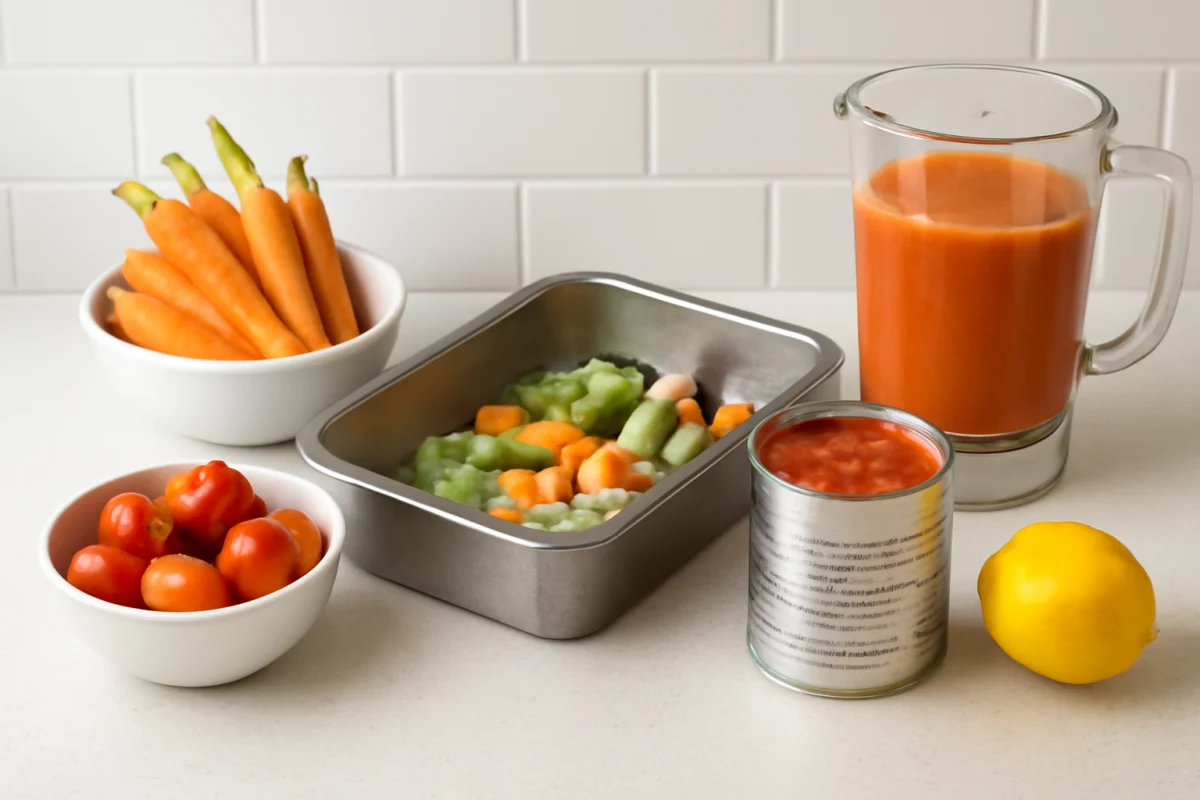
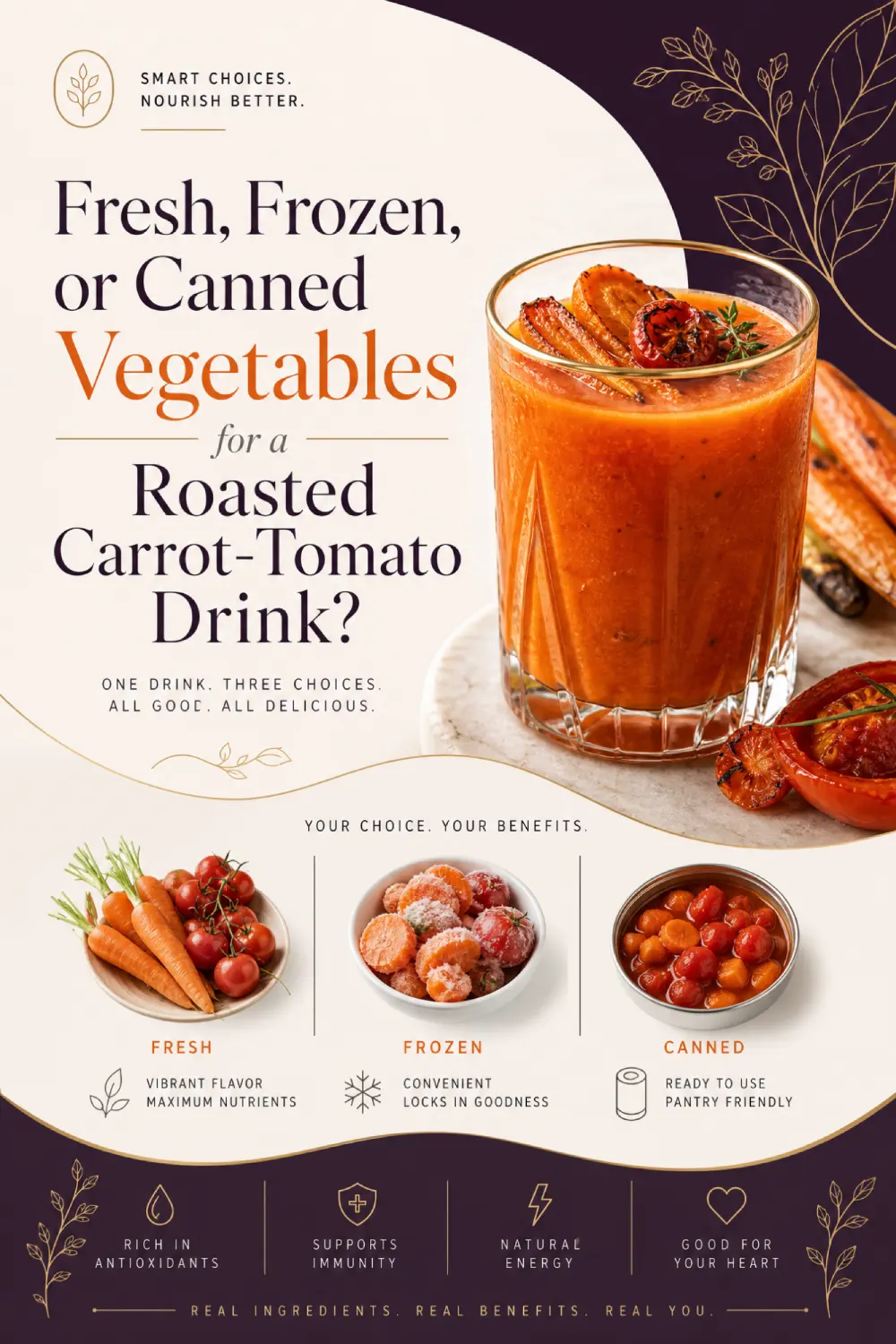
For a roasted carrot-tomato drink, fresh vegetables offer the brightest flavor, frozen vegetables provide convenience, and canned vegetables can be the most practical pantry option. The best choice depends on what you have, how much preparation you want to do, and whether you prefer a lighter, fresher flavor or a deeper, more savory one. This blended drink is a useful way to compare the three formats without treating any option as universally superior. For more recipes and practical drink guidance, visit homemade detox drinks.
The recipe below combines roasted carrots, tomatoes, lemon, herbs, and water for a smooth, savory beverage that can be served warm or chilled. It is not intended to replace balanced meals or provide a special cleanse effect. Instead, it is a flavorful vegetable-based drink that can add variety to a regular eating routine.
Fresh, frozen, or canned vegetables: which should you choose?
Choose fresh carrots and tomatoes when you want a clean, garden-like taste and do not mind washing, trimming, and roasting them. Fresh tomatoes are especially useful when they are ripe and flavorful. Out-of-season tomatoes may be less aromatic, so canned tomatoes can sometimes produce a more consistent result.
Choose frozen vegetables when convenience matters. Frozen carrots can be roasted after thawing and draining, although they may soften more quickly. Frozen tomatoes are less common in standard grocery freezers, but frozen roasted vegetables or unsalted vegetable blends can work if their ingredients suit the recipe. Always check the package for added sauces, salt, or seasonings.
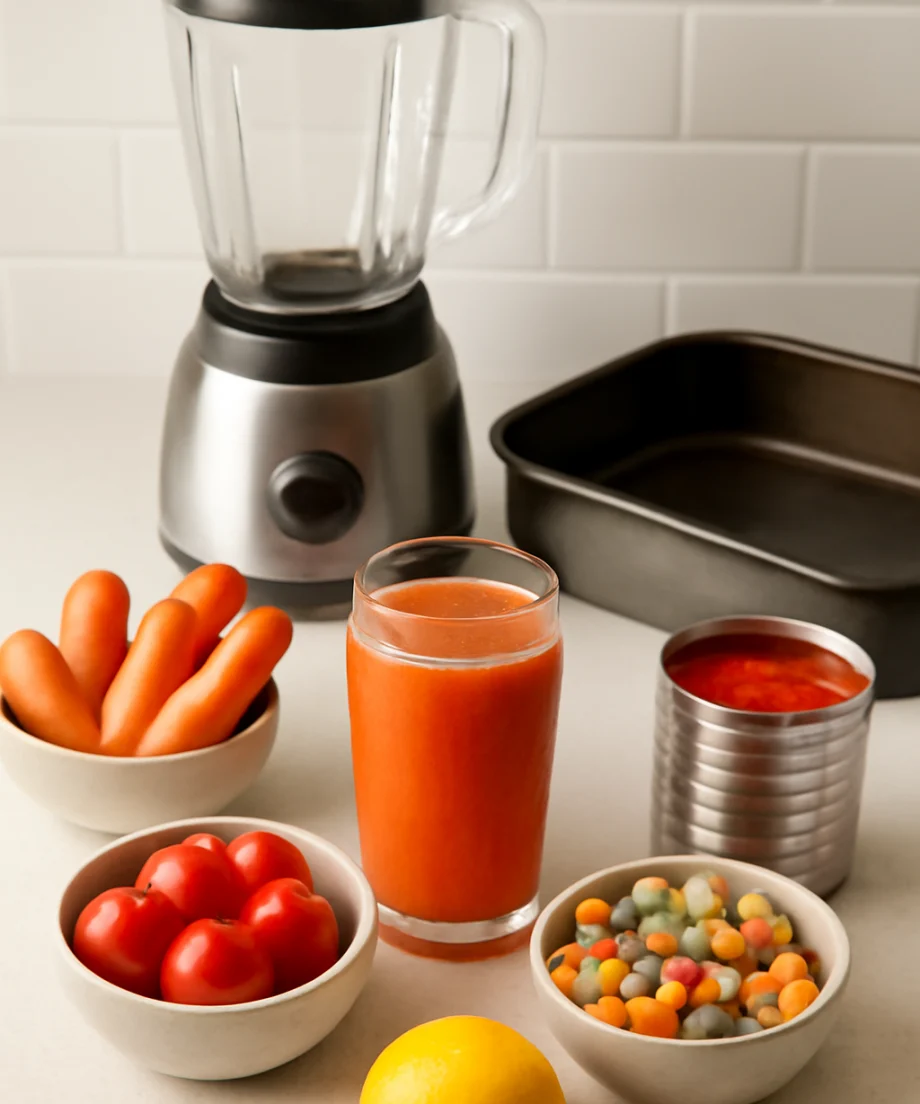
Choose canned vegetables for speed and pantry flexibility. Canned diced tomatoes are particularly convenient in this drink. Canned carrots can also work, but drain them well and avoid varieties packed with added sugar or heavy seasoning. Because canned ingredients may already contain sodium, taste the drink before adding salt.
For a balanced approach, use fresh carrots for roasting and canned no-salt-added tomatoes for dependable flavor. If you prefer to use only one type of vegetable, the method can be adjusted with the alternatives listed below.
Roasted Carrot-Tomato Drink Recipe
This recipe makes a thick, savory drink with a texture closer to a blended vegetable beverage than a clear juice. A high-speed blender will produce the smoothest result, but a standard blender can work in batches.
Preparation and yield
- Prep time: 15 minutes
- Cook time: 25 to 30 minutes
- Total time: About 45 minutes
- Yield: 3 servings
Ingredients
- 4 medium carrots, peeled and cut into 1-inch pieces
- 2 medium fresh tomatoes, quartered, or 1 can (14.5 ounces) no-salt-added diced tomatoes, drained
- 1 tablespoon olive oil
- 1 small yellow onion, quartered
- 1 small garlic clove, peeled
- 2 cups cold water or low-sodium vegetable broth
- 2 tablespoons fresh lemon juice
- 1 tablespoon chopped fresh parsley or cilantro
- 1/4 teaspoon ground black pepper
- Optional: 1/4 teaspoon ground cumin or smoked paprika
- Optional: a small pinch of salt, added after tasting
- Ice, for serving if desired
How to make the drink
- Heat the oven. Set the oven to 425°F. Line a rimmed baking sheet with parchment paper or use a lightly oiled sheet pan.
- Prepare the vegetables. Add the carrots, fresh tomatoes, onion, and garlic to a bowl. Toss with the olive oil and, if desired, the cumin or smoked paprika. If using canned tomatoes, leave them out of the roasting step and add them during blending.
- Roast until tender. Spread the fresh vegetables in a single layer. Roast for 25 to 30 minutes, stirring once, until the carrots can be pierced easily with a fork and the onion has softened. The garlic may be ready sooner; remove it if it begins to brown too quickly.
- Cool briefly. Let the roasted vegetables stand for about 5 minutes. This makes blending easier and reduces the risk of handling very hot liquid. If you plan to serve the drink chilled, cool the vegetables longer.
- Blend carefully. Transfer the roasted vegetables to a blender. Add the canned tomatoes if using them, along with the water or broth, lemon juice, herbs, and black pepper. Start on low speed and increase gradually. If the blender is small, work in batches and do not fill it beyond the manufacturer’s recommended level.
- Adjust the texture. Blend until smooth. Add more water, 1 tablespoon at a time, if the drink is too thick. For a silkier texture, pour it through a fine-mesh strainer, although straining will remove some pulp.
- Taste and serve. Add salt only after tasting, particularly if you used broth or canned vegetables. Serve warm in heat-safe cups, or refrigerate it until cold and pour over ice.
How each vegetable format changes the result
Using fresh vegetables
Fresh carrots and tomatoes give the drink a naturally bright flavor and allow you to control the size and ripeness of each ingredient. Look for firm carrots without soft spots and tomatoes that smell fragrant and are free from visible mold or major damage. Wash produce under running water before cutting, even when the peel will be removed. Keep cut vegetables refrigerated if they will not be cooked promptly.
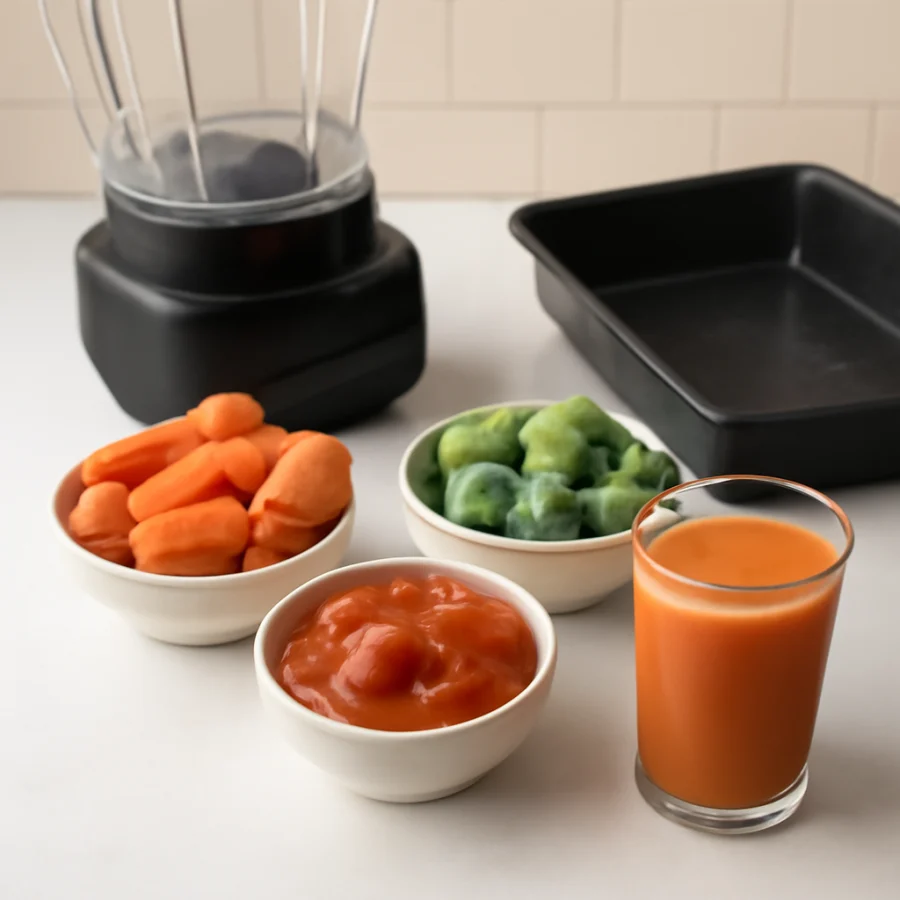
Fresh tomatoes contain more water than many canned varieties, so the finished drink may need less added water. Add liquid gradually rather than following the full amount automatically.
Using frozen vegetables
Frozen carrots are a practical substitute when fresh produce is unavailable or preparation time is limited. Thaw them in the refrigerator or cook them according to the package directions, then drain away excess water before roasting or blending. Frozen vegetables may have a softer texture, but that is usually less important in a blended drink.
Do not assume every frozen vegetable blend is interchangeable. Some include butter sauces, cheese, salt, or other seasonings that can change the flavor and nutrition profile. Read the ingredient list and choose plain vegetables when possible.
Using canned vegetables
Canned tomatoes can save time and provide a rich, consistent base. Choose plain diced or crushed tomatoes without added sauces. No-salt-added varieties make it easier to control the final seasoning, but regular canned tomatoes can also be used if you adjust the added salt.
If using canned carrots, drain and rinse them if appropriate for the product. Rinsing may reduce some surface sodium, but it will not remove all of it. Avoid dented, leaking, bulging, or badly rusted cans, and follow the product label for storage once opened.
Helpful substitutions and flavor ideas
- Replace part of the carrots with roasted sweet potato for a sweeter, thicker drink.
- Use fresh lime juice instead of lemon juice for a sharper citrus note.
- Swap parsley for basil, cilantro, or a small amount of fresh dill.
- Add a pinch of red pepper flakes if you enjoy heat.
- Use plain water for a lighter drink or low-sodium vegetable broth for a more savory one.
- Add a spoonful of plain yogurt after blending if you want a creamier texture. Keep the drink refrigerated and use it promptly.
For more ingredient-focused ideas, visit the Drink & Ingredient Guides section. You can also browse the site’s Drink Recipes for other preparation methods.
Serving suggestions
Serve this drink in small glasses as part of a meal or snack, rather than treating it as a complete meal replacement. It pairs well with whole-grain toast, a bean-based dish, a sandwich, or a simple salad. A small garnish of chopped herbs, cracked black pepper, or a thin lemon wedge adds visual appeal without requiring extra ingredients.
If you prefer a thinner drink, dilute it with cold water. If you want a spoonable texture, use less liquid and serve it in a bowl with a drizzle of olive oil and toasted seeds. These changes affect texture and flavor, so adjust gradually.
Storage and food-safety notes
Transfer leftovers to a clean, covered container and refrigerate them promptly. Keep the refrigerator at 40°F or below, and use general food-safety guidance for refrigerated leftovers rather than relying on smell alone. Because homemade blended drinks do not contain commercial preservatives, their quality can change quickly.
If the drink has been sitting at room temperature for an extended period, it is safer to discard it than to return it to the refrigerator. Do not store it in the blender jar, especially if the jar is not designed for refrigeration. Before serving leftovers, stir or shake them because separation is normal. For additional guidance, see the Food Safety & Storage category.
Frequently asked questions
Can I make this drink without roasting the vegetables?
Yes. You can blend cooked carrots with canned tomatoes, lemon juice, herbs, and water. The flavor will be lighter and less caramelized. If using raw carrots, cut them into small pieces and use a blender capable of handling them safely; the result may be more textured.
Should I use fresh or canned tomatoes?
Use whichever gives you the better flavor and convenience. Fresh ripe tomatoes provide a brighter taste, while canned tomatoes are dependable and quick. Check the label for added salt, sauces, and seasonings.
Can I freeze the finished drink?
You can freeze it in an airtight, freezer-safe container with room for expansion, but thawing may change the texture. Stir or blend it again after thawing, and refrigerate it during the thawing process. Do not refreeze leftovers that have already been thawed.
How can I make the drink less thick?
Add cold water or low-sodium broth a little at a time while blending. Lemon juice can brighten the flavor, but it will not substantially thin the mixture.
Is one vegetable format nutritionally best?
Not in every situation. Fresh, frozen, and canned vegetables can all fit into a varied eating pattern. The ingredient list, preparation method, added sodium, sauces, and portion size matter. Choose the format that helps you prepare and enjoy the drink safely and consistently.

Comments
0No comments yet. Be the first to share a helpful note or question.
Leave a Comment
Your email address will not be published. Comments are reviewed before appearing on the site.