
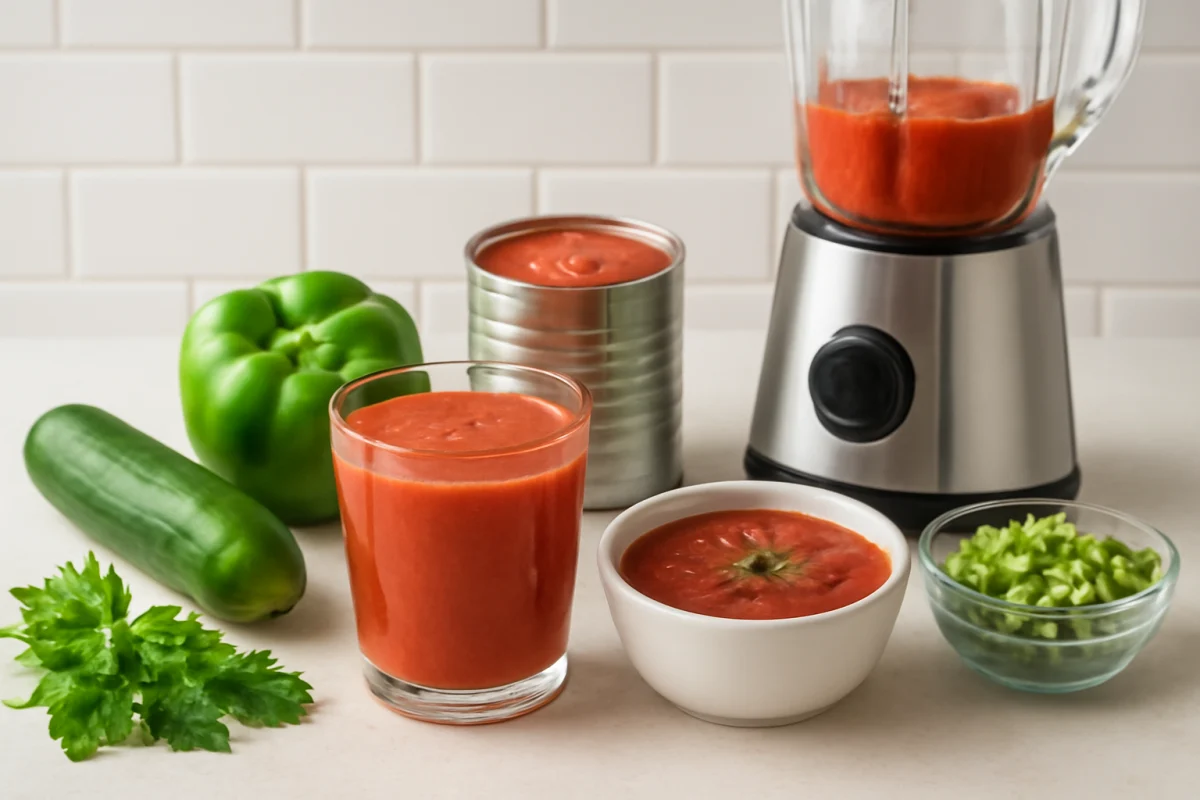
Fresh, frozen, or canned vegetables can all work in a flavorful blended vegetable drink, but each option has a different advantage. For a no-cook garden gazpacho, fresh cucumber and herbs provide a crisp flavor, canned tomatoes create a dependable base, and frozen vegetables can add convenience when fresh produce is unavailable. This chilled savory drink is worth trying because it is quick to prepare, easy to adjust, and useful when you want a vegetable-forward option without turning on the stove. For more recipes and practical drink guidance, visit detox water recipes.
Unlike a sweet juice or smoothie, gazpacho is a cold blended soup that can be served in a glass or a bowl. It is not a detox treatment, a substitute for balanced meals, or a guaranteed weight-loss strategy. Think of it as a refreshing way to combine vegetables, water, vinegar, herbs, and seasonings in a practical recipe.
Fresh, Frozen, or Canned Vegetables: Which Works Best?
The best choice depends on the vegetable, the texture you want, and what you already have available. Fresh vegetables are ideal for ingredients eaten raw, such as cucumber, bell pepper, cilantro, and parsley. They contribute brightness and a clean, crisp texture.
Canned tomatoes are especially useful in gazpacho because they are soft, juicy, and consistent. Choose plain canned tomatoes rather than products with added sauces or heavy seasoning so you can control the flavor. If the can includes a lot of liquid, reserve some of it and add it gradually during blending.
Frozen vegetables are convenient and can be a good option when seasonal produce is expensive or unavailable. Frozen peas, corn, or roasted vegetable blends may work in variations of this recipe, but they can make the drink sweeter, thicker, or less traditionally gazpacho-like. Thaw frozen ingredients in the refrigerator before blending, or follow the package directions. Do not use frozen vegetables that have been left at room temperature for an extended period.
No-Cook Garden Gazpacho Recipe
This recipe makes a savory, chilled blended drink with a medium-thick texture. For a thinner drink, add cold water. For a spoonable soup, use less water and blend briefly so a little texture remains.
Preparation and serving information
- Preparation time: 15 minutes
- Chilling time: 30 minutes, optional
- Total time: 45 minutes with chilling
- Servings: 4 cups, or about 4 small servings
Ingredients
- 1 can, 28 ounces, whole or diced tomatoes packed in juice
- 1 medium English cucumber, about 10 ounces, chopped
- 1 medium red bell pepper, seeded and chopped
- 1 small garlic clove, peeled
- 1/4 cup finely chopped red onion
- 2 tablespoons extra-virgin olive oil
- 1 tablespoon red wine vinegar, plus more to taste
- 1/2 teaspoon kosher salt, plus more to taste
- 1/4 teaspoon freshly ground black pepper
- 1/2 cup cold water, plus more as needed
- 2 tablespoons chopped fresh parsley or cilantro
- Optional: 1 cup thawed frozen peas for a mild green variation
- Optional garnish: diced cucumber, chopped herbs, a few drops of olive oil, or a small pinch of black pepper
How to make it
- Prepare the produce. Wash the cucumber, bell pepper, herbs, and any other fresh produce under cool running water. Cut the cucumber and bell pepper into pieces that your blender can handle easily. Peel the garlic and chop the onion.
- Combine the base ingredients. Add the canned tomatoes, cucumber, bell pepper, garlic, onion, olive oil, vinegar, salt, pepper, and cold water to a blender. If your blender is small, work in two batches rather than filling it beyond the manufacturer’s recommended capacity.
- Blend until smooth. Start on a low speed and increase gradually. Blend until the mixture is mostly smooth, stopping to scrape down the sides if necessary. For a more textured drink, use short pulses and leave some small pieces of vegetables intact.
- Adjust the consistency. Add cold water 1 tablespoon at a time until the gazpacho reaches your preferred drinking consistency. If it seems too thin, add a little more cucumber or a few extra tomato pieces. Taste only after blending and adjust the vinegar, salt, pepper, or herbs carefully.
- Add optional frozen vegetables. For a green variation, blend in thawed frozen peas. They will add body and a mild sweetness. If the mixture becomes too thick, add another splash of cold water.
- Chill and serve. Transfer the gazpacho to a covered container and refrigerate it for about 30 minutes if you want a colder, more settled flavor. Stir before serving and garnish each portion with diced cucumber or herbs.
How Each Vegetable Format Changes the Drink
Using fresh vegetables
Fresh cucumber and bell pepper are strong choices when you want a crisp, garden-like flavor. Select produce that is firm and free from visible mold, deep bruising, or leaking areas. A ripe tomato can replace some or all of the canned tomatoes when tomatoes are in season, although the final texture and acidity may vary.
Fresh herbs should be added near the end of blending or stirred in afterward if you want their flavor to remain distinct. Parsley gives the drink a clean herbal note, while cilantro has a more pronounced flavor that some people may prefer to use in smaller amounts.
Using frozen vegetables
Frozen peas are the easiest addition to this recipe because they blend smoothly after thawing. Frozen corn can also work, but it will make the gazpacho sweeter and may leave more noticeable skins. A frozen roasted vegetable blend can create a deeper flavor, though check the package for added sauces, salt, or seasonings before using it.
For best texture, thaw frozen vegetables in the refrigerator and drain away excess liquid. Do not thaw them on the counter for long periods. If you use frozen ingredients that are intended to be cooked before eating, follow the package directions instead of assuming blending makes them ready to eat.
Using canned vegetables
Canned tomatoes are the most practical canned ingredient in this recipe. Plain diced or whole tomatoes packed in juice are generally easier to control than seasoned varieties. If you use canned peppers, corn, or peas, drain them first and taste the gazpacho before adding more salt.
Read the current package label for ingredients, sodium information, and preparation instructions. Product formulas can change, so do not rely on a previous label or an online description when making a choice.
Helpful substitutions and flavor adjustments
- No red wine vinegar? Use lemon juice or sherry vinegar. Add a small amount at a time because acidity varies.
- No English cucumber? Use regular cucumbers, but peel them if the skin is tough and remove some seeds if the center is especially watery.
- Want more heat? Add a small piece of jalapeño or a pinch of cayenne. Start with a modest amount and taste before adding more.
- Prefer a milder flavor? Reduce the garlic and red onion, or soak the chopped onion briefly in cold water, then drain it before blending.
- Need a thicker texture? Blend in a small amount of thawed peas, extra cucumber, or a piece of bread if that suits your recipe preferences.
- Want more texture? Reserve a few tablespoons of chopped cucumber and bell pepper, then stir them in after blending.
Serving suggestions
Serve the gazpacho in chilled glasses for a drinkable portion or in small bowls with a spoon. A simple garnish of cucumber, herbs, or a few drops of olive oil adds color without overwhelming the base. You can also serve it alongside a sandwich, grain bowl, salad, or other balanced meal.
For a gathering, pour the gazpacho into small cups and keep the container cold until serving. Stir periodically because blended vegetables and oil may separate slightly as the drink sits. This natural separation does not necessarily indicate spoilage, but an unusual odor, visible mold, or an unexpected change in texture is a reason to discard it.
Food-safety and storage notes
Wash fresh produce before cutting, keep the blender and utensils clean, and use a clean covered container for storage. Refrigerate the finished gazpacho promptly rather than leaving it at room temperature for an extended period. Follow current guidance from reliable food-safety authorities for refrigeration and leftovers, especially when serving children, older adults, pregnant people, or anyone with a weakened immune system.
For the best quality, serve the gazpacho within a short refrigerated storage window and check its appearance and smell before serving. If you are preparing it ahead, keep the mixture covered and chilled, then stir before pouring. Do not taste food that appears spoiled to decide whether it is safe. For more practical guidance, see these food safety and storage resources.
Frequently asked questions
Is fresh, frozen, or canned produce healthiest for this recipe?
All three formats can fit into a balanced eating pattern. The best option depends on the specific vegetable, storage conditions, preparation, and the product’s ingredient and nutrition label. Canned tomatoes are convenient, while fresh cucumber and pepper provide a crisp raw texture. Frozen peas are useful when you want convenience and a thicker blend.
Can I make this gazpacho without a blender?
A food processor can work, although the texture may be less smooth. You can also finely chop the ingredients for a chunky version, but it will be closer to a chopped vegetable soup than a drink. Use caution with any appliance and follow the manufacturer’s instructions.
Can I freeze the finished gazpacho?
Freezing may change the texture of cucumber, herbs, and other watery vegetables, so refrigeration is usually better for this recipe. If you freeze a portion, leave room in the container for expansion, thaw it in the refrigerator, and stir thoroughly. The quality may not match the freshly blended version.
Can this replace a meal?
It is better viewed as a light drink or side rather than a complete meal. Pair it with foods that provide additional protein, carbohydrates, and fat if you want a more filling meal. Individual nutrition needs vary, so seek professional guidance for personalized dietary advice.
Fresh, frozen, or canned vegetables can each make a useful contribution to this no-cook garden gazpacho. Start with canned tomatoes for a reliable base, use fresh cucumber and pepper for brightness, and add thawed frozen vegetables when convenience or variety matters most.



Comments
0No comments yet. Be the first to share a helpful note or question.
Leave a Comment
Your email address will not be published. Comments are reviewed before appearing on the site.