
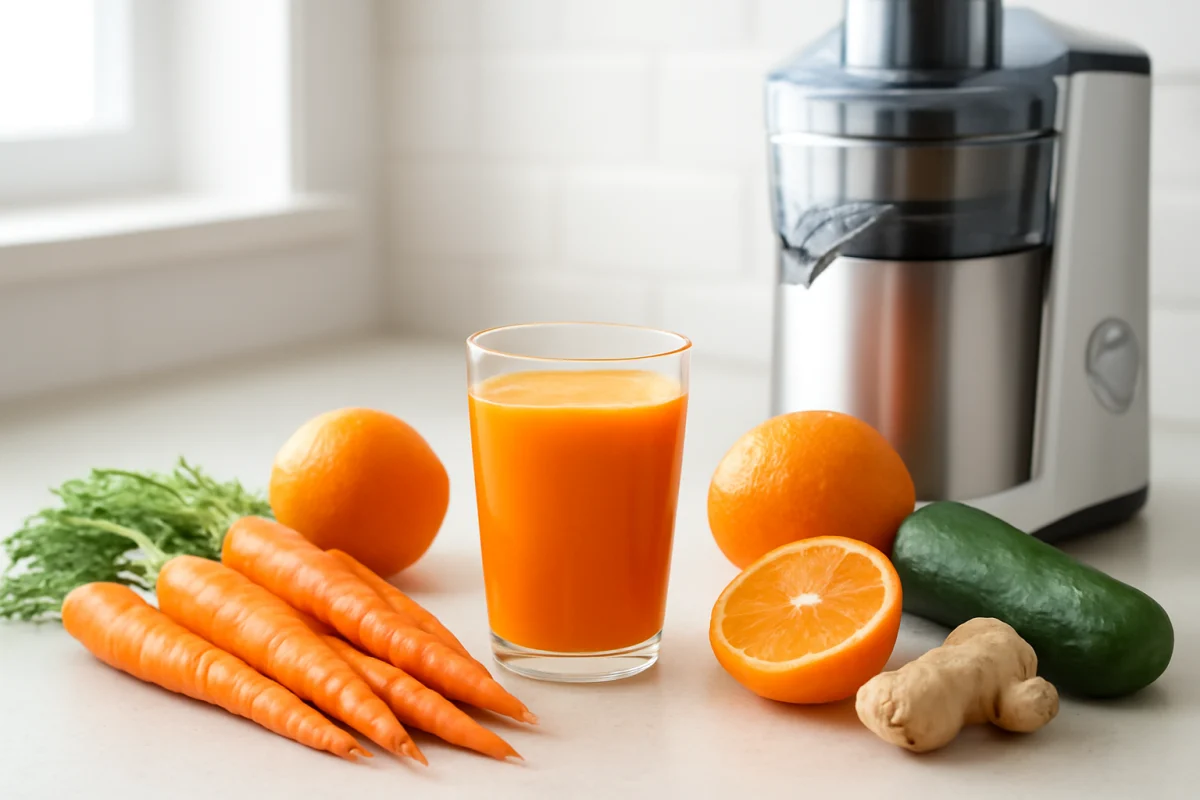
A daily juice cleanse should begin with a practical, food-safe recipe—not an extreme restriction plan. This citrus-carrot juice combines carrots, oranges, cucumber, lemon, and fresh ginger for a bright drink that can fit alongside regular meals and snacks. The recipe is easy to adjust, uses familiar ingredients, and offers a simple way to enjoy more produce without claiming to remove toxins, cure health conditions, or guarantee weight loss. For more recipes and practical drink guidance, visit refreshing detox drinks.
Use this guide to prepare a fresh juice, understand its realistic limitations, and build a safer daily routine. Juice can be refreshing and flavorful, but it does not provide everything your body needs. Keep drinking water, eat balanced meals, and avoid treating a juice-only plan as a substitute for nourishment or professional care.
Citrus-Carrot Juice at a Glance
- Prep time: 15 minutes
- Total time: 20 minutes, including cleanup
- Servings: 2, about 10 to 12 fluid ounces each
- Best for: A fresh breakfast accompaniment, afternoon drink, or produce-forward snack
- Equipment: Juicer, fine-mesh strainer if desired, knife, cutting board, and two glasses
Ingredients for Citrus-Carrot Juice
- 6 medium carrots, scrubbed and trimmed
- 2 medium oranges, peeled and separated into sections if your juicer requires it
- 1 small English cucumber, rinsed and cut into pieces
- 1/2 lemon, peeled if needed
- 1/2-inch piece of fresh ginger, peeled
- 1/2 cup cold water, optional, for a lighter consistency or to help blend the ingredients
- Ice, optional, for serving
Produce size and juicer efficiency vary, so the final amount may be somewhat different. Taste the juice before serving and add water if the flavor is especially concentrated. If you use a blender instead of a juicer, you will also need a high-speed blender and a fine-mesh strainer or reusable nut-milk bag.
How to Make This Daily Juice Cleanse Recipe
- Wash your hands and equipment. Clean your hands, cutting board, knife, juicer parts, and glasses before starting. Rinse produce under cool running water, even when you plan to peel it. Do not use soap or household cleaners on fruits and vegetables.
- Prepare the produce. Scrub the carrots, trim the ends, and cut them into pieces that fit your juicer’s feed chute. Rinse the cucumber and cut it into sections. Peel the oranges and lemon if your equipment calls for peeled citrus. Remove visible lemon seeds and peel the ginger.
- Juice the ingredients. Process the carrots, oranges, cucumber, lemon, and ginger according to your juicer’s instructions. Alternating firm and juicy ingredients can help move pulp through some machines, but follow the manufacturer’s guidance for your model.
- Adjust the texture. Stir in up to 1/2 cup of cold water if you want a less concentrated drink. If you prefer a smoother texture, strain the juice through a fine-mesh strainer. Straining removes some of the pulp, so you can leave it in if you enjoy a fuller texture.
- Taste and serve. Pour the juice into two glasses and serve immediately over ice if desired. Stir before drinking because natural separation is normal.
- Clean promptly. Rinse removable juicer parts soon after use, then wash them according to the appliance instructions. Dried pulp is harder to remove and can make routine cleaning more difficult.
Why These Ingredients Work Well Together
Carrots
Carrots provide a naturally sweet, earthy base and help balance the sharpness of lemon and ginger. Their firm texture also works well in many centrifugal and masticating juicers. Choose carrots that are firm, free of soft spots, and free from an unpleasant odor.
Oranges and lemon
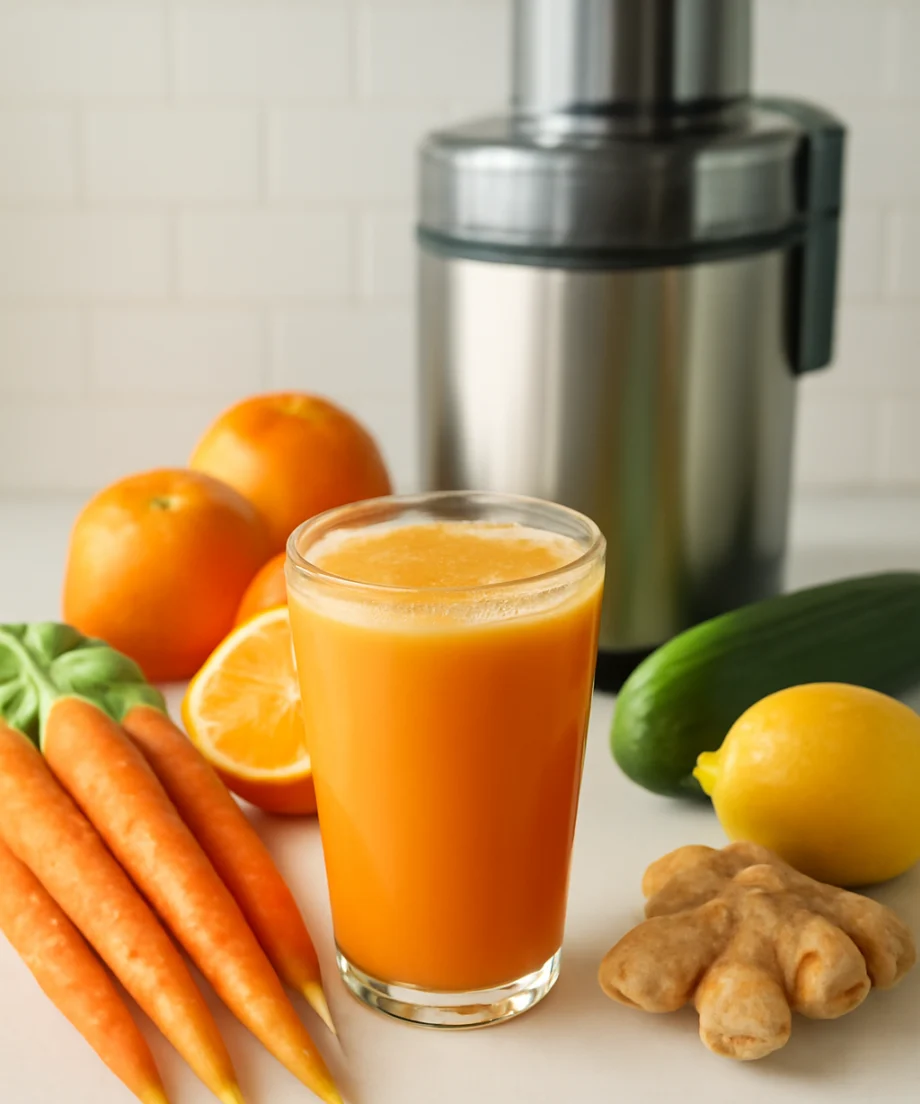
Oranges add bright sweetness, while lemon provides acidity that keeps the flavor lively. Citrus can vary in sweetness and tartness, so start with the listed amount of lemon and adjust only after tasting. When using citrus in a juicer, follow the appliance manual because some models are designed for whole citrus and others are not.
Cucumber and ginger
Cucumber contributes a clean, watery flavor that can make the juice feel lighter. Ginger adds warmth and a little spice. If you are sensitive to strong flavors, begin with a smaller piece of ginger. You can also leave it out without changing the basic method.
Helpful Tips and Ingredient Alternatives
- For a less sweet juice: Use one orange instead of two and add more cucumber. The result will be more vegetal and tart.
- For a softer flavor: Replace the ginger with a few fresh mint leaves, adding them only if your juicer instructions permit leafy herbs.
- For extra green color: Add a small handful of spinach. Wash it carefully and expect the flavor to become more noticeable.
- For a blender version: Chop the produce into small pieces, blend it with 1/2 to 1 cup of cold water, and strain if preferred. Blended produce retains more fiber than strained juice, but the drink will be thicker.
- For more pulp: Skip straining and stir the juice well before serving. Pulp can settle quickly, which is normal.
- For easier preparation: Wash and cut the produce shortly before juicing rather than preparing several days of ingredients at once. Fresh-cut produce requires careful refrigeration and handling.
If you are comparing equipment, look for a juicer that is easy to disassemble and clean, has clear operating instructions, and includes food-contact parts made for the appliance. A machine that is difficult to clean may discourage safe, regular use. For more general ideas, browse the site’s juicing and blending guides and drink and juicer buying guides.
How to Fit Juice Into a Daily Routine
A daily juice cleanse does not need to mean drinking only juice. A more reasonable approach is to enjoy a modest serving with a regular eating pattern that includes a variety of vegetables, fruits, whole grains, protein foods, and sources of healthy fat. Juice is low in fiber compared with whole produce, and it may not be filling enough to stand in for a complete meal.
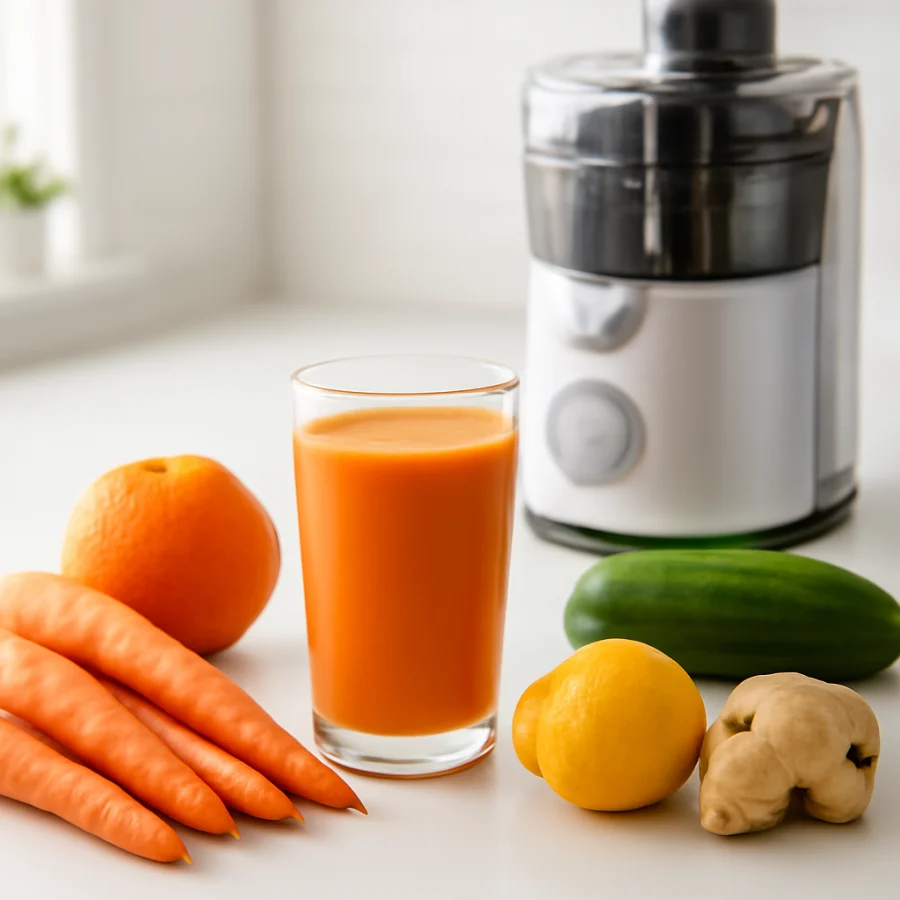
Try serving this recipe with breakfast, alongside a sandwich at lunch, or as part of an afternoon snack. If you drink it before activity, consider your overall hydration and food intake rather than relying on juice alone. Water remains an important everyday beverage, and thirst, heat, exercise, and individual needs can affect how much fluid you require.
People with health conditions, food allergies, medication concerns, pregnancy-related nutrition needs, or a history of disordered eating should ask a qualified health professional how this type of drink fits their circumstances. Avoid restrictive plans, prolonged fasting, and any routine that causes dizziness, weakness, nausea, or other concerning symptoms.
Storage and Food-Safety Notes
Fresh juice is perishable because it has not been commercially pasteurized or preserved. For the best quality, drink it right after preparation. If you need to store it, transfer it immediately to a clean, covered container, refrigerate it promptly, and follow current guidance from reliable food-safety authorities. Keep the refrigerator at 40°F or below, and do not leave fresh juice at room temperature for extended periods.
Do not store juice in a dirty container or return partly finished juice to the main batch. When in doubt about how long it has been unrefrigerated, discard it rather than tasting it to check safety. Wash produce and equipment carefully, and take extra care when serving juice to children, older adults, pregnant people, or anyone with a weakened immune system. More general handling information is available in these food safety and storage guides.
Frequently Asked Questions
Can I drink this every day?
Some people may enjoy a small serving daily, but there is no need to drink it every day for the recipe to be useful. Rotate ingredients, include whole fruits and vegetables, and pay attention to how the drink fits into your overall eating pattern. A juice-only routine is not a balanced long-term plan.
Does this juice remove toxins?
No. The body has its own organs and systems for processing and removing waste. This drink can provide fluid and produce flavors, but it should not be marketed or used as a detoxification treatment.
Can I replace breakfast with this juice?
Juice alone may not provide enough fiber, protein, fat, or energy for a satisfying meal. If you serve it in the morning, pair it with balanced foods such as eggs, yogurt, oatmeal, whole-grain toast, or another option that suits your needs.
Why did my juice separate?
Natural separation is common because juice contains water, pulp, and plant particles with different weights. Stir or gently shake the covered container before serving. Separation does not automatically mean the juice has spoiled, but storage time and temperature still matter.
Can I make this without a juicer?
Yes. Blend the prepared ingredients with cold water, then drink the mixture as a thicker smoothie or strain it for a juice-like texture. A blender version may retain more pulp and will usually have a different consistency.
A Practical Way to Enjoy Fresh Juice
This citrus-carrot recipe is best viewed as one flexible drink in a varied routine, not as a shortcut or a substitute for meals. Prepare a small batch, serve it fresh, clean your equipment promptly, and make room for water and a broad range of whole foods. These simple steps make a daily juice cleanse approach more realistic, enjoyable, and responsible.


Comments
0No comments yet. Be the first to share a helpful note or question.
Leave a Comment
Your email address will not be published. Comments are reviewed before appearing on the site.