
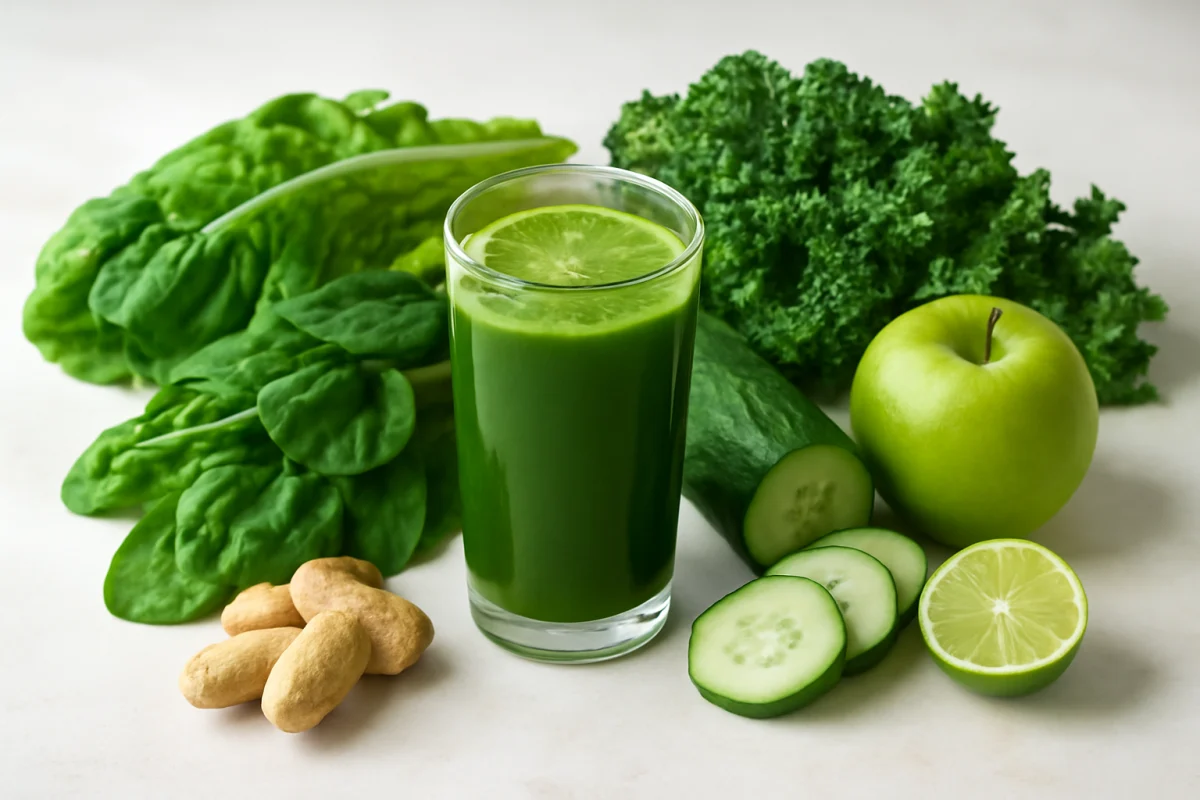
The best leafy greens for weight loss juices are mild, fresh greens such as spinach, romaine, and kale, especially when combined with hydrating vegetables and a modest amount of fruit. This cucumber-kale green juice is a practical way to use those ingredients without relying on a highly restrictive cleanse plan or making unrealistic promises about weight loss. It has a crisp flavor, a bright finish from lime, and enough variety to keep a homemade juice interesting. For more recipes and practical drink guidance, visit detox drink ideas.
Juice can fit into a balanced eating pattern, but it is not a complete meal and does not remove toxins, guarantee weight loss, or replace professional care. Most of the fiber is left behind during juicing, so enjoy this drink alongside regular meals that include protein, whole produce, and satisfying sources of carbohydrates and fats. For more ideas, explore these juicing and blending guides.
Cucumber-Kale Green Juice at a Glance
- Prep time: 15 minutes
- Total time: 15 minutes
- Servings: 2, about 10 ounces each
- Method: Juicer or blender with a fine-mesh strainer
- Flavor: Crisp, lightly sweet, citrusy, and green
Ingredients
- 1 medium English cucumber, about 12 ounces, rinsed and cut into chunks
- 2 packed cups baby spinach, rinsed thoroughly
- 2 large romaine lettuce leaves, rinsed and roughly chopped
- 1 large kale leaf, stem removed and leaf roughly chopped
- 1 small green apple, cored and cut into chunks
- 1/2 medium lime, peeled
- 1/2-inch piece fresh ginger, peeled
- 1/2 cup cold water, only if using a blender
- Ice, for serving if desired
Why These Are Some of the Best Leafy Greens for Weight Loss Juices
Leafy greens are useful in juice recipes because they add color, freshness, and a savory flavor without requiring a large amount of fruit. Their specific nutritional profiles vary, and the final drink depends on the ingredients and equipment used. Still, choosing different greens can make homemade juice more enjoyable and easier to include in an overall balanced routine.
Spinach
Baby spinach has a soft texture and a mild flavor, making it one of the easiest greens for beginners. It blends well with cucumber, apple, citrus, and ginger. If you are sensitive to strong vegetal flavors, spinach can form the base of the recipe while kale provides a smaller accent.
Romaine
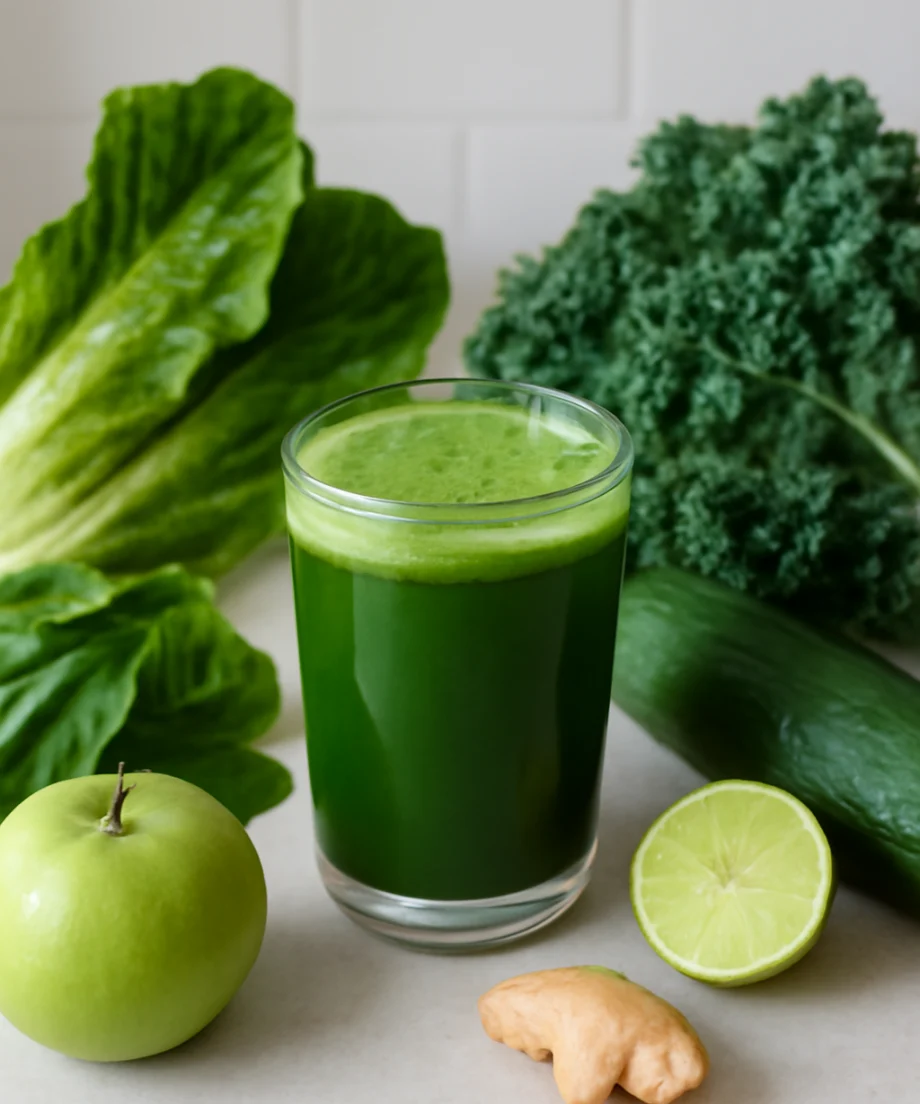
Romaine contributes a clean, lightly sweet taste and plenty of water from its crisp leaves. It is less assertive than kale, so it helps create a refreshing drink that does not taste overly grassy. Separate the leaves and rinse between them, since dirt can collect near the base.
Kale
Kale gives the juice a deeper green flavor. Curly kale and lacinato kale both work, although lacinato kale is often somewhat less fibrous and easier to process. Remove thick stems for a smoother result, particularly when using a blender. One large leaf is enough for this recipe; adding much more may make the juice bitter.
Other greens to try
Parsley, Swiss chard, and collard greens can also be used in small amounts. Parsley adds a distinct herbal note, while Swiss chard can bring a slightly earthy flavor. Collard greens are sturdy and may need extra chopping. Rotate ingredients based on taste and availability rather than treating one leafy green as a guaranteed weight-loss food.
How to Make Cucumber-Kale Green Juice
- Wash your hands and equipment. Clean your hands, cutting board, knife, juicer parts, and blender jar before preparing the produce.
- Rinse the produce. Wash the cucumber, spinach, romaine, kale, apple, lime, and ginger under cool running water. Do not use soap or household cleaners on food.
- Prepare the ingredients. Cut the cucumber and apple into pieces that fit your machine. Remove the kale stem, peel the lime and ginger, and roughly chop the greens.
- Juicer method: Feed the cucumber, spinach, romaine, kale, apple, lime, and ginger through the juicer in alternating handfuls. This helps softer leaves move through the machine with ingredients that contain more water. Stir the juice before serving.
- Blender method: Add the cucumber, greens, apple, lime, ginger, and cold water to the blender. Blend until the mixture is as smooth as possible. Pour it through a fine-mesh strainer over a pitcher or bowl, pressing gently with a spoon. For a thicker drink, leave some pulp in the mixture instead of straining it completely.
- Taste and serve. Add ice if desired and serve right away. If the flavor is too sharp, add a little more cucumber rather than a large amount of sweetener.
Tips for Better Flavor and Texture
Balance strong greens with watery produce. Cucumber and romaine soften the flavor of kale. If the drink tastes too grassy, reduce the kale to half a leaf and add another romaine leaf or a few cucumber chunks.
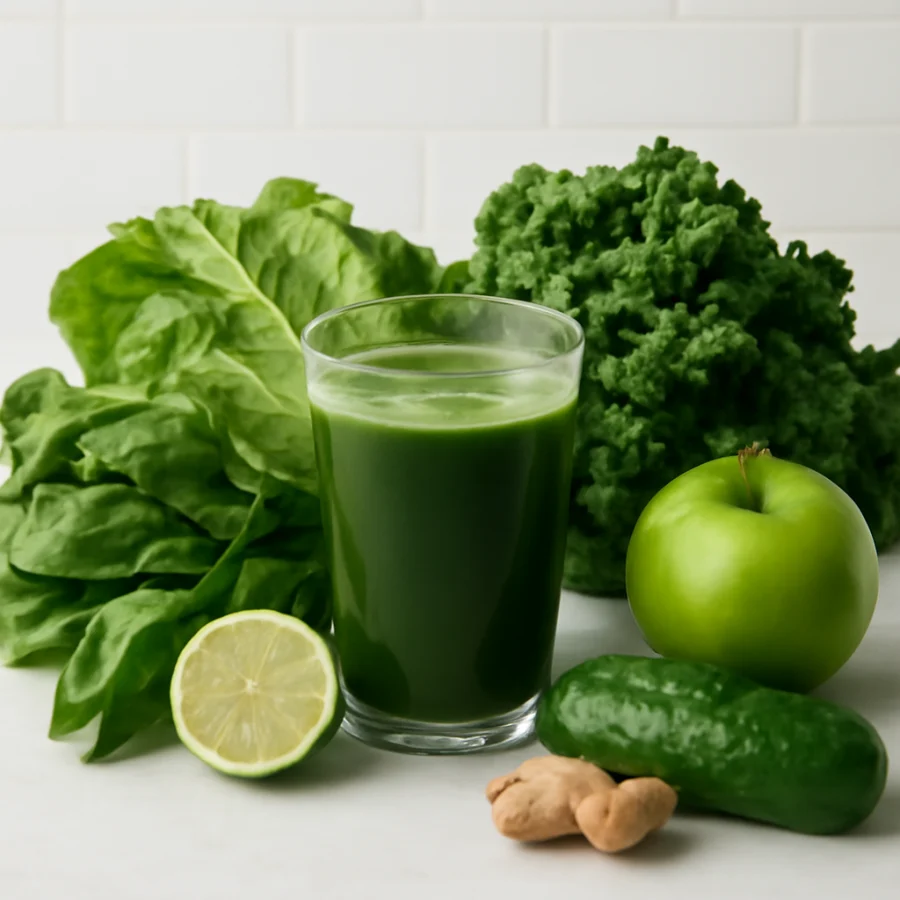
Use fruit thoughtfully. The apple provides sweetness and helps the lime and ginger taste more rounded. You can replace it with 1/2 cup of pineapple chunks, but that will change the flavor and increase the drink's sweetness. A small pear is another option if you prefer a softer, less tart profile.
Adjust ginger gradually. Fresh ginger can become intense quickly. Start with a thin slice if you are unsure, then add more the next time you make the recipe. Ground ginger is not an ideal direct substitute because it can create a gritty texture.
Chill the ingredients first. Cold cucumber and apple make the finished drink more refreshing without requiring much ice. If you use a blender, cold water also helps keep the mixture pleasant while it processes.
Keep the pulp when practical. Straining produces a thinner juice, but leaving some pulp provides more texture and retains some of the produce's fiber. A smoothie-style version can be made by blending the ingredients with additional water and skipping the straining step.
Ingredient Alternatives
If kale is unavailable, use an additional cup of spinach or one more romaine leaf. If you do not have romaine, try a small handful of parsley, but expect a stronger herbal taste. Lemon can replace lime, and a small piece of peeled turmeric can replace some or all of the ginger. Turmeric may stain hands, counters, and equipment, so handle it carefully.
For a lower-fruit version, omit the apple and add extra cucumber plus a squeeze of lime. The result will be more savory and less sweet. For a thicker blended drink, add a few ice cubes or a small amount of plain yogurt, if that fits your preferences and dietary needs. Yogurt changes the drink from juice to a smoothie and should be kept refrigerated.
Serving Suggestions
Serve this juice in a small glass with breakfast or alongside a meal rather than using it as a substitute for all-day eating. Pair it with a filling food such as eggs and whole-grain toast, plain yogurt with oats, or a bean-based lunch. These combinations can make the occasion more satisfying than drinking juice alone.
You can also pour the strained juice over ice and garnish it with a cucumber ribbon or a small lime wedge. Avoid leaving fresh juice at room temperature while serving. If you are preparing drinks for other people, label any ingredients that may be relevant to allergies or dietary restrictions.
Storage and Food Safety
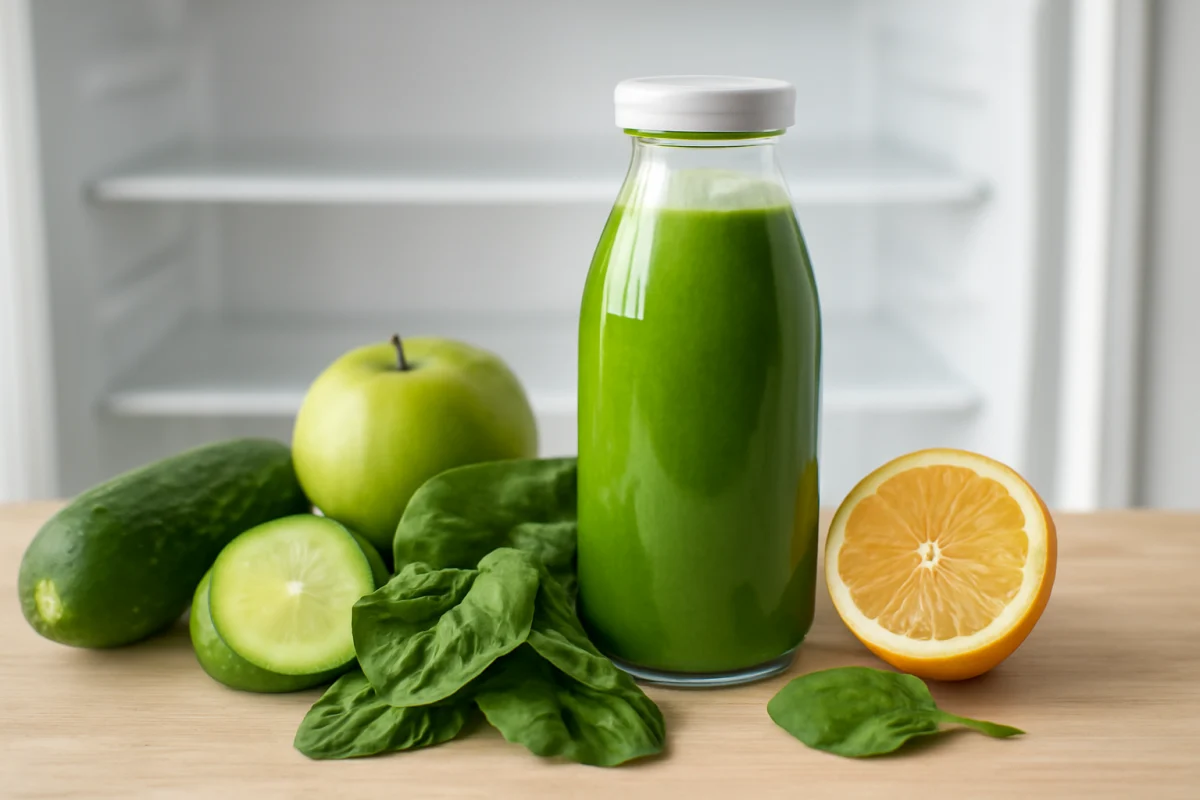
Fresh juice is best consumed immediately because its flavor, color, and texture can change after preparation. If you need to store it, transfer it to a clean, airtight container, refrigerate it promptly, and use it within 24 hours for best quality. Keep the refrigerator at 40°F or below, and discard the drink if it develops an unusual odor, appearance, or taste. Do not rely on smell alone to determine whether food is safe.
Wash produce under running water before cutting, even when the peel will be removed. Clean reusable juicer and blender parts according to the manufacturer's directions, and avoid sealing warm equipment in a way that traps moisture. For broader guidance, review these food safety and storage tips.
What This Juice Can and Cannot Do
This recipe can make leafy greens and vegetables more convenient to consume, and its water-rich ingredients contribute to the drink's fluid content. It is not a detox treatment, fat-burning formula, or guaranteed weight-loss solution. Weight changes are influenced by many factors, including overall eating patterns, activity, sleep, medications, health conditions, and individual circumstances.
Juicing also removes much of the fiber found in whole fruits and vegetables. Because of that, whole produce and blended drinks may be more filling for some people. If you have a medical condition, take medication, are pregnant, or have questions about how juice fits your diet, ask a qualified health professional for personalized advice.
Frequently Asked Questions
What are the best leafy greens for weight loss juices?
Spinach, romaine, and kale are versatile choices because they offer different levels of flavor and texture. The best option is the green you enjoy and can use safely as part of a balanced eating pattern. No leafy green guarantees weight loss.
Can I make this recipe without a juicer?
Yes. Blend the ingredients with 1/2 cup of cold water, then strain the mixture through a fine-mesh strainer if you want a thinner juice. You can also leave the pulp in and serve it as a smoothie.
Can I skip the apple?
Yes. Replace it with extra cucumber for a more savory drink, or use a small pear or 1/2 cup of pineapple for a different flavor. Adjust the amount based on your preferred sweetness.
How long does homemade green juice last?
It is best right away. If stored in a clean, sealed container in a refrigerator at 40°F or below, use it within 24 hours for best quality and discard it if it seems spoiled.
Is this juice a meal replacement?
No. It is a beverage and does not provide the complete combination of protein, fiber, and energy found in a balanced meal. Serve it with food when you want a more filling option.
For more balanced ideas using produce, herbs, and blended drinks, browse the site's drink recipes and ingredient guides.


Comments
0No comments yet. Be the first to share a helpful note or question.
Leave a Comment
Your email address will not be published. Comments are reviewed before appearing on the site.