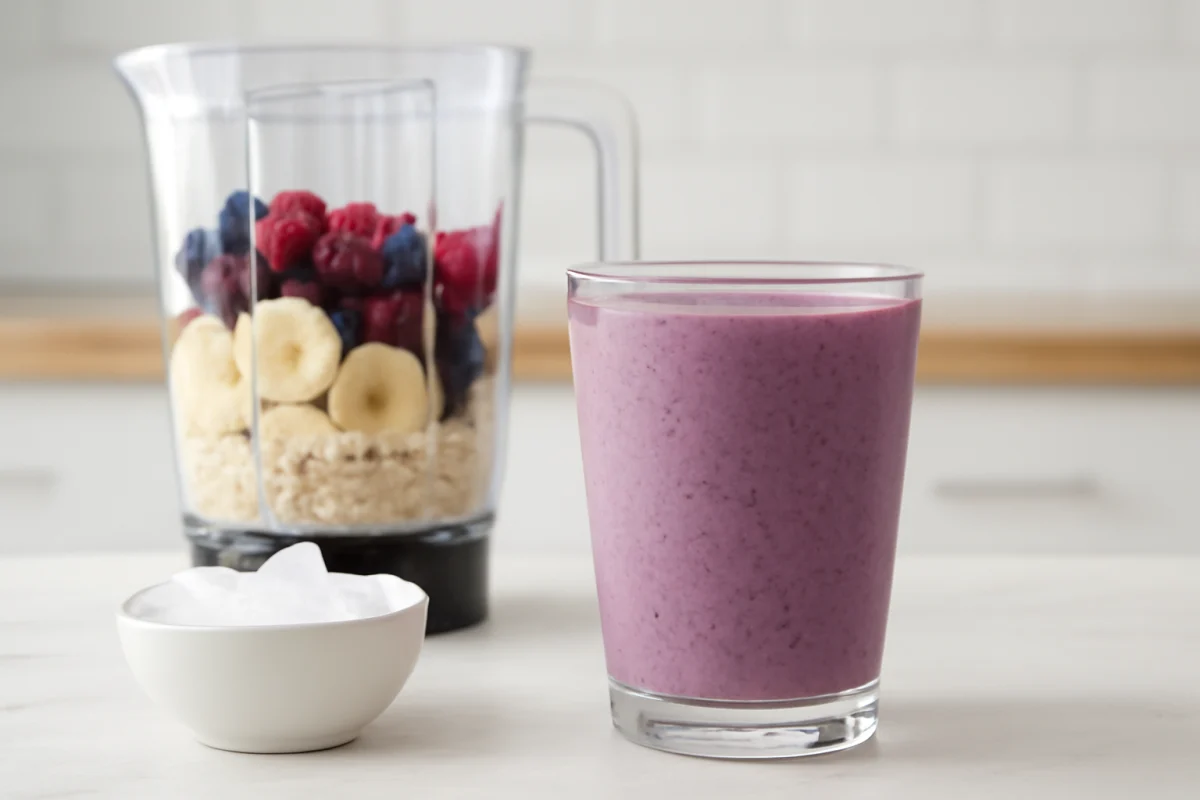
The best ice ratios for thick smoothies depend on the fruit, liquid, and blender you use. For a creamy berry oat smoothie, start with 1 cup of frozen fruit, 1/2 cup of liquid, and 1/2 cup of ice for two servings. This balance creates a cold, spoonable texture without making the drink watery or difficult to blend. If you prefer an especially thick smoothie, use 3/4 cup of ice, but add it gradually and stop when the texture is right. For more recipes and practical drink guidance, visit cleanse drink guide.
This creamy berry oat smoothie is worth trying because it uses familiar ingredients and a flexible method. Frozen berries provide chill and flavor, rolled oats add body, and banana helps create a smooth texture without requiring dairy. The recipe works as a breakfast drink or snack alongside other foods, and you can adjust the ice according to your blender and the size of your fruit pieces.
Creamy Berry Oat Smoothie at a Glance
- Prep time: 5 minutes
- Total time: 7 to 10 minutes
- Servings: 2
- Texture: Thick, creamy, and spoonable
- Best ice ratio: 1/2 cup ice for every 1 cup frozen fruit, with up to 3/4 cup for a thicker result
Ingredients
- 1 medium ripe banana, peeled and sliced
- 1 cup frozen mixed berries
- 1/2 cup rolled oats
- 1/2 cup unsweetened oat milk or milk of choice
- 1/2 cup ice
- 1 tablespoon almond butter or sunflower seed butter
- 1/2 teaspoon vanilla extract
- 1/4 teaspoon ground cinnamon
- Optional: 1 to 2 teaspoons maple syrup, if additional sweetness is desired
For a very thick smoothie, reserve up to 1/4 cup additional ice. You may also need 1 to 3 tablespoons of extra milk during blending, depending on the power of your blender and the size of the frozen fruit.
How the Ice Ratio Affects Smoothie Texture
Ice does more than lower the temperature. It adds volume and can make a smoothie feel thicker while it is freshly blended. However, too much ice can produce a hard-to-blend mixture with a coarse or diluted finish. As the ice melts, the smoothie may also become thinner than expected.
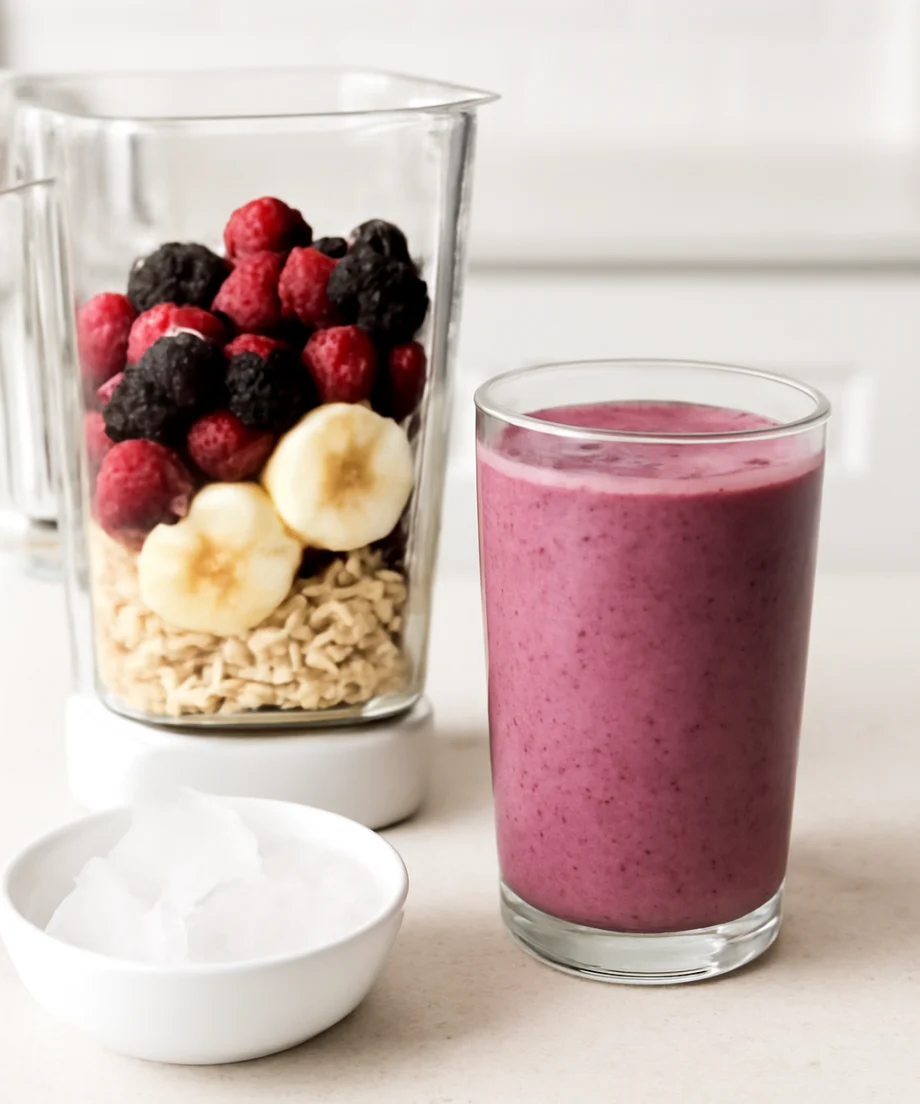
A useful starting point is to match 1/2 cup of ice with each cup of frozen fruit. This is not a strict formula, because bananas, berries, yogurt, nut butter, oats, and liquid all change the result. Frozen fruit already supplies both coldness and structure, so a smoothie made entirely with frozen ingredients may need little or no ice.
Simple ice guidelines
- Lightly chilled: Use 1/4 cup ice per cup of frozen fruit.
- Thick and cold: Use 1/2 cup ice per cup of frozen fruit.
- Extra thick: Use up to 3/4 cup ice per cup of frozen fruit, adding it in stages.
- Very frozen smoothie: Replace some ice with additional frozen banana or berries.
Large ice cubes can be harder for some blenders to process. If your appliance struggles with ice, use smaller cubes or crushed ice, and check the manufacturer's instructions before blending frozen ingredients. Do not force the blender to run if the blade is stalled.
How to Make the Thick Berry Oat Smoothie
- Prepare the ingredients. Peel and slice the banana. Measure the oats, berries, milk, ice, nut or seed butter, vanilla, and cinnamon. Slicing the banana helps it blend more evenly.
- Soften the oats if desired. For a smoother texture, combine the oats and milk in the blender jar and let them stand for 2 to 3 minutes. This step is optional but can help reduce a grainy texture.
- Load the blender in the right order. Add the milk first, followed by the banana, nut or seed butter, oats, berries, vanilla, cinnamon, and ice. The liquid near the blades can make blending easier.
- Blend on low first. Start at a low speed for about 10 seconds, then increase to medium or high. Use the tamper only if your blender is designed for one and the manufacturer's directions allow it.
- Check the consistency. Stop the blender and inspect the mixture. If it is too thick to move, add milk 1 tablespoon at a time. If it is thinner than you want, add a few ice cubes or a small amount of frozen fruit.
- Blend briefly to finish. Blend until the berries and ice are evenly incorporated. Avoid running the blender longer than necessary, since extended blending can warm the smoothie and make it less thick.
- Serve promptly. Pour the smoothie into two glasses or bowls. Add toppings immediately if using them.
Tips for Getting a Thick, Smooth Finish
Use frozen fruit strategically
Frozen berries create a colder, thicker base than fresh berries. Frozen banana adds creaminess and can replace some of the ice. If you use fresh fruit, begin with less liquid and add ice gradually, because fresh fruit often releases more juice as it blends.
Do not add all the liquid at once
The measured 1/2 cup of milk is a starting point rather than a guarantee. Begin with slightly less if your blender handles thick mixtures well, then add more only when needed. Too much liquid is one of the quickest ways to turn a spoonable smoothie into a thin drink.
Balance oats with moisture
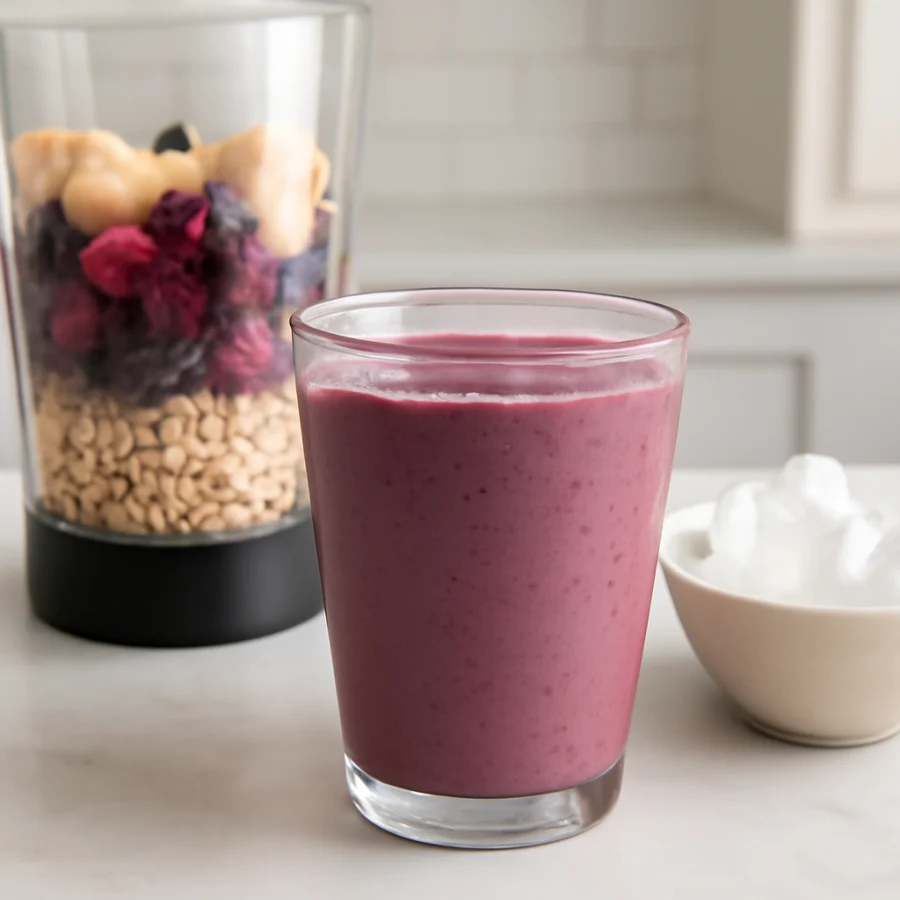
Oats add body, but they also absorb liquid. If the smoothie becomes pasty or the blades stop moving, add a tablespoon of milk and blend again. Rolled oats generally provide a more pleasant texture than large amounts of quick-cooking or steel-cut oats, which may remain gritty when used raw.
Let the blender do the work
Repeatedly stopping to stir can be useful, but do so with the blender turned off and the jar handled according to the appliance instructions. Never insert a spoon or spatula while the blades are moving. A short pause can protect the motor and help you adjust the consistency safely.
Ingredient Alternatives
You can adapt this recipe without changing the basic ice ratio. Use soy milk, dairy milk, pea milk, or another beverage that works for your dietary preferences. Choose an unsweetened option if you want more control over the flavor.
Sunflower seed butter is a nut-free alternative to almond butter. Tahini can also work, although its stronger flavor may be noticeable. For a different fruit profile, replace the mixed berries with frozen mango, peaches, or cherries. Since fruits vary in water content, add the liquid gradually when making substitutions.
If you prefer a smoothie without oats, replace the 1/2 cup rolled oats with 1/2 cup additional frozen banana or a few tablespoons of plain yogurt. If using yogurt, you may need less ice because it contributes body. A dairy-free yogurt can also work, but check the current product label for ingredients and allergen information.
Serving Suggestions
Serve this smoothie immediately for the thickest texture. For a bowl-style presentation, use the lower end of the liquid range and pour the blended mixture into a wide bowl. Add sliced banana, berries, pumpkin seeds, unsweetened coconut, or a light sprinkle of oats.
For a drinkable consistency, add 2 to 4 tablespoons of milk after blending. If you are serving the smoothie with breakfast, pair it with a food that offers a different texture, such as whole-grain toast, eggs, or a piece of fruit. A smoothie can be part of a varied eating pattern, but it is not a substitute for every meal or a requirement for a balanced diet.
Storage and Food Safety
A fresh smoothie is best served right away because ice melts and the texture changes during storage. If necessary, pour leftovers into a clean, covered container, refrigerate promptly, and use them within a short period according to current food-safety guidance. Shake or stir before drinking, and discard the smoothie if it develops an unusual smell, appearance, or flavor.
Keep perishable milk, yogurt, and cut fruit refrigerated until preparation. Wash produce under cool running water before cutting, and wash your hands, blender jar, lid, and utensils after handling ingredients. Follow reliable current guidance from food-safety authorities for refrigerator temperatures and storage times. For additional practical information, see these food safety and storage guides.
Frequently Asked Questions
What is the best ice ratio for a thick smoothie?
A practical starting point is 1/2 cup of ice for every 1 cup of frozen fruit. For an extra-thick smoothie, use up to 3/4 cup, but add it gradually. If the recipe already contains several frozen ingredients, you may need less ice.
Why is my smoothie watery after blending?
Common causes include too much liquid, a high proportion of fresh fruit, or ice that has melted before blending. Add a small amount of frozen fruit or ice and blend briefly. Next time, begin with less liquid and keep the ingredients cold until you are ready to blend.
Can I make a thick smoothie without ice?
Yes. Use frozen banana, frozen berries, mango, or another frozen fruit as the primary source of chill and thickness. You may need a little additional milk to help the blades move.
Should I use crushed ice or ice cubes?
Either can work, but smaller pieces may be easier for some blenders to process. Check your blender's instructions, especially if it is not designed for crushing ice. Stop blending if the motor strains or the blades stop moving.
How can I make this smoothie less sweet?
Leave out the maple syrup and use unsweetened milk. You can also increase the berries slightly or add a small amount of plain yogurt. Taste after blending and adjust gradually rather than adding several sweeteners at once.
A Flexible Formula for Future Smoothies
Once you understand the best ice ratios for thick smoothies, you can adapt the method to many combinations. Start with about 1 cup frozen fruit, 1/2 cup liquid, and 1/2 cup ice for two small servings. Add ingredients that provide body, such as banana, oats, yogurt, avocado, or nut butter, then adjust the texture in small increments.
The most reliable approach is to blend briefly, assess the consistency, and make one change at a time. That prevents an overly thin or overly icy result and helps you learn how each ingredient behaves in your own blender. For more ideas, browse these drink recipes and juicing and blending guides.
Comments
0No comments yet. Be the first to share a helpful note or question.
Leave a Comment
Your email address will not be published. Comments are reviewed before appearing on the site.