
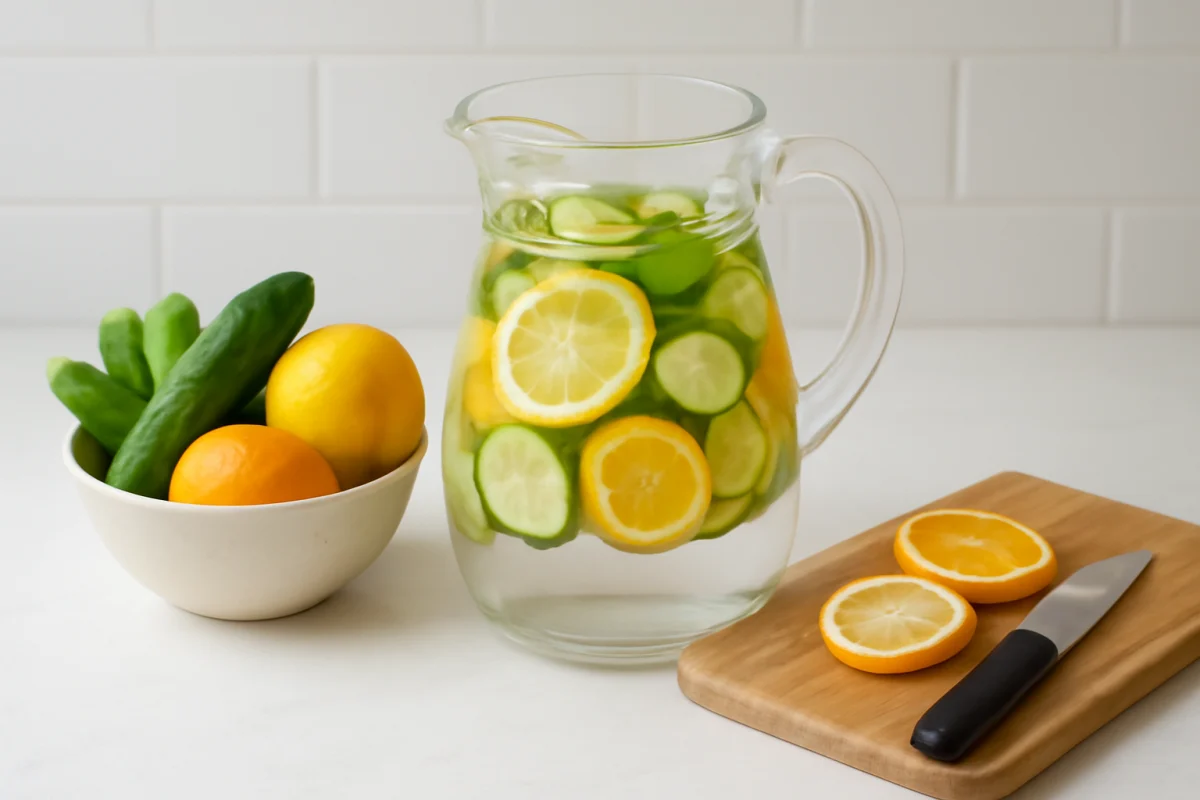
Cross-contamination happens when germs move from one food, surface, utensil, or hand to another. In a homemade drink, that can occur when unwashed produce touches a clean cutting board, when a knife is used for raw meat and fruit without washing, or when a prepared beverage sits at an unsafe temperature. The safest approach is straightforward: wash your hands, clean and separate equipment, use sound produce, and refrigerate the finished drink promptly. For more recipes and practical drink guidance, visit refreshing detox drinks.
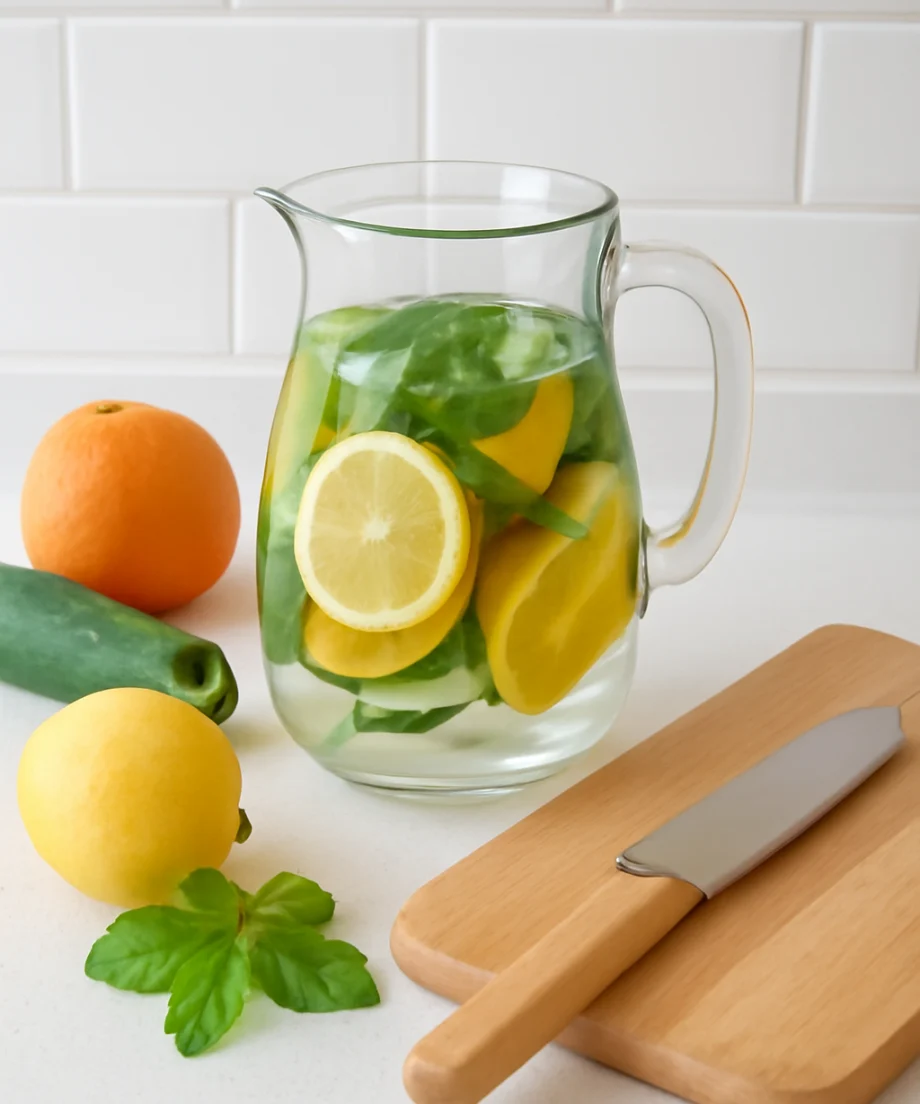
This citrus cucumber infused water is a simple recipe to practice those habits. It combines cold water with lemon, orange, cucumber, and mint for a crisp, refreshing drink without relying on restrictive cleanse routines or exaggerated health claims. The ingredients add flavor, but the drink is not a substitute for balanced meals, and it does not remove toxins, treat disease, or guarantee weight loss.
Citrus Cucumber Infused Water at a Glance
- Prep time: 10 minutes
- Total time: 10 minutes, plus optional chilling time
- Servings: 6 cups
- Best equipment: Clean cutting board, clean knife, pitcher, measuring cup, and serving glasses
Ingredients
- 6 cups cold drinking water
- 1 small cucumber, preferably firm and free of soft spots
- 1 lemon
- 1 small orange
- 10 fresh mint leaves
- Ice, for serving, if desired
How to Make Citrus Cucumber Infused Water Safely
- Wash your hands. Use soap and running water and wash for at least 20 seconds before handling the ingredients. Repeat after touching a phone, trash can, pet, raw meat, poultry, seafood, eggs, or other potentially contaminated items.
- Prepare a clean workspace. Wash the pitcher, cutting board, knife, measuring cup, and any glasses with hot, soapy water. Rinse them well and allow them to air-dry or dry with a clean towel. If you have just prepared raw meat or seafood, use a separate clean area or thoroughly clean and sanitize the surface according to reliable food-safety guidance.
- Rinse the produce under running water. Rinse the cucumber, lemon, orange, and mint even if you plan to peel or discard some of them. Do not use soap, bleach, or household cleaners on produce. Gently rub firm produce such as the cucumber and citrus while rinsing.
- Dry the ingredients. Pat the produce dry with a clean paper towel or allow it to air-dry. Drying can help remove remaining surface moisture and makes slicing easier. Discard any ingredient with mold, a leaking area, or an unusual odor.
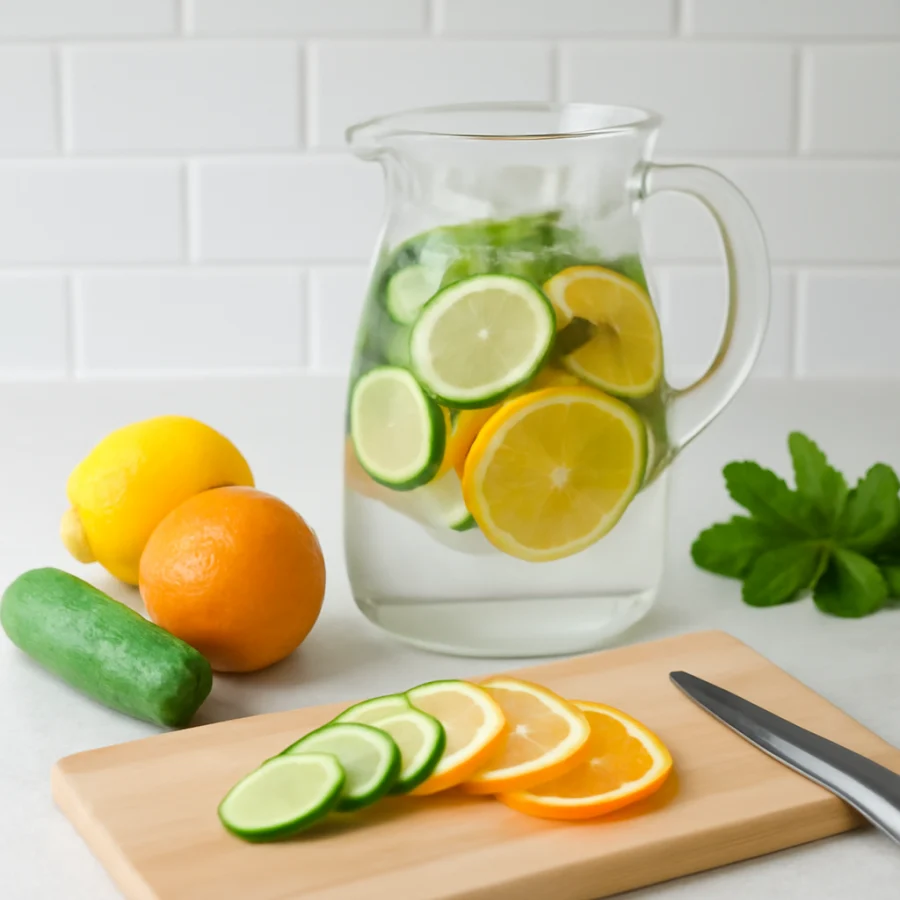
- Slice the produce. On the clean cutting board, slice the cucumber into thin rounds. Cut the lemon and orange into thin rounds or half-moons. Remove obvious seeds if you prefer. Keep the prepared ingredients away from unwashed produce and raw animal foods.
- Combine the drink. Add the cucumber, citrus slices, and mint to the clean pitcher. Pour in 6 cups of cold water and stir gently with a clean utensil.
- Chill and serve. Cover the pitcher and refrigerate it for about 30 minutes if you want a stronger flavor. Serve over ice in clean glasses, or pour directly from the chilled pitcher.
Why Cross-Contamination Happens in Drink Preparation
Cross-contamination is often associated with meat, poultry, and seafood, but ready-to-drink beverages can also be affected. Fresh produce may carry microorganisms on its surface, and those microorganisms can transfer to a knife, cutting board, pitcher, or glass. Once sliced ingredients are placed in water, the drink is no longer protected by the whole, intact skin of the produce.
Several small mistakes can create a chain of contamination:
- Using a cutting board that still has residue from raw chicken or seafood
- Cutting fruit with a knife that was not washed after another food was prepared
- Touching mint or citrus after handling a phone, faucet handle, or trash
- Placing clean slices on a plate that held unwashed produce
- Pouring the drink into glasses that were not properly washed
- Leaving the pitcher at room temperature for an extended period
The best defense is separation. Keep raw animal foods away from ready-to-eat produce, use clean tools for the drink, and clean high-touch surfaces before and after preparation. For more practical guidance, visit the Food Safety Guides section.
Ingredient Choices and Simple Alternatives
Cucumber
A firm cucumber provides a mild, fresh flavor. English cucumbers can work well because they are usually long and thin, but any fresh cucumber is suitable. If the skin is waxed, heavily blemished, or unpleasantly tough, peel it after washing. Peeling does not replace washing, because the knife can transfer surface residue through the skin as it cuts.
Citrus
Lemon adds tartness, while orange provides a softer, sweeter aroma. You can use two lemons instead of the orange for a sharper flavor, or replace the orange with a lime. If you use bottled citrus juice, check the current label for ingredients and storage instructions. Juice will produce a different texture and flavor than sliced fruit, and it may not provide the same visual appeal.
Mint
Mint is optional but adds a cooling note. Basil can be used as an alternative, or you can leave the herbs out entirely. Rinse fresh herbs under running water, remove damaged leaves, and handle them with clean hands.
Water
Use safe drinking water from your tap or a properly maintained filtration system. If a local water advisory is in effect, follow the current instructions from your local health department or water utility. Do not assume that chilling or adding citrus makes questionable water safe.
Food-Safety Tips for Storing Infused Water
Keep the finished drink covered and refrigerated. Because the recipe contains cut produce, it should not be treated like shelf-stable bottled water. A cautious practice is to prepare only the amount you expect to drink promptly and discard leftovers that have been left out for an extended period. When in doubt, follow current guidance from a reliable food-safety authority rather than relying on smell or taste alone.
Use a clean ladle or pour directly from the pitcher without touching the rim to glasses or hands. Do not top off an old batch with fresh water and new fruit. Wash the pitcher before making another batch. If the water becomes cloudy in an unusual way, develops an off odor, or the fruit becomes slimy, discard it.
For broader storage ideas and safe handling reminders, explore Food Safety & Storage. Food-safety recommendations can change as public-health agencies update their guidance, so consult current sources when you need advice for a specific situation.
Helpful Preparation Tips
- Use chilled ingredients: Starting with cold water and refrigerated produce improves the drinking experience without requiring a long countertop rest.
- Avoid over-slicing: Thin slices release flavor quickly, but very thin citrus slices may make the water taste bitter after prolonged storage.
- Do not crush the mint: Gently press or stir the leaves rather than aggressively muddling them, which can make the drink taste grassy.
- Make a smaller batch: Halve the ingredients for about 3 cups if you are preparing the drink for one or two people.
- Label the pitcher: If several drinks are stored in the refrigerator, a simple preparation label can help you use the oldest one first.
Serving Suggestions
Serve this infused water with a meal, pack it in a clean insulated container, or offer it alongside plain water at a gathering. Add ice immediately before serving so the drink does not become diluted in the refrigerator. For a larger table, prepare multiple clean pitchers rather than repeatedly refilling one that has been sitting out.
If you want a lightly sparkling version, pour the infused water into individual glasses and add plain sparkling water just before serving. Do not carbonate the fruit-filled pitcher unless the equipment is specifically designed for that use. For more drink ideas, browse the Drink Recipes collection.
Frequently Asked Questions
Can washing produce prevent all cross-contamination?
No. Rinsing helps remove surface dirt and some microorganisms, but it does not make produce sterile. Clean hands, clean equipment, separation from raw foods, prompt refrigeration, and careful storage are also important.
Should I wash lemons and oranges before slicing them?
Yes. Even when you do not eat the peel, the knife can carry surface contamination into the fruit as it passes through the skin. Rinse the whole citrus fruit under running water before cutting.
Can I leave infused water on the counter during a party?
It is safer to keep it cold and limit the time it spends at room temperature. Use a chilled pitcher or a container sitting in ice, replace small amounts as needed, and discard leftovers that have been handled or left out too long.
Can I reuse the fruit for a second batch?
It is better to use fresh, properly washed ingredients for each batch. Used fruit loses flavor and may become soft, so reusing it can also reduce quality. Always wash the pitcher before starting again.
Is this a detox treatment or a meal replacement?
No. This is a flavored water recipe intended to make drinking water more appealing. It does not remove toxins, treat or prevent disease, guarantee weight loss, or replace a varied eating pattern and regular meals.



Comments
0No comments yet. Be the first to share a helpful note or question.
Leave a Comment
Your email address will not be published. Comments are reviewed before appearing on the site.