
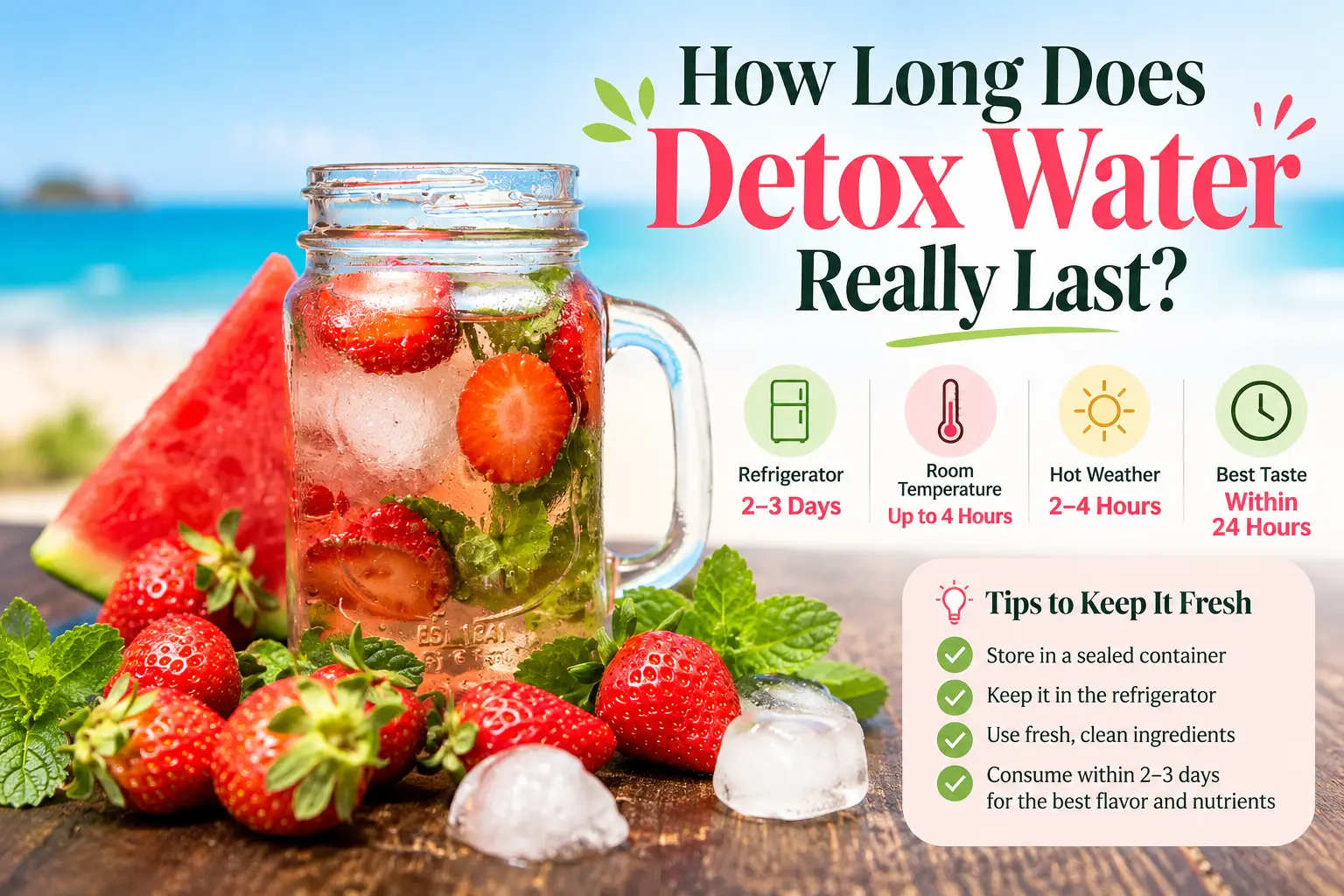
How long can you keep homemade detox water? For the best quality and a cautious food-safety approach, refrigerate homemade infused water promptly and drink it within 24 hours. If it has sat at room temperature for more than 2 hours, discard it; on a hot day above 90°F, use a 1-hour limit. Homemade infused water is not shelf-stable, even when it looks and smells normal.
This cucumber, lemon, and mint water is worth trying because it is simple, refreshing, and easy to prepare without added sugar. The citrus and herbs give plain water a brighter flavor, which may make it more appealing during the day. It is a flavored beverage, not a medical treatment or a substitute for balanced meals. The safest approach is to make a small batch, keep it cold, and prepare a fresh batch regularly.
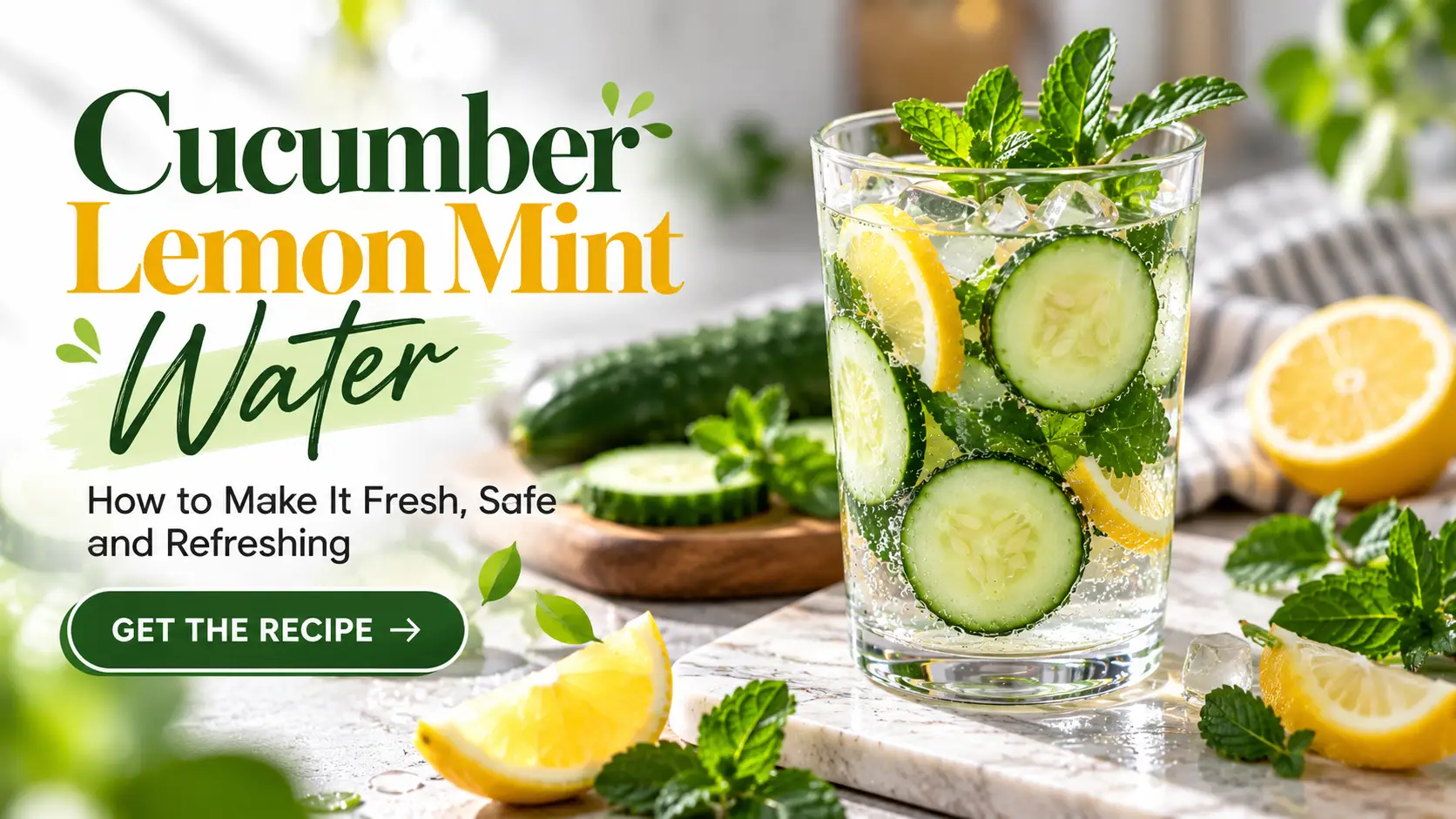
Cucumber, Lemon, and Mint Infused Water
This recipe makes a lightly flavored drink for the refrigerator. Because it uses fresh produce, follow the storage guidance below rather than treating it like bottled water.
- Prep time: 10 minutes
- Infusion time: 30 minutes to 2 hours
- Total time: About 2 hours and 10 minutes
- Servings: 4 cups
Ingredients
- 4 cups cold drinking water
- ½ medium English cucumber, thinly sliced
- ½ lemon, thinly sliced or cut into small wedges
- 8 to 10 fresh mint leaves
- Ice, for serving if desired
Directions
- Wash your hands with soap and water before preparing the drink. Clean the cutting board, knife, pitcher, and any other equipment you will use.
- Rinse the cucumber, lemon, and mint under cool running water. Do not use soap or household cleaners on produce. Gently rub firm produce such as the cucumber and lemon while rinsing.
- Slice the cucumber and lemon with a clean knife. Handle the mint gently so the leaves stay mostly intact.
- Place the produce and mint in a clean, covered pitcher or food-safe container. Add 4 cups of cold water.
- Cover the container and refrigerate it for 30 minutes to 2 hours. A longer steep can produce stronger flavors, but the fresh ingredients will gradually soften and may make the water cloudy.
- Serve over ice in clean glasses if desired. Keep the pitcher refrigerated between servings.
- Discard the drink within 24 hours for the best combination of quality and caution. Remove and discard the fruit and herbs sooner if they become slimy, unusually soft, moldy, or unpleasant-smelling.
How Long Homemade Detox Water Lasts in the Refrigerator
A practical home guideline is to use fresh infused water within 24 hours when it contains sliced fruit, cucumber, or herbs. Refrigeration slows the growth of microorganisms, but it does not stop it. The clock starts when the ingredients are added to the water, not when you first pour a glass.
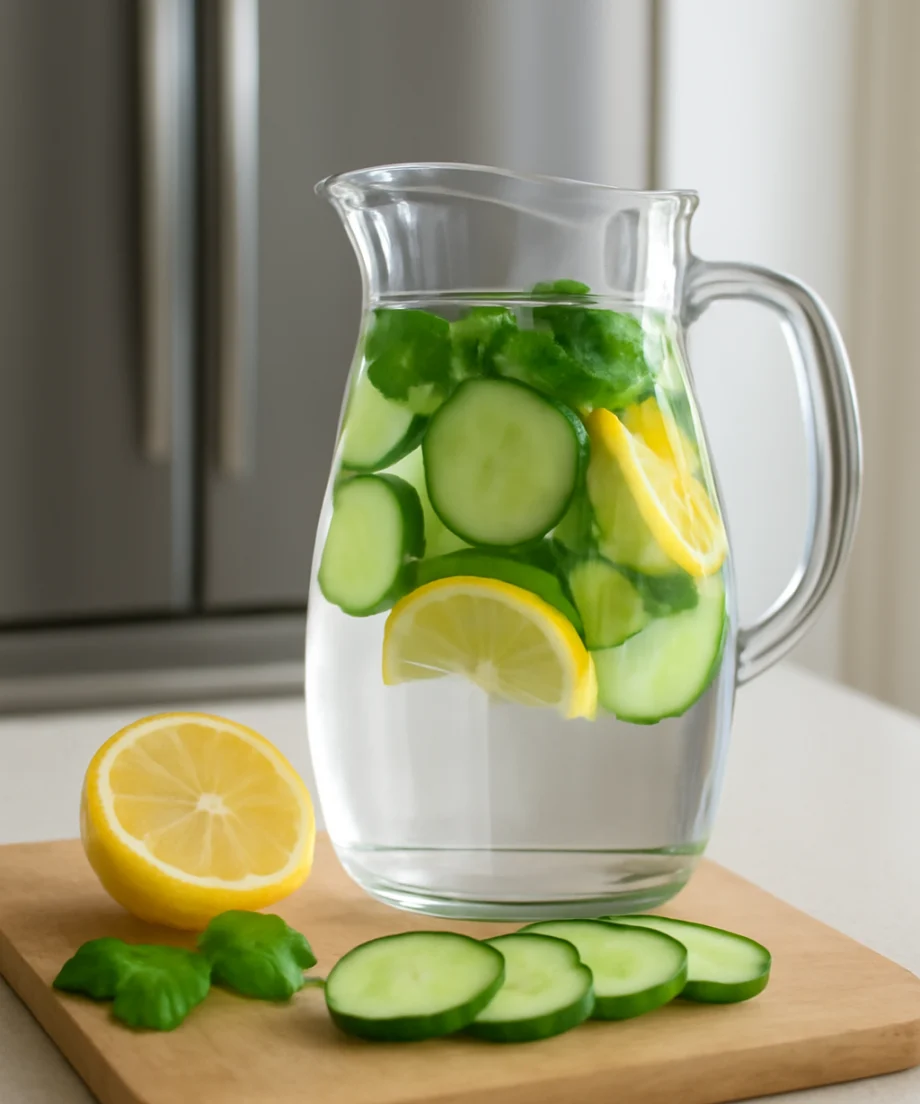
Some people keep infused water for longer, but a longer storage period can reduce flavor quality and increase uncertainty about food safety. Fresh ingredients release juices and plant material into the water, and cut produce is more perishable than whole produce. If you want water ready for the next day, prepare it in the evening, cover it, refrigerate it promptly, and use it the following day.
A clean appearance is not proof that the drink is safe. Harmful microorganisms may not cause an obvious change in smell, color, or taste. When in doubt, throw it out rather than tasting it to decide whether it is still good.
Room-Temperature Storage and Travel
Do not leave homemade detox water on the counter for an extended period. Perishable foods and drinks should generally not remain at room temperature for more than 2 hours. If the surrounding temperature is above 90°F, such as during a hot outdoor event or in a warm vehicle, use a 1-hour limit.
For travel, use an insulated cooler or bottle with sufficient ice packs to keep the drink cold. A reusable bottle can be convenient, but it should be washed and dried thoroughly between uses. Do not repeatedly top off an old batch with fresh water or fruit. That practice can make it difficult to track how long the ingredients have been present.
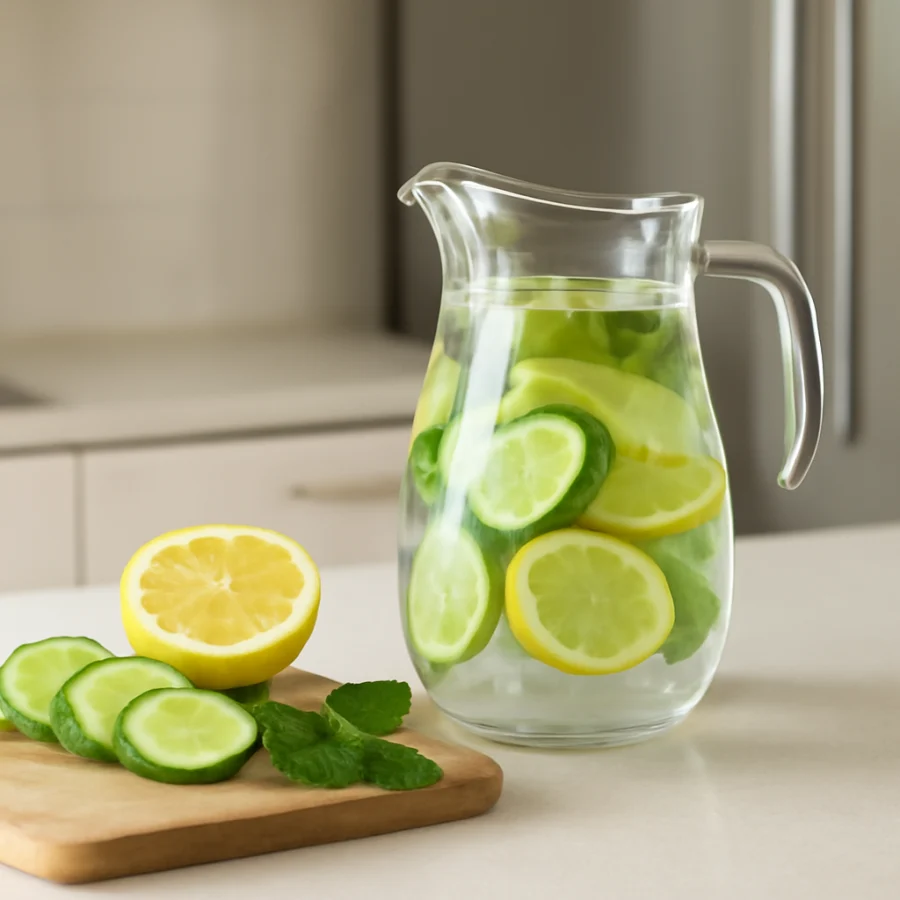
If you need a drink that can safely stay unrefrigerated, choose a commercially packaged product that is labeled for room-temperature storage and follow its current package directions. Once opened, store it according to the label.
Food-Safety Steps That Matter Most
Start with clean equipment
Wash pitchers, bottles, knives, and cutting boards with hot, soapy water, then rinse and allow them to dry. A container that still has residue from an earlier drink can affect both flavor and cleanliness. If your bottle has a narrow opening, pay special attention to the lid, gasket, and threads where residue can collect.
Handle produce carefully
Wash produce before slicing it, even when you plan to peel it. Bacteria on the outside can transfer to the inside during cutting. Choose firm, undamaged ingredients and remove bruised or moldy sections. Wash fresh mint carefully because its leaves can hold soil and moisture.
Keep the water cold
Refrigerate the drink at 40°F or below, using a refrigerator thermometer if you are unsure of the actual temperature. Place the covered container in the refrigerator soon after preparation. Avoid storing it in the refrigerator door if that area is warmer or experiences frequent temperature changes.
Avoid cross-contamination
Use clean serving glasses and utensils. Do not drink directly from the pitcher or bottle if other people will be using it. Keep raw meat, poultry, seafood, and their juices away from the ingredients and preparation area.
For more practical guidance, see the Food Safety & Storage section and consult current recommendations from reliable public-health food-safety sources.
Ingredient Alternatives and Preparation Tips
You can adjust this recipe without changing the main storage rule. Use orange or lime slices instead of lemon, or replace cucumber with a few washed strawberries. Basil can stand in for mint, although it may give the drink a stronger herbal flavor. If using berries, choose firm fruit and discard any damaged pieces before washing.
For a milder drink, use fewer citrus slices or steep the ingredients for only 30 minutes. Lemon peel can contribute bitterness after a long infusion, while mint may become grassy or overpowering. Removing the ingredients after the desired flavor develops can improve the taste, but it does not turn the water into a shelf-stable beverage. Continue to refrigerate it and use it within the same cautious time frame.
If you prefer a colder drink, chill the water and ingredients first instead of relying on a large amount of ice. Ice can dilute the flavor as it melts, and ice made from an unclean ice bin or scoop can introduce contamination. Serve the drink in clean glasses and return the covered pitcher to the refrigerator promptly.
Serving Suggestions and Realistic Limitations
Serve this infused water with breakfast, lunch, or a snack, or pour it into a reusable cup for a short outing with an ice pack. It can be one pleasant way to add variety to your normal fluid choices. Your overall hydration needs vary with factors such as activity, weather, age, and health status, so this recipe should be viewed as flavored water rather than a special cleanse program.
The word “detox” is commonly used for flavored water, but this drink has not been shown here to remove toxins, cure disease, cause guaranteed weight loss, or replace a balanced eating pattern. The value of the recipe is its flavor, convenience, and use of ordinary ingredients. If you have a medical condition, fluid restriction, or questions about beverages and medications, ask a qualified health professional for advice specific to you.
Frequently Asked Questions
Can I keep homemade detox water for three days?
It is safer and usually better tasting to make only enough for about 24 hours when the water contains sliced produce or fresh herbs. After that point, quality declines and the storage history may be uncertain. Discard it rather than extending the batch for several days.
Does lemon make infused water safe for longer?
No. Lemon adds acidity and flavor, but it does not make homemade infused water shelf-stable or eliminate all food-safety concerns. Keep lemon water refrigerated and follow the same time limits.
Can I refill the pitcher with more water?
Refilling a pitcher that still contains old fruit and herbs makes it harder to track storage time and may weaken the flavor. Empty, wash, and dry the container before starting a new batch. If you refill it once for immediate use, treat the drink as part of the original batch rather than resetting the clock.
What are signs that infused water should be discarded?
Discard it if it has been left out too long or if you notice mold, slime, fermentation-like bubbles, an unusual odor, or an unexpected taste. Do not taste a questionable drink to test it. When storage conditions are uncertain, discarding it is the safer choice.
Can I freeze the fruit for later use?
Freezing sliced fruit may help with convenience, but it does not replace safe handling. Use clean, food-safe freezer containers, thaw or add the fruit under hygienic conditions, and keep the finished drink refrigerated. Frozen ingredients can become soft as they thaw, so the final drink may have a different texture.
For more recipes and preparation ideas, explore the Drink Recipes collection. A small, freshly prepared batch kept cold is the simplest way to enjoy cucumber, lemon, and mint water while reducing avoidable storage risks.


Comments
0No comments yet. Be the first to share a helpful note or question.
Leave a Comment
Your email address will not be published. Comments are reviewed before appearing on the site.