
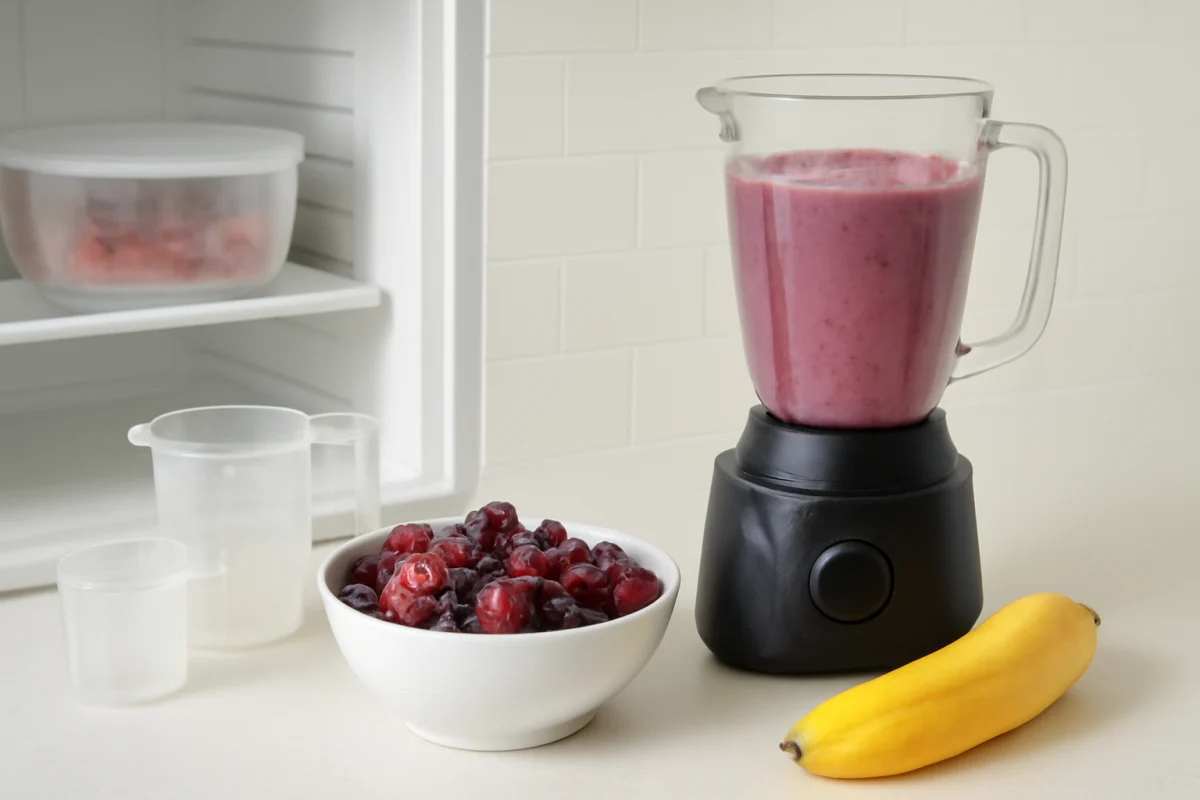
The safest ways to thaw frozen ingredients for blending are to thaw them in the refrigerator, use them directly from frozen when your blender allows it, or use a short cold-water thaw when you need them ready quickly. Do not thaw frozen fruit, vegetables, or other perishable ingredients on the kitchen counter. For a practical example, this frozen berry oat smoothie uses frozen berries safely and creates a thick, refreshing drink without requiring a long cleanse or restrictive routine. For more recipes and practical drink guidance, visit refreshing detox drinks.
Frozen ingredients can be convenient, economical, and useful for consistent smoothie texture. However, freezing does not make food immune to contamination. It slows the growth of many microorganisms, but some microbes can remain present and become active as food warms. Safe handling, clean equipment, and prompt refrigeration help reduce avoidable risks.
Frozen Berry Oat Smoothie at a Glance
- Preparation time: 10 minutes, plus thawing if needed
- Total time: 10 minutes using frozen berries, or about 2 to 12 hours with refrigerator thawing
- Servings: 2
- Best for: A quick breakfast or snack made with frozen fruit and pantry staples
Ingredients
- 2 cups frozen mixed berries, such as strawberries, blueberries, raspberries, or blackberries
- 1 medium ripe banana, peeled and sliced
- 1 cup pasteurized milk or unsweetened fortified soy milk
- 1/2 cup plain yogurt, kept refrigerated until use
- 1/4 cup old-fashioned rolled oats
- 1 tablespoon smooth peanut butter or sunflower seed butter
- 1/2 teaspoon ground cinnamon, optional
- 1 to 2 teaspoons maple syrup, optional
- 1/2 cup ice, optional, if a colder and thicker drink is desired
Check packaged ingredients for current allergen and storage information. If you use a nondairy milk or yogurt, keep it refrigerated according to the package label. For more ingredient ideas, browse the Drink & Ingredient Guides.
How to Thaw Frozen Ingredients Safely
1. Thaw in the refrigerator
Refrigerator thawing is the most dependable option when you are planning ahead. Put the frozen fruit in a clean, covered container and place it in the refrigerator. Keep the refrigerator at 40°F or below. A small amount of fruit may soften within a few hours, while a larger container can take longer.
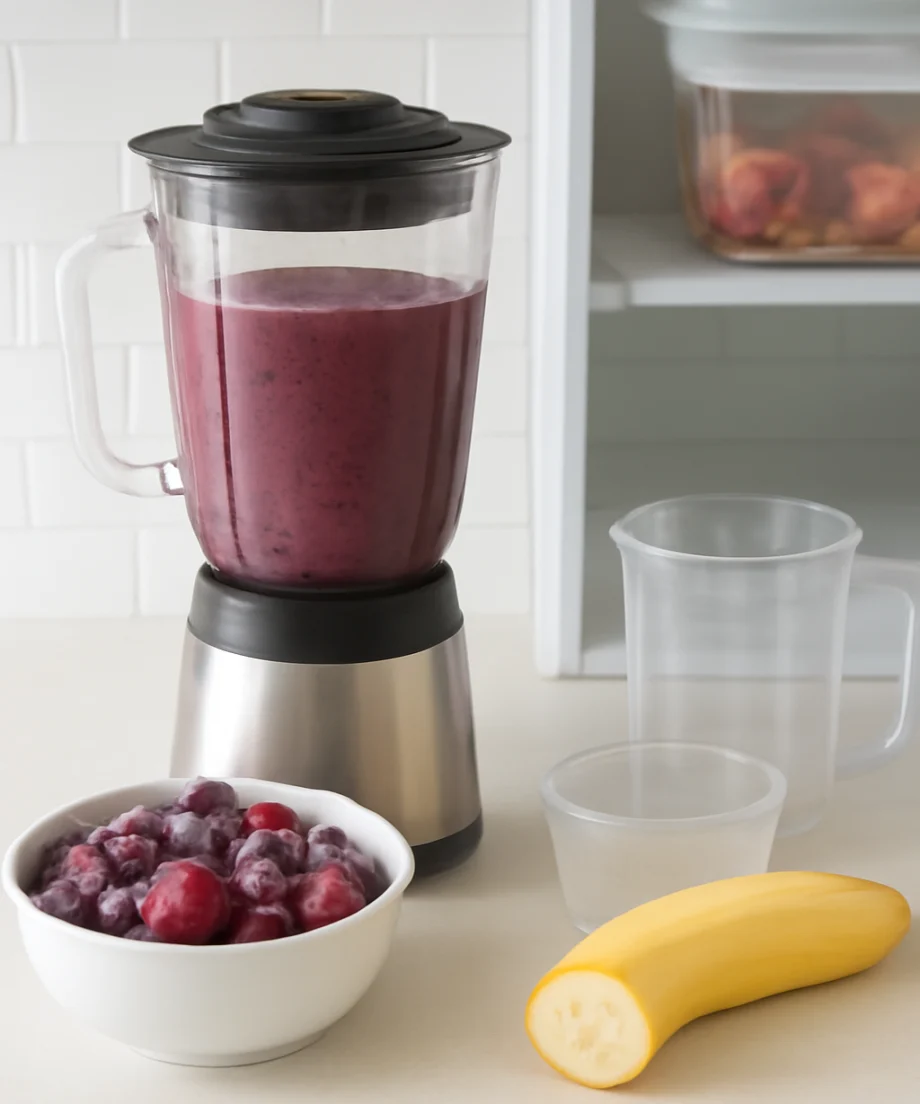
Use a container that will not leak onto other foods. Frozen fruit releases liquid as it thaws, and that liquid can spread onto ready-to-eat foods. Keep the container on a lower shelf if possible, especially if it contains a food that could drip.
2. Use frozen fruit directly when appropriate
Many frozen berries can go straight into a blender. This is often the simplest method for this smoothie because the fruit adds thickness and chill. Before blending, inspect the package for large ice clumps, damaged packaging, or signs that the fruit has partially thawed and refrozen. A little frost is normal, but food with unusual odor, discoloration, leaking packaging, or an uncertain storage history should be discarded.
Read your blender’s instructions before adding hard frozen ingredients. Some models are designed for frozen fruit, while others require additional liquid or recommend partial thawing. Never force the blender motor or use a utensil while the blades are moving. Turn the appliance off and unplug it before adjusting ingredients.
3. Use a cold-water thaw for a quicker option
If the fruit needs to soften soon, place it in a leakproof bag or container and submerge it in cold water. Change the water regularly so it stays cold. Once thawed, use the fruit promptly and clean the container and sink area afterward.
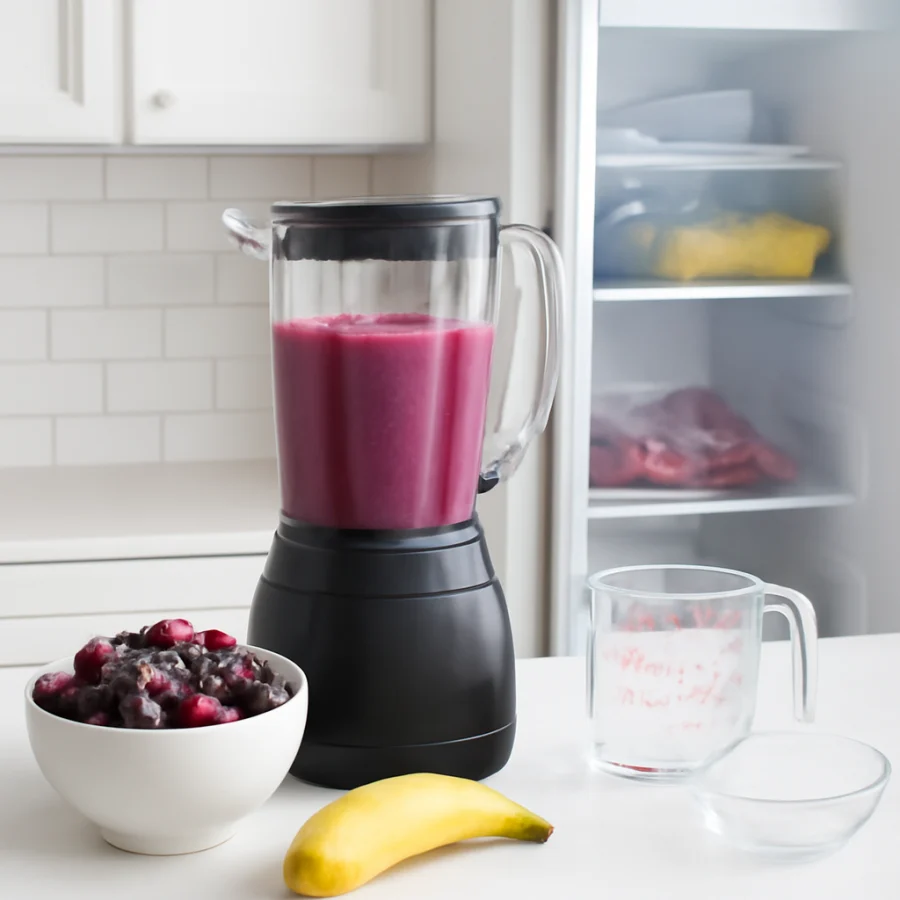
Cold-water thawing is different from leaving food in warm water or on the counter. Warm conditions can allow the surface of the food to enter an unsafe temperature range while the center remains frozen. Do not use hot water to speed up the process.
4. Avoid countertop thawing
Do not leave frozen fruit, milk, yogurt, or other perishable ingredients at room temperature to thaw. The outside can warm while the inside remains frozen, creating conditions that support bacterial growth. If perishable ingredients have been sitting out for an extended period, use current guidance from a reliable food-safety authority rather than relying on smell or appearance alone.
How to Prepare the Smoothie
- Wash your hands. Use soap and running water before handling ingredients. Clean the blender jar, lid, cutting board, knife, measuring tools, and serving glasses.
- Prepare the banana. Peel and slice the banana. If you are not blending immediately, keep the slices covered in the refrigerator.
- Add liquid first. Pour the milk or soy milk into the blender. Starting with liquid can help the blades move the other ingredients more easily.
- Add the remaining ingredients. Add the yogurt, oats, nut or seed butter, banana, frozen berries, cinnamon, and optional maple syrup. Add ice last if you are using it.
- Blend safely. Secure the lid and blend on a low setting first, then increase the speed. Stop if the motor strains. Add a tablespoon or two of additional milk if the mixture is too thick, but keep the lid in place while the blades are moving.
- Check the texture. Blend until the oats and berries are incorporated. If berry seeds or pieces are a concern, pour the smoothie through a fine-mesh strainer, although straining may change the texture and reduce some of the drink’s natural fiber.
- Serve promptly. Pour into clean glasses and drink soon after preparation. Keep any extra portion refrigerated rather than leaving it on the counter.
Tips for Better Texture and Safer Handling
- Use small frozen pieces. Smaller fruit pieces are generally easier for a blender to process than large solid blocks.
- Do not overfill the jar. Follow the blender manufacturer’s maximum fill line. Overfilling can produce uneven blending and place extra strain on the motor.
- Balance thick and liquid ingredients. Yogurt, oats, and nut butter make the drink thick. Milk or soy milk helps keep the mixture moving.
- Keep dairy cold. Take milk and yogurt from the refrigerator immediately before blending, and return them promptly afterward.
- Use clean equipment. Residue left in a blender can support microbial growth. Rinse the jar after pouring, then wash it according to the manufacturer’s directions.
- Do not taste questionable food. Spoilage cannot always be detected by smell, taste, or appearance. When storage conditions are uncertain, the safer choice is to discard the ingredient.
- Follow package instructions. Some frozen products may include preparation or cooking instructions. Verify the current label, especially if the product is intended to be heated before eating.
Ingredient Alternatives
For a dairy-free version, use unsweetened soy milk and a plain nondairy yogurt. Soy milk contributes more protein than many other plant-based beverages, but labels vary, so check the package for nutrition and allergen details. Almond, oat, or pea beverages can also work, although each changes the flavor and thickness.
Replace peanut butter with sunflower seed butter if you need a peanut-free option. Almond butter is another possibility, provided it fits your dietary needs. If you avoid oats, leave them out or use a small amount of another quick-blending grain product that is labeled for your intended use.
Fresh fruit can replace frozen berries, but the smoothie may be thinner and warmer. Add ice only if your blender is designed to crush it. You can also use frozen mango or peaches, but cut or portion them according to your appliance’s instructions.
Serving and Storage Guidance
Serve the smoothie immediately for the best texture. If you need to store leftovers, pour them into a clean, covered container and refrigerate promptly. Leave a little space at the top if the container may expand slightly. Shake or stir before drinking because separation is normal.
For quality and safety, use refrigerated leftovers as soon as practical and follow current guidance from the U.S. Department of Agriculture or your local health department. Do not store a partially consumed smoothie in the original blender jar if it is difficult to clean thoroughly. Discard leftovers that were left at room temperature for too long, have an unusual odor or appearance, or were handled with an unclean utensil.
Freezing a blended smoothie is possible, but it may separate or become icy after thawing. If you freeze it, use a freezer-safe container, leave room for expansion, thaw it in the refrigerator, and stir or reblend before serving. Never refreeze a smoothie that has been fully thawed and held at room temperature.
Frequently Asked Questions
Can I blend frozen berries without thawing them?
Often, yes. Many blenders can process frozen berries, and using them frozen can create a thicker smoothie. Check your appliance manual, add enough liquid, and stop if the motor strains. Do not use a blender that is not rated for hard frozen ingredients without following its instructions.
Is it safe to thaw fruit on the counter?
It is better to avoid countertop thawing for perishable foods. Use the refrigerator, direct-from-frozen blending when appropriate, or a controlled cold-water method instead.
Should frozen fruit be washed before blending?
Follow the package directions. Washing some frozen fruit can spread liquid around the sink, and washing does not replace safe storage or cooking instructions. If the label directs you to cook the product, do not assume blending makes it ready to eat.
How can I make this smoothie less thick?
Add a small amount of cold milk or soy milk and blend briefly. Add liquid gradually so the smoothie does not become thinner than intended.
Does this smoothie replace a balanced meal?
Not necessarily. It can be used as a snack or part of a meal, but individual nutrition needs vary. A balanced eating pattern generally includes a range of foods, and beverages should not be treated as a substitute for professional nutrition advice.
For additional preparation ideas, visit the Juicing & Blending section and review the site’s Food Safety & Storage resources. Safe thawing is a small step, but it makes frozen ingredients easier to use with confidence.
Comments
0No comments yet. Be the first to share a helpful note or question.
Leave a Comment
Your email address will not be published. Comments are reviewed before appearing on the site.