
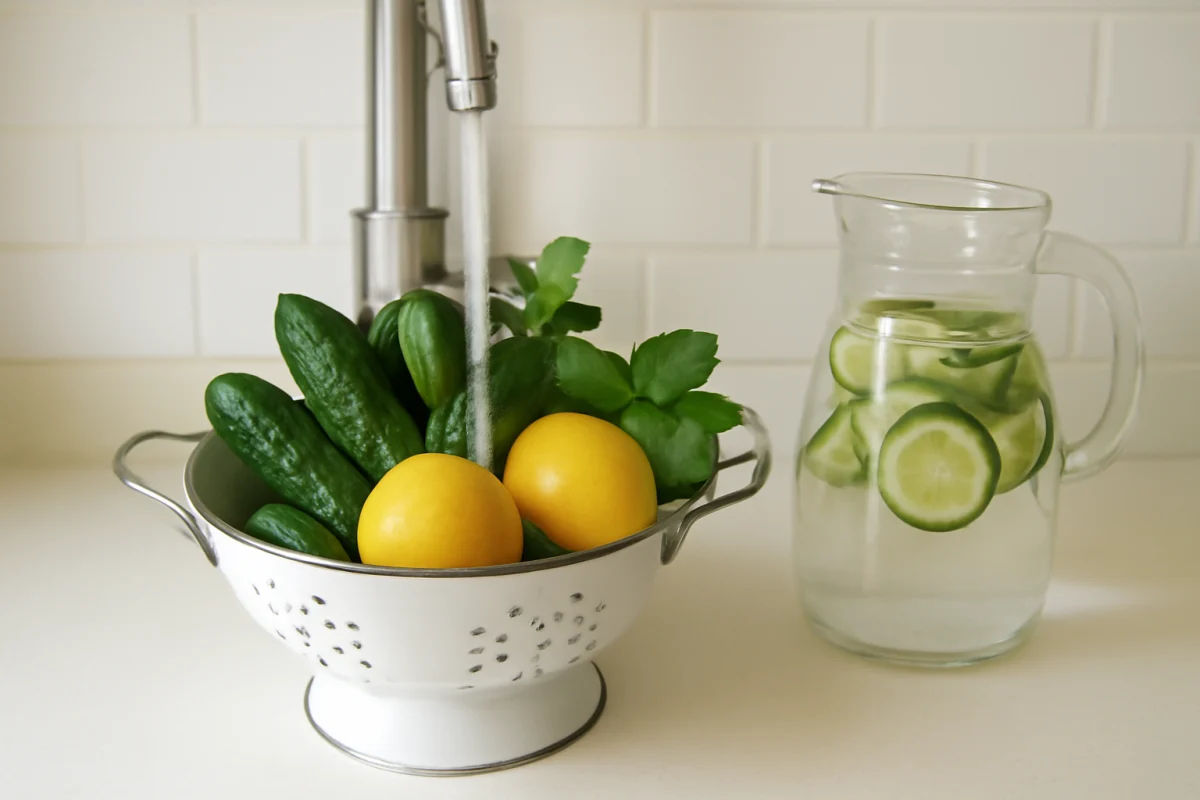
How to wash away pesticide residues effectively from produce starts with a simple method: rinse fresh fruits and vegetables thoroughly under cool, running tap water while rubbing firm surfaces with clean hands. Do not use soap, bleach, or commercial cleaners. For a refreshing way to use carefully washed produce, try this cucumber, lemon, and mint water. It is easy to prepare, supports everyday hydration, and does not make exaggerated detox or health claims. For more recipes and practical drink guidance, visit healthy detox drinks.
Washing can remove dirt, some surface residues, and microorganisms from produce, but it cannot remove every pesticide residue. Some substances may be absorbed into plant tissues, and washing does not make damaged or spoiled food safe. The most useful approach combines careful shopping, proper washing, clean preparation tools, prompt refrigeration, and realistic expectations.
Why Try This Cucumber, Lemon, and Mint Water?
This drink is worth trying because it turns washed produce into a crisp, lightly flavored beverage without complicated equipment. Cucumber adds a clean, mild flavor, lemon contributes brightness, and mint provides a fresh aroma. The ingredients are easy to adjust, so you can make a small pitcher for a meal or a single serving for the refrigerator.
The drink is not a pesticide-removal treatment, detox cure, or substitute for balanced meals. Its main purpose is to make water more appealing. If you choose bottled or packaged ingredients instead of fresh produce, check the current label for storage directions and ingredient information.
Recipe at a Glance
- Preparation time: 15 minutes
- Chilling time: 30 minutes, optional
- Total time: 45 minutes
- Servings: 4, about 8 fluid ounces each
- Equipment: Colander, clean cutting board, clean knife, 1-quart pitcher, and glasses
Ingredients
- 4 cups cold drinking water
- 1 small cucumber, about 6 ounces
- 1 lemon
- 8 to 10 fresh mint leaves
- Ice, for serving
Use drinking-quality water. If you prefer a stronger flavor, add more cucumber or mint after tasting rather than adding a large amount at once. For a sweeter drink, serve it with a small amount of fruit on the side instead of relying on a large quantity of added sugar.
How to Wash the Produce
Wash your hands with soap and water before handling the ingredients. Clean the sink, cutting board, knife, and pitcher if they have been used for raw meat, seafood, eggs, or other foods that could cause cross-contamination.
- Inspect the produce. Choose firm, fresh items without mold, extensive bruising, leaking areas, or a sour odor. Remove any damaged portions. Washing cannot reliably make spoiled produce safe.
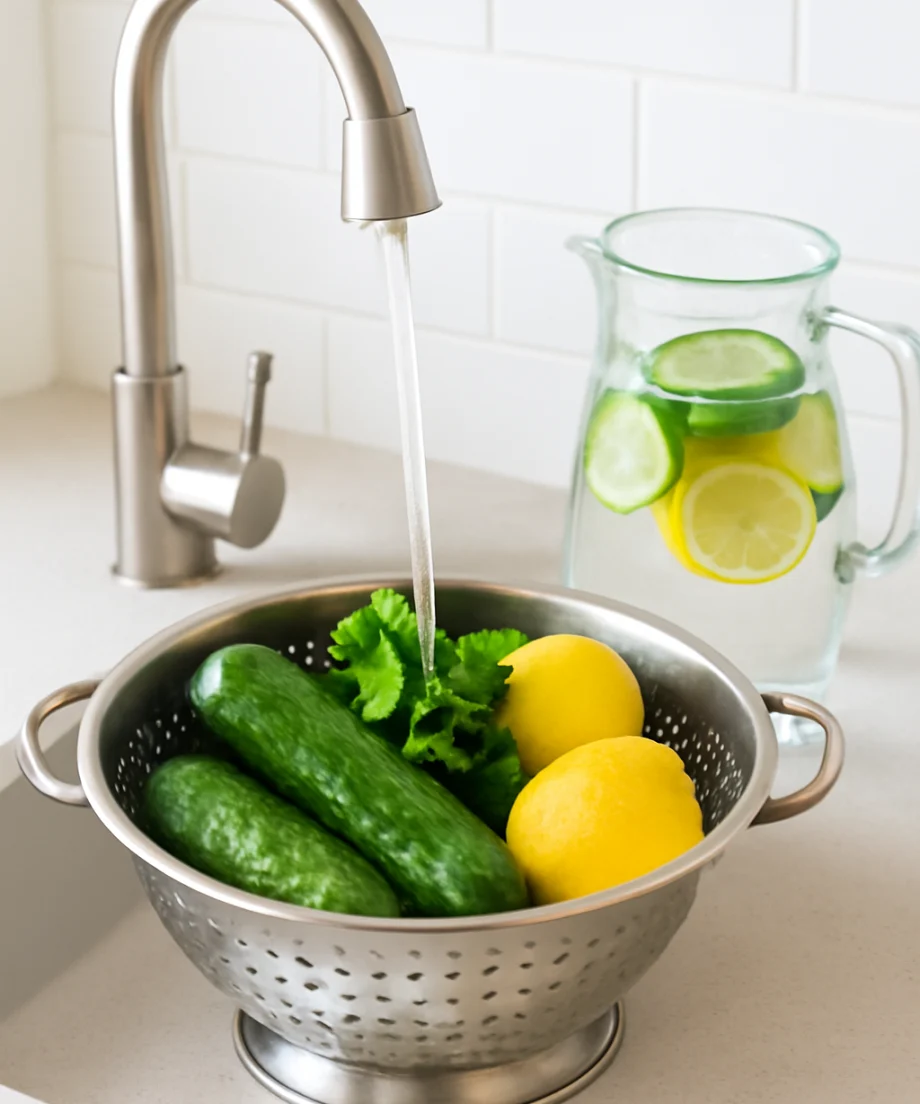
- Wash the cucumber. Place it under cool, running tap water. Rub the entire surface with clean hands, including the ends and any ridges. A clean produce brush may be useful for firm, thick-skinned produce, but do not use a brush on delicate items unless the texture can withstand it.
- Wash the lemon. Even though the peel is usually discarded, rinse and rub it before slicing. A knife can transfer material from the outside of the fruit to the inside as it passes through the peel.
- Wash the mint gently. Hold the leaves under cool running water, then drain them in a clean colander. Handle them carefully to avoid bruising.
- Dry the ingredients. Pat the cucumber, lemon, and mint dry with a clean paper towel or allow them to air-dry in a clean area. Drying can remove additional loose material from the surface and helps limit excess water in the pitcher.
- Cut only after washing. Slice the cucumber and lemon on a clean cutting board. Do not wash cut produce with soap or cleaning chemicals.
How to Make Cucumber, Lemon, and Mint Water
- Add the cucumber slices, lemon slices, and mint leaves to a clean 1-quart pitcher.
- Pour in 4 cups of cold drinking water.
- Stir gently with a clean spoon. Avoid crushing the mint unless you want a more pronounced herbal flavor.
- Cover the pitcher and refrigerate for about 30 minutes. The flavor will become more noticeable as the ingredients sit in the water.
- Serve over ice in clean glasses. If the flavor becomes too strong, add more cold water.
For a single serving, use 1 cup of water, a few cucumber slices, one lemon wedge, and 2 or 3 mint leaves. Prepare it in a covered glass or small jar and chill it briefly before serving.
What Washing Can and Cannot Do
Running water and gentle rubbing are practical ways to remove soil and some material from the surface of produce. Washing is also an important part of reducing contamination from handling and transport. However, it does not sterilize food, eliminate all microorganisms, or guarantee removal of every pesticide residue.
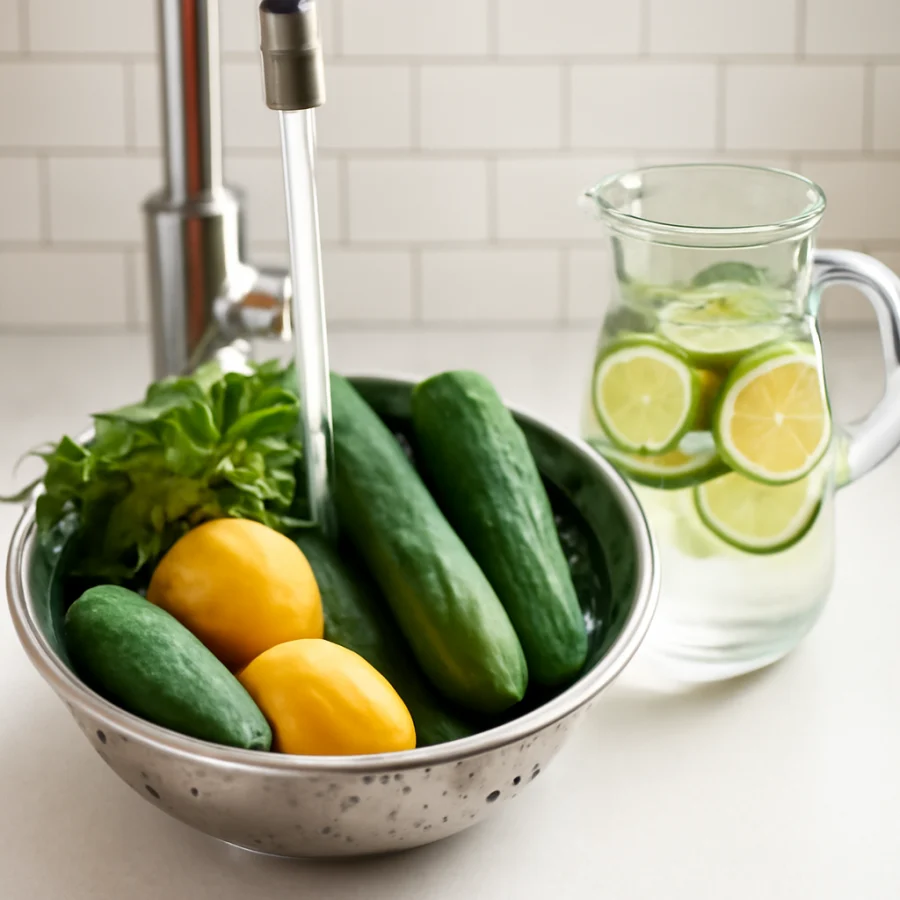
Some people recommend soaking produce in vinegar, baking soda, salt, or other homemade solutions. These methods may change flavor or texture, and they should not be treated as a guaranteed way to remove pesticide residues. Soap, dish detergent, bleach, disinfectant, and commercial surface cleaners should never be used on food. Produce can absorb cleaning chemicals, and those products are not intended for consumption.
Peeling may reduce residues on the skin of some fruits and vegetables, but it also removes edible portions and fiber. It is a personal food-preparation choice, not a complete solution. For leafy greens, remove outer leaves, separate the leaves, and rinse thoroughly under running water. For prewashed, packaged produce, follow the package instructions and avoid rinsing it again if the label says it is ready to eat and additional handling could introduce contamination.
Helpful Ingredient Alternatives
- Lime: Replace the lemon with one lime for a sharper citrus flavor.
- Orange: Use a few orange slices for a softer, sweeter aroma.
- Basil: Swap mint for several washed basil leaves.
- Strawberries: Add a few sliced strawberries after washing them carefully under running water.
- Sparkling water: Replace some or all of the still water just before serving. Open the bottle shortly before use to preserve carbonation.
- Ginger: Add a small amount of peeled, thinly sliced fresh ginger for a warmer flavor.
Keep substitutions modest until you know how the flavors work together. Citrus peel can add bitterness if it sits in water for many hours, while mint can become grassy or strong. Removing the slices and leaves after chilling can help maintain a lighter taste.
Serving and Storage Tips
Serve the drink cold with ice and a fresh mint leaf if desired. Use clean glasses, and do not let a shared pitcher sit uncovered at room temperature for an extended period. Refrigerate leftovers promptly in a covered container. Because the drink contains cut fruit and herbs, it is best made in a small batch and used within a short period rather than stored indefinitely.
Discard the drink if it develops an unusual odor, visible mold, carbonation that was not present initially, or an unpleasant flavor. Do not taste questionable food or beverages to decide whether they are safe. Keep cut produce and prepared drinks separate from raw meat, poultry, seafood, and unwashed produce.
For more practical guidance on handling beverages and ingredients, visit the Food Safety & Storage section. You can also explore additional drink recipes for simple, food-safe preparation ideas.
Frequently Asked Questions
Does washing remove all pesticide residues?
No. Washing can remove dirt and some surface material, but it cannot guarantee removal of all pesticide residues. Some residues may remain on the surface or be present within plant tissues. Washing is still a sensible food-safety step.
Should I use soap or vinegar to wash produce?
No. Do not use soap, dish detergent, bleach, disinfectants, or household cleaners. Vinegar and other homemade washes should not be considered guaranteed pesticide-removal methods. Cool, running tap water and gentle rubbing are the practical general approach.
Can I make this drink with unwashed lemon peel?
It is safer to rinse and rub the lemon before slicing, even if you plan to remove the peel. The knife can transfer material from the outside surface to the fruit and water.
Is this drink a detox cleanse?
It is flavored water, not a cleanse treatment. The body has its own organs and systems for processing substances, and no drink can be promised to remove toxins or replace balanced eating, hydration needs, or professional medical care.
Can I use frozen fruit?
Yes, provided the product has been handled according to its package directions and kept frozen until use. Frozen fruit can chill the drink and add flavor. Check the current package label for storage and safety information.
What is the most important food-safety step?
Use clean hands, clean tools, safe water, and fresh produce. Wash produce under running water before cutting it, refrigerate prepared drinks, and discard items that look or smell spoiled. For current recommendations, consult reliable food-safety guidance from government or public-health sources.
A Simple, Realistic Routine
To make this recipe safely, begin with sound produce, wash it under running water, dry it, and cut it on a clean surface. Then combine the ingredients with drinking water, chill the pitcher, and refrigerate leftovers promptly. This routine will not remove every pesticide residue, but it is a straightforward way to handle produce responsibly while making a refreshing beverage for everyday hydration.



Comments
0No comments yet. Be the first to share a helpful note or question.
Leave a Comment
Your email address will not be published. Comments are reviewed before appearing on the site.