
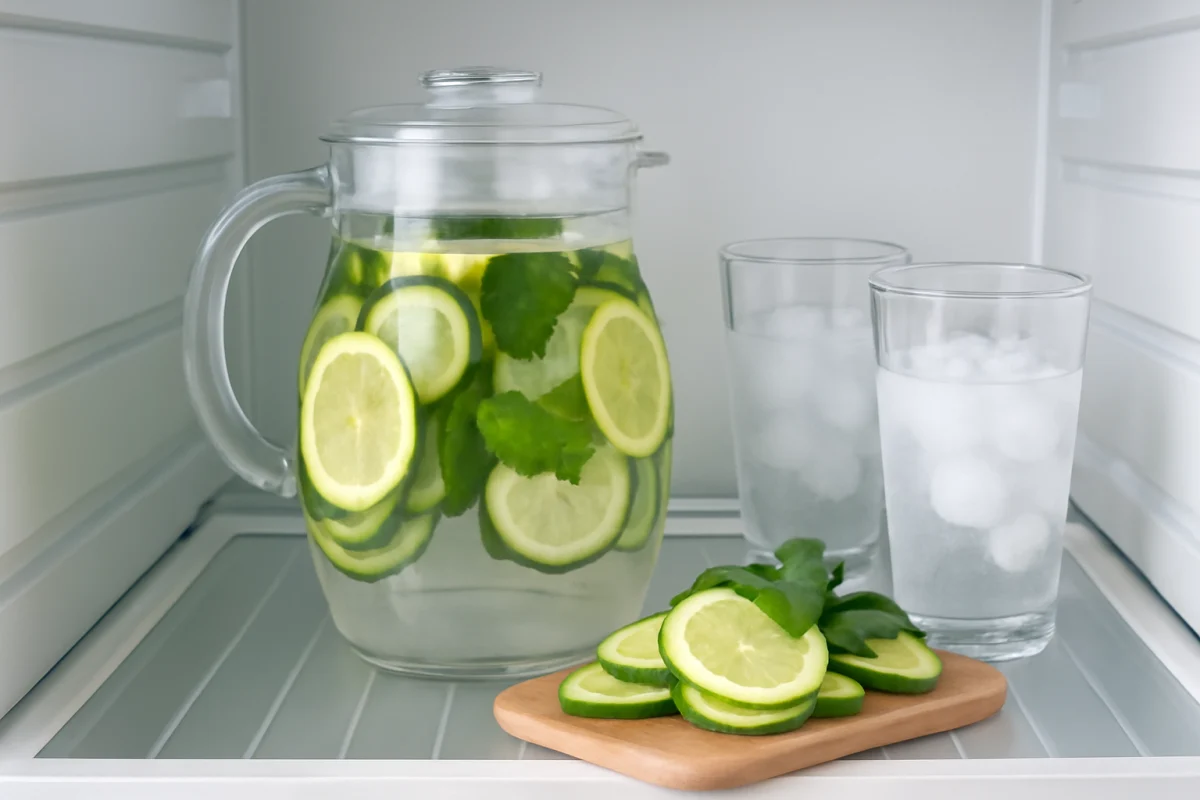
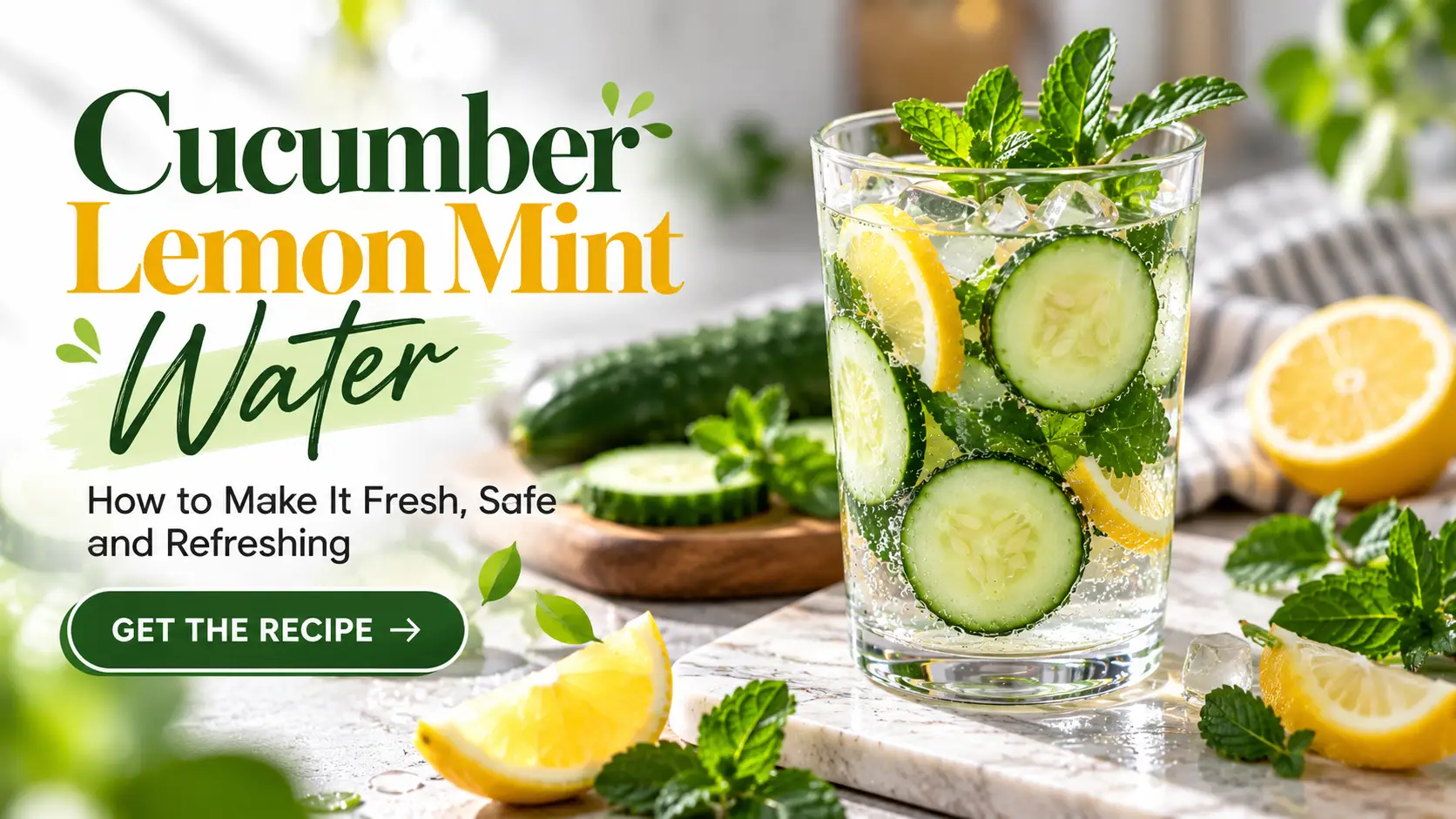
The best way to store infused water safely is to use clean equipment, refrigerate it promptly, and prepare only a practical amount for short-term use. This cucumber, lemon, and mint infused water is a simple option for people who want a refreshing, lightly flavored drink without relying on bottled flavorings. Proper packaging matters because cut produce can introduce microorganisms, absorb refrigerator odors, and lose quality more quickly than whole ingredients. For more recipes and practical drink guidance, visit cleanse drink ideas.
Infused water does not remove toxins, cure illness, guarantee weight loss, or replace balanced meals. Its main value is that fresh flavor may make plain water more appealing. The recipe below focuses on flavor, sensible portions, and food-safety habits that help reduce early spoilage and unnecessary waste. For more general guidance, visit our Food Safety & Storage section.
Cucumber, Lemon, and Mint Infused Water at a Glance
- Prep time: 10 minutes
- Total time: 2 hours, including chilling
- Yield: 4 servings, about 8 fluid ounces each
- Best container: A clean, food-safe glass pitcher or covered container
- Best use: A chilled drink for the same day or within a short refrigerated storage period
Ingredients
- 8 cups cold drinking water
- 1 small English cucumber, about 8 ounces, washed and thinly sliced
- 1 medium lemon, washed and thinly sliced
- 12 to 16 fresh mint leaves, washed and gently bruised
- Ice, optional, for serving rather than long-term storage
Choose produce that is firm, free from visible mold, and not excessively bruised. English cucumber works well because it has thin skin and relatively small seeds, but a standard cucumber is also suitable. If you prefer a softer citrus flavor, use half a lemon. If you want a more noticeable mint aroma, add a few extra leaves without crushing them heavily.
How to Make and Package Infused Water Safely
- Wash your hands and equipment. Wash your hands with soap and water before handling the ingredients. Clean the knife, cutting board, pitcher, and storage lid. Use a container made for food contact and large enough to hold the water without forcing the ingredients against the lid.
- Rinse the produce. Rinse the cucumber, lemon, and mint under cool running water. Do not use soap, bleach, or household cleaners on produce. Dry the mint and wipe the cucumber and lemon with a clean paper towel or fresh kitchen towel.
- Slice carefully. Cut the cucumber and lemon into thin, even slices. Thin pieces release flavor efficiently, while very thick pieces may contribute less flavor during a short chilling period. Remove any damaged portions before slicing.
- Prepare the mint. Gently press or clap the mint leaves between clean hands to release aroma. Avoid pulverizing them, because heavily crushed leaves can make the drink taste grassy and can leave more plant material in the water.
- Fill the container. Place the cucumber, lemon, and mint in the clean pitcher. Add 8 cups of cold water, leaving a little headspace so the lid can close without touching the ingredients.
- Cover and refrigerate. Seal the pitcher and place it in the refrigerator. Chilling for about 2 hours gives the water time to develop flavor. Keep the container covered to reduce exposure to refrigerator odors, spills, and airborne contaminants.
- Serve with clean utensils. Pour the drink into clean glasses. If using ice, add it to individual glasses instead of the storage container. This helps avoid diluting the remaining drink and prevents ice from becoming another source of handling.
- Check before drinking. Discard the infused water if it develops an unpleasant smell, unusual cloudiness, visible mold, fermentation-like bubbling, or an off taste. When in doubt, throw it out rather than trying to rescue it.
Why Packaging Affects Freshness and Nutrient Quality
Packaging cannot stop fresh produce from changing, but it can slow several quality problems. A covered container limits contact with the air and helps keep the drink from picking up odors from foods such as onions, garlic, or strongly seasoned leftovers. A secure lid also reduces the chance of spills and accidental contact with hands or other items in the refrigerator.
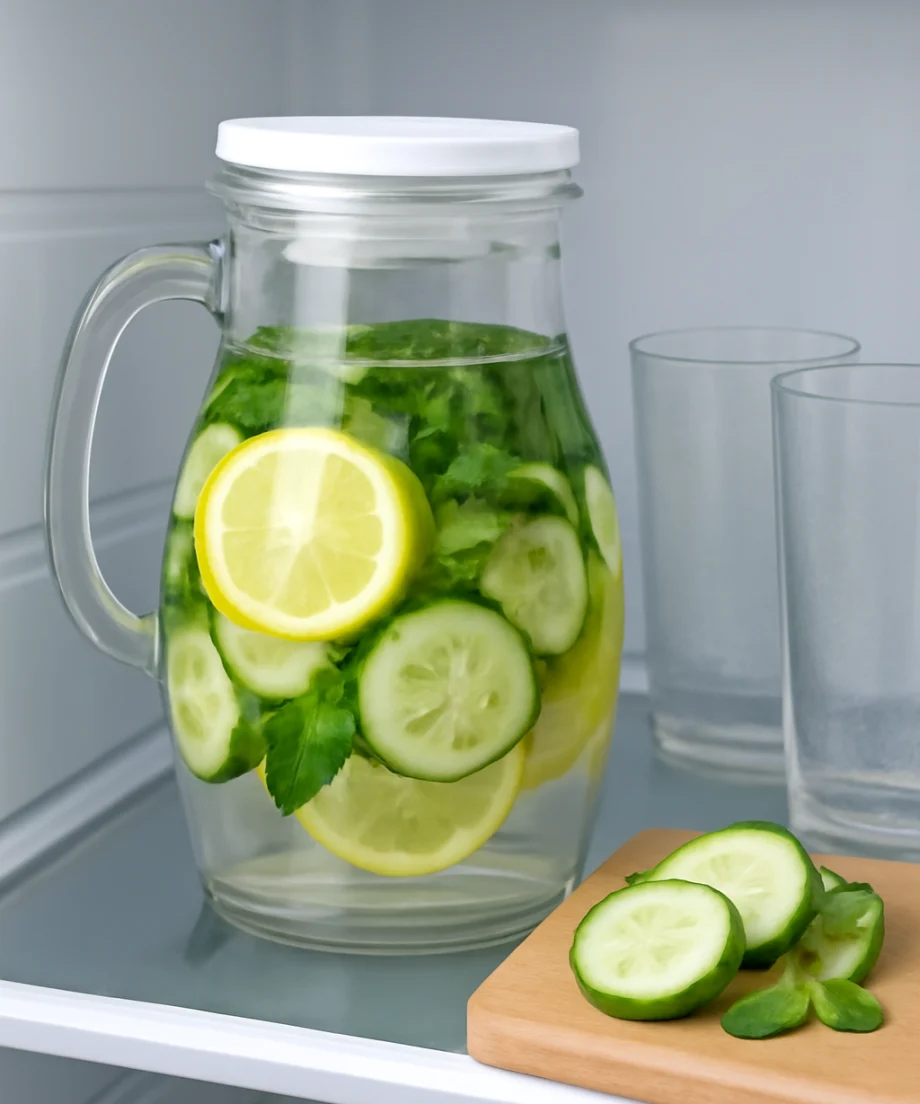
Temperature is equally important. Refrigeration slows the growth of many microorganisms and helps preserve the crisp, fresh character of cucumber and mint. A food-safe container with a tight-fitting lid is usually more useful than an attractive uncovered pitcher. If you are choosing between containers, prioritize a container that is easy to clean, does not retain odors, and can be closed securely.
Some nutrients and plant compounds are sensitive to air, light, time, and temperature. Cutting produce exposes more surface area, so sliced ingredients may lose quality faster than whole ingredients. Infused water contains only small amounts of flavor compounds from the produce, and the exact nutrient content will vary. It is more accurate to treat this recipe as flavored water rather than a concentrated source of vitamins or minerals.
Storage Guidelines for This Recipe
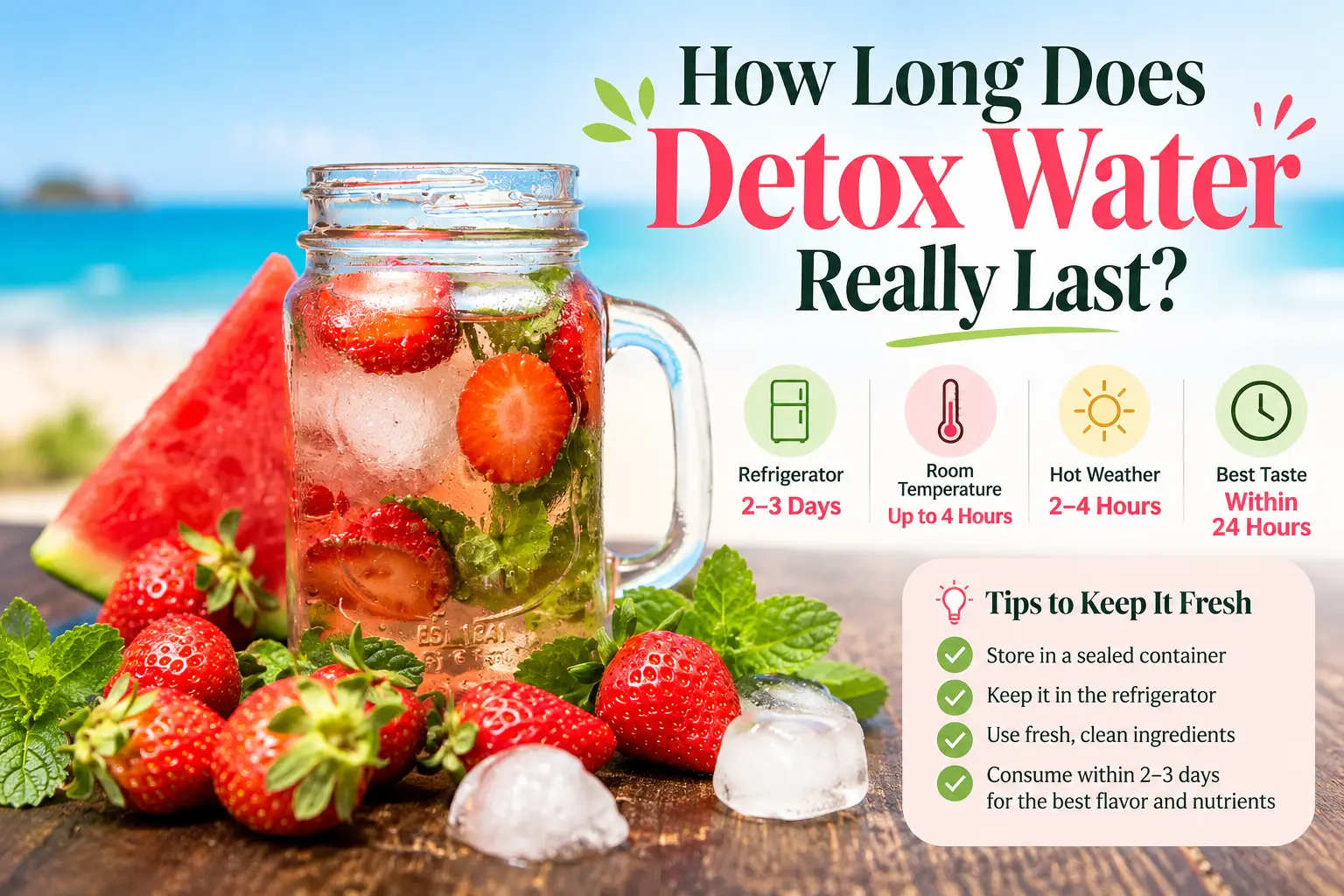
Refrigerate the covered pitcher promptly after preparation, and do not leave it sitting at room temperature for an extended period. A practical approach is to make only what you expect to drink that day. If you prepare it ahead, label the container with the preparation time so it is easier to track.
Because this recipe contains sliced produce, quality can decline as it sits. For the best flavor, drink it the same day. If you keep leftovers, maintain continuous refrigeration and use cautious judgment about freshness. Follow current guidance from reliable food-safety authorities for refrigerated ready-to-eat foods, and discard the drink if its appearance, smell, or flavor changes in a suspicious way.
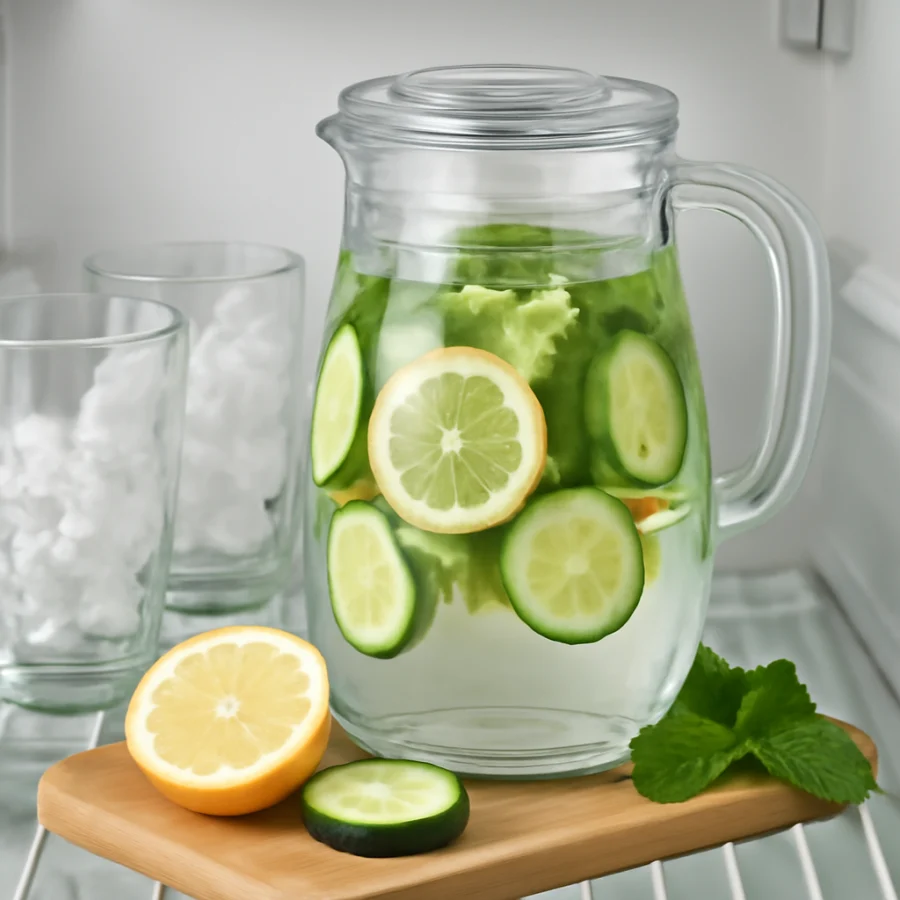
Do not store infused water in an open bowl, a container that previously held chemicals, or a disposable container that is not intended for repeated food use. Avoid placing the pitcher in the refrigerator door if the door is frequently opened and closed; a stable interior shelf may help maintain a more consistent temperature. Do not top off an older batch with fresh water. Wash the container and make a new batch instead.
Helpful Ingredient Alternatives
For a milder citrus flavor
Use half a lemon or replace part of the lemon with a few strips of washed orange peel. Avoid adding large amounts of peel if you dislike bitterness. Citrus peel can also carry surface dirt, so wash the fruit before cutting or peeling.
For a different herb
Fresh basil can replace mint for a softer, slightly sweet herbal note. Rosemary may work in a very small amount, but its flavor is strong. Use one short sprig and remove it if the flavor becomes too intense.
For a fruit variation
Add a small handful of washed strawberries, raspberries, or blueberries. Use fruit that is firm and free of mold. Berries can soften quickly, so this version is best made in a smaller batch and enjoyed promptly.
For sparkling water
Prepare the cucumber, lemon, and mint infusion with still water first. Strain it, then add chilled plain sparkling water to individual glasses immediately before serving. Storing the entire batch with carbonation may lead to a flatter drink and can make the container more difficult to handle.
Preparation and Serving Tips
- Use a narrow, covered pitcher if you want the ingredients to stay submerged, but do not pack the container so tightly that cleaning becomes difficult.
- Strain the drink before storing leftovers if the cucumber, lemon, and mint have become soft or overly strong. Straining does not make an old batch safe, so use it only while the drink still seems fresh.
- Keep a separate serving ladle or pour directly from the pitcher to limit repeated contact with the drink.
- Serve it alongside a meal, after a walk, or as an alternative to a sugary beverage. It should complement normal eating and drinking habits, not replace food.
- If you are preparing drinks for children, older adults, pregnant people, or anyone with a weakened immune system, be especially careful about produce washing, refrigeration, clean equipment, and short storage times.
Frequently Asked Questions
Can infused water sit on the counter?
It is safer to refrigerate it promptly rather than leave it at room temperature. Sliced fruits, vegetables, and herbs add moisture and handling steps that can make a drink more perishable than plain water. If it has been left out for an uncertain or extended period, discard it.
Should I remove the lemon, cucumber, and mint before storing?
Removing the ingredients is not required immediately, but it may improve flavor and texture if the drink will be kept for several hours. Lemon can become more bitter, cucumber can soften, and mint can become dark or grassy. Strain the drink with a clean strainer and return it to a clean covered container.
Can I use a reusable plastic bottle?
Use only a clean, food-safe bottle intended for repeated use. Follow the manufacturer’s instructions for cleaning and temperature limits. A wide-mouth bottle is often easier to wash thoroughly than a narrow bottle, especially when using sliced produce and herbs.
Why does the water look cloudy?
Some cloudiness can come from citrus juice, tiny herb particles, or natural plant material. However, cloudiness combined with an unpleasant odor, bubbling, mold, or an off taste is a reason to discard the drink. Appearance alone cannot confirm that a batch is safe.
Can I prepare this recipe the night before?
You can prepare it ahead if it is covered and kept refrigerated, but the freshest flavor usually comes from making a modest batch close to when you plan to drink it. For overnight preparation, use clean produce and equipment, refrigerate immediately, and check the drink before serving.
A Practical Approach to Fresher Infused Water
Good packaging starts with a clean container, a secure lid, and prompt refrigeration. It also means choosing a batch size that fits your routine instead of storing a large quantity for many days. This cucumber, lemon, and mint recipe offers a light, refreshing flavor while making food-safety habits easy to practice. For more drink ideas, browse our Drink Recipes collection and our Drink & Ingredient Guides.
Comments
0No comments yet. Be the first to share a helpful note or question.
Leave a Comment
Your email address will not be published. Comments are reviewed before appearing on the site.