
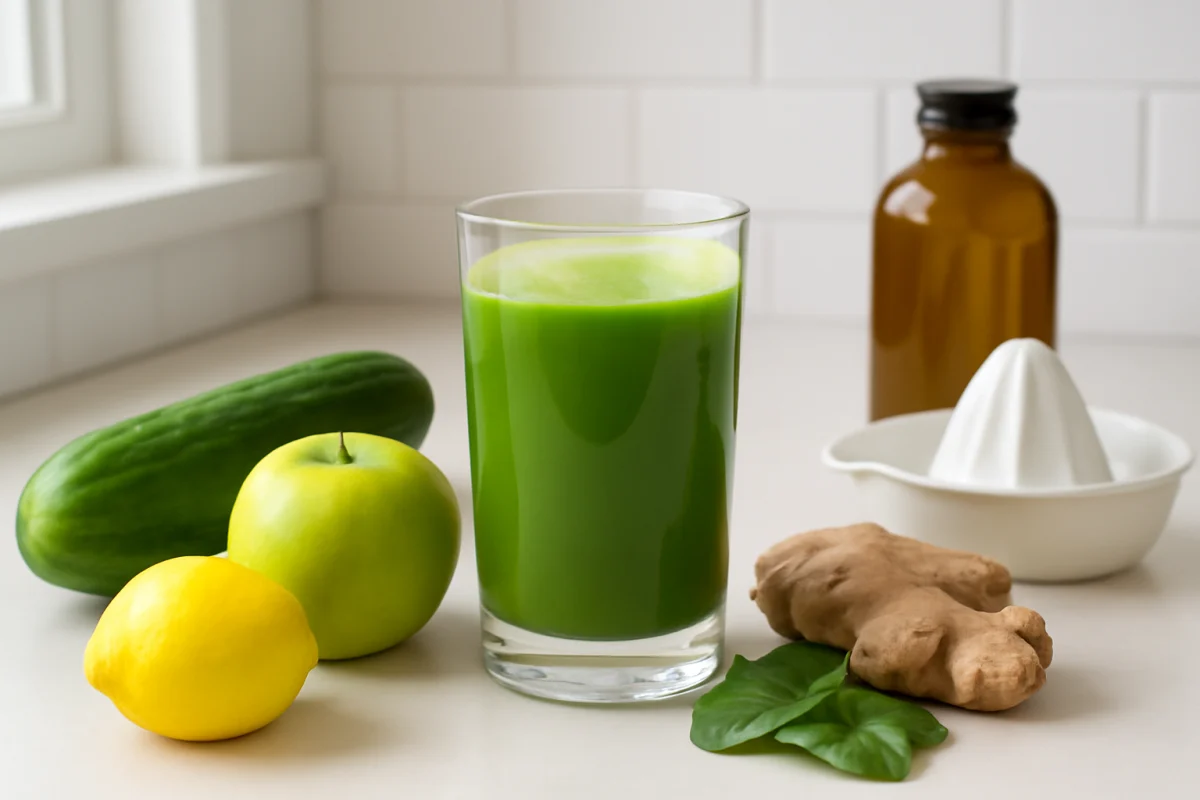
The best way to protect fresh juicing ingredients from light and air is to prepare them shortly before serving, minimize the time cut produce spends exposed, and store any leftover juice in a clean, tightly sealed container in the refrigerator. This citrus cucumber green juice is a practical recipe for exploring those habits: cucumber provides a mild, refreshing base, while apple, lemon, and leafy greens add brightness and flavor without requiring a complicated ingredient list. For more recipes and practical drink guidance, visit refreshing detox drinks.
Fresh juice can change after produce is cut, pressed, or blended. Oxygen can contribute to browning and flavor changes, while light and heat may gradually affect color and freshness. These changes do not always mean a drink is unsafe, but they can make it less appealing and reduce its quality. Careful preparation, prompt chilling, and sensible storage help you get more from your ingredients.
Citrus Cucumber Green Juice at a Glance
- Prep time: 15 minutes
- Total time: 15 minutes, plus optional chilling
- Servings: 2
- Main focus keyword: light and air affect fresh juicing ingredients
Ingredients
- 1 large cucumber, about 10 to 12 ounces, washed and trimmed
- 1 medium sweet apple, washed, cored, and cut into pieces that fit your juicer
- 2 packed cups baby spinach or tender kale, washed and dried
- 1 medium lemon, peeled and cut into sections, with seeds removed
- 1-inch piece fresh ginger, scrubbed and peeled if desired
- 1/2 cup cold water, only if using a blender instead of a juicer
- Ice for serving, optional
Choose firm produce with no visible mold, leaking areas, or strong off-odors. The apple contributes sweetness and the lemon brings acidity and a clean finish. Cucumber keeps the drink light, while spinach or kale adds a fresh vegetal note. Ginger is optional, so leave it out if you prefer a milder flavor.
How Light and Air Affect Fresh Juicing Ingredients
Cutting produce breaks open plant cells. Once the interior is exposed, oxygen can interact with compounds in fruits and vegetables, causing some ingredients to darken or lose their freshly cut appearance. Apples are especially likely to brown after cutting. Lemon juice can slow visible browning on some cut fruit because of its acidity, but it does not preserve a fresh juice indefinitely.
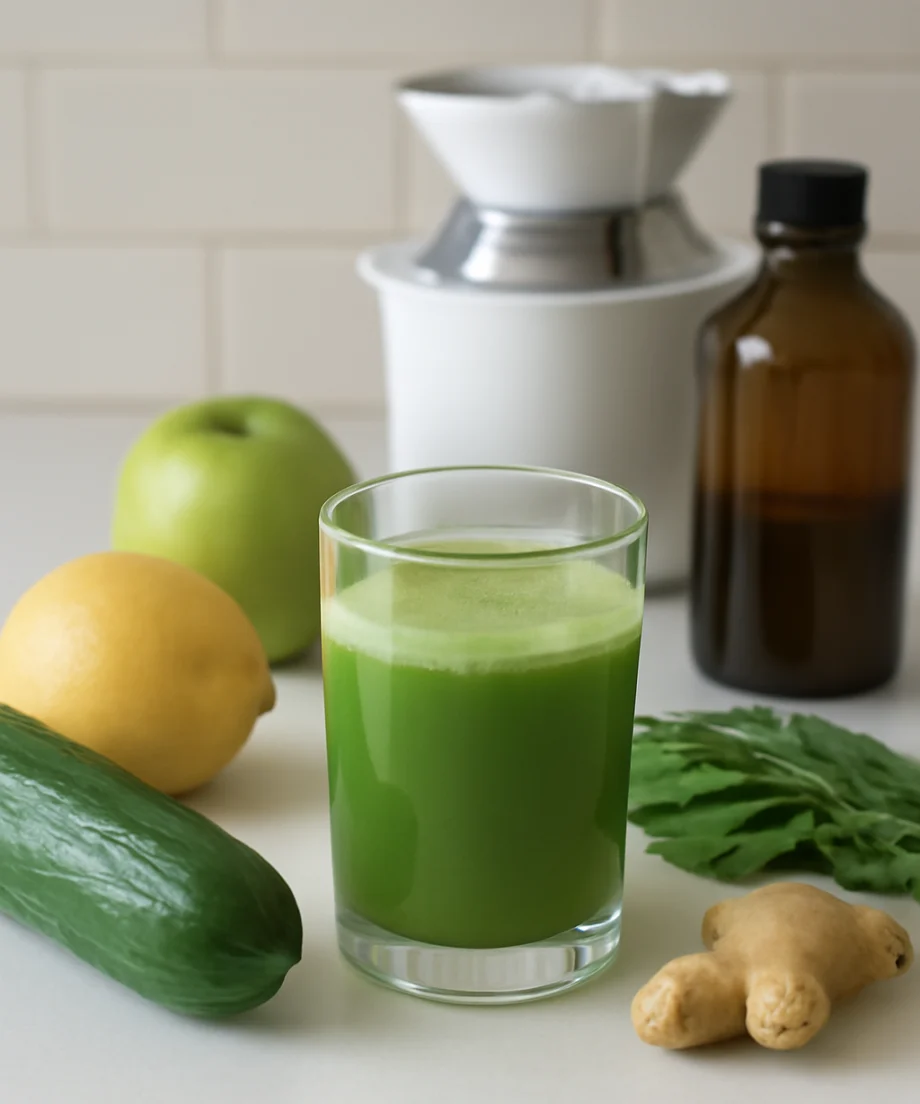
Light is another part of the storage picture. A clear container sitting in direct sunlight can warm more quickly and expose the drink to conditions that may affect its color and flavor. A refrigerator helps slow quality changes, but a covered, opaque, or amber-colored container can provide additional protection from light. The most important habits are still cleanliness, rapid refrigeration, and using the juice promptly.
Air exposure also increases when juice is poured into a container with a large amount of empty space. A smaller food-safe container that can be closed securely leaves less headspace. Do not force liquid into a container that is too full, however; leave enough room to close it without spills. A tightly sealed container can reduce unnecessary exposure while the juice is refrigerated.
Preparation Steps
- Wash your hands and equipment. Wash your hands with soap and water before handling the ingredients. Clean the juicer, knife, cutting board, blender, strainer, and storage container according to the equipment manufacturer’s instructions. Use a clean cutting board that is suitable for produce.
- Prepare the produce. Rinse the cucumber, apple, greens, lemon, and ginger under cool running water. Scrub firm produce such as the cucumber, apple, and ginger with a clean produce brush if needed. Trim damaged spots. Remove the apple core and lemon seeds. Peeling the lemon helps prevent an overly bitter drink.
- Cut ingredients just before juicing. Cut the cucumber and apple into pieces that fit your machine. Keep the prepared ingredients in a clean bowl or on a clean board, away from raw meat, poultry, seafood, and eggs.
- Juice in a practical order. Follow your juicer’s instructions. A useful sequence is to alternate softer greens with cucumber and apple, then finish with the lemon and ginger. This may help move leafy ingredients through the machine, but the correct order depends on the model.
- Stir and taste. Stir the juice in a clean pitcher. If the flavor is too sharp, add more cucumber or apple juice rather than sweetener. If it is too mild, add a small amount of lemon or ginger.
- Serve promptly. Pour the juice into chilled glasses and serve immediately, or transfer it to a clean, tightly sealed container and refrigerate it without delay.
Blender Method
If you do not have a juicer, add the cucumber, apple, greens, lemon, ginger, and water to a blender. Blend until as smooth as possible. For a thinner drink, add a little more water. You can drink the mixture as a thicker blended beverage or strain it through a clean fine-mesh strainer into a pitcher. Straining removes much of the pulp, while leaving it in produces a more textured drink.
Blending incorporates more air than many juicers, so the drink may separate or change color more quickly. Stir it before serving, and keep it cold if it is not consumed immediately. Avoid leaving a blender pitcher of juice at room temperature while preparing other foods.
Storage and Food-Safety Guidance
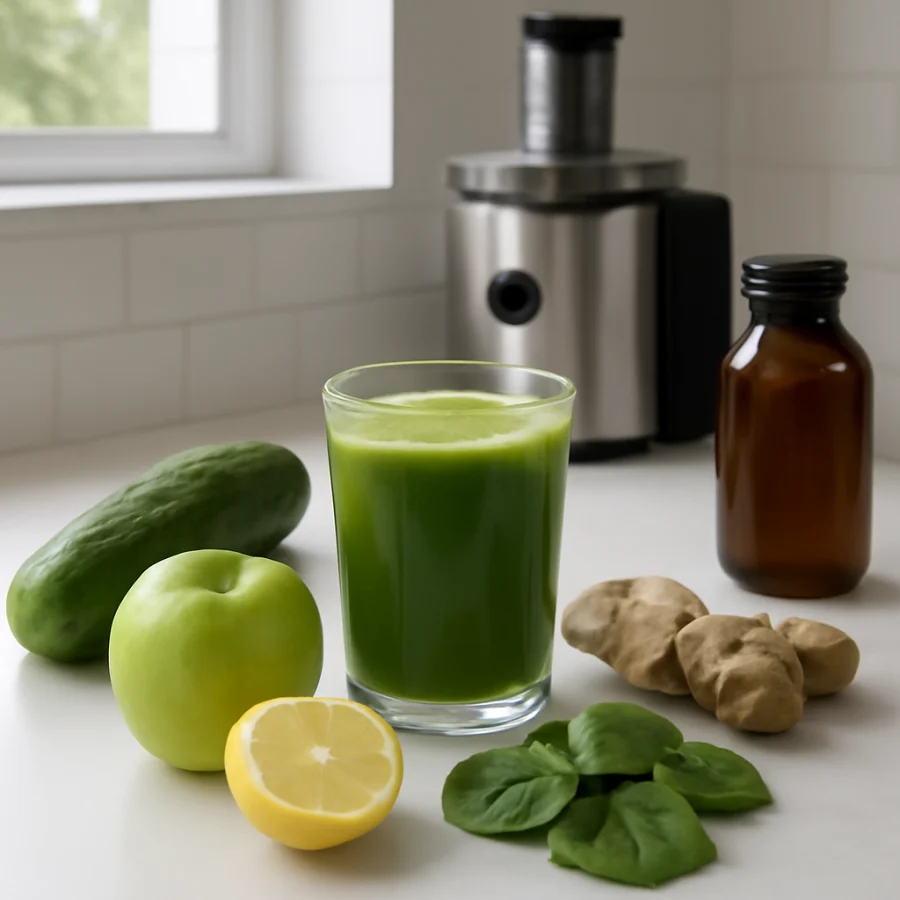
Fresh juice is perishable because it has not been heat-treated to make it shelf stable. Refrigerate it promptly at 40°F or below, using a refrigerator thermometer if you want to verify the temperature. Store the juice in a clean, tightly sealed container, preferably one that is just large enough for the amount you made. Keep it away from raw animal foods and from areas where spills could contaminate ready-to-eat items.
For best quality, drink this juice soon after preparation. If you need to store it, use it within a short refrigerated period rather than treating it like a commercially packaged, shelf-stable beverage. Check the current guidance from reliable food-safety authorities for your household, equipment, and local requirements. When in doubt about a juice that has been left warm, smells fermented, shows unusual bubbling, or has an unexpected appearance, discard it instead of tasting it to decide whether it is safe.
Do not store fresh juice at room temperature for extended periods, and do not return a partially consumed glass to the main container. If you are serving juice to children, older adults, pregnant people, or anyone with a weakened immune system, take extra care with sanitation and prompt refrigeration. Unpasteurized juice may carry food-safety risks, so readers in higher-risk groups may wish to choose pasteurized products or discuss suitable options with a qualified health professional.
Tips for Reducing Light and Air Exposure
- Keep produce whole until needed. Whole cucumbers, apples, lemons, and greens generally have less exposed surface area than cut ingredients.
- Work in a cool area. Heat can speed quality changes, so avoid preparing juice beside a hot oven or in direct sun.
- Use an opaque or amber container. This can limit light exposure during refrigeration, although it does not replace safe handling.
- Seal the container immediately. Close the lid after pouring instead of leaving the juice uncovered.
- Make only what you expect to drink. Smaller batches reduce the time ingredients spend cut, processed, and stored.
- Expect natural separation. Pulp and liquid may separate, especially in a blended version. Stirring is usually enough; unusual gas, odors, or texture changes are reasons to discard it.
Ingredient Alternatives
Replace spinach with romaine lettuce, parsley, or a small amount of tender kale. Romaine creates a softer flavor, while parsley makes the drink more herbal. Pear can replace the apple for a gentler sweetness, although ripe pear may make the juice cloudier. Lime can replace lemon, but it may produce a sharper flavor. If cucumber is unavailable, use a small amount of celery or additional apple, adjusting the balance to taste.
These substitutions can change the amount of liquid, sweetness, acidity, and pulp. Add alternatives gradually rather than changing every ingredient at once. The goal is a pleasant beverage, not a rigid formula.
Serving Suggestions
Serve the juice cold in a small glass with a cucumber ribbon or lemon wedge if desired. It pairs well with breakfast foods such as whole-grain toast, yogurt, eggs, or fruit, but it should not be treated as a replacement for balanced meals. You can also pour it over ice for immediate service, although melting ice will dilute the flavor. If preparing it for guests, make the juice close to serving time and keep the pitcher covered and refrigerated until needed.
Frequently Asked Questions
Does adding lemon keep fresh juice fresh?
Lemon can add acidity and may slow some visible browning, especially in cut apple, but it does not make fresh juice shelf stable or eliminate the need for refrigeration. Continue to use clean equipment and store the drink promptly.
Should fresh juice be stored in glass or plastic?
Either food-safe glass or food-safe plastic can work when the container is clean, closes securely, and is suitable for refrigerated foods. Choose a size that limits excess headspace without overfilling it. Follow the manufacturer’s instructions for any container used with acidic beverages.
Can I leave this juice on the counter?
Fresh juice should not be left at room temperature for extended periods. Serve it promptly or refrigerate it in a sealed container. If it has been warm for too long or you are uncertain about its handling, discard it.
Why did my juice turn brown?
Cut apples and some leafy ingredients can darken when exposed to oxygen. Blending can also introduce more air, making color changes more noticeable. Browning can affect appearance without automatically proving that the drink is unsafe, but any juice with an off smell, unexpected fermentation, or questionable storage should be discarded.
Is this recipe a detox treatment?
No. This is a fresh beverage made from fruit and vegetables. It does not remove toxins, cure or treat disease, guarantee weight loss, or replace balanced meals or professional medical care. Enjoy it as one optional part of an overall eating and hydration routine.
For more practical guidance, explore the site’s Food Safety & Storage resources and Juicing & Blending guides. With clean preparation, limited exposure to light and air, and prompt refrigeration, this citrus cucumber green juice is simple to prepare and easier to enjoy at its freshest.


Comments
0No comments yet. Be the first to share a helpful note or question.
Leave a Comment
Your email address will not be published. Comments are reviewed before appearing on the site.