
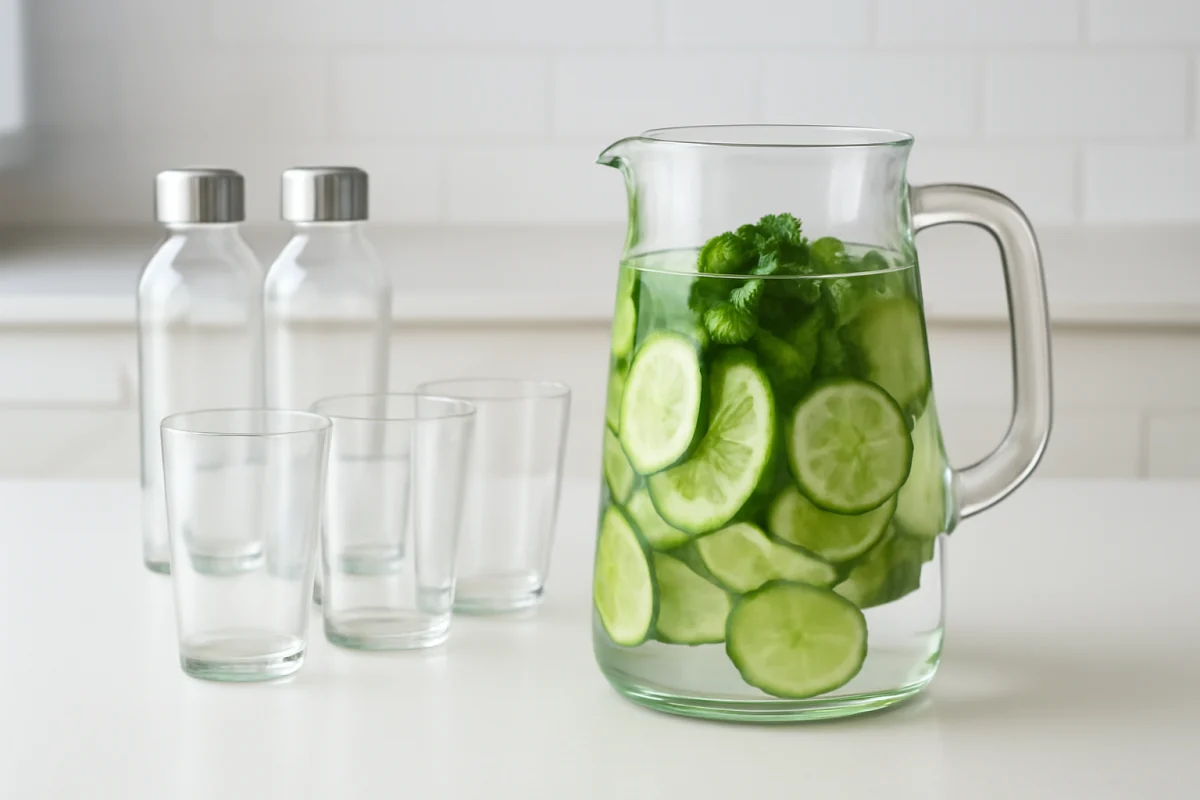
A standard U.S. drinking glass usually holds about 8 to 16 fluid ounces, while a reusable water bottle commonly holds 16.9, 20, 24, 32, or 40 fluid ounces. Because sizes vary, the most reliable way to know how much water fits in a standard glass or bottle is to check the volume printed on the container or measure it with a kitchen cup. Once you know the capacity, you can easily portion a refreshing drink such as this cucumber-lime infused water. For more recipes and practical drink guidance, visit homemade detox drinks.
This simple recipe is worth trying because it adds fresh cucumber, lime, and mint flavor without requiring juice, sweeteners, or a complicated preparation method. It can make plain water more appealing during a workday, after a walk, or alongside a meal. The ingredients are easy to adjust, and the finished pitcher can be portioned into common glass or bottle sizes.
How much water fits in a standard glass or bottle?
There is no single legal or universal size for a “standard” drinking glass or bottle. In everyday U.S. use, these are common approximate capacities:
- Small drinking glass: 8 fluid ounces, or 1 cup
- Medium glass: 12 fluid ounces, or 1 1/2 cups
- Large tumbler: 16 fluid ounces, or 2 cups
- Single-use water bottle: 16.9 fluid ounces, or about 500 milliliters
- Reusable bottle: commonly 20 to 32 fluid ounces, although larger and smaller options are also available
For recipe planning, 1 U.S. gallon equals 128 fluid ounces, 1 quart equals 32 fluid ounces, and 1 cup equals 8 fluid ounces. A 64-fluid-ounce pitcher therefore holds eight 8-ounce servings, four 16-ounce servings, or a combination of different portions. These are measuring references rather than rules for how much any individual should drink.
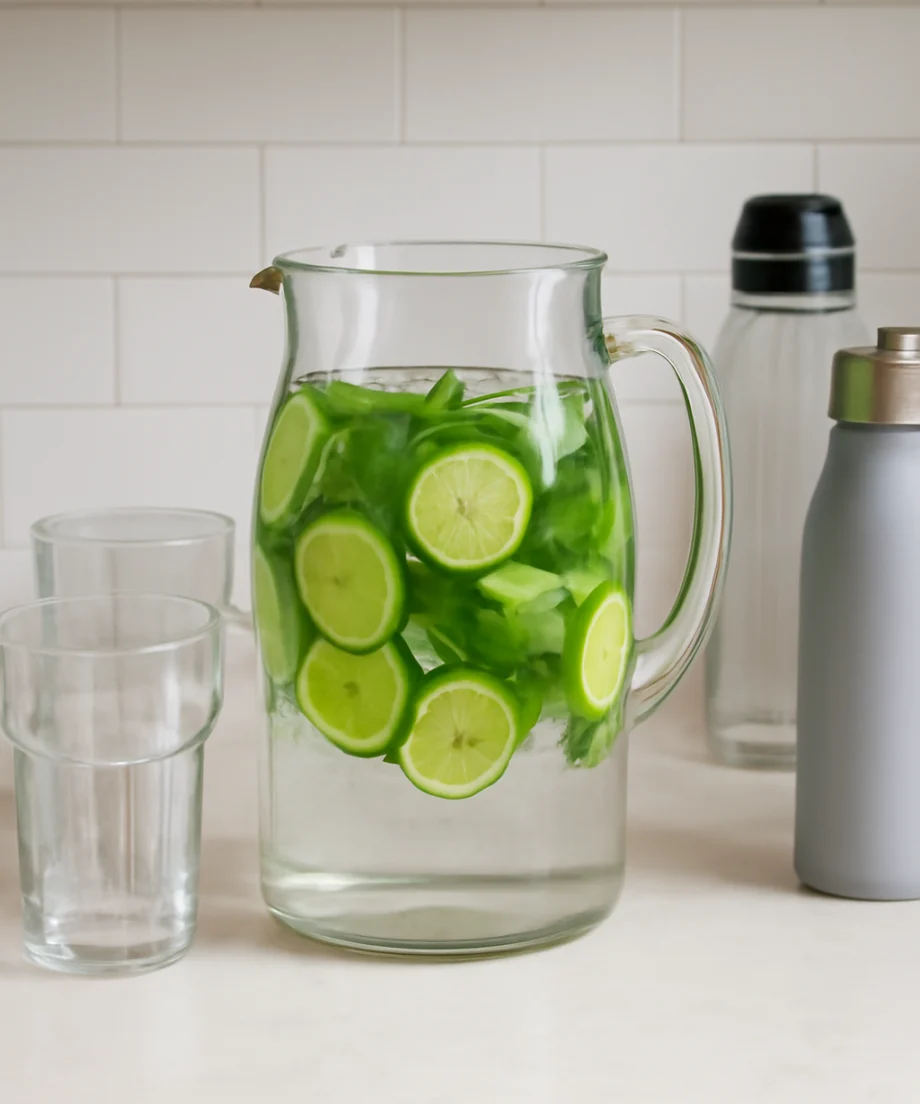
Cucumber-Lime Infused Water Recipe
This recipe makes a lightly flavored pitcher that can be poured into standard glasses or bottles. It is not intended to replace meals or provide a special cleansing effect. Its main purpose is to offer a pleasant, low-effort way to enjoy water.
Preparation time
- Prep time: 10 minutes
- Chill time: 30 minutes to 2 hours
- Total time: 40 minutes to 2 hours and 10 minutes
- Servings: 8 servings of about 8 fluid ounces, or 4 servings of about 16 fluid ounces
Ingredients
- 64 fluid ounces cold drinking water, or 8 cups
- 1/2 English cucumber, thinly sliced
- 1 medium lime, thinly sliced or cut into rounds
- 8 to 10 fresh mint leaves, gently torn or left whole
- Ice, optional, for serving
How to make cucumber-lime infused water
- Wash your hands and produce. Clean your hands before preparing the ingredients. Rinse the cucumber, lime, and mint under cool running water. Use a clean produce brush for firm produce if needed, and avoid using soap on fruits or vegetables.
- Prepare the cucumber and lime. Slice the cucumber into thin rounds. Slice the lime into rounds or wedges. Thin slices expose more surface area to the water, while wedges are convenient if you prefer to squeeze a small amount of juice into individual servings.
- Combine the ingredients. Place the cucumber, lime, and mint in a clean 2-quart pitcher. Add 64 fluid ounces of cold water. Stir gently with a clean spoon.
- Chill the pitcher. Cover the pitcher and refrigerate it for at least 30 minutes. For a stronger flavor, let it chill for up to 2 hours. The taste will remain light because this is an infusion rather than a concentrated juice.
- Serve by container size. Pour 8 fluid ounces into a standard measuring cup-sized glass, 12 to 16 fluid ounces into a larger tumbler, or about 16.9 fluid ounces into a typical 500-milliliter bottle. Leave room for ice if you are adding it.
- Refresh the serving. Stir the pitcher gently before pouring because the mint and produce may settle. Add fresh ice to individual glasses instead of storing the entire pitcher with a large amount of ice, which can dilute the flavor as it melts.
Portioning the recipe into common glasses and bottles
Knowing the capacity of your glass or bottle helps you estimate how many servings the pitcher provides. A 64-fluid-ounce batch fills eight 8-ounce glasses. It fills approximately five 12-ounce glasses, with a small amount left over, or four 16-ounce glasses. It fills about three 20-ounce bottles, with roughly 4 fluid ounces remaining.
If your bottle does not list its capacity, fill it with water and pour that water into a liquid measuring cup. You can also use a kitchen scale for a rough estimate because 1 fluid ounce of water weighs approximately 1 ounce, but a liquid measuring cup is more straightforward for home recipe portions. Do not assume that a bottle’s physical height tells you its volume; wide bottles and insulated bottles can hold more or less than they appear to hold.
Helpful preparation tips and ingredient alternatives
Adjust the flavor gradually
Cucumber and mint provide a mild, fresh flavor, while lime adds acidity. If you prefer a subtle drink, use fewer lime slices or remove them after 30 to 60 minutes. If you want more citrus flavor, add a small squeeze of lime to an individual glass just before serving. Adding citrus juice to the entire pitcher can make the flavor sharper and may shorten the time the drink tastes fresh.
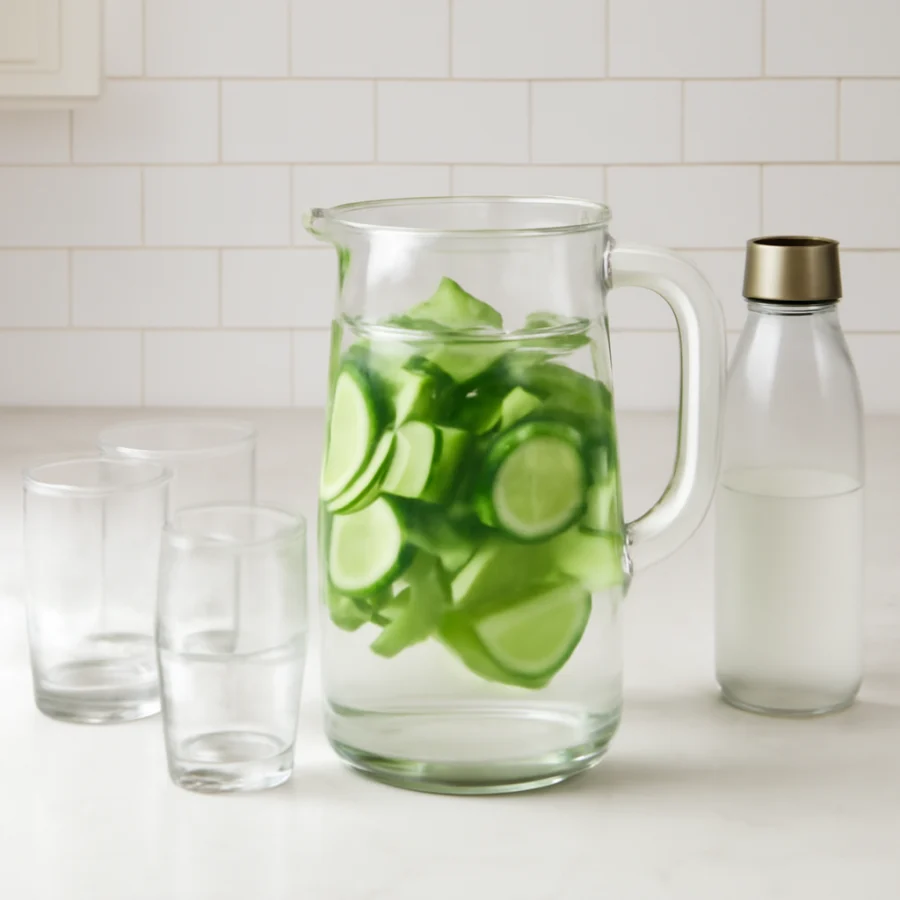
Try simple substitutions
- Replace lime with lemon for a brighter, more familiar citrus flavor.
- Use strawberries, orange slices, or a few blueberries instead of cucumber, or combine them in modest amounts.
- Swap mint for basil if you enjoy a softer herbal note.
- Use still or sparkling water. If using sparkling water, add it just before serving so the carbonation does not fade during storage.
When adding fruit, keep the recipe unsweetened unless you specifically want a lightly sweet drink. Sugar, honey, syrups, and sweetened juices change the flavor and nutrition profile. If you are tracking added sugars or managing a health condition, review the ingredients in any sweetener or packaged mixer and follow guidance from your qualified health professional.
Serving ideas for daily routines
Keep the pitcher in the refrigerator and pour a glass with breakfast, lunch, or an afternoon snack. A 16-ounce bottle can be useful for carrying a portion to work or school, while an 8-ounce glass may be more comfortable alongside a meal. You can also prepare the cucumber and lime in a covered container, then add water shortly before serving.
For more practical ideas, explore these hydration and daily routine guides or try another approach with lemon, cucumber, and mint water. Flavoring water can support a routine by making the drink more enjoyable, but thirst, meals, activity, weather, and individual health needs all affect fluid needs.
Storage and food-safety notes
Refrigerate the prepared water in a clean, covered pitcher. For best quality, use it within 24 hours, especially when fresh fruit, cucumber, or herbs are submerged. Discard it if it develops an unusual odor, appearance, or flavor. Do not leave the pitcher at room temperature for extended periods, and return a serving to the refrigerator promptly if it will not be consumed.
Wash reusable bottles thoroughly according to the manufacturer’s instructions. Pay particular attention to lids, threads, seals, and straws, where residue can collect. If you prepare the drink for a gathering, use clean utensils and avoid allowing hands to contact the ingredients. For additional guidance, review the site’s food safety and storage resources.
Frequently asked questions
Is 8 ounces the same as one cup?
For U.S. liquid measures, 8 fluid ounces equals 1 cup. This is a volume measurement. It should not be confused with 8 ounces by weight, which can vary depending on the ingredient.
Is a 16.9-ounce bottle the same as a 16-ounce bottle?
No. A 16.9-fluid-ounce bottle holds slightly more than a 16-fluid-ounce bottle. The 16.9-ounce size is commonly associated with a 500-milliliter bottle, but always check the label for the exact capacity.
How can I tell how much water my glass holds?
Fill the glass with water and pour it into a liquid measuring cup. Repeat until the glass is full, keeping track of the total. You can also check whether the glass or its packaging lists a capacity.
Can I make this recipe in a bottle instead of a pitcher?
Yes. Add a few cucumber slices, one or two lime slices, and a small mint sprig to a clean 20- to 32-fluid-ounce bottle. Fill with water, close the lid, and refrigerate. A wide-mouth bottle is easier to clean and makes it simpler to remove the ingredients before storage.
Does infused water hydrate differently from plain water?
Water-based infused drinks contribute fluid, but the added ingredients do not make the drink a medical treatment or a guaranteed solution for any health goal. Choose the version you enjoy and can prepare safely. If a clinician has given you specific fluid instructions, follow those instructions.


Comments
0No comments yet. Be the first to share a helpful note or question.
Leave a Comment
Your email address will not be published. Comments are reviewed before appearing on the site.