
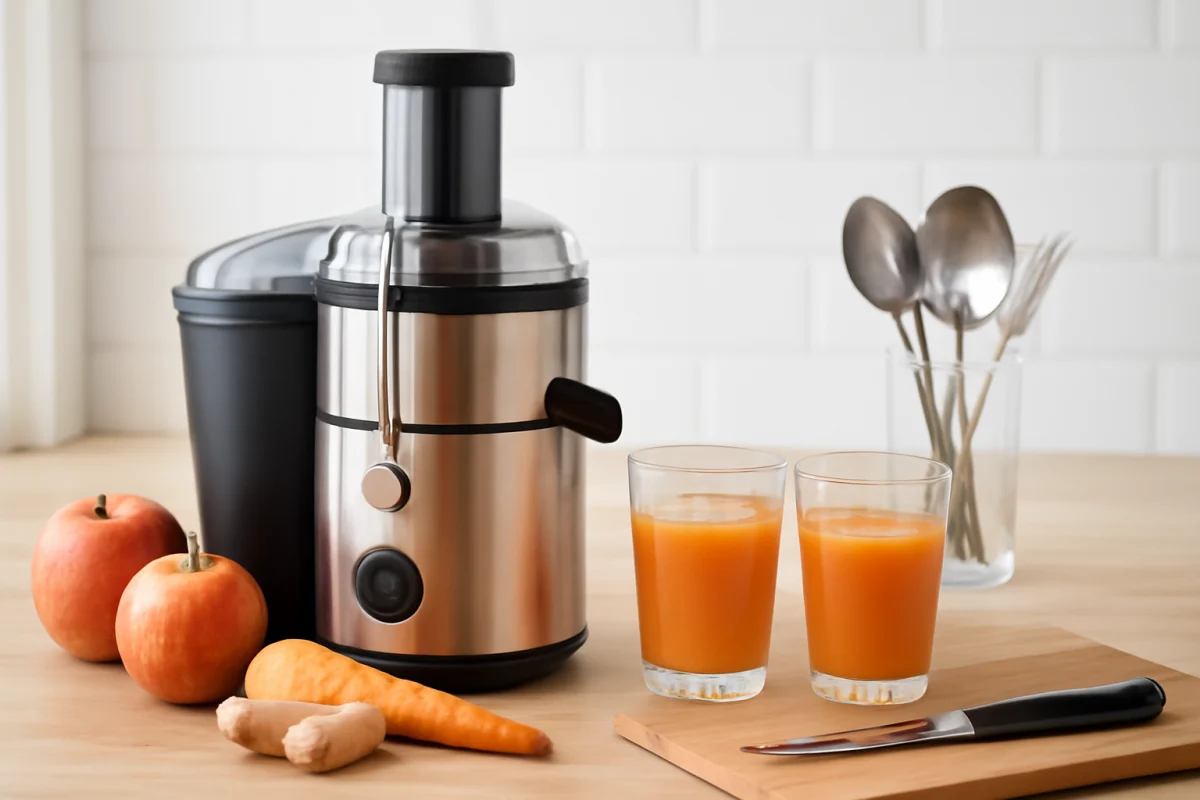
The best first juice extractor is the one that matches your routine, budget, cleanup tolerance, and favorite ingredients. For many beginners, a centrifugal extractor is a practical starting point because it is usually straightforward to operate and works well for firm produce. If you prefer leafy greens, softer fruits, or quieter operation, a masticating extractor may be a better fit. The right choice is less about finding the most advanced machine and more about selecting one you will use consistently. For more recipes and practical drink guidance, visit cleanse drink guide.
This guide explains how to compare the main extractor types and includes a simple apple, carrot, and lemon juice recipe for putting your new machine to work. The drink is bright, naturally sweet, and easy to adjust without relying on added sugar. It is not a substitute for a balanced meal, and no juice can remove toxins or guarantee a health outcome.
A Simple Beginner Juice to Try First
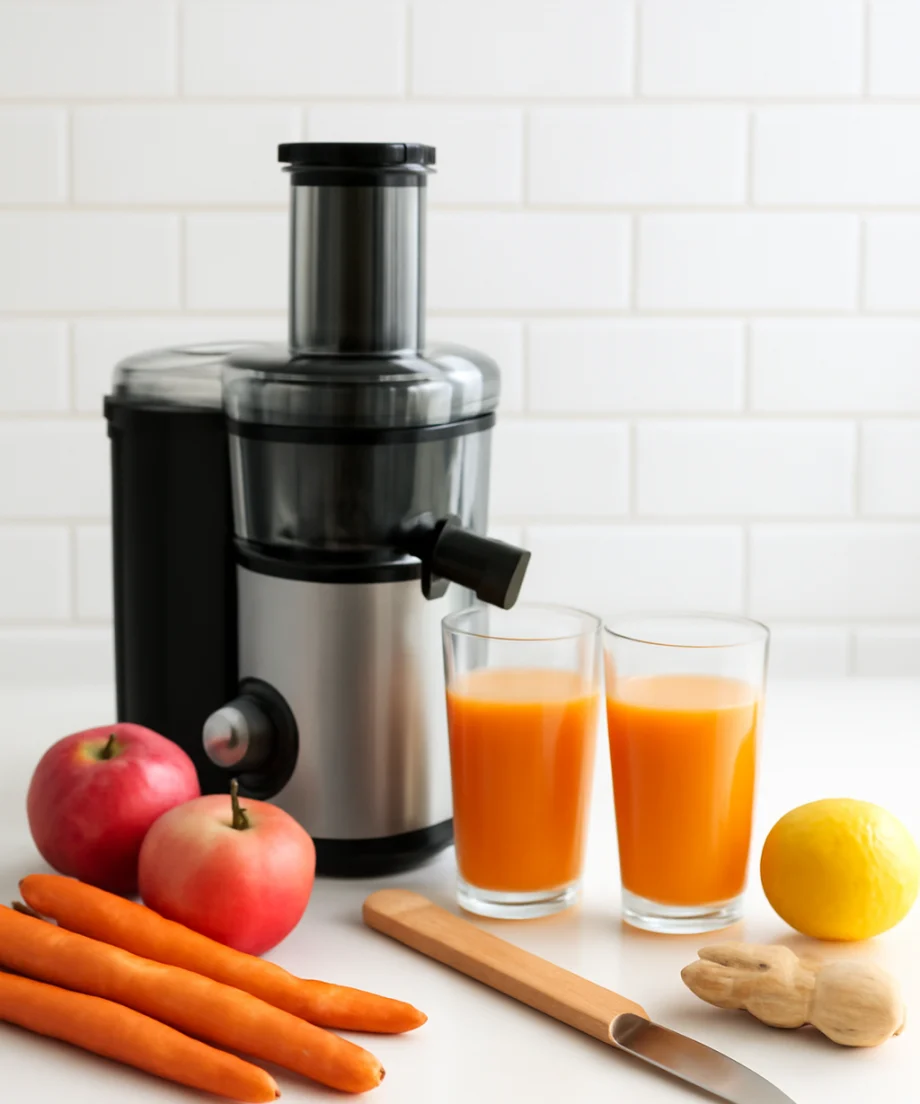
This apple, carrot, lemon, and ginger juice is a useful first recipe because the ingredients are familiar, easy to prepare, and suitable for many standard juice extractors. The apple and carrot provide sweetness, while lemon and ginger add acidity and spice.
Prep time: 15 minutes
Total time: 20 minutes
Yield: 2 servings
Ingredients
- 2 medium apples, washed, cored, and cut into pieces that fit your feed chute
- 4 medium carrots, scrubbed and trimmed
- 1/2 lemon, peeled and cut into pieces
- 1/2-inch piece of fresh ginger, washed and peeled if desired
- 1/2 cup cold water, optional, for diluting
- Ice, optional, for serving
Directions
- Wash the apples, carrots, lemon, and ginger under cool running water. Scrub firm produce, including carrots, with a clean produce brush if needed.
- Prepare the produce according to your extractor’s instructions. Remove apple stems and cores, peel the lemon, and cut large pieces so they fit safely into the feed chute. If your machine’s manual gives specific guidance about seeds, peels, or pits, follow it.
- Set up the extractor on a stable, dry surface. Place the juice container beneath the spout and the pulp container in its correct position.
- Feed the apples, carrots, lemon, and ginger through the machine in small batches. Use only the supplied pusher, and never push produce into the chute with your fingers or another utensil.
- Stir the juice. Add up to 1/2 cup cold water if the flavor is too concentrated or the texture is thicker than you prefer.
- Serve immediately over ice, or refrigerate it promptly in a clean, covered container. Stir again before drinking.
How to Choose Your First Juice Extractor
Centrifugal extractors
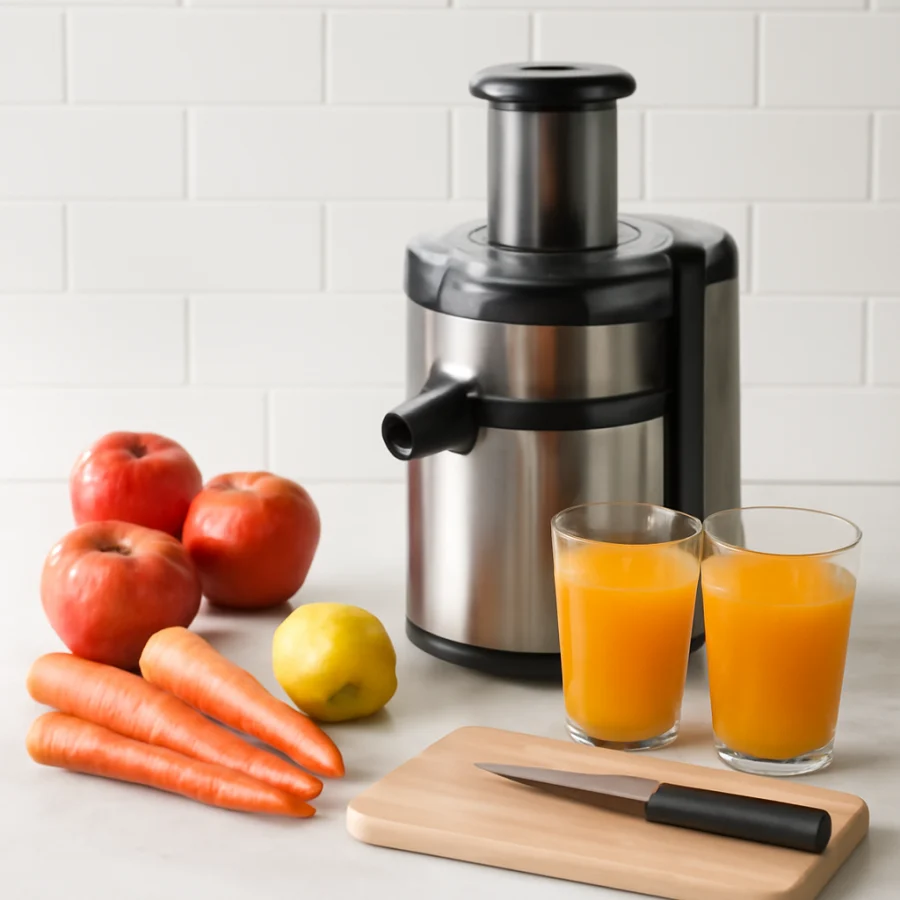
Centrifugal models shred produce with a fast-spinning cutting basket and separate juice from pulp. They are often appealing to beginners because they can be quick to assemble and are generally well suited to firm ingredients such as apples, carrots, cucumbers, and beets.
Consider this type if you want to make juice occasionally, prefer a faster process, or mainly use firm produce. The tradeoffs can include a louder motor, foam on some juices, and less efficient results with delicate leafy greens or very soft fruit. Exact performance varies by design, so check the current manufacturer specifications rather than relying only on a product category label.
Masticating extractors
Masticating models crush and press produce at a slower speed. They are commonly chosen by people who make juice regularly, want to work with leafy greens, or prefer a quieter machine. Many also offer attachments or functions for foods such as nut-based mixtures, although those capabilities differ by model.
A masticating extractor may require more chopping because its feed chute is sometimes narrower. It can also take longer to process a batch and may have more parts to clean. Before buying, look for clear instructions about assembly, disassembly, cleaning, and the ingredients the manufacturer permits.
Twin-gear and triturating extractors
Twin-gear, sometimes called triturating, extractors use two interlocking gears to crush and press produce. They are usually aimed at experienced juicers who want a specialized machine and are willing to spend more time on preparation and cleanup.
For a first extractor, this type is rarely necessary unless you already know that you want a highly involved juicing routine. A more complex machine can be a poor purchase if its size, cost, or cleanup requirements make it inconvenient to use.
Features That Matter More Than Marketing Terms
Feed-chute size
A wider chute may reduce chopping, but it does not eliminate the need to prepare produce safely. You still need to wash ingredients, remove parts the manual identifies as unsuitable, and avoid forcing oversized pieces into the machine. Compare the manufacturer’s stated chute dimensions with the produce you expect to use most often.
Cleanup and disassembly
Cleanup is one of the most important real-world considerations. Look for removable parts that are easy to rinse and a pulp basket that is simple to empty. A strainer or cutting basket with many small openings may need careful brushing. Confirm whether parts are dishwasher-safe through the current manual rather than assuming they are.
Noise and countertop space
If you share a small kitchen or plan to juice early in the morning, noise may influence your decision. Measure the available counter and cabinet space before purchasing. Remember to allow room to insert produce, remove the pulp container, and wash the parts.
Warranty and instructions
A clear manual is especially valuable for a first-time user. Check how the manufacturer explains assembly, approved ingredients, blockage prevention, cleaning, and warranty coverage. Product details, included accessories, and policies can change, so verify the current information on the manufacturer’s website or product label before buying.
Ingredients and Preparation Tips
Firm produce is usually the easiest place to begin. Apples, carrots, cucumbers, celery, and citrus prepared according to the machine’s instructions are common options. Soft fruit such as bananas and mangoes may produce a thick puree rather than a clear juice and may work better in a blender. Leafy greens can also require a machine designed to handle them efficiently.
Wash produce even when you plan to peel it, because cutting through an unwashed surface can transfer dirt or microorganisms to the inside. Remove damaged areas. Citrus peel is typically bitter, and hard pits or seeds should be handled according to the extractor’s manual. Do not put produce into the feed chute while the machine is running unless the instructions specifically describe that operating procedure.
For more ingredient guidance, you can browse the Drink & Ingredient Guides section. If you want to compare juice-making with blending, the Juicing & Blending category offers a useful starting point.
Storage and Food-Safety Notes
Fresh juice is perishable because it contains raw produce and has not been commercially processed. The safest quality approach is to drink it immediately. If you need to store it, transfer it promptly to a clean, covered container, refrigerate it, and use it as soon as practical. Do not leave fresh juice at room temperature for extended periods.
Wash the extractor’s removable parts after each use, following the manufacturer’s cleaning instructions. Pay special attention to pulp trapped around seals, strainers, and corners. Let cleaned parts dry fully before reassembling or storing them. For broader guidance, see the Food Safety & Storage resources.
Helpful Tips and Ingredient Alternatives
- For a less sweet drink: Replace one apple with a cucumber or add more lemon.
- For a warmer flavor: Keep the ginger, or add a small amount more gradually. Ginger can become intense quickly.
- For a milder citrus note: Use a smaller piece of peeled lemon and adjust after tasting.
- For a thinner texture: Add cold water after extraction rather than forcing extra water through the machine.
- For serving: Pour into chilled glasses and stir before serving. A simple lemon slice can add visual appeal.
- For less waste: Plan a use for the pulp, such as adding suitable vegetable pulp to a cooked recipe, but only when you know the ingredients and texture are appropriate.
Common Beginner Mistakes
Buying based only on motor power is a common mistake. A higher number does not automatically mean a better fit for your ingredients or routine. Ignoring cleanup is another problem; a machine that stays in a cabinet is unlikely to become part of your routine. Beginners also sometimes overfill the chute, rush soft produce through the machine, or skip the manual’s instructions about pits, seeds, and fibrous ingredients.
Start with small batches while learning how your extractor behaves. Notice which ingredients create more pulp, foam, or blockage, and adjust the order and size of the pieces accordingly. Never attempt to clear a jam while the machine is connected to power. Turn it off, unplug it, and follow the manufacturer’s blockage instructions.
Frequently Asked Questions
Is a centrifugal or masticating extractor better for a beginner?
Neither is universally better. Choose centrifugal if speed and simple preparation matter most. Choose masticating if you expect to use leafy greens, prefer quieter operation, or do not mind slower preparation and more cleanup.
Can I put whole apples into a juice extractor?
Only if the manufacturer’s instructions allow the size and preparation. Wash and inspect the apples, remove stems, and cut them to fit the feed chute. Follow the manual’s instructions about cores and seeds.
How long does homemade juice last?
It is best consumed immediately. If stored, refrigerate it promptly in a clean, covered container and use it as soon as practical. When in doubt about safety or quality, discard it.
Do I need an expensive extractor to make good juice?
No. A basic model can be suitable if it handles your preferred ingredients, fits your space, and is easy enough to clean. Compare the current specifications, manual, warranty, and return terms before making a purchase.
Can juice replace a meal or cleanse the body?
Juice should not be treated as a replacement for balanced meals, and it cannot remove toxins or guarantee weight loss. Enjoy it as one beverage within an overall eating pattern that includes a variety of foods.

Comments
0No comments yet. Be the first to share a helpful note or question.
Leave a Comment
Your email address will not be published. Comments are reviewed before appearing on the site.