
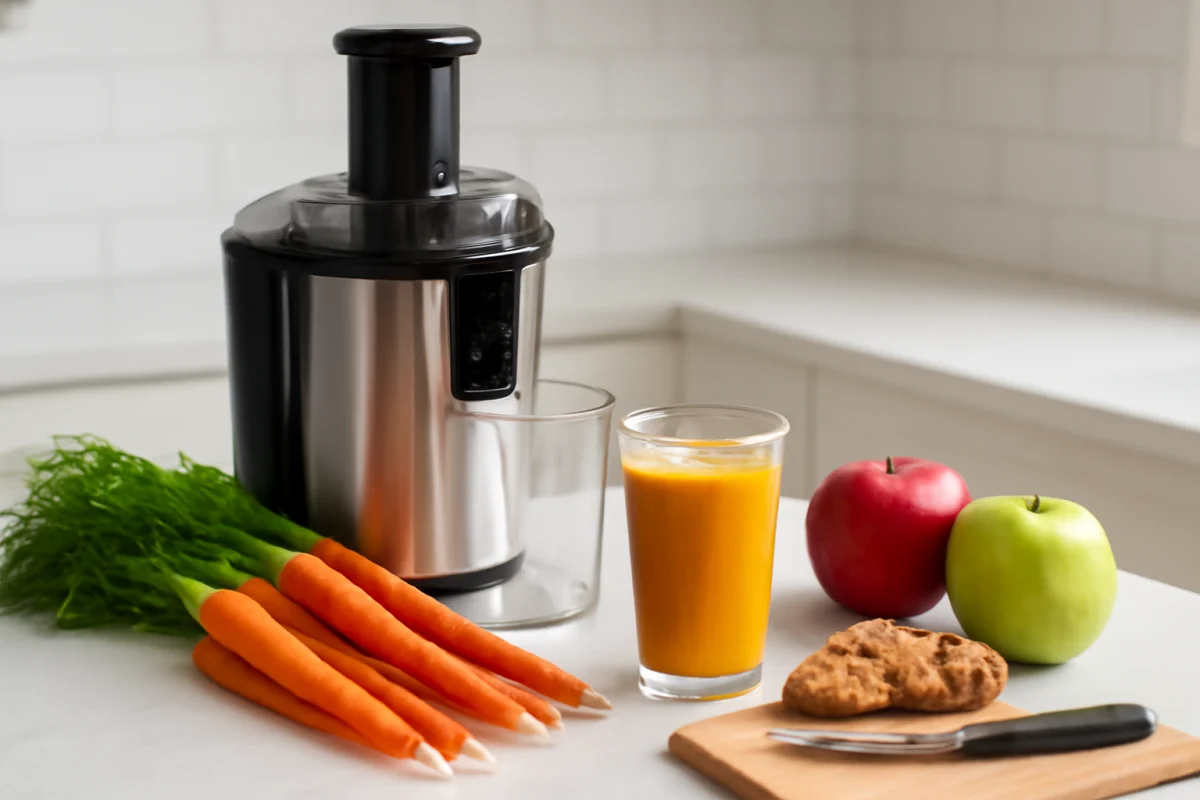
The best way to choose long-lasting juicing equipment is to match the machine to the drinks you actually plan to make. For a balanced starting point, this carrot apple ginger juice recipe is a useful test: it includes firm carrots, crisp apples, and a small amount of fibrous ginger. A dependable juicer should handle these ingredients steadily, clean without excessive effort, and fit comfortably into your kitchen routine. For more recipes and practical drink guidance, visit cleanse drink guide.
This homemade juice is worth trying because it combines sweet fruit, earthy vegetables, and warm ginger flavor without requiring complicated preparation. It is a beverage to enjoy with a meal or snack, not a replacement for balanced meals. If you are comparing appliances, the recipe also gives you a practical way to evaluate feed-chute size, pulp handling, cleanup, noise, warranty information, and storage design before buying.
Carrot Apple Ginger Juice Recipe at a Glance
- Prep time: 15 minutes
- Juicing time: 5 to 10 minutes, depending on the machine
- Total time: About 25 minutes
- Servings: 2 small servings
- Best equipment: A centrifugal or masticating juicer with a food-contact chute, strainer, collection container, and pulp receptacle
Ingredients
- 4 medium carrots, scrubbed and trimmed
- 2 medium sweet-tart apples, such as Honeycrisp, Gala, or Granny Smith
- 1-inch piece of fresh ginger, peeled if desired
- 1 tablespoon fresh lemon juice, optional
- Ice, optional, for serving
Ingredient size and juiciness vary, so the final amount will not be identical every time. Apples contribute sweetness and liquid, carrots provide a mild earthy flavor, and ginger adds intensity. Lemon juice can brighten the drink, but it is optional and does not make the juice shelf-stable.
How to Make Carrot Apple Ginger Juice
- Wash your hands and produce. Rinse the carrots, apples, and ginger under cool running water. Scrubbing firm produce with a clean produce brush can help remove surface dirt. Do not use soap or detergent on produce.
- Inspect the ingredients. Cut away bruised or damaged areas. Remove carrot tops and ends. Cut out apple stems and remove seeds if your juicer instructions call for it. Some machines can process apple pieces with seeds removed, but always follow the manufacturer’s guidance.
- Cut produce to fit the feed chute. Slice carrots into manageable lengths and quarter the apples. Smaller pieces may help a compact machine work more smoothly, while a wide-chute model may accept larger pieces. Cut the ginger into a small piece so it does not become trapped in the chute.
- Set up the juicer securely. Place it on a stable, dry counter with the pulp container and juice pitcher correctly positioned. Check that the lid, strainer, and locking mechanism are assembled according to the manual.
- Juice in alternating batches. Feed a few carrot pieces, followed by apple and ginger, using the pusher only as directed. Alternating firmer carrots with juicy apples can help move ingredients through the chamber. Never push food into the chute with your fingers, a spoon, or another utensil.
- Add lemon juice if using. Stir the lemon juice into the collected beverage. Taste carefully and add more only if you want a sharper flavor.
- Serve promptly. Pour the juice over ice if desired. Stir before serving because natural separation can occur.
- Clean the machine promptly. Unplug the juicer, disassemble removable parts, and rinse and wash them according to the manufacturer’s instructions. Use the supplied brush on the strainer if needed.
How to Choose Juicing Equipment That Lasts
Compare the two main juicer styles
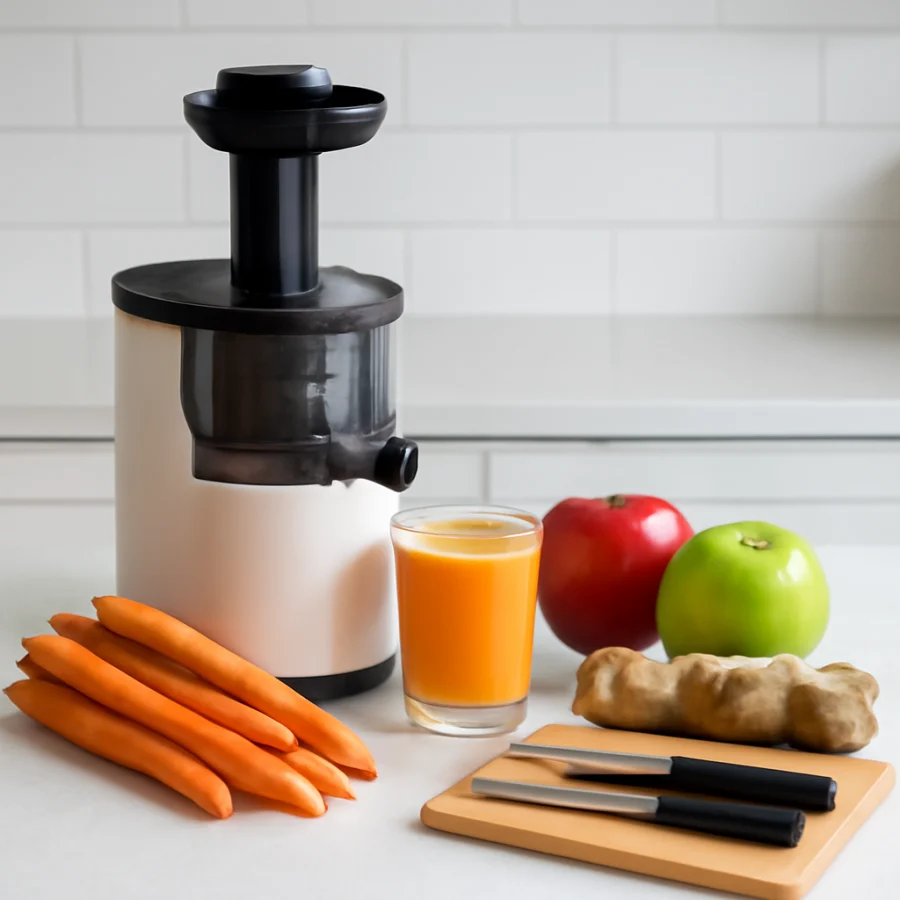
Centrifugal juicers shred produce and separate juice quickly. They can be convenient for occasional batches and often have a straightforward setup. Before buying, check whether the feed chute accommodates the produce sizes you commonly use, whether the pulp container is easy to remove, and whether the strainer has detailed cleaning instructions.

Masticating juicers crush and press produce more slowly. They may appeal to people who make leafy greens, soft produce, or smaller batches, but they can include more parts and require a longer preparation and cleaning routine. A slower machine is not automatically a better choice; the most durable option is one you can assemble, use, and clean correctly on a regular basis.
Look beyond motor claims
Product pages may emphasize motor power, speed settings, or premium materials, but one specification rarely predicts the full ownership experience. Look for a clear manual, replacement-part information, a readable warranty, and instructions for preventing jams. Verify current details with the manufacturer because model features, support terms, and included accessories can change.
Prioritize practical construction
Inspect the parts you will handle most often: the locking arm, feed chute, pusher, strainer, collection containers, and pulp bin. A sturdy feel is useful, but avoid assuming that a heavier appliance will always last longer. Smooth surfaces and simple assemblies can make cleaning easier. Check whether removable parts are approved for a dishwasher only when the manual specifically says they are.
Think about counter space and storage
Measure the available counter and cabinet space before ordering. Consider the machine’s height with the pusher installed, the room needed to open the lid, and where the juice container will sit. Equipment that must be moved through a crowded cabinet every time may receive less use, regardless of its features.
Helpful Recipe Tips and Ingredient Alternatives
- For a less sweet drink, use one apple instead of two and add a little extra carrot.
- For a milder ginger flavor, begin with a half-inch piece. Ginger can become more noticeable as the juice sits.
- Use a firm pear in place of one apple for a softer, floral flavor. Remove the stem and seeds as recommended by your appliance manual.
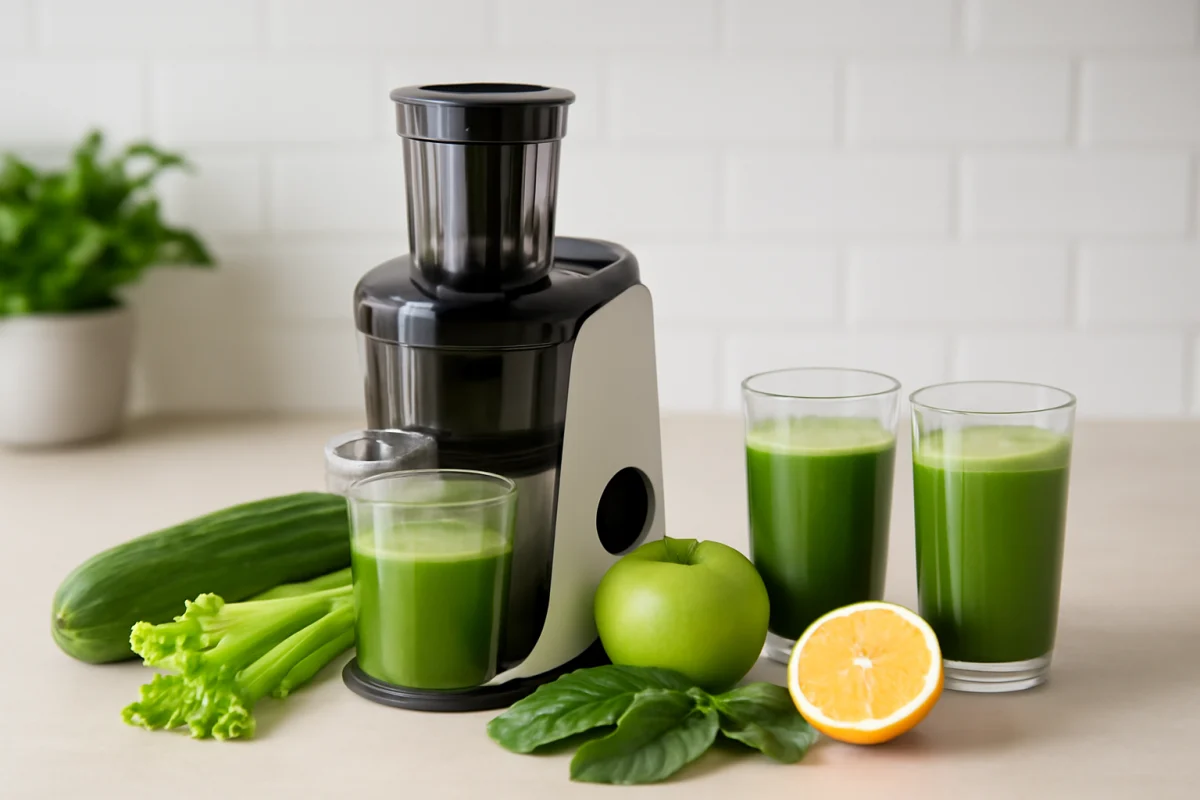
- Add a small cucumber for a lighter, more refreshing variation. Cucumber can produce a thinner juice and may increase separation.
- Fresh lemon juice works well, but lime juice can provide a different acidic note.
- If your machine struggles with fibrous ginger, juice it between apple pieces or grate it and stir the juice into the finished drink if your appliance does not accept it easily.
For more ideas involving appliance techniques and ingredient combinations, browse the juicing and blending guide. You can also explore the site’s drink recipes for additional preparation ideas.
Serving and Storage Advice
Fresh juice is best served soon after preparation. If you need to hold it briefly, pour it into a clean, covered container and refrigerate it promptly. Leave as little empty space as practical, since exposure to air can affect flavor and color. Do not leave fresh juice at room temperature for extended periods, and discard it if it develops an unusual smell, appearance, or taste.
Because homemade juice is not pasteurized and does not contain a validated preservation process, do not treat it like a shelf-stable packaged beverage. Follow current guidance from reliable food-safety authorities and your local health department for additional storage information. Clean produce, clean equipment, and prompt refrigeration all matter. The food safety and storage guide offers related handling reminders.
Common Buying Mistakes to Avoid
Do not choose a juicer solely because it has the lowest price, the largest number of attachments, or the most dramatic marketing language. A machine with complicated parts may be frustrating if you only want a simple carrot and apple drink. Also avoid assuming that a wide feed chute eliminates all preparation; produce still needs inspection and washing, and some items must be cut to prevent jams.
Before purchasing, read the current manual if one is available online. Confirm how the machine handles hard produce, fibrous ingredients, cleaning, storage, and replacement parts. If a product’s performance, warranty, or safety information is unclear, contact the manufacturer rather than relying on an unsupported claim.
Frequently Asked Questions
Should I peel the carrots and apples?
Peeling is usually optional when produce is thoroughly washed, but remove stickers, damaged areas, stems, and any parts your juicer manual says to discard. Some people peel apples for a smoother flavor or because of personal preference.
Can I make this recipe in a blender?
Yes, but the result will be a thicker blended drink rather than strained juice. Blend the prepared ingredients with enough water to move the blades, then strain only if you want a thinner texture. A blender is a sensible choice if you prefer fiber and do not need a clear juice.
Why is my juice separating?
Separation is normal because different ingredients contain different amounts of water, pulp, and natural solids. Stir the drink before serving. A fine strainer may create a smoother texture, but it will not prevent separation completely.
How much ginger should I use?
Start with a small piece, such as one-half to one inch for this recipe, and adjust in future batches. Ginger’s flavor can be strong, and individual preferences vary.
What makes juicing equipment long-lasting?
Consistent cleaning, correct assembly, avoiding overloading, and following the manufacturer’s instructions are important. A clear warranty and access to replacement parts are also practical signs to investigate, although they cannot guarantee a specific lifespan.
Comments
0No comments yet. Be the first to share a helpful note or question.
Leave a Comment
Your email address will not be published. Comments are reviewed before appearing on the site.