
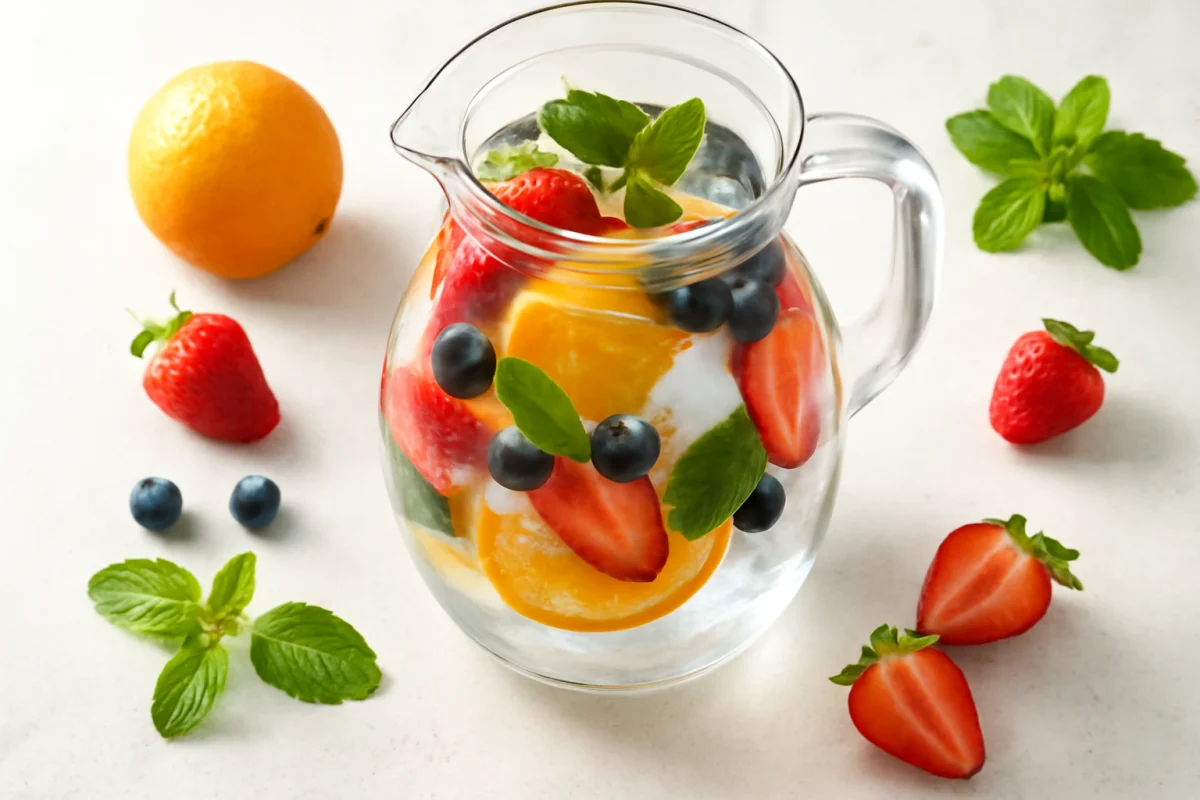
The best fruits and herbs to add to homemade infused water are the ones that provide bright flavor without making preparation complicated. Citrus, berries, cucumber, mint, basil, and ginger are dependable choices because they pair well, look appealing in a pitcher, and can make plain water more enjoyable to drink. This citrus-berry mint infused water recipe is a simple place to start, whether you are serving guests or looking for a refreshing nonalcoholic drink for the refrigerator. For more recipes and practical drink guidance, visit detox beverage ideas.
Infused water is water flavored with fresh produce rather than a concentrated juice or sweetened syrup. It can add variety to your daily routine, but it is not a detox treatment, a meal replacement, or a guaranteed way to change your weight. Its practical benefit is straightforward: a pleasant flavor may make it easier for some people to choose water more often.
Citrus-Berry Mint Infused Water at a Glance
- Prep time: 10 minutes
- Infusion time: 30 minutes to 2 hours
- Total time: About 40 minutes to 2 hours and 10 minutes
- Servings: 6 cups
- Equipment: Cutting board, knife, large pitcher, and serving glasses
Ingredients
- 6 cups cold drinking water
- 1 small orange, thoroughly washed and thinly sliced
- 1/2 cup fresh strawberries, hulled and sliced
- 1/2 cup fresh blueberries, rinsed
- 8 to 10 fresh mint leaves, rinsed
- 1/2 cup ice, optional for serving
How to Make Citrus-Berry Mint Infused Water
- Wash your hands and produce. Rinse the orange, strawberries, blueberries, and mint under cool running water. Use a clean produce brush for firm-skinned produce if needed. Dry the ingredients with a clean towel or let them drain.
- Prepare the fruit. Remove the strawberry stems and slice the berries. Cut the orange into thin rounds. Thin slices expose more surface area to the water while keeping the pitcher attractive.
- Combine the ingredients. Place the orange slices, strawberries, blueberries, and mint in a clean pitcher. Add the cold water.
- Infuse in the refrigerator. Cover the pitcher and refrigerate for at least 30 minutes. For a more noticeable flavor, let it infuse for up to 2 hours. Gently stir before serving.
- Serve cold. Pour over ice if desired. Add a fresh mint leaf or a small piece of fruit to each glass for presentation.
Why These Fruits and Herbs Work Together
Orange
Orange brings a familiar citrus aroma and a lightly sweet-tart flavor. Its color also gives the water a bright, welcoming appearance. Because citrus peel can become bitter during extended soaking, remove the slices after a few hours if the flavor starts to taste sharp or bitter.
Strawberries
Strawberries offer a soft berry flavor that blends naturally with orange and mint. Sliced strawberries release flavor more readily than whole berries, although they may soften quickly. Choose firm, ripe fruit without bruises or visible mold.
Blueberries
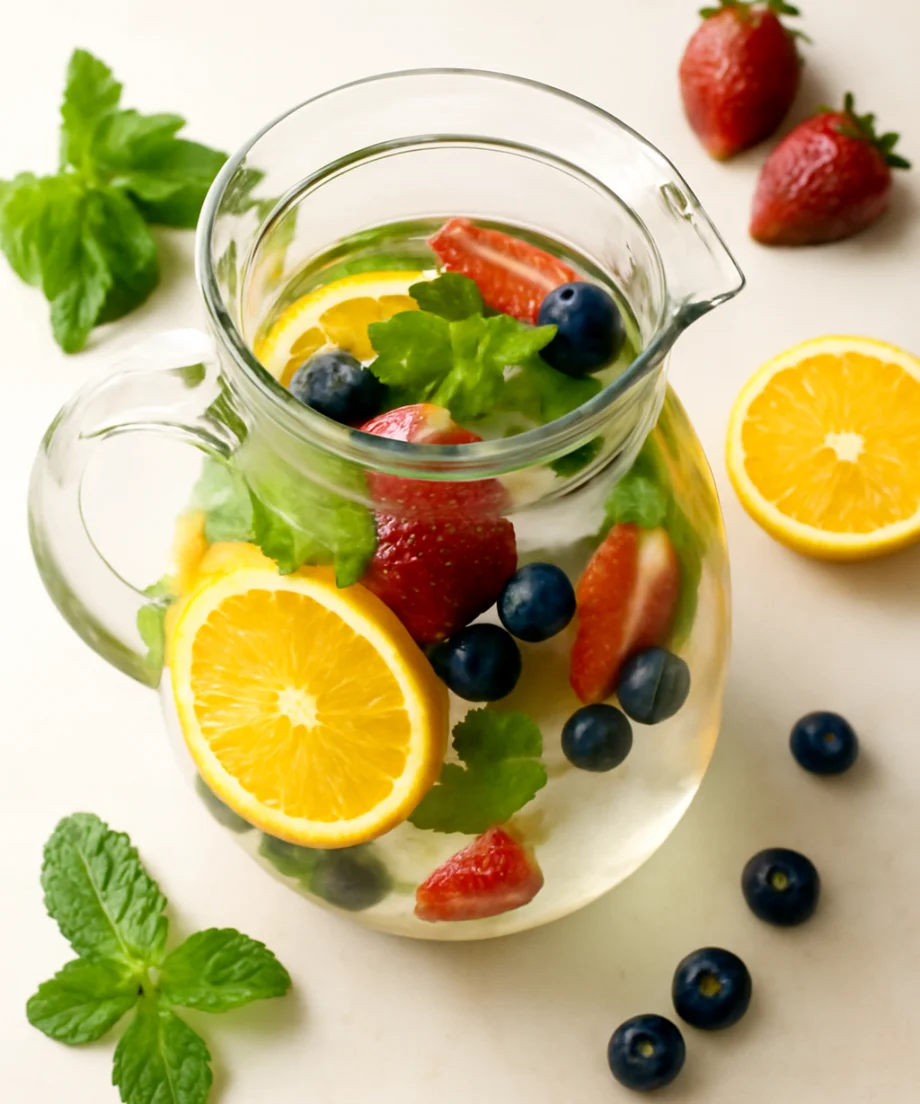
Blueberries add a mild fruitiness and attractive color. Lightly pressing a few berries with the back of a clean spoon can release more flavor, but avoid crushing all of them because the water may become cloudy and the fruit may break apart.
Mint
Mint gives the drink a cool, fresh aroma. Gently clap or rub the leaves between clean hands before adding them to help release their scent. Avoid aggressively muddling the mint, which can create a grassy or overly intense taste.
Best Fruits and Herbs to Add to Homemade Infused Water
Once you understand the basic formula, you can create other combinations based on flavor, season, and what you already have. Use one or two fruits with one herb at a time so the final drink remains balanced.
- Lemon and cucumber: Crisp, clean, and simple. Add a few thin lemon rounds and several cucumber slices to cold water.
- Lime and cilantro: A bold combination that works well with a few slices of pineapple. Start with a small amount of cilantro because its flavor can dominate.
- Raspberry and rosemary: Sweet-tart berries pair with the piney aroma of rosemary. Use one small sprig rather than a large handful.
- Peach and basil: Sliced peach offers a soft summer flavor, while basil adds an aromatic note. This combination is especially good when peaches are ripe but still firm.
- Apple and cinnamon: Thin apple slices and one cinnamon stick create a warm, lightly spiced profile. Remove the cinnamon if the flavor becomes too strong.
- Pineapple and ginger: Pineapple has a pronounced flavor, so a few chunks may be enough. Add two or three very thin ginger slices for gentle spice.
- Grapefruit and thyme: Grapefruit brings a pleasantly bitter citrus note, while thyme adds an earthy aroma. This is a good option for people who prefer less sweetness.
For more ingredient ideas, browse these drink and ingredient guides. They can help you compare flavor profiles and preparation approaches without relying on sweetened concentrates.
Helpful Preparation Tips
Use cold, good-tasting water
Infusion does not hide an unpleasant water flavor. Use water that tastes fresh to you, whether it comes from the tap, a filter, or a chilled container. If you use a filter or packaged water, follow the product's current care or storage instructions.
Slice ingredients consistently
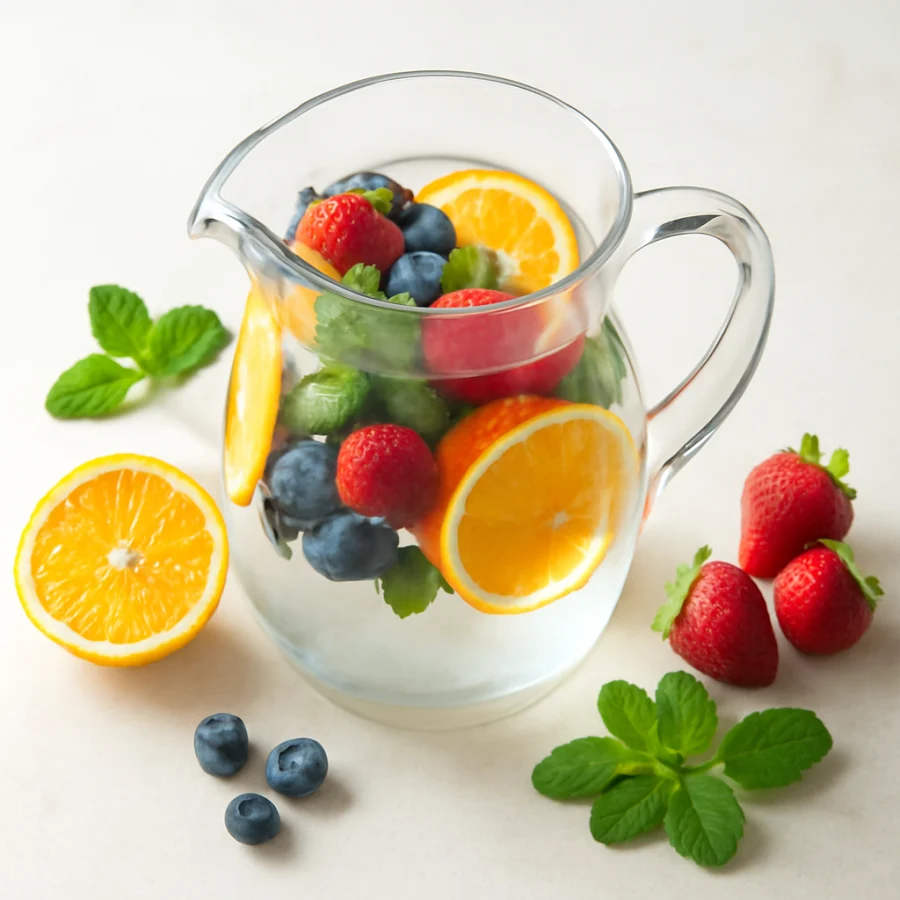
Thin, even slices help produce flavor more evenly and make the pitcher look polished. Very thin citrus slices can release bitterness faster, while thick pieces may need more time to flavor the water.
Start with less
It is easier to add more fruit or herbs than to correct an overpowering mixture. Begin with a modest amount, taste after 30 minutes, and adjust with additional produce if needed.
Consider a removable infuser
A pitcher with a removable infuser basket can make it easier to lift out soft berries, herbs, or citrus before serving. It is not essential, but it can simplify cleanup and help prevent the drink from becoming too strong.
Ingredient Alternatives and Serving Suggestions
If strawberries are not available, try raspberries, blackberries, or thinly sliced peaches. You can replace orange with lemon, lime, or grapefruit. For a different herbal note, use basil, rosemary, thyme, or a small amount of cilantro. Fresh herbs generally provide a brighter aroma than dried herbs, which can become gritty or overpowering in water.
Serve the infused water in clear glasses with ice, especially when hosting a brunch, picnic, or casual dinner. You can prepare separate pitchers with different combinations so guests can choose a flavor. For a lightly sparkling version, infuse the fruit and herbs in still water first, then add chilled unflavored sparkling water immediately before serving. This helps preserve the carbonation.
Do not add sugar automatically. Taste the water first, since ripe fruit may provide enough flavor on its own. If you want a sweeter beverage, consider serving a small amount of fruit juice separately so each person can adjust their glass. Remember that juice adds sugar and calories compared with plain infused water.
Safe Storage and Food-Handling Notes
Keep homemade infused water refrigerated rather than leaving it at room temperature for extended periods. Use a clean, covered pitcher, and avoid returning used fruit to the container after it has been sitting in a serving glass. As a practical quality guideline, drink the batch within 24 hours and discard it sooner if it develops an off smell, unusual appearance, or unpleasant taste.
Soft fruit and herbs deteriorate faster than firm produce, so remove them when the flavor is strong or the ingredients begin to look wilted. Wash the pitcher and utensils with hot, soapy water between batches. For additional handling and storage guidance, see the publication's food safety and storage resources and consult reliable current food-safety guidance.
Frequently Asked Questions
How long should fruit stay in infused water?
Start tasting after 30 minutes. Many combinations are enjoyable within 1 to 2 hours. Citrus peel, delicate berries, and herbs may become bitter or soft if left in the water too long, so remove them when the flavor reaches the level you prefer.
Can I use frozen fruit?
Yes. Frozen berries can chill the water and add flavor as they thaw. Use commercially frozen fruit according to the package instructions, and keep the pitcher refrigerated. Frozen fruit may make the water cloudier than fresh fruit.
Can infused water replace regular meals or medical care?
No. Infused water is simply a flavored beverage. It does not replace balanced meals, provide complete nutrition, remove toxins, or treat health conditions. Anyone with a medical condition or special hydration needs should follow advice from a qualified health professional.
Why does my infused water taste bitter?
Common causes include leaving citrus peel in the pitcher too long, using too much herb, or crushing the ingredients aggressively. Remove the citrus and herbs, dilute the water with more cold water, and use smaller amounts in the next batch.

Can I reuse the fruit for another batch?
It is usually better to use fresh produce for each batch. Fruit and herbs lose flavor after soaking, and reused ingredients may become soft or less appealing. If you do make another batch, keep it refrigerated and use sound food-handling practices.
A Simple Formula for Future Batches
For a 6-cup pitcher, begin with one strongly flavored fruit, one softer fruit or vegetable, and a small handful of one herb. Citrus plus berries plus mint is a reliable starting point, but the best combination is the one you enjoy and can prepare safely. Adjust the infusion time rather than adding large amounts of produce, and keep the drink cold until it is served.
For more practical drink ideas, explore these drink recipes or browse guidance on hydration and daily routines.


Comments
0No comments yet. Be the first to share a helpful note or question.
Leave a Comment
Your email address will not be published. Comments are reviewed before appearing on the site.