
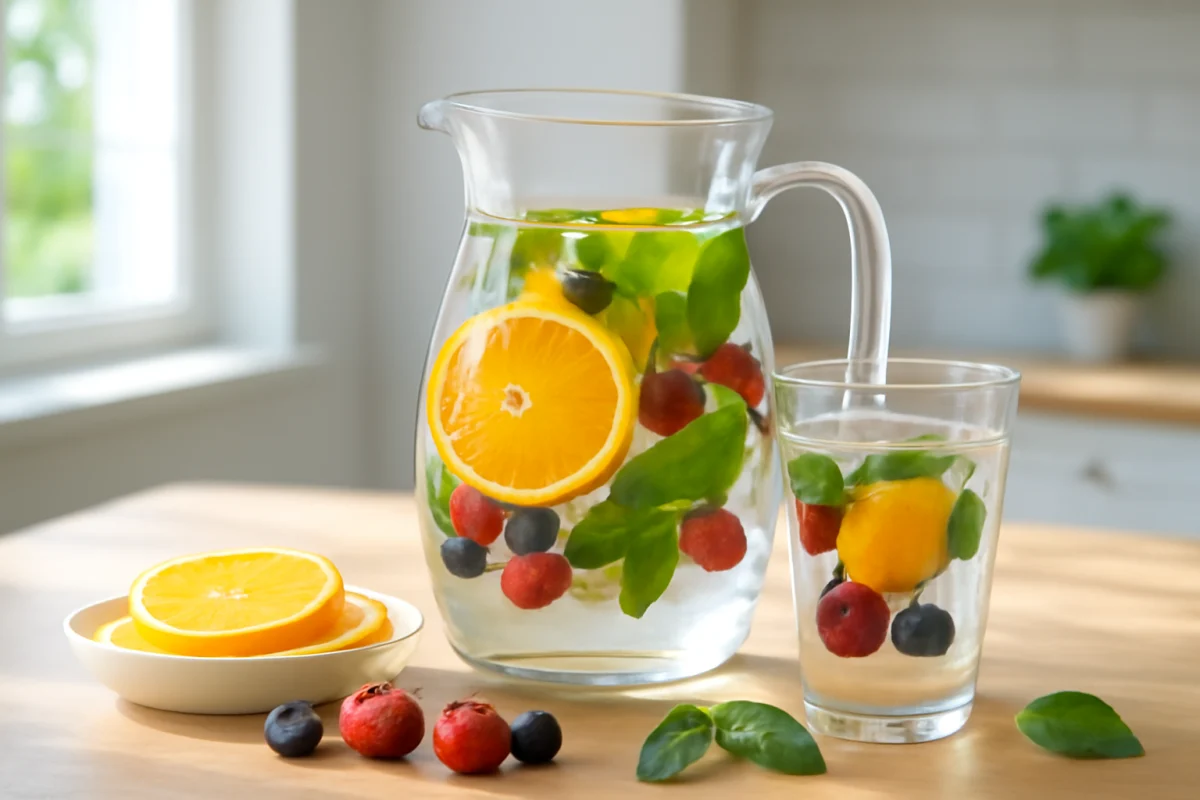
Morning hydration with infused water can make it easier to drink water early in the day, especially when plain water feels unappealing. This citrus-berry basil recipe adds fresh flavor, color, and a gentle aroma without turning your morning drink into a sugary beverage. While infused water is not a cure-all and cannot replace sleep, balanced meals, or medical care, it can be a practical part of a comfortable daily hydration routine. For more recipes and practical drink guidance, visit fruit infused detox water.
The recipe combines orange, strawberries, blueberries, and basil in cold water. The fruit provides flavor rather than a guaranteed energy effect; the main reason you may feel more alert after drinking it is that replacing lost fluids can support normal daily function when you are mildly dehydrated. For more guidance about building a realistic routine, explore these hydration and daily routine ideas.
Citrus-Berry Basil Infused Water at a Glance
- Prep time: 10 minutes
- Infusion time: 30 minutes to 2 hours
- Total time: About 40 minutes, or longer if chilled overnight
- Servings: 4 cups
- Best for: A refreshing morning drink, breakfast accompaniment, or non-sugary alternative to sweet beverages
Ingredients
- 4 cups cold, potable water
- 1 small orange, washed and thinly sliced
- 1/2 cup strawberries, washed, hulled, and sliced
- 1/4 cup blueberries, washed
- 6 to 8 fresh basil leaves, gently rinsed
- Ice, optional, for serving
Use fresh, good-quality ingredients, but there is no need to purchase premium or specialty products. Tap water is suitable where it is considered safe to drink. If you use bottled water, check the current label and storage guidance. Wash produce under cool running water before cutting it, and keep cut fruit refrigerated when it is not being prepared or served.
How to Make Morning Infused Water
- Wash your hands and equipment. Clean your hands, pitcher, knife, cutting board, and any serving glasses before preparation. Use a clean pitcher made for food and beverage storage.
- Prepare the fruit. Rinse the orange, strawberries, and blueberries under cool running water. Slice the orange into thin rounds and cut the strawberries into pieces that will fit comfortably in the pitcher. There is no need to peel the orange, but remove any visible seeds.
- Add the ingredients. Place the orange slices, strawberries, blueberries, and basil leaves in a 1-quart pitcher. Press the basil very gently between clean fingers if you want a stronger aroma; avoid aggressively crushing it, which can make the flavor more herbal or bitter.
- Pour in the water. Add 4 cups of cold water. Stir slowly with a clean spoon so the fruit and herbs are distributed without breaking them apart.
- Chill and infuse. Cover the pitcher and refrigerate for at least 30 minutes. For a more noticeable flavor, let it stand for up to 2 hours. Taste it before serving and add ice if desired.
- Serve promptly. Pour the infused water into glasses over ice, using a strainer if you prefer to keep the fruit and herbs in the pitcher. Refill the pitcher with plain water once if the flavor remains pleasant, then discard the produce according to the storage guidance below.
Why This Recipe Is Worth Trying
Many people know they want to drink more water but find plain water repetitive. Fresh fruit and basil can provide a more inviting sensory experience, which may help make regular sipping feel easier. That is a practical benefit, not a promise of a special cleansing effect.
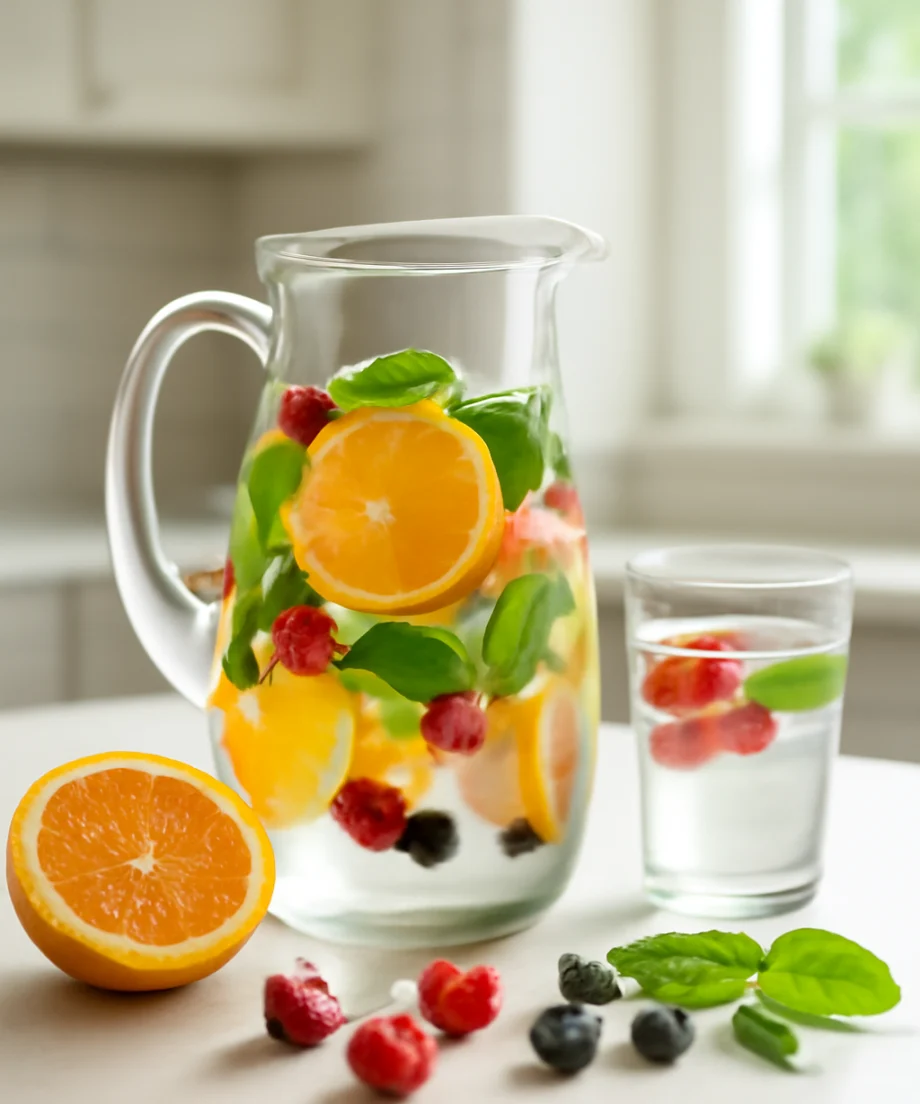
Water itself supplies fluid, while the fruit and basil contribute aroma and flavor. Because this recipe does not use syrup, juice concentrate, or a large quantity of added sugar, it can be a useful alternative to sweetened drinks for readers who enjoy fruit flavors. It is still important to eat whole foods separately; the small amount of fruit used for infusion does not make the drink a complete snack or meal.
Morning hydration may also fit naturally into an existing routine. You might prepare the pitcher while making breakfast, place a glass beside your coffee mug, or take a serving with you after checking that the container is leak-resistant. If you drink coffee or tea, infused water can complement those beverages rather than serving as a claim that caffeine must be avoided.
Ingredient Alternatives
Use other citrus
Replace the orange with lemon, lime, or grapefruit slices for a sharper flavor. If you use grapefruit and take prescription medication, ask a pharmacist or health care professional whether grapefruit is appropriate, because it can interact with some medicines.
Swap the berries
Raspberries, blackberries, or sliced peaches can replace the strawberries and blueberries. Soft fruit may break down faster, so add it shortly before serving if you prefer clearer water. Frozen berries can be used as flavoring and may help chill the drink, but check the package instructions and keep the drink cold after preparation.
Try a different herb
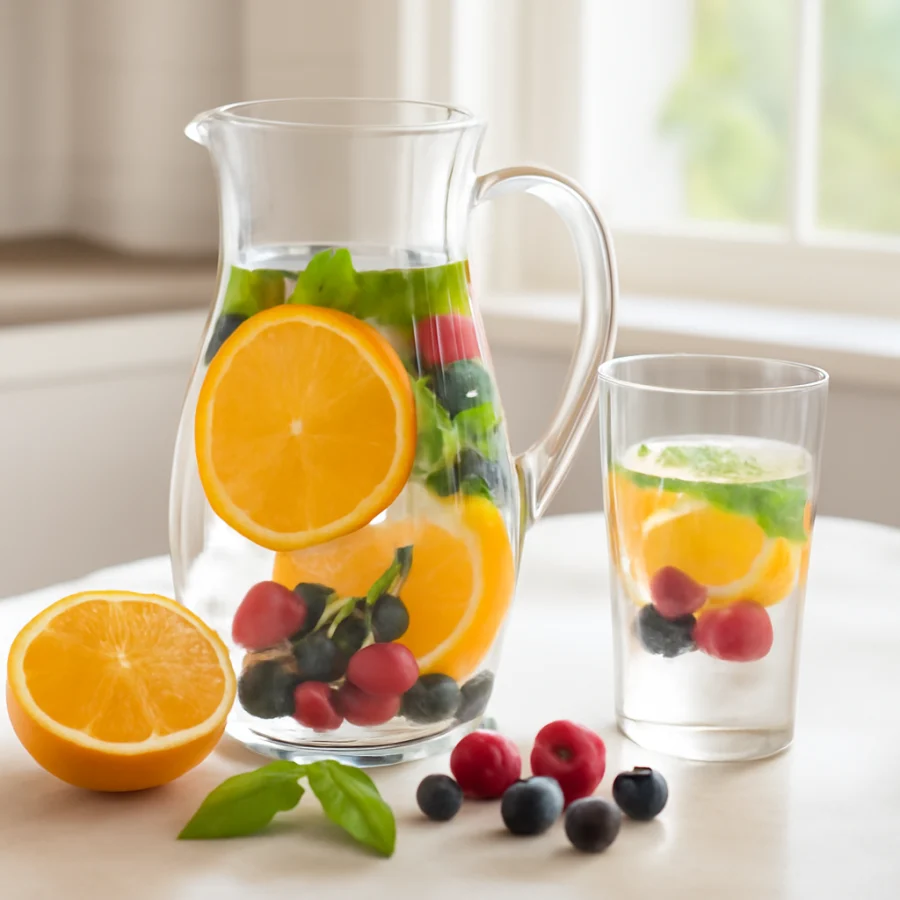
Mint, rosemary, or thyme can replace basil. Start with a small amount because herbs vary in intensity. Cucumber slices also work well if you want a lighter, less fruity profile. For another simple combination, see this lemon cucumber water recipe.
Helpful Preparation and Serving Tips
- Slice thinly: Thin citrus slices release flavor more efficiently than thick wedges.
- Avoid over-muddling: Crushing fruit can make the water cloudy and may release more bitterness from citrus peel or herb stems.
- Adjust gradually: If the flavor is too strong, add more water. If it is too mild, add a few additional fruit slices or allow a little more infusion time.
- Keep it unsweetened: If you want sweetness, consider serving a small portion of whole fruit alongside the drink rather than adding a large amount of sugar or syrup.
- Use a covered pitcher: A lid helps protect the drink from refrigerator odors and accidental contamination.
- Choose a comfortable temperature: Cold, cool, or room-temperature water can all be reasonable choices. The best option is the one that makes drinking water easier for you.
Food Safety and Storage
Fresh fruit and herbs are perishable, so treat infused water as a refrigerated food or beverage. Keep the pitcher covered and refrigerated at 40°F or below when possible. Do not leave the drink sitting at room temperature for extended periods, particularly in a warm kitchen, on a sunny counter, or outdoors.
For best flavor and quality, drink the water the same day or within about 24 hours, and discard it sooner if it develops an unusual smell, appearance, or taste. Remove the fruit and herbs if they become soft or unpleasant. Do not top off an old pitcher with fresh water and continue storing it indefinitely. Wash the pitcher thoroughly between batches.
When preparing drinks for children, older adults, pregnant people, or anyone with a weakened immune system, use especially careful hand, produce, utensil, and refrigerator hygiene. Follow current guidance from reliable food-safety authorities for additional details; our food safety and storage guide offers related reading.
Realistic Expectations About Morning Energy
Infused water may help you drink more fluid, but it is not an energy supplement and does not replace sleep, food, or treatment for a health condition. If you feel tired in the morning, consider the broader routine: sleep quality, breakfast or another balanced meal, activity, stress, and your usual caffeine intake may all matter.
Persistent or severe fatigue, dizziness, confusion, fainting, unusual thirst, or other concerning symptoms deserve professional attention. Do not use infused water as a substitute for medical advice, prescribed treatment, or a balanced eating pattern. A flavorful drink can support a routine, but it cannot diagnose or solve the cause of ongoing symptoms.
Frequently Asked Questions
Can infused water really boost energy?
It may help you feel better if you were not drinking enough fluid, but it does not provide a guaranteed energy boost. The fruit and basil mainly add flavor and aroma. Morning alertness also depends on sleep, meals, activity, health, and other individual factors.
Can I make this drink the night before?
Yes. Prepare it in a clean, covered pitcher and refrigerate it overnight. The flavor may become stronger, especially from the citrus peel and basil. Remove the produce if the flavor becomes bitter, and use the drink within about 24 hours for best quality.
Should I add lemon juice or sweetener?
You can add a small squeeze of lemon for brightness, but it is optional. Sweetener is not necessary. If you add sugar, honey, or syrup, remember that the drink is no longer unsweetened and should still be stored safely in the refrigerator.
Can I eat the fruit after infusing?
You may eat the fruit if it has been handled cleanly, kept cold, and still looks and smells fresh. Its texture may be softer and its flavor less appealing after sitting in water. Discard it if it has been left out too long or shows signs of spoilage.
Does this recipe detox the body?
No drink has been established here as a way to remove toxins or cleanse the body. Your body already has systems that process and eliminate waste. This recipe is best viewed as a flavorful water option that can make hydration more enjoyable.
A Simple Way to Add It to Your Morning
Prepare one pitcher when you begin breakfast or another regular morning task. Pour a glass, keep the rest covered in the refrigerator, and sip it alongside a balanced meal or snack if that suits your routine. The most useful beverage is one that tastes good, fits your schedule, and can be prepared and stored safely.
For more ideas, browse these drink recipes and adapt the flavors to your preferences without relying on extreme cleanse plans or unsupported promises.



Comments
0No comments yet. Be the first to share a helpful note or question.
Leave a Comment
Your email address will not be published. Comments are reviewed before appearing on the site.