
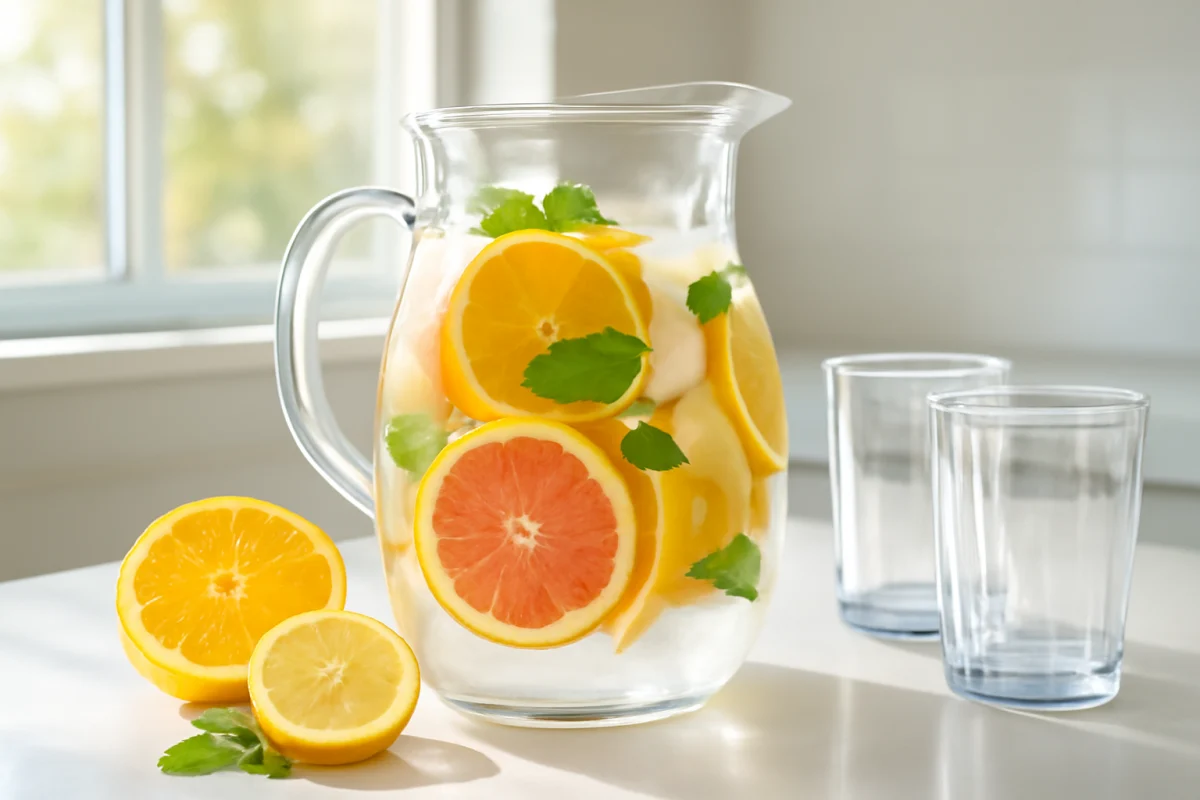
The best citrus combinations for refreshing homemade infusions balance sweet, tart, and aromatic flavors without requiring added sugar. This grapefruit-orange-lemon infused water combines juicy orange, lightly bitter grapefruit, bright lemon, and fresh mint for a crisp drink that is easy to prepare for everyday hydration. It is flavorful enough for a brunch table or a picnic cooler, yet simple enough to make in a few minutes. For more recipes and practical drink guidance, visit detox water recipes.
Infused water is not a cure, cleanse, or substitute for balanced meals or professional care. Its main appeal is taste: adding fresh fruit and herbs can make plain water more interesting. For a broader introduction to the method, see this guide to making fruit-infused water with fresh ingredients.
Grapefruit-Orange-Lemon Mint Infused Water
This recipe highlights four complementary flavors. Orange contributes gentle sweetness and a familiar citrus aroma. Grapefruit adds a more complex, slightly bitter edge. Lemon brings acidity and brightness, while mint gives the finished drink a cool, fresh character. If you prefer a softer flavor, reduce the grapefruit or replace part of it with lime.
Recipe details
- Preparation time: 10 minutes
- Infusion time: 30 minutes to 2 hours
- Total time: About 40 minutes, or longer if chilled overnight
- Yield: 6 servings, about 1 cup each
Ingredients
- 8 cups cold water
- 1 medium orange, scrubbed and thinly sliced
- 1/2 medium grapefruit, scrubbed and thinly sliced
- 1/2 lemon, scrubbed and thinly sliced
- 8 to 10 fresh mint leaves, gently bruised
- 1 cup ice, optional for serving
How to make this citrus infusion
- Wash your hands and produce. Rinse your hands with soap and water before preparing the drink. Wash the orange, grapefruit, lemon, and mint under cool running water. Scrubbing the citrus surface gently helps remove surface dirt before slicing.
- Prepare the citrus. Pat the fruit dry with a clean towel. Slice the orange, grapefruit, and lemon into thin rounds. Remove visible seeds. Thin slices expose more surface area to the water, but avoid crushing the fruit because excessive pressure can release more bitter pith and juice.
- Bruise the mint lightly. Place the mint leaves between your fingers and gently press or clap them once. This releases aroma without shredding the leaves into small pieces that can make the drink look cloudy.
- Combine the ingredients. Add the citrus slices and mint to a large glass pitcher. Pour in the cold water and stir slowly with a clean spoon.
- Chill and infuse. Refrigerate the pitcher for at least 30 minutes. For a more noticeable flavor, let it stand for up to 2 hours. Taste it before serving and remove the grapefruit or lemon if the flavor becomes too sharp.
- Serve cold. Pour the infusion over ice if desired. Add a fresh citrus wheel or a small mint sprig to each glass for a simple garnish.
Why these citrus flavors work together
Good citrus infusions usually include more than one flavor profile. Using only lemon can produce a very tart drink, while orange alone may taste mild after it sits in water. Combining citrus varieties creates contrast and keeps the flavor from feeling one-dimensional.
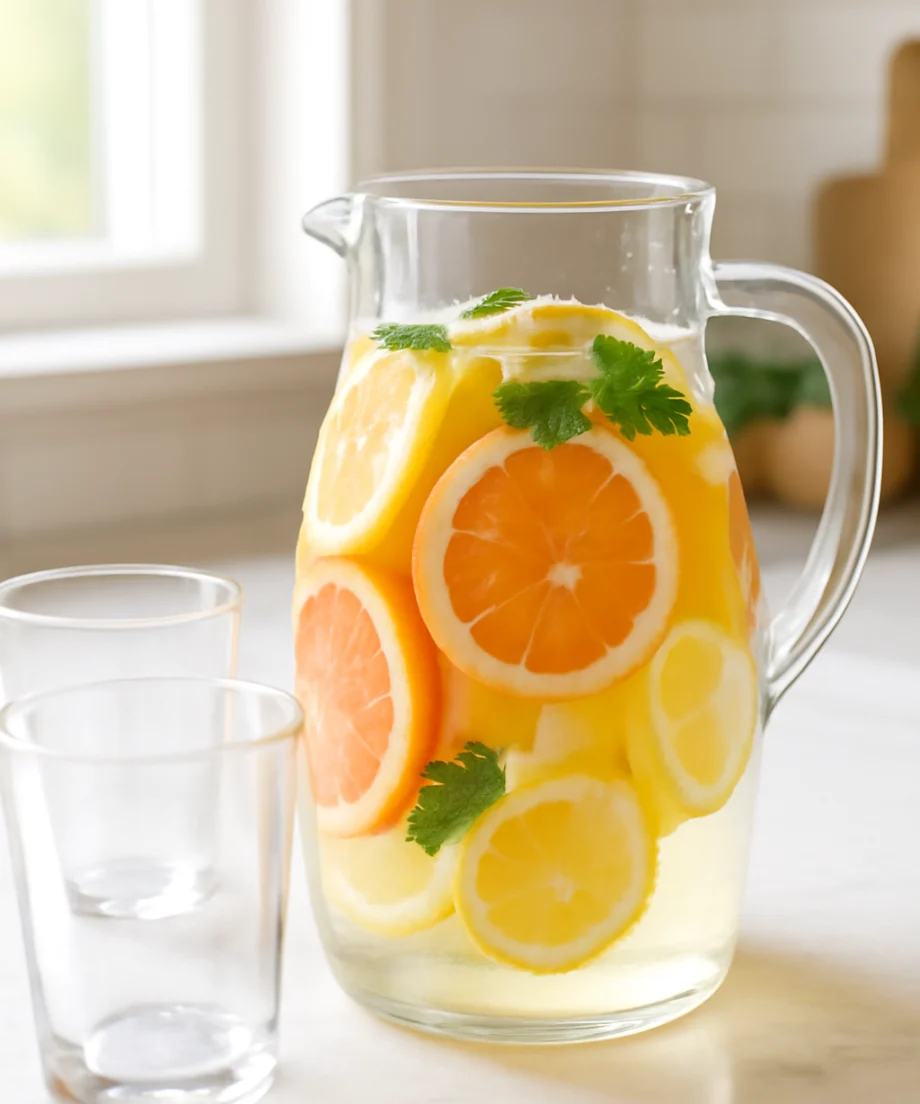
Orange and grapefruit form the main body of this recipe. Orange has a round, sweet-smelling aroma, while grapefruit keeps the blend lively. Lemon acts like a finishing note, adding a clean tartness that can make the water taste more refreshing. Mint is optional, but its herbal aroma makes the drink feel cooler and more complete.
The balance can change depending on the fruit. A very tart grapefruit may need less time in the pitcher. A mild orange may benefit from slightly longer infusion. Because fresh produce varies, tasting the water is more reliable than following an exact infusion time for every batch.
Ingredient alternatives and citrus combinations
You can adjust the recipe to suit the fruit you have available. Keep the total amount of sliced fruit approximately similar so the water does not become crowded with pulp or peel.
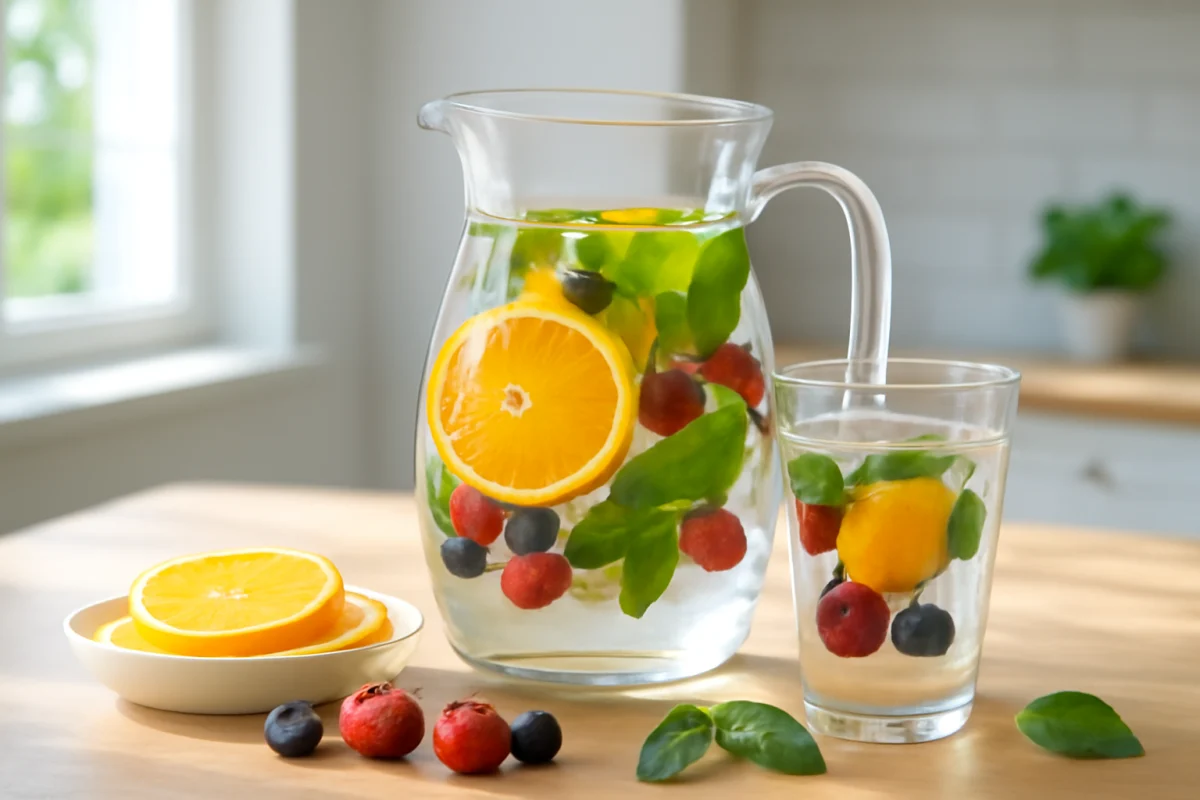
- Orange and lime: Use one orange and one thinly sliced lime for a bright, clean combination with a sharper finish.
- Lemon and cucumber: Replace the grapefruit with half a cucumber for a milder, crisp infusion. This pairing is especially easy to drink with lunch.
- Grapefruit and rosemary: Use a small rosemary sprig instead of mint. Rosemary is aromatic, so start with a modest amount and remove it if it becomes too strong.
- Blood orange and lemon: Blood oranges offer a distinctive color and berry-like aroma when they are in season. Their flavor can vary, so taste the finished water before adding more lemon.
- Lime, orange, and basil: Add a few basil leaves for a softer herbal note. Handle basil gently because bruising can darken the leaves.
- Mandarin and lemon: Several peeled mandarin segments can replace the orange slices. This version is less bitter and often appeals to people who prefer sweeter-smelling citrus.
If you want stronger citrus flavor without adding sugar, squeeze a small amount of juice into the water just before serving. This changes the drink from a delicate infusion into a lightly flavored citrus water. For a sparkling version, infuse the fruit and herbs in still water first, then add chilled unflavored sparkling water to each glass immediately before serving.
Tips for a cleaner, better-balanced infusion
- Use thin slices, not crushed fruit. Thin rounds release aroma gradually and are easier to remove from the pitcher.
- Limit the pith. The white layer beneath citrus peel can contribute bitterness, especially when grapefruit or lemon remains in water for several hours.
- Start with cold water. Cold water keeps the drink immediately refreshing and slows the softening of the fruit.
- Taste early. Begin tasting after 30 minutes. If the drink is already flavorful, strain out some of the fruit rather than allowing the flavor to become overpowering.
- Use a large pitcher. A pitcher with enough room for water, fruit, and ice is easier to stir and pour without splashing.
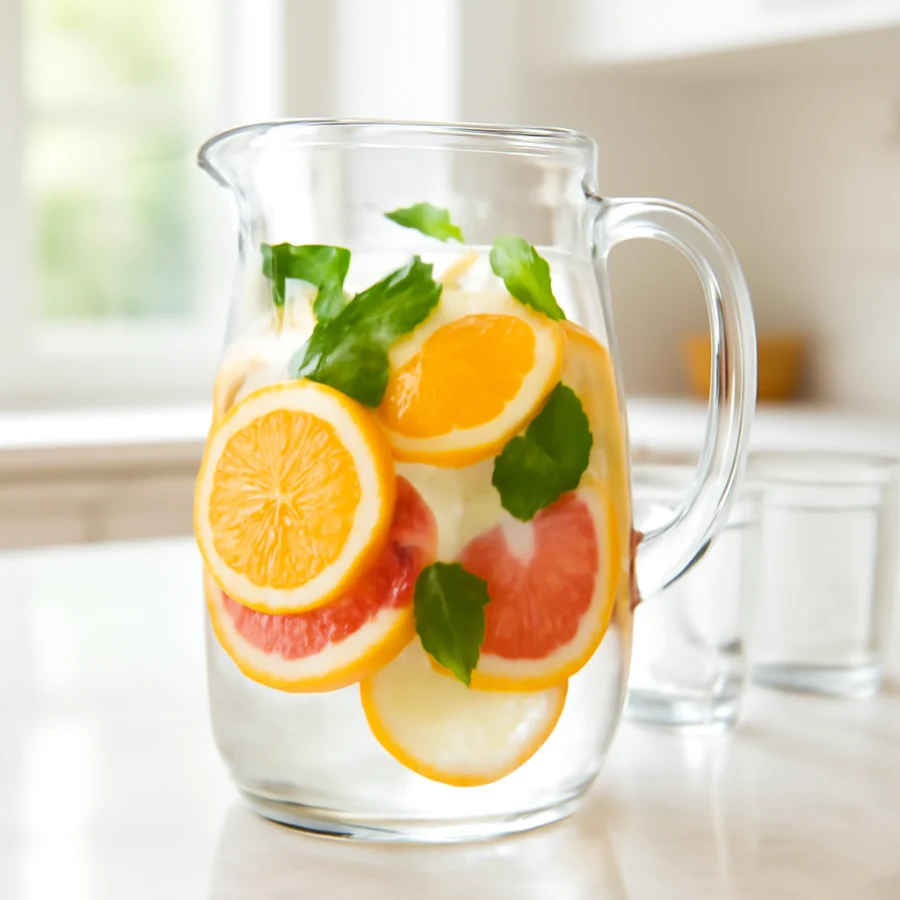
- Keep the presentation simple. A few visible citrus rounds and one mint sprig are usually enough. Too much fruit can make the drink difficult to pour and may increase bitterness.
Serving suggestions
Serve this citrus infusion in clear glasses so the colorful fruit is visible. It pairs well with a light breakfast, a picnic spread, grilled vegetables, or a nonalcoholic brunch menu. For a gathering, prepare the still-water base in advance and add ice only when serving so the drink does not become diluted too quickly.
You can also make individual portions in 16-ounce jars or bottles. Add two or three citrus slices, one small mint sprig, and enough water to fill each container. This approach is convenient for taking a flavored drink to work or school, provided the container can be kept cold.
Food safety and storage
Fresh fruit and herbs are perishable, so treat infused water as a refrigerated food. Keep the pitcher covered and chilled at 40°F or below when possible. Do not leave it sitting at room temperature for extended periods, particularly outdoors or in a warm kitchen.
For best quality, drink the infusion within 24 hours and discard it sooner if the fruit looks slimy, the mint has deteriorated, or the aroma seems unpleasant. Strain out the fruit and herbs before storing leftovers if you want to slow further flavor changes, then refrigerate the liquid in a clean, covered container. Do not top off an old batch with fresh water or fruit; wash the pitcher before making another batch.
Use clean utensils and a clean pitcher, and avoid adding citrus slices that have already been sitting out on a serving platter. For more general guidance, visit the food safety and storage section.
Frequently asked questions
Can I make this citrus infusion the night before?
Yes. Refrigerate it in a covered pitcher, but expect the flavor to become stronger and possibly more bitter overnight. For a fresher taste, prepare it a few hours ahead and remove the fruit before serving or before extended storage.
Should I peel the citrus?
Peel is optional. Leaving some peel on adds aroma and makes the pitcher look attractive, while removing most of the peel can reduce bitterness. Always wash citrus before slicing, whether or not you plan to eat the peel.
Can I use bottled lemon or lime juice?
You can, but bottled juice creates a more pronounced sour flavor and does not provide the visual appeal of fresh slices. If using a packaged product, check the current label for ingredients and storage instructions.
Is grapefruit safe for everyone?
Grapefruit and grapefruit juice can interact with some medications. If you take prescription or over-the-counter medicine, ask a pharmacist or health care professional whether grapefruit is appropriate for you. You can replace it with orange, lime, cucumber, or extra lemon if needed.
Can I sweeten the drink?
If you prefer a sweeter beverage, add a small amount of sugar, honey, or another sweetener to an individual glass and stir well. Sweetening each serving gives you better control than adding a large amount to the entire pitcher.
A flexible citrus drink for everyday routines
This grapefruit-orange-lemon mint infusion is a practical starting point for experimenting with homemade citrus drinks. Adjust the fruit according to season, taste the water as it chills, and keep the finished batch refrigerated. The result is a colorful, refreshing beverage that adds variety to plain water without making exaggerated health promises or requiring a restrictive routine.


Comments
0No comments yet. Be the first to share a helpful note or question.
Leave a Comment
Your email address will not be published. Comments are reviewed before appearing on the site.