
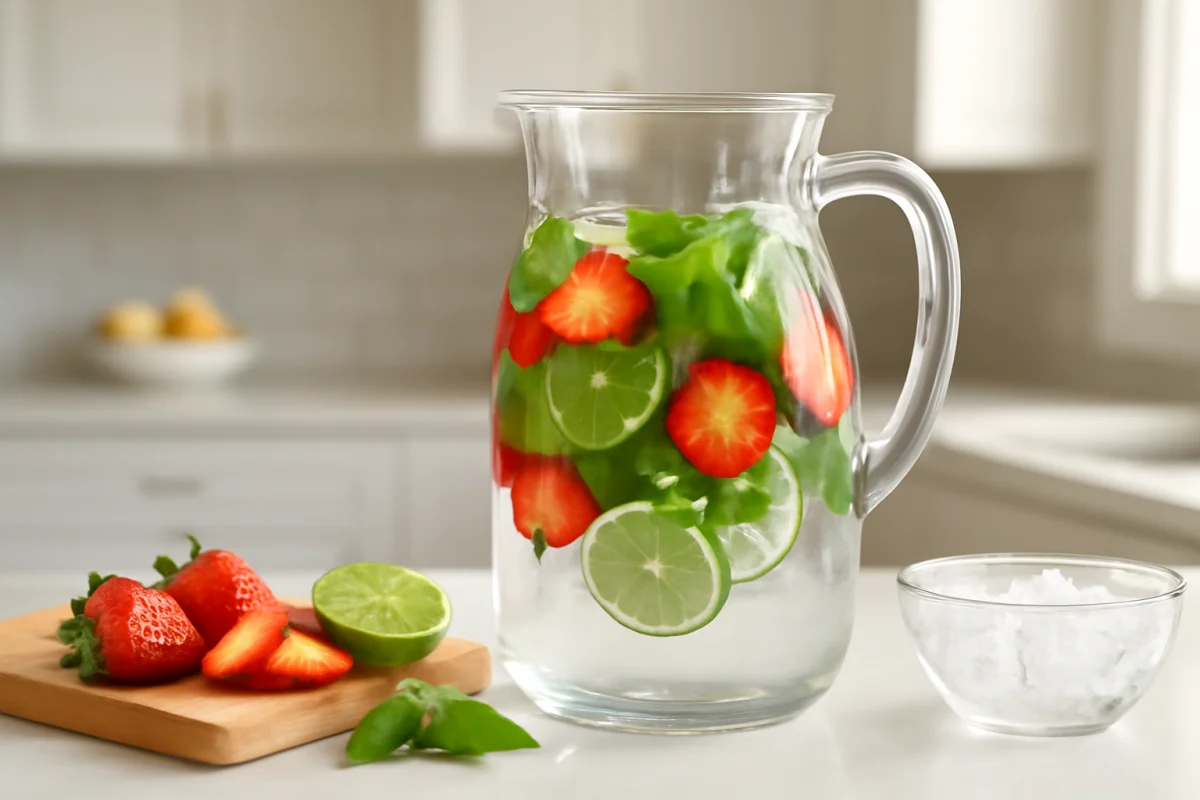
The easiest way to avoid common mistakes when preparing homemade infused water is to use clean, chilled ingredients, keep the flavors balanced, and refrigerate the drink promptly. This strawberry-basil-lime infused water is a simple recipe to practice those habits. It has a bright fruit flavor, a light herbal note, and a refreshing finish without added sweetener. For more recipes and practical drink guidance, visit cleanse drink ideas.
Infused water can make plain water more appealing, but it is not a detox treatment, a cure, or a replacement for balanced meals. Its main value is taste and convenience. If you enjoy the flavor, you may find it easier to choose water throughout the day. For more background, see this guide to what infused water is and how to make it at home.
Strawberry-Basil-Lime Infused Water at a Glance
- Prep time: 10 minutes
- Infusion time: 30 minutes to 2 hours
- Total time: About 40 minutes, or longer if chilled for up to 2 hours
- Servings: 4 cups
- Equipment: Cutting board, clean knife, 1-quart pitcher or covered container, and measuring cup
Ingredients
- 4 cups cold drinking water
- 1 cup fresh strawberries, rinsed, hulled, and sliced
- 6 to 8 fresh basil leaves
- 1 small lime, thinly sliced
- Ice, for serving, optional
Use drinking water that is safe for your household. Filtered water is fine if you prefer its taste, but it is not required. Choose strawberries that are firm and free from visible mold. Fresh basil should look lively rather than wilted or slimy. If the lime has damaged or soft areas, trim those away or choose another lime.
How to Make Strawberry-Basil-Lime Infused Water
- Wash your hands and equipment. Wash your hands with soap and water before preparing the drink. Clean the pitcher, cutting board, knife, and any other equipment that will touch the ingredients.
- Rinse the produce carefully. Rinse the strawberries, basil, and lime under cool running water. Do not use soap or household cleaners on produce. Let the ingredients drain or pat them dry with a clean towel.
- Prepare the strawberries. Remove the leafy tops and slice the berries into thin pieces. Smaller pieces release flavor more quickly, but avoid crushing them into a puree unless you want a cloudy drink with more sediment.
- Slice the lime. Cut the lime into thin rounds. If you prefer a less tart drink, use half of the lime or remove some of the peel before adding it. Lime peel can contribute a pleasant aroma, but it may also add bitterness during a long infusion.
- Gently bruise the basil. Place the basil leaves between clean fingers and press lightly once or twice. This releases aroma without shredding the leaves. Tearing or aggressively muddling basil can make the drink look dark and taste more vegetal.
- Combine the ingredients. Add the strawberries, basil, and lime to the pitcher. Pour in 4 cups of cold water and stir gently with a clean utensil.
- Chill promptly. Cover the pitcher and place it in the refrigerator for 30 minutes to 2 hours. Taste it after 30 minutes if you prefer a subtle flavor, or let it continue infusing for a stronger fruit and herb profile.
- Serve cold. Pour the infused water over ice if desired. Add a fresh strawberry, lime wheel, or small basil leaf to each glass for a simple presentation.
Common Mistakes to Avoid
Using too many ingredients
A crowded pitcher can produce muddled flavors and make it difficult to identify what you enjoy. Start with one fruit, one herb, and one citrus ingredient. In this recipe, the strawberry provides gentle sweetness, basil adds aroma, and lime supplies acidity. If the flavor feels weak, increase the infusion time slightly before adding more ingredients.
Skipping the produce rinse
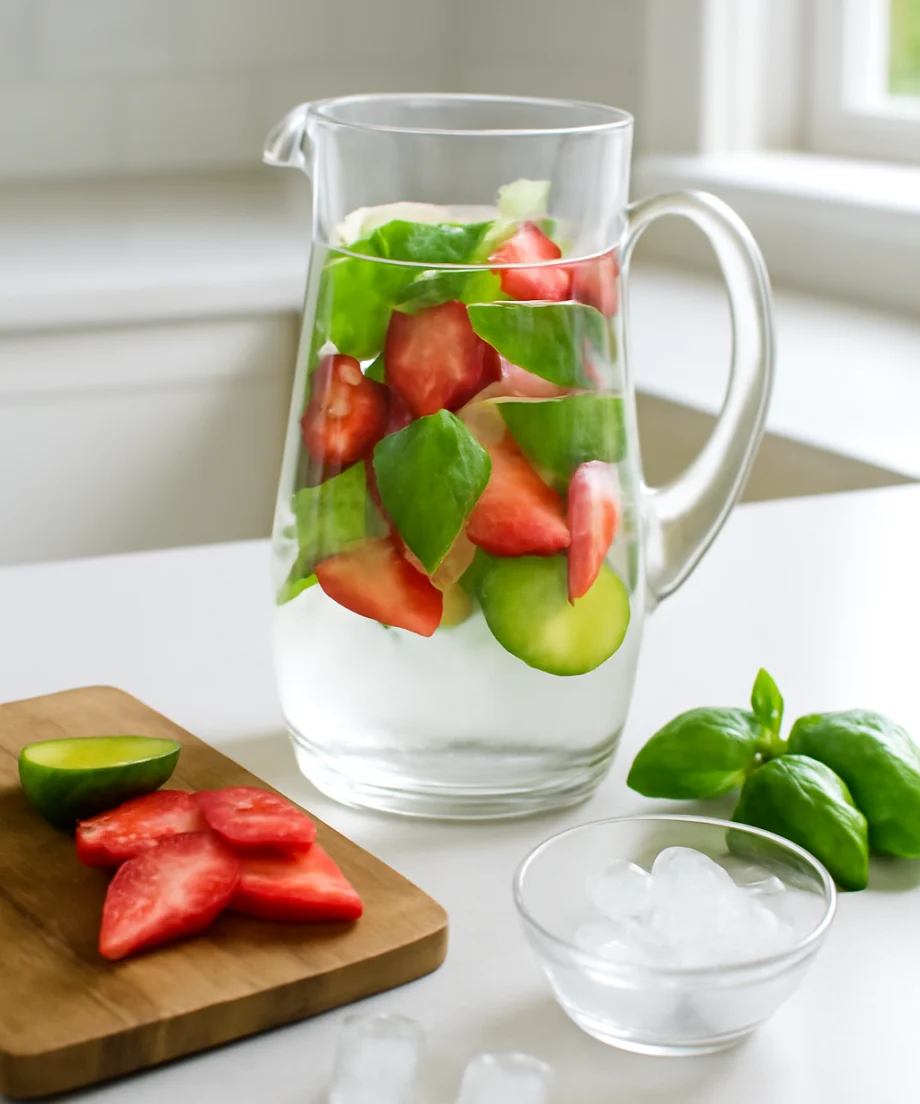
Fresh produce can carry dirt and other contaminants from handling and transportation. Rinsing does not make damaged or moldy produce safe, so inspect each ingredient first and discard anything with significant spoilage. Keep cut produce separate from raw meat, poultry, seafood, and unwashed items while preparing the drink.
Leaving the pitcher at room temperature
Once fruit and herbs are cut and placed in water, the drink should be refrigerated rather than left on a kitchen counter for extended periods. A covered container also helps protect the water from spills, odors, and contact with other foods. For broader guidance, review these food safety and storage tips.
Infusing for too long
Longer is not always better. Strawberries can become soft, basil may darken, and lime peel can make the water bitter if the ingredients remain submerged for too long. For this combination, a short infusion is usually enough. If you want to prepare the drink ahead, remove the fruit, basil, and lime after a few hours and keep the strained water refrigerated.
Adding sugar automatically
Infused water is meant to be lightly flavored, not intensely sweet. Taste it before adding anything. If you want a sweeter beverage, consider using a small amount of a sweetener that fits your preferences, but remember that this changes the drink from plain infused water into a sweetened beverage. Mashed fruit may also add flavor, though it can make the texture pulpy.
Confusing infused water with juice
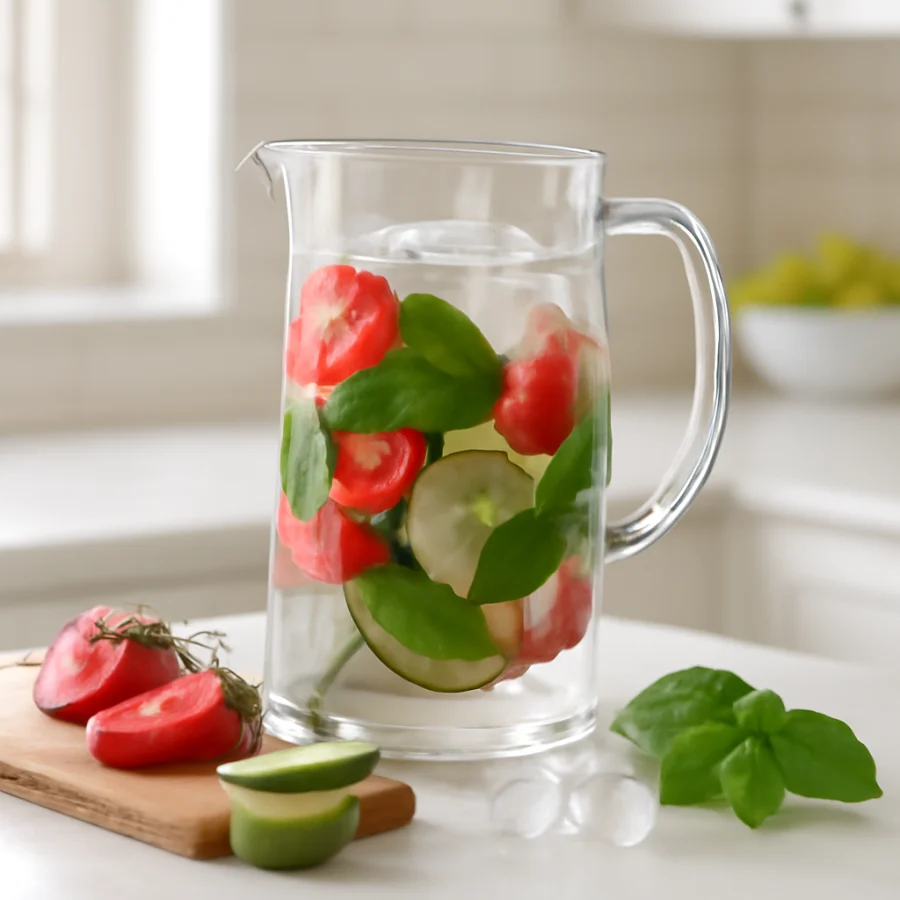
Infused water extracts some flavor and aroma from the ingredients but does not have the same taste or texture as fruit juice. Avoid expecting a strong strawberry or lime flavor from a few slices. If you want a more concentrated drink, you can blend or press fruit, but that creates a different preparation with more pulp and a shorter storage life.
Ingredient Alternatives
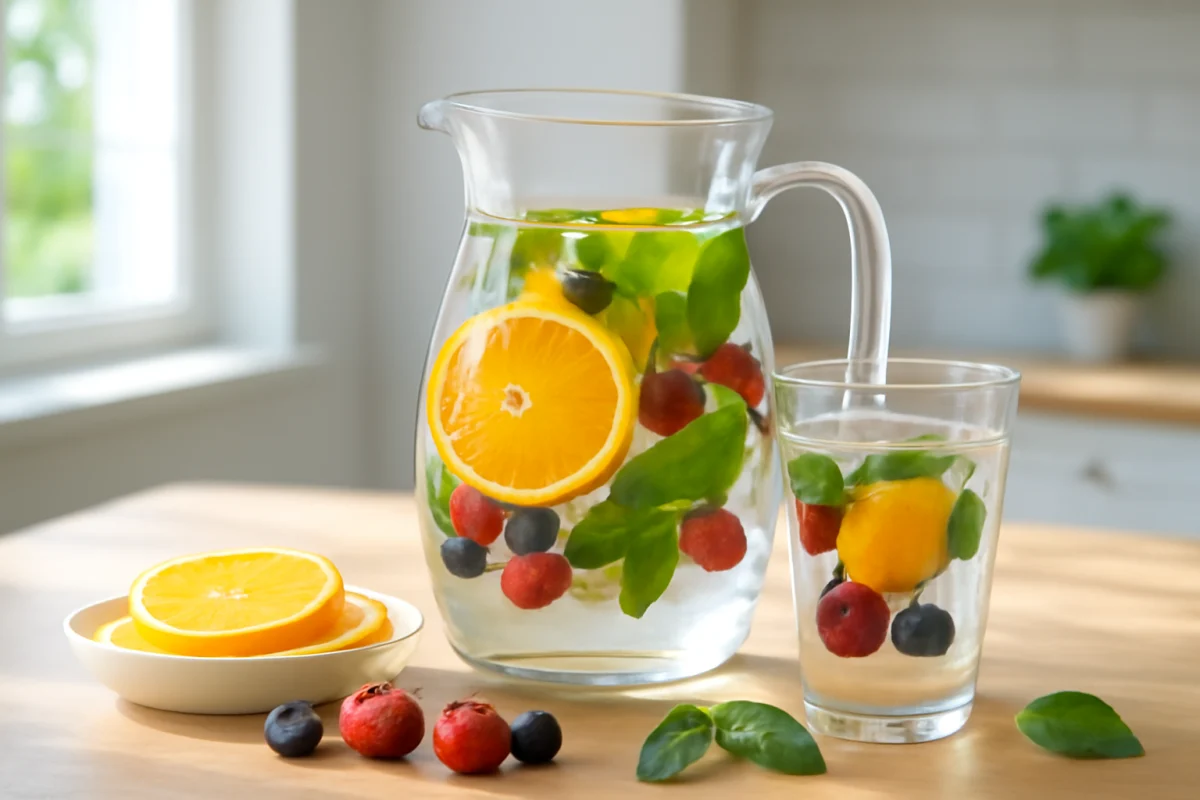
If strawberries are out of season, try raspberries, blackberries, sliced peaches, or thinly sliced apples. Use ripe but firm fruit, and remove bruised portions before preparation. Mint can replace basil for a cooler herbal note, while lemon can replace lime. Cucumber is another mild option, although it will make the drink taste more vegetal.
When substituting ingredients, change one item at a time so you can understand the result. Delicate herbs generally need less infusion time than firm fruit. Citrus peel may become bitter, so use thin slices and taste the water periodically. If you use frozen fruit, choose plain frozen fruit without added sugar and allow it to thaw slightly before adding it. Frozen fruit can chill the water, but it may also soften quickly.
Serving and Preparation Tips
- Use a clear pitcher if you want the colorful ingredients to be part of the presentation.
- Serve the drink in small glasses over ice for a simple brunch or lunch option.
- Keep a separate batch with no citrus if you prefer a milder flavor.
- Add fresh basil just before serving when you want a brighter herbal aroma.
- Use a covered, food-safe container if transporting the drink.
- Stir gently before pouring because fruit pieces and herb leaves may float or settle.
A pitcher with a removable infuser basket can make straining easier, but it is not essential. If you buy a reusable bottle or infuser, select one made for food contact and follow the manufacturer's cleaning instructions. Product materials, care instructions, and other details can vary, so check the current label or manufacturer information.
Storage and Food Safety
Keep homemade infused water covered in the refrigerator. For the best flavor and quality, drink it the same day or within about 24 hours, especially when using soft berries and fresh herbs. If the water develops an unusual odor, cloudy appearance beyond what the ingredients would normally cause, slimy pieces, mold, or an unpleasant taste, discard it rather than trying to rescue it.
Do not top off an old batch with fresh water and new fruit without washing the container first. Empty the pitcher, wash it with dish soap and hot water as appropriate for the material, rinse it well, and allow it to dry. When preparing drinks for children, older adults, pregnant people, or anyone with a weakened immune system, use extra care with handwashing, produce preparation, refrigeration, and timely disposal. Current food-safety recommendations can change, so consult reliable government or public-health guidance when you need more specific advice.
Frequently Asked Questions
Can I make this infused water the night before?
Yes, you can prepare it the night before and keep it covered in the refrigerator. For a cleaner flavor, remove the fruit, basil, and lime after a few hours, then refrigerate the strained water until serving.
Why does my infused water taste bitter?
Bitterness may come from too much lime peel, a long infusion, bruised basil, or overripe ingredients. Use thinner citrus slices, reduce the infusion time, and add the basil without crushing it heavily.
Can I reuse the fruit and herbs?
It is better to use fresh ingredients for each batch. Once cut produce has been submerged, its flavor and texture decline, and repeated handling can create additional food-safety concerns.
Does infused water replace regular water?
It can count toward your fluid intake if you enjoy it, but plain water and other beverages may also fit into a balanced routine. Individual fluid needs vary with factors such as activity, weather, age, and health status.
Can I drink infused water for a cleanse?
You can enjoy it as a flavorful beverage, but it does not remove toxins, guarantee weight loss, or replace balanced meals or professional medical care. Avoid using infused water as part of a restrictive fast or an all-liquid regimen.
For more approachable recipes, browse the site's drink recipes and hydration routine ideas. The most reliable homemade infused water is usually the simplest: clean ingredients, safe storage, a short infusion, and flavors you genuinely enjoy.


Comments
0No comments yet. Be the first to share a helpful note or question.
Leave a Comment
Your email address will not be published. Comments are reviewed before appearing on the site.