
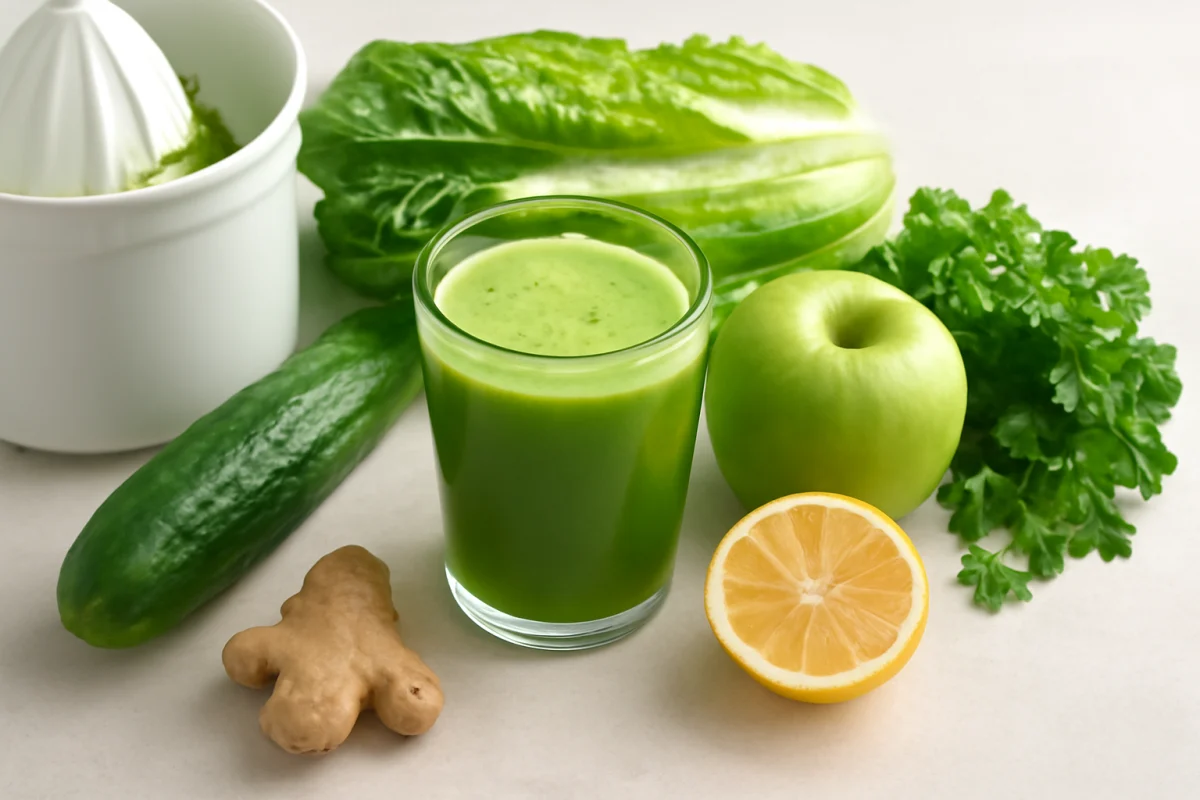
If you are thinking about trying a juice cleanse, start with one fresh, food-safe juice rather than an extreme all-liquid routine. This citrus-green juice combines cucumber, romaine, celery, green apple, lemon, ginger, and parsley for a crisp drink that can fit alongside regular meals and snacks. It is refreshing, easy to adjust, and a practical way to explore juicing without treating juice as a cure-all or a replacement for balanced eating. For more recipes and practical drink guidance, visit homemade detox drinks.
A juice cleanse may sound simple, but an extended plan can make it harder to get enough protein, fiber, fat, and overall energy. Juice can be part of a varied routine, but it does not “remove toxins,” guarantee weight loss, or replace medical care. If you have a health condition, take medication, are pregnant or breastfeeding, or have a history of disordered eating, ask a qualified health professional before making major changes to your diet.
For more background, browse these cleanse drink guides and learn how fresh beverages can fit into a realistic daily routine.
Citrus-Green Juice at a Glance
- Prep time: 10 minutes
- Total time: 15 minutes
- Servings: 2 cups
- Best for: A fresh, produce-forward drink served with a meal or snack
- Equipment: Juicer, fine-mesh strainer if desired, knife, cutting board, and two glasses
Ingredients
- 1 medium cucumber, rinsed and cut into pieces that fit your juicer
- 2 packed cups chopped romaine lettuce
- 2 celery stalks, rinsed and cut into pieces
- 1 medium green apple, rinsed, cored, and quartered
- 1/2 lemon, peeled and seeded
- 1/2-inch piece fresh ginger, peeled
- 2 tablespoons fresh parsley leaves, rinsed
- Ice, optional, for serving
How to Make This Citrus-Green Juice
- Wash your hands and equipment. Clean your hands, juicer parts, knife, cutting board, and glasses before preparing the ingredients. Keep produce away from raw meat, poultry, and seafood.
- Prepare the produce. Rinse the cucumber, romaine, celery, apple, lemon, ginger, and parsley under cool running water. Scrub firm produce where appropriate. Cut ingredients into pieces that your juicer can handle. Remove the apple core and lemon peel, since large amounts of citrus peel can make the juice bitter and may not be suitable for every juicer.
- Juice the ingredients. Feed the cucumber, romaine, celery, apple, lemon, ginger, and parsley through the juicer according to the manufacturer’s instructions. If the juice contains more pulp than you prefer, pour it through a fine-mesh strainer.
- Taste and adjust. Add a little more lemon for brightness or another small piece of apple for sweetness. Keep adjustments modest so the drink remains refreshing rather than overly sweet.
- Serve promptly. Pour the juice into two clean glasses. Serve over ice if you like, and drink it with a meal or snack instead of using it as your only source of nourishment.
Why This Juice Is Worth Trying
This recipe is useful for people who want to try a juice cleanse-style drink without committing to a restrictive plan. Cucumber and celery provide a light, crisp base, while apple and lemon add flavor. Romaine and parsley bring a fresh green character, and ginger adds gentle warmth. The result is flavorful enough to drink on its own but flexible enough to pair with breakfast, lunch, or an afternoon snack.
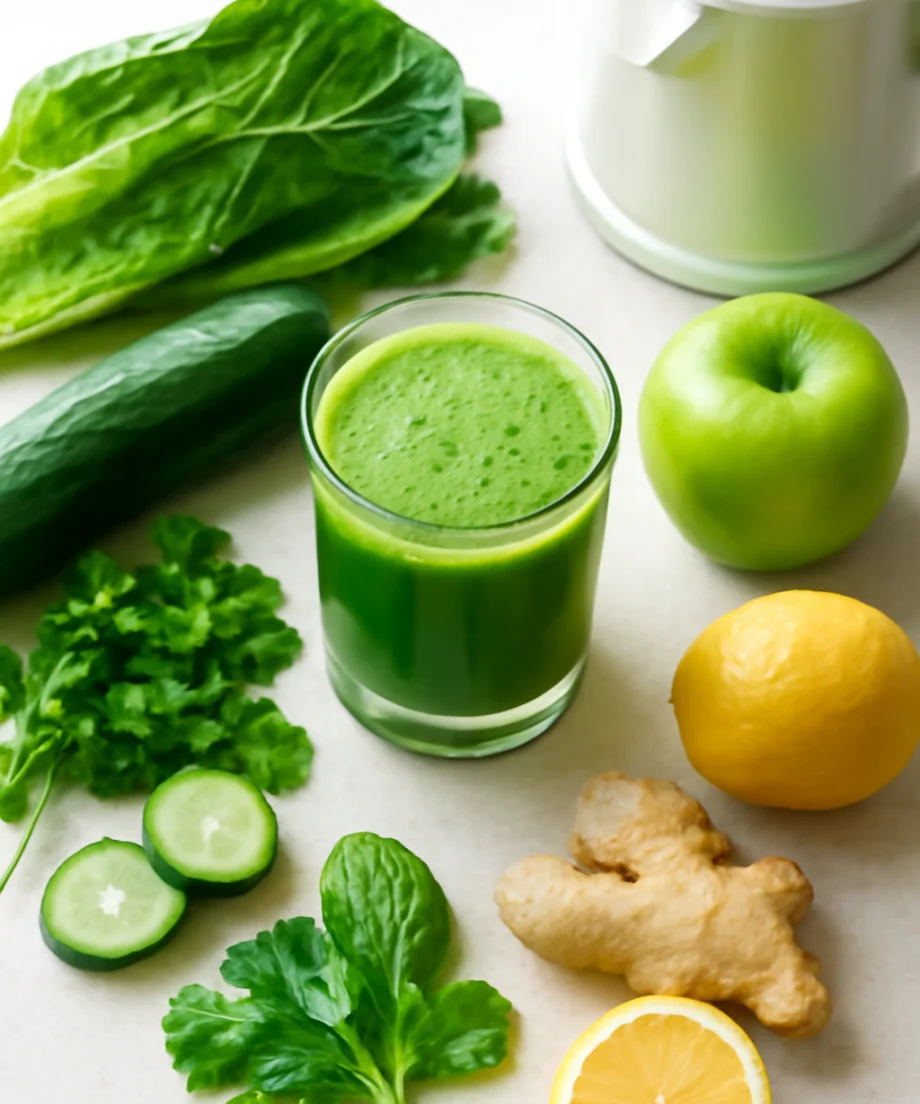
Fresh juice can also be a convenient way to use produce that might otherwise be overlooked. Still, juicing separates much of the fiber from whole fruits and vegetables. Fiber supports fullness and is an important part of a balanced eating pattern, so consider serving this drink with whole-food sources of protein, carbohydrates, and fat. Examples include eggs and whole-grain toast, yogurt with nuts, or a bean-and-grain bowl.
Ingredient Alternatives
Make it less sweet
Use half an apple instead of a whole apple and add extra cucumber or romaine. You can also increase the lemon slightly, but taste as you go because too much lemon can make the drink sharply sour.
Make it milder
Reduce the ginger to a thin slice or leave it out. Parsley can also be omitted if you prefer a simpler cucumber-and-citrus flavor.
Use different greens
Baby spinach can replace some or all of the romaine. Kale is another option, although its stronger flavor may make the juice more bitter. Remove tough stems when needed and begin with a small amount.
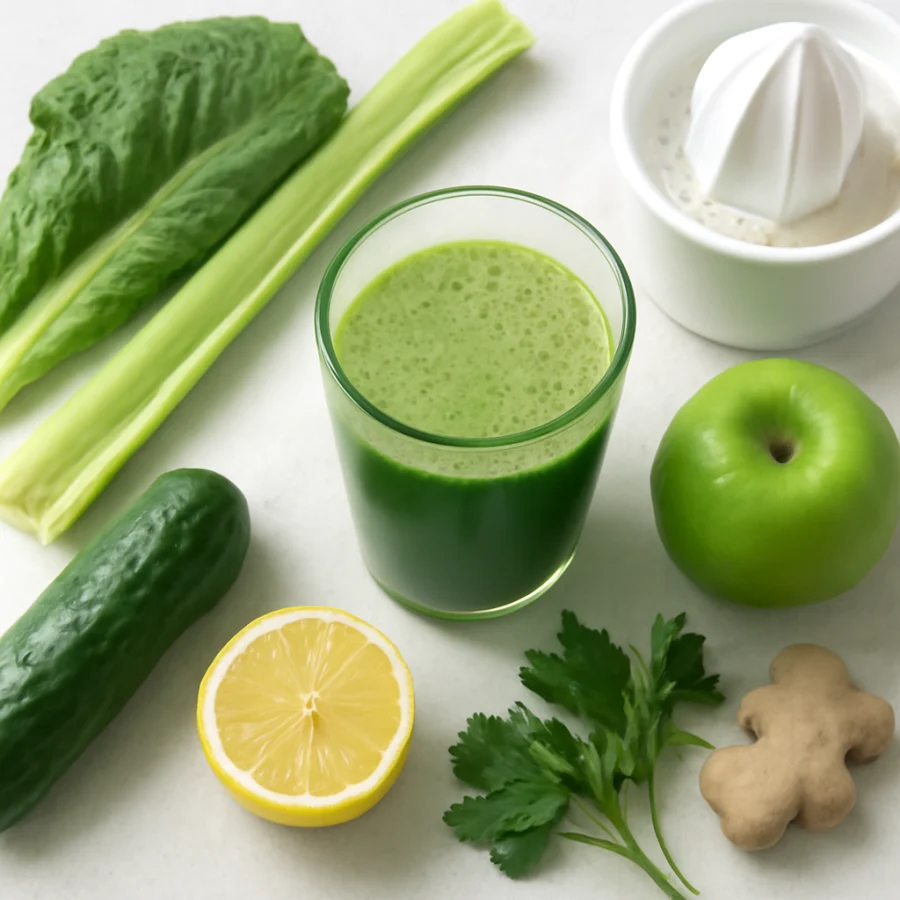
Use a blender instead of a juicer
Blend the ingredients with 1/2 to 1 cup of cold water until smooth. For a thicker drink, keep the mixture as a smoothie and retain the pulp. If you prefer a thinner texture, strain it through a fine-mesh strainer. Straining reduces the fiber, so keeping the blended pulp is often the more filling option.
Preparation and Food-Safety Notes
Fresh juice is perishable. Drink it immediately when possible, or transfer it to a clean, covered container and refrigerate it promptly. Keep your refrigerator at 40°F or below, and follow current guidance from reliable food-safety authorities for storing homemade juice. When in doubt about how long a particular juice has been refrigerated, discard it rather than tasting it to check whether it is safe.
Wash produce under running water, but do not use soap, bleach, or household cleaners on fruits and vegetables. Washing can reduce surface contamination, but it does not eliminate every food-safety risk. Scrub firm produce, remove damaged areas, and clean your juicer promptly after use. Check the appliance manual for parts that are dishwasher-safe and instructions for disassembly.
Juice made with raw produce is not pasteurized. That matters especially for young children, older adults, pregnant people, and anyone with a weakened immune system. If you are preparing juice for someone in a higher-risk group, consider choosing a commercially pasteurized product and verify the current label. Packaged beverage formulas, processing methods, and storage instructions can change, so read the product information each time you buy one.
For more practical guidance, visit the site’s food safety and storage resources.
How to Approach a Juice Cleanse Realistically
The phrase “juice cleanse” often implies that drinking juice for a set period will flush unwanted substances from the body. Your liver, kidneys, lungs, and digestive system already perform the body’s normal processing functions. There is no need to use a juice routine to “detox” them, and a drink cannot substitute for treatment if you feel unwell.
If you enjoy fresh juice, treat it as one beverage within a broader routine. A single serving with food may be more practical than an all-day or multiday plan. Pay attention to how the drink affects you, particularly if you notice shakiness, dizziness, nausea, headaches, unusual fatigue, or digestive discomfort. Stop and seek appropriate advice if you feel unwell.
Juice can also be concentrated in natural sugars while being low in fiber compared with whole produce. That does not make it automatically bad, but it is one reason portion size and context matter. Pairing juice with a meal can make the routine more satisfying than drinking repeated glasses by themselves.
Serving Ideas
- Serve 1 cup alongside avocado toast and an egg for a more substantial breakfast.
- Pair it with plain Greek yogurt, oats, and nuts for a balanced snack or light meal.
- Pour it over ice with a squeeze of lemon for a bright afternoon beverage.
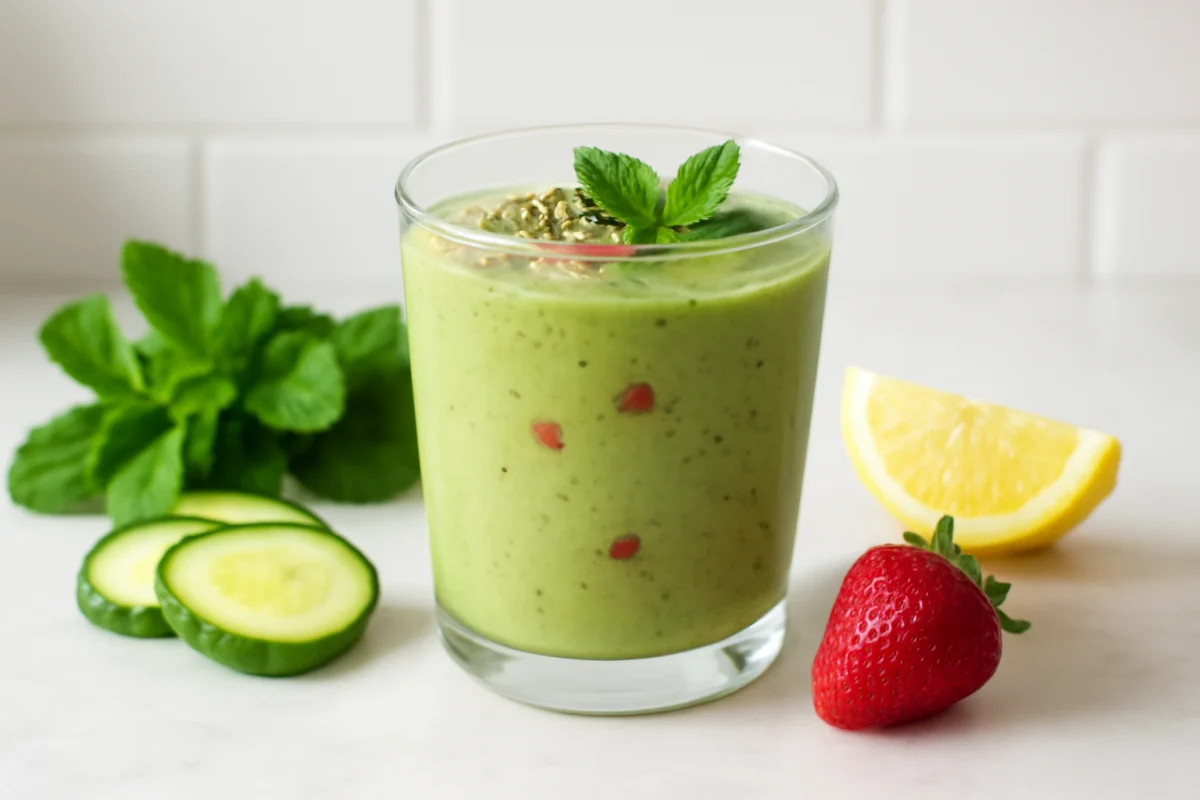
- Use a small amount as a flavorful base for a savory smoothie with cucumber and herbs.
- Serve immediately after blending if you want to retain the drink’s thicker texture and fiber.
Frequently Asked Questions
Can I drink this juice instead of eating meals?
It is better viewed as a beverage, not a complete meal replacement. This juice does not provide the full range of protein, fiber, fat, and calories many people need throughout the day. Pair it with regular meals and snacks unless a qualified professional has given you different instructions.
Does this juice cleanse remove toxins?
No drink has been shown here to remove toxins from the body. The recipe can help you enjoy produce and hydration, but it should not be promoted as a detox treatment or cure.
How long does homemade juice last?
Fresh juice is best consumed right away. If you must store it, refrigerate it promptly in a clean, covered container and follow reliable current food-safety guidance. Do not leave it at room temperature for extended periods.
Can I make this recipe without a juicer?
Yes. Blend the ingredients with cold water and keep the pulp for a thicker smoothie, or strain the mixture for a juice-like texture. A blender version may be more filling because it retains more of the produce’s fiber.
Is a juice cleanse safe for everyone?
No single routine is appropriate for everyone. People with medical conditions, those taking medication, pregnant or breastfeeding people, children, older adults, and anyone with a history of disordered eating should seek individualized guidance before making significant dietary changes.
For more recipe ideas and practical preparation tips, explore drink recipes and juicing and blending guides. The most useful approach is usually the one that keeps fresh drinks enjoyable, safe, and connected to a varied eating pattern.

Comments
0No comments yet. Be the first to share a helpful note or question.
Leave a Comment
Your email address will not be published. Comments are reviewed before appearing on the site.