
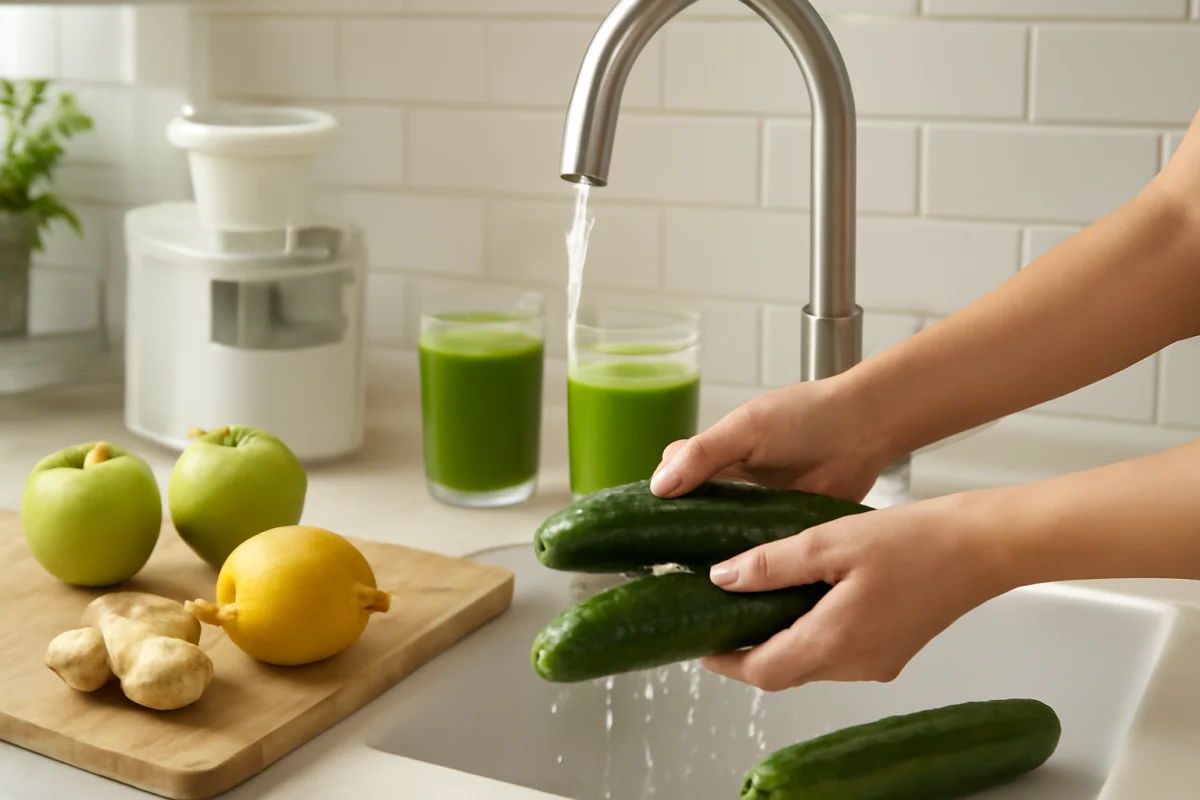
The safest way to wash produce before making homemade juice is to rinse fruits and vegetables under cool, running water while gently rubbing firm surfaces with clean hands. Wash produce even when you plan to peel it, because dirt and microorganisms on the outside can transfer to the edible part during cutting. For leafy greens, separate the leaves and rinse them carefully. Do not use soap, bleach, detergent, or commercial produce cleaners. For more recipes and practical drink guidance, visit natural cleanse drinks.
This simple cucumber-apple juice is a practical recipe for putting that routine into action. It combines crisp cucumber, sweet apple, tart lemon, and a small amount of ginger for a bright, refreshing drink. It is worth trying when you want a homemade beverage made from familiar ingredients, with the flavor adjusted to your preference. Like any juice, it is best enjoyed as part of a varied eating pattern rather than as a replacement for balanced meals.
Fresh Cucumber-Apple Juice at a Glance
- Prep time: 15 minutes, including produce washing
- Total time: About 20 minutes
- Makes: 2 servings, about 8 ounces each
- Main keyword: how to wash produce before making homemade juice
Ingredients
- 2 medium cucumbers, about 12 ounces total
- 2 medium crisp apples, such as Granny Smith, Honeycrisp, or Fuji
- 1 lemon
- 1 small piece fresh ginger, about 1/2 inch
- 1/2 cup cold water, only if using a blender
- Ice, for serving, if desired
Use produce that is fresh and in good condition. Avoid fruits and vegetables with mold, deep cracks, leaking areas, or a strong off odor. If an ingredient has a damaged section, trim it generously or choose another piece. Washing does not make spoiled produce safe to eat.
How to Wash Produce Before Making Homemade Juice
1. Clean your hands and work area
Wash your hands with soap and warm water for at least 20 seconds before handling ingredients. Clean the counter, cutting board, knife, juicer parts, blender jar, strainer, and serving glasses. Keeping the preparation area clean helps reduce the chance of transferring germs to ready-to-drink juice.
Use a cutting board that is clean and in good condition. If the board has deep grooves that are difficult to clean, replace it. Keep raw meat, poultry, seafood, and eggs away from the produce and equipment used for this recipe.
2. Rinse whole produce under running water
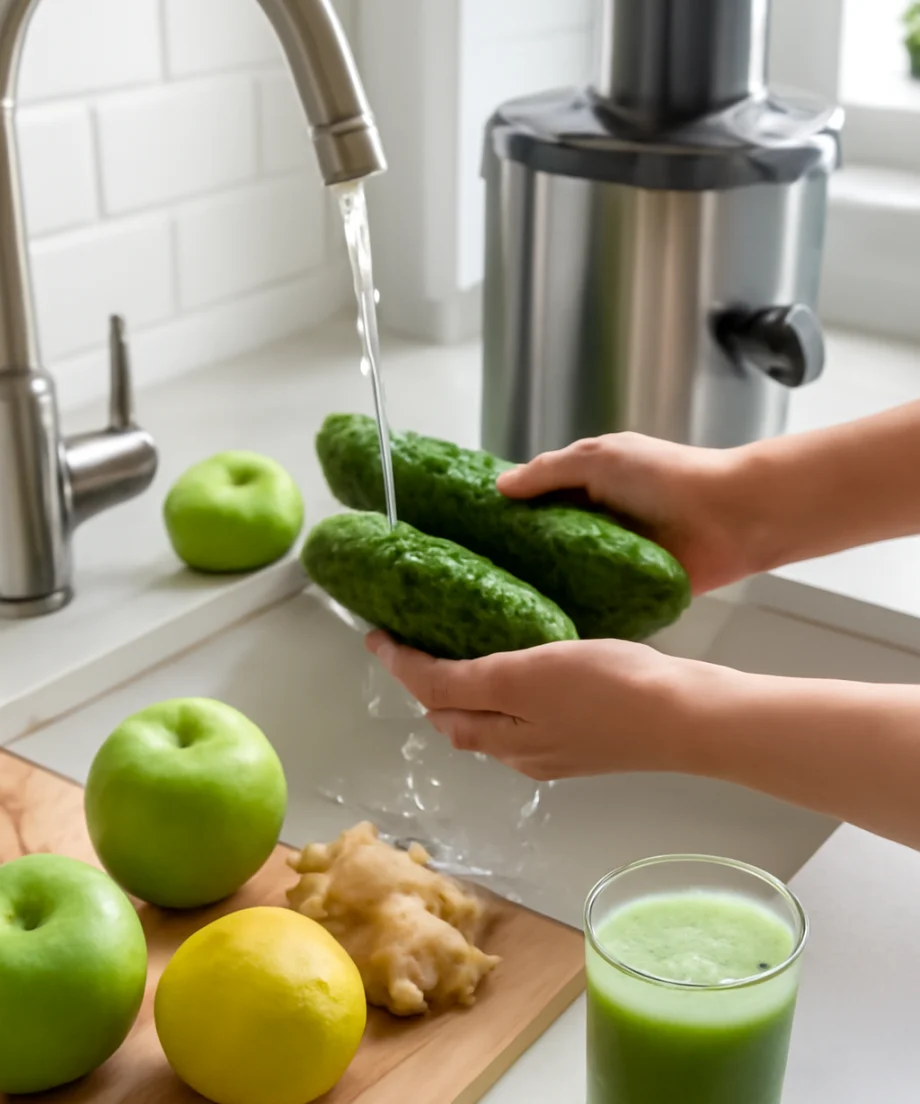
Place the cucumbers, apples, lemon, and ginger under cool, running tap water. Gently rub each item with clean hands as the water runs over it. Pay particular attention to the stem ends, crevices, and textured areas. A clean produce brush can be used on firm items such as cucumbers, but use it only for produce and wash it after use.
Do not soak produce in a sink full of water, where water can become contaminated. Do not use dish soap or other household cleaners. These products are not made to be eaten and can leave residues. There is also no need to use a vinegar solution for routine washing; rinsing under running water and rubbing the surface is the straightforward approach recommended for home preparation.
3. Handle apples, lemon, and ginger thoughtfully
Apples can be juiced with the peel on if they are washed well, but remove the stem and cut out the core and seeds before juicing. If you prefer peeled apples, wash them first anyway, then peel them with a clean peeler.
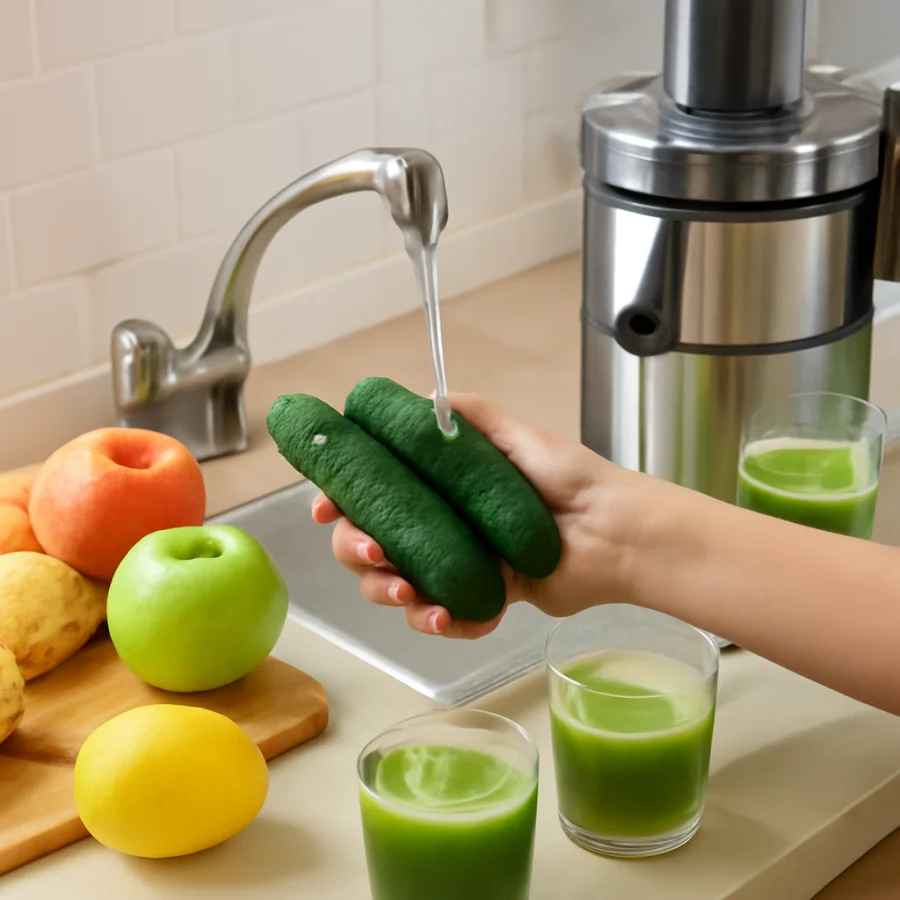
Wash the lemon before cutting it, even if you plan to squeeze only the inside. A knife can carry residue from the outer skin to the cut surface. For this recipe, use the juice from half of the lemon at first and add more if needed. You can remove the lemon peel and seeds before processing.
Rinse the ginger, scrub away visible soil, and peel it if the skin is tough or damaged. A small spoon can make peeling the knobby root easier. Ginger has a strong flavor, so begin with a small piece and adjust in a later batch.
4. Dry and cut the produce
Pat the washed produce dry with a clean towel or let it air-dry briefly. Drying is not a substitute for washing, but it makes the ingredients easier to handle and helps limit extra water on the cutting board.
Cut the cucumbers and apples into pieces that fit your juicer's feed tube. Remove apple stems, cores, and seeds. Cut away the lemon peel and remove visible seeds. Chop the ginger into a few smaller pieces. Always follow the safety instructions for your specific juicer or blender, and never push food into a juicer with your fingers.
Recipe Method
- Prepare the equipment. Wash and assemble the juicer or blender according to the manufacturer's instructions. Place a clean container beneath the juicer spout, or set out a fine-mesh strainer and a bowl if using a blender.
- Juice the firm ingredients. Feed the cucumber, apple, and ginger through the juicer, alternating ingredients if your model allows it. Finish with the lemon juice. Stir the juice gently when all the ingredients have been processed.
- Blend if you do not have a juicer. Add the cucumber, chopped apple, ginger, lemon juice, and 1/2 cup cold water to a blender. Blend until smooth. Pour the mixture through a fine-mesh strainer if you prefer a thinner drink. Press gently with a spoon, but avoid forcing a large amount of pulp through the strainer.
- Taste and adjust. Add more lemon for tartness or a little additional cucumber for a milder flavor. If the juice tastes too strong, dilute it with cold water or serve it over ice.
- Serve promptly. Pour into clean glasses and drink soon after preparation. Stir before serving because natural pulp may settle.
Helpful Washing and Preparation Tips
Wash produce just before using it
Washing fruits and vegetables immediately before preparation can help reduce excess moisture during storage. Moisture may encourage spoilage, especially on delicate produce. If you wash ingredients in advance, dry them thoroughly and store them properly in the refrigerator.
Pay attention to pre-cut ingredients
Pre-cut produce is convenient, but it should still be kept cold and used according to the package instructions. Choose packages that are intact and refrigerated. If the package looks swollen, damaged, unusually wet, or past its use-by guidance, select another option.
Consider organic and conventional produce based on preference
Either organic or conventionally grown produce can work in this recipe. The washing steps are the same. Washing does not remove every possible residue, and it does not make unwashed or damaged produce safe. If you buy packaged ingredients, check the current label for handling instructions.
Ingredient Alternatives and Flavor Ideas
Replace one cucumber with celery for a more savory flavor, or use a pear instead of one apple for a softer sweetness. Lime can stand in for lemon, although the flavor will be slightly different. A few mint leaves can add a cooling note, while a small amount of fresh turmeric can bring an earthy flavor. Wash each substitute using the same process before cutting or juicing.
If you want more fiber, use a blender and keep some of the pulp rather than straining it completely. The resulting drink will be thicker and may separate more quickly. You can also blend the mixture with additional water to make a spoonable, smoothie-like beverage.
Serving Suggestions
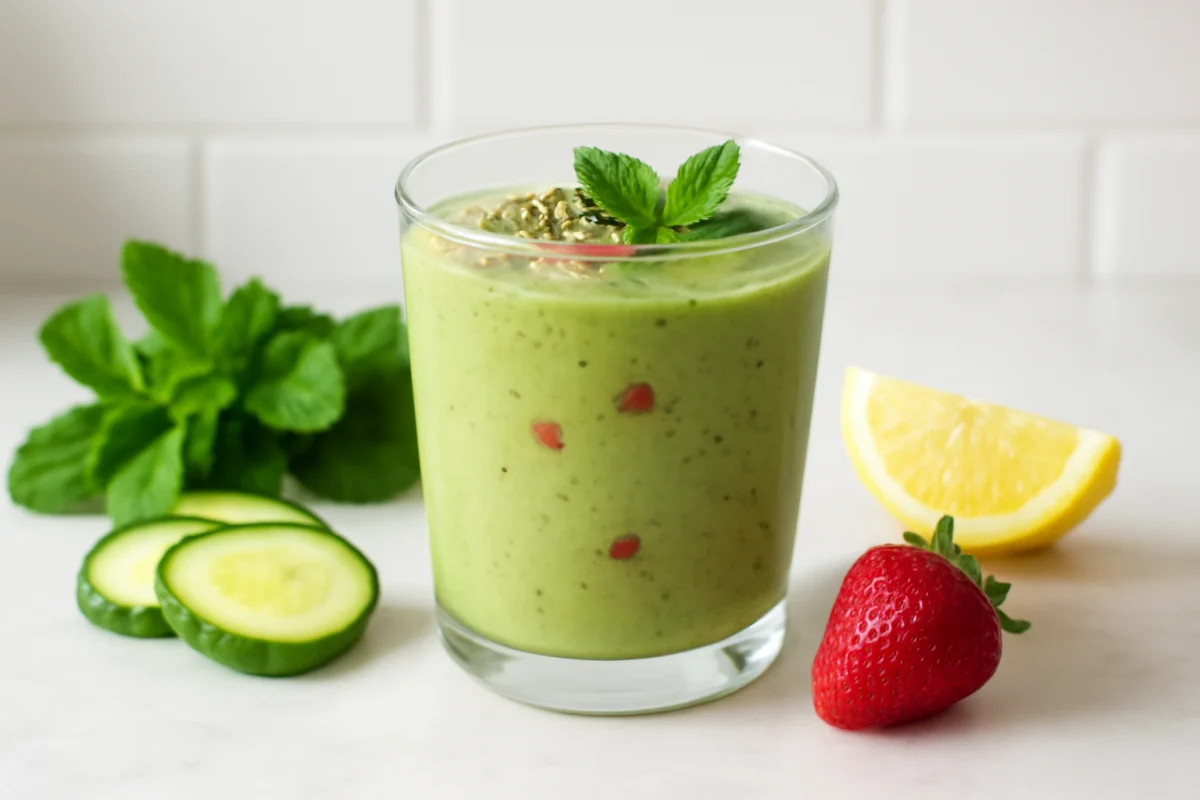
Serve the juice chilled in a clean glass with ice and a thin cucumber slice. It pairs well with breakfast or a light snack, such as plain yogurt, whole-grain toast, nuts, or a meal that includes protein and other whole foods. If you are serving guests, make the juice in small batches and keep it cold while it is waiting to be served.
For more ideas about preparing homemade drinks, explore these juicing and blending guides and drink recipes.
Storage and Food-Safety Notes
Fresh juice is perishable. Refrigerate it promptly in a clean, covered container if you are not drinking it right away, and keep the refrigerator at 40°F or below. For the best flavor and quality, prepare only what you expect to drink soon. Follow current guidance from reliable food-safety authorities for refrigerated fresh juice, especially when serving children, older adults, pregnant people, or anyone with a weakened immune system.
Do not leave fresh juice sitting at room temperature for an extended period. Discard it if it develops an unusual odor, flavor, appearance, or signs of fermentation. Wash the juicer, blender, strainer, knife, cutting board, and glasses promptly after use. Taking apart removable juicer parts and cleaning the small crevices can help prevent residue from drying in place.
Frequently Asked Questions
Should I wash produce before peeling it?
Yes. Wash produce before peeling or cutting it. Otherwise, a peeler or knife can transfer dirt and microorganisms from the outside to the inside.
Can I use soap to clean fruits and vegetables?
No. Do not use dish soap, bleach, detergent, or household disinfectants on food. Rinse produce under cool, running water and rub firm surfaces with clean hands.
Do I need to wash bagged greens or labeled pre-washed produce?
Follow the package directions. If the label says the greens are ready to eat, additional washing may create opportunities for cross-contamination in a home kitchen. Keep the package refrigerated and use it as directed.
Can I make this juice ahead of time?
You can prepare it ahead for short-term refrigerated storage in a clean, covered container, but the flavor and texture are usually best soon after juicing. Keep it cold and discard it if its quality changes.
Is this juice a cleanse or a replacement for meals?
No. This is simply a homemade beverage. It does not remove toxins, treat a health condition, or replace a balanced meal. Enjoy it alongside a varied diet and regular hydration.

Comments
0No comments yet. Be the first to share a helpful note or question.
Leave a Comment
Your email address will not be published. Comments are reviewed before appearing on the site.