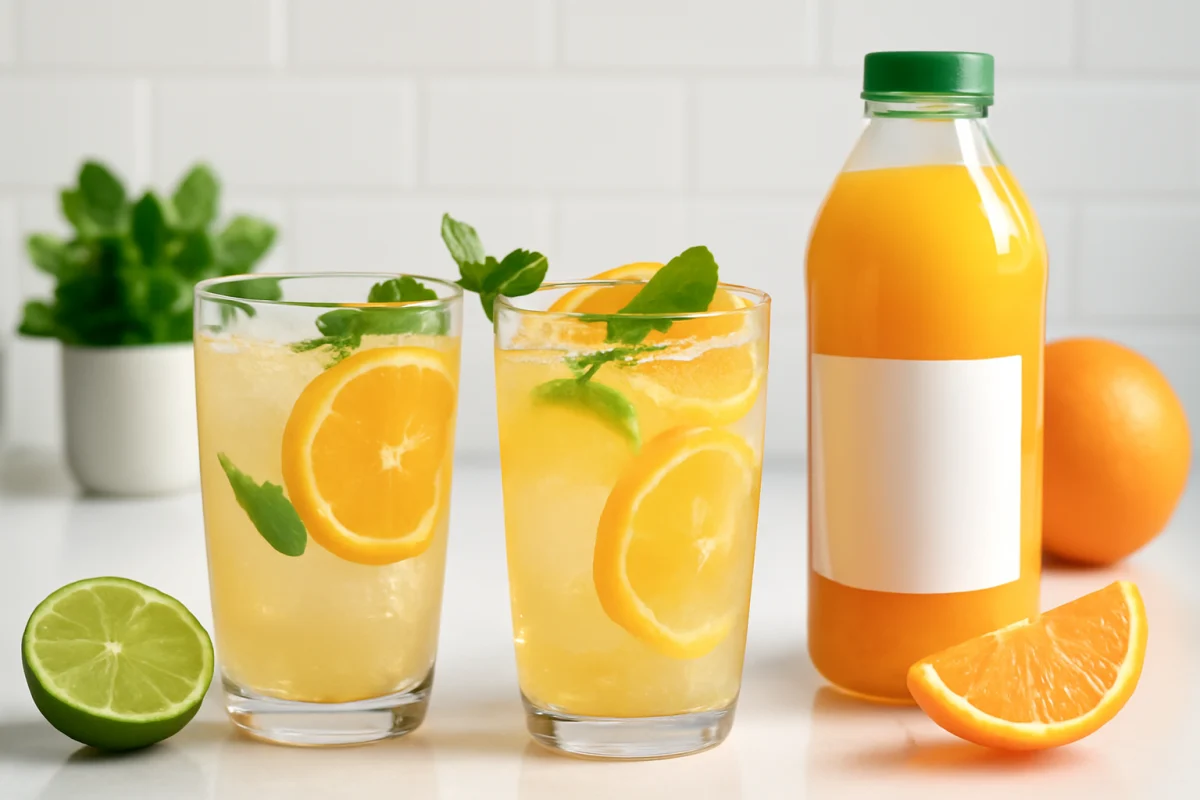
How to read added sugar on bottled juice labels starts with one important distinction: a drink can contain naturally occurring sugar from fruit while also having sugar added during processing. Check the Nutrition Facts label, compare the serving size with the amount you plan to drink, and review the ingredient list before buying. Then, if you want a lighter-tasting option, try this unsweetened citrus spritzer made with a small amount of juice, sparkling water, fresh citrus, and herbs. For more recipes and practical drink guidance, visit detox beverage ideas.
This recipe is worth trying because it lets you control the sweetness without relying on a bottled beverage’s marketing language. It is bright, fizzy, and easy to adjust. It can also help you practice label reading: choose a juice labeled “100% juice” when that fits your preferences, look for “Includes Added Sugars” in the Nutrition Facts panel, and remember that “no added sugar” does not mean sugar-free.
Quick recipe details
- Prep time: 10 minutes
- Total time: 10 minutes
- Servings: 2
- Best for: A refreshing nonalcoholic drink with adjustable sweetness
Ingredients
- 1 cup chilled plain sparkling water
- 1/2 cup unsweetened 100% orange juice or another juice with no added sugar
- 1 tablespoon fresh lemon juice
- 1 tablespoon fresh lime juice
- 1 small orange, thinly sliced
- 1 small lime, thinly sliced
- 6 to 8 fresh mint leaves
- 1 cup ice
- Optional: 1 to 2 teaspoons honey or maple syrup, added to taste
How to make the citrus spritzer
- Chill the ingredients. Refrigerate the sparkling water and juice before preparing the drink. Cold ingredients help the spritzer stay crisp and reduce the need for extra ice.
- Prepare the citrus. Wash the orange and lime under running water, dry them, and cut them into thin slices. Washing produce before cutting helps reduce the chance of transferring surface dirt to the inside of the fruit.
- Combine the juice and citrus. Add the orange juice, lemon juice, and lime juice to a small pitcher. Stir gently. If you are using honey or maple syrup, mix it into the juice before adding sparkling water so it distributes more evenly.
- Add the mint. Lightly clap the mint leaves between your clean hands or gently press them with the back of a spoon. Add them to the pitcher without tearing them into tiny pieces, which can make the drink overly herbal or difficult to strain.
- Add ice and sparkling water. Place ice in two glasses. Divide the juice mixture between the glasses, then slowly pour in the sparkling water. Stir once or twice, gently, to preserve the fizz.
- Garnish and serve. Add orange and lime slices to each glass. Serve immediately while the sparkling water is lively.
How to read added sugar on bottled juice labels
The front of a bottle can make a drink sound wholesome, but the Nutrition Facts label and ingredient list provide more useful details. When comparing bottled juices, use the following process.
Start with the serving size
Look at the serving size at the top of the Nutrition Facts panel. A bottle may contain one serving, or it may contain multiple servings. If you drink the entire bottle, compare the full amount you consume with the listed serving size. Calories, total sugar, and added sugar are generally presented per serving, so the numbers may need to be multiplied when a container has more than one serving.
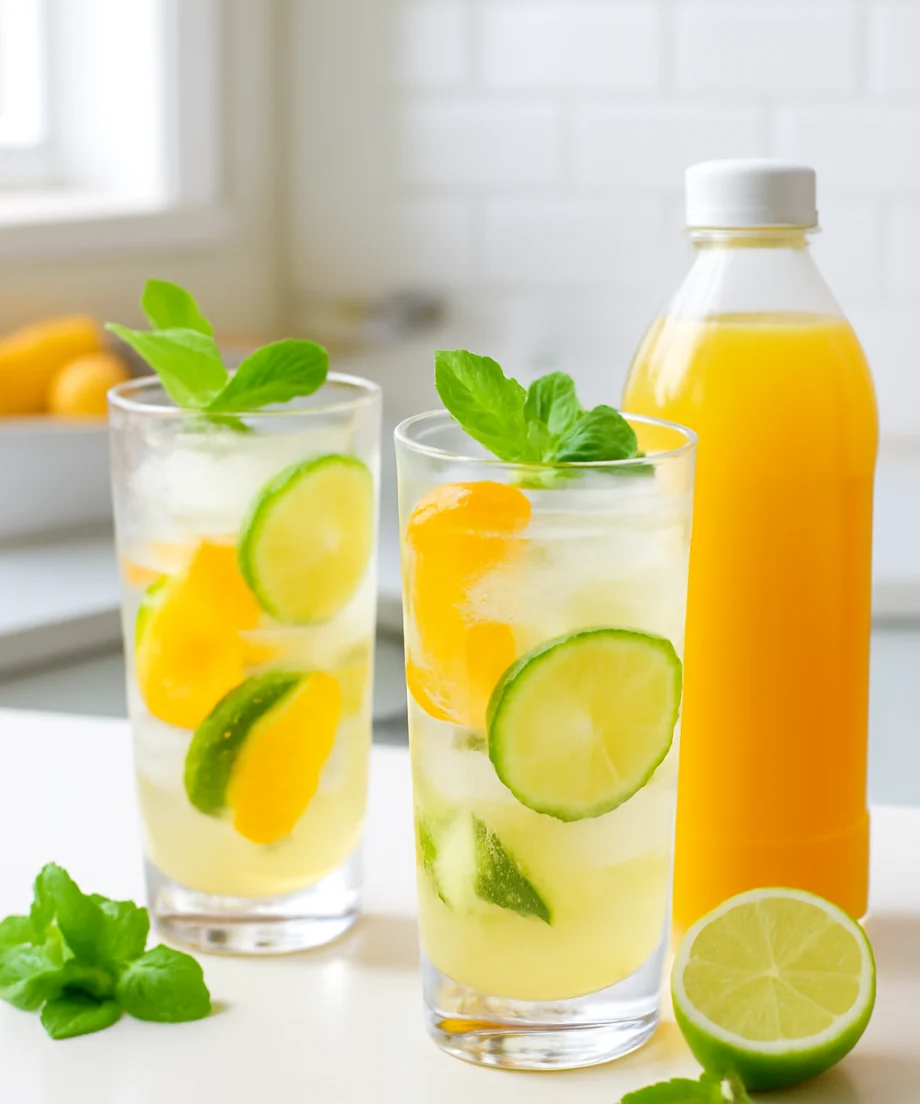
Serving sizes are listed in familiar household measures and metric units. The household measure can help you visualize the portion, but it does not necessarily match the size of the bottle or the amount you normally pour into a glass.
Separate total sugar from added sugar
Total Sugars includes naturally occurring sugars and added sugars. In a fruit juice, some or all of the total sugar may come from the fruit itself. The label also lists Includes Added Sugars, which shows how much sugar was added during processing.
For example, a juice could list total sugar but show zero grams of added sugar. That means the sugar listed may come naturally from the fruit or vegetables used to make the drink. Another beverage could contain both natural sugar and added sugar. The two lines answer different questions, so check both instead of relying on total sugar alone.
Read the ingredient list
Ingredients are listed by weight, with ingredients used in greater amounts appearing earlier in the list. Added sugar may appear as sugar, cane sugar, brown sugar, honey, agave syrup, maple syrup, corn syrup, fruit juice concentrate, or another sweetening ingredient. The exact wording varies by product.
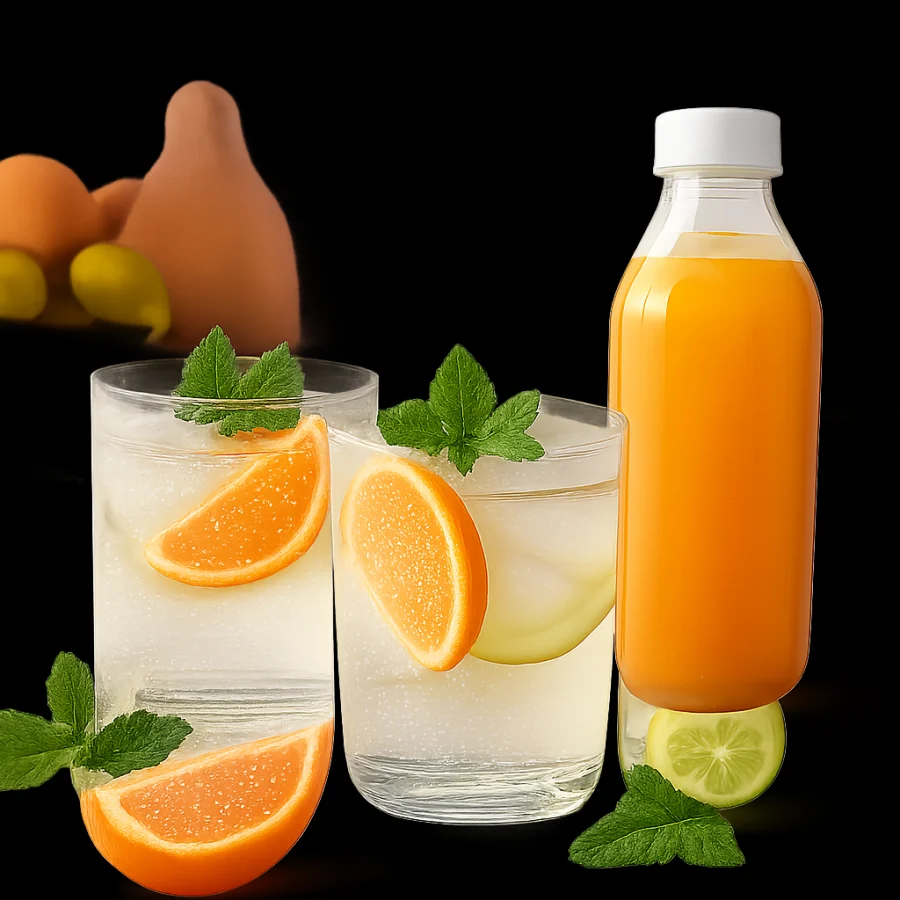
An ingredient list can also help you distinguish juice from a juice drink, punch, cocktail, or flavored beverage. Terms such as “100% juice” and “juice beverage” describe different products, but the label still deserves a close look. Marketing language such as “natural,” “light,” or “made with fruit” does not by itself tell you how much added sugar is present.
Do not confuse “no added sugar” with “sugar-free”
A product labeled “no added sugar” may still contain natural sugar from fruit. A product labeled “sugar-free” follows a different labeling standard and may use sweeteners or other ingredients. If you are comparing drinks for personal dietary reasons, review the complete label and ingredient list rather than assuming the front-panel claim tells the whole story.
Choosing juice for this recipe
For the citrus spritzer, select a refrigerated or shelf-stable juice that suits your taste and has no added sugar if you want the recipe’s sweetness to come mainly from the fruit. The label and formulation can change, so verify the current package each time you buy a product.
Orange juice works well because it adds body and familiar citrus flavor. Grapefruit juice gives the drink a more bitter, tart character. Pineapple juice makes it sweeter and more tropical, even without added sugar. Cranberry juice can be quite tart, so you may prefer a small amount blended with orange juice. Lemon and lime juice are usually best used as accents because their acidity can dominate the drink when used in larger amounts.
If you use a sweetened juice or juice beverage, reduce or skip the optional honey or maple syrup. The final drink may still taste pleasant because sparkling water, citrus slices, and mint add aroma and freshness without additional sweetener.
Helpful tips and easy variations
- Make it less sweet: Use 1/3 cup juice and increase the sparkling water to 1 1/6 cups. Add extra lemon or lime if you enjoy a sharper flavor.
- Make it more flavorful: Add a few cucumber ribbons, a sprig of rosemary, or several basil leaves. Use one herb at a time so the flavors remain clear.
- Use frozen fruit: Frozen orange segments or berries can chill the drink while adding flavor. They may gradually dilute the spritzer as they thaw.
- Prepare a single serving: Combine 1/4 cup juice, 1/2 tablespoon lemon or lime juice, and about 1/2 cup sparkling water over ice.
- Adjust the bubbles: Pour sparkling water in last and stir gently. Vigorous mixing causes the carbonation to escape more quickly.
- Skip sweetener when possible: Taste the drink first. Citrus juice and ripe fruit can provide enough flavor without honey or maple syrup.
Serving and storage guidance
Serve this drink immediately for the best carbonation. If you need to prepare it ahead, combine the juices and sliced citrus in a covered container and refrigerate them. Add the sparkling water and ice just before serving.
Refrigerate leftovers promptly in a clean, covered container and use them within a short period according to current food-safety guidance and the storage directions for the ingredients. Discard the drink if it develops an unusual smell, appearance, or flavor. Do not leave a perishable juice mixture at room temperature for extended periods. For more practical guidance, see these food safety and storage tips.
Frequently asked questions
Does 100% juice have added sugar?
It may not. “100% juice” generally indicates that the beverage is made entirely from juice and does not necessarily mean sugar was added. Check the Nutrition Facts panel for the “Includes Added Sugars” line and read the ingredient list on the current package.
Is all sugar in juice considered added sugar?
No. Total sugar includes both natural and added sugar. Sugar that naturally occurs in fruit is included in total sugar, while sugar added during processing appears separately as added sugar.
Can I use bottled lemon or lime juice?
Yes, but compare the ingredient list because bottled products can differ. Some contain only juice, while others may include preservatives, sweeteners, or other ingredients. Fresh juice usually provides a brighter flavor, but bottled juice can be convenient.
Can I make this spritzer without sparkling water?
Yes. Use cold still water for a noncarbonated citrus drink. You can also dilute the juice with water and serve it over ice, although the texture and drinking experience will be different.
Is this drink a replacement for a meal or a treatment for a health condition?
No. It is simply a flavored beverage. It does not remove toxins, treat disease, guarantee weight loss, or replace balanced meals or professional care. Choose ingredients and portions that fit your own needs, and ask a qualified health professional for individualized guidance.
A practical label-reading habit
When shopping, compare similar bottles side by side: check the serving size, total sugar, added sugar, ingredient list, and the amount you realistically plan to drink. Once you bring the bottle home, this citrus spritzer offers another option—use a measured amount of juice, add sparkling water, and adjust the flavor yourself. That simple approach keeps the drink refreshing while making its ingredients easier to understand.
Comments
0No comments yet. Be the first to share a helpful note or question.
Leave a Comment
Your email address will not be published. Comments are reviewed before appearing on the site.