
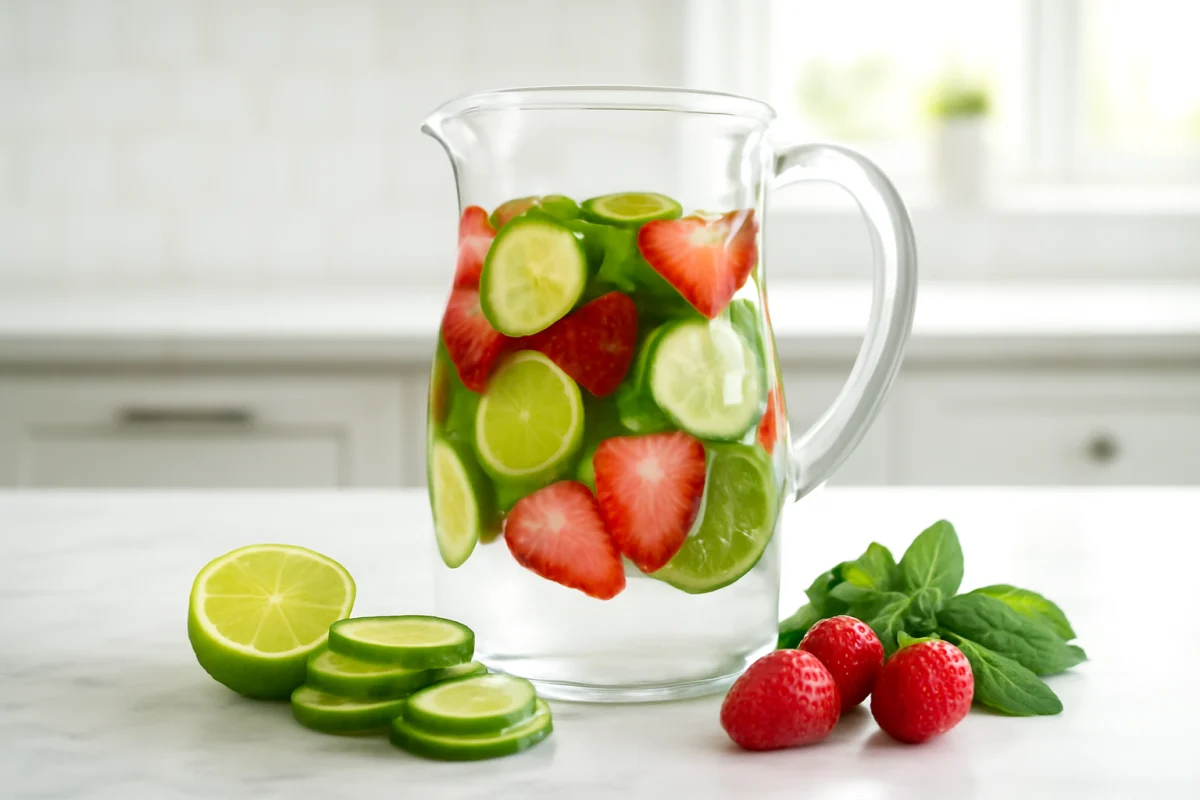
The easiest way to make a fruit-infused water that tastes balanced is to combine sweet fruit, a crisp ingredient, a small amount of acidity, and a gentle herb. This strawberry, cucumber, lime, and basil combination is refreshing without being overly sweet, sour, or grassy. It takes only a few minutes to assemble and can make plain water more appealing throughout the day. For more recipes and practical drink guidance, visit refreshing detox drinks.
This is a flavored water recipe, not a replacement for meals or a guaranteed wellness solution. Its main advantage is practical: pleasant flavor can make it easier for some people to choose water more often. For more ideas about building simple drink routines, browse these hydration and daily routine guides.
Balanced Strawberry Cucumber Lime Water
This recipe makes a pitcher with a light fruit flavor. The ingredients are easy to adjust, so you can make the water more subtle or more pronounced without adding sweeteners.
Preparation and serving information
- Prep time: 10 minutes
- Infusion time: 30 minutes to 2 hours
- Total time: About 40 minutes to 2 hours and 10 minutes
- Servings: 6 cups, or about 4 servings
Ingredients
- 6 cups cold water
- 1 cup strawberries, hulled and thinly sliced
- 1/2 small English cucumber, thinly sliced
- 1/2 lime, thinly sliced into rounds
- 6 to 8 fresh basil leaves
- Ice, for serving, optional
How to Make Fruit-Infused Water
- Wash your hands and produce. Rinse the strawberries, cucumber, lime, and basil under cool running water. Gently rub firm produce such as the cucumber and lime while rinsing. Clean produce on a clean surface, and keep it separate from raw meat, poultry, seafood, and eggs.
- Prepare the fruit and vegetables. Remove the strawberry tops and slice the berries. Slice the cucumber into thin rounds. Cut the lime into thin rounds or half-moons. Thin slices expose more surface area to the water, allowing the flavor to develop without needing to crush the ingredients.
- Add the ingredients to a pitcher. Place the strawberries, cucumber, lime, and basil in a clean 7- to 8-cup pitcher. If you prefer a very mild herbal flavor, start with four basil leaves instead of six to eight.
- Pour in the water. Add 6 cups of cold water and stir gently with a clean spoon. Avoid aggressively muddling the lime or basil. Crushing them can make the water taste bitter, sharp, or too herbal.
- Chill and taste. Cover the pitcher and refrigerate it for at least 30 minutes. Taste a small glass before serving. If the flavor is too light, continue chilling for another 30 minutes to 1 1/2 hours. If the lime is becoming too strong, remove some of the lime slices.
- Serve cold. Pour the infused water over ice if desired. Add a fresh strawberry slice, cucumber ribbon, or basil leaf to each glass for a simple presentation.
Why These Ingredients Work Together
A balanced infused water usually needs contrast. If every ingredient is sweet, the drink can taste flat. If every ingredient is tart or aromatic, it may feel intense. This recipe uses each ingredient for a different role.
Strawberries add gentle sweetness
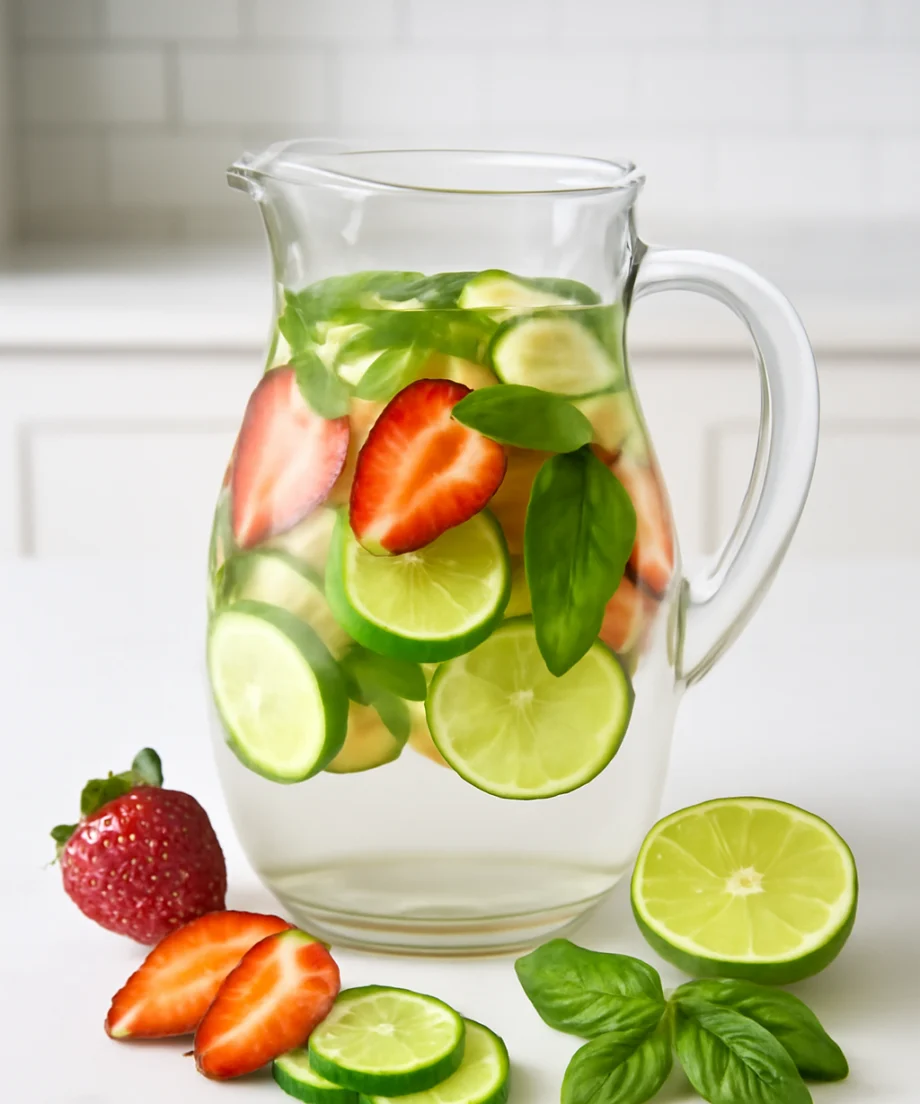
Strawberries provide the main fruit character. Choose berries that smell fresh and are free from soft, moldy, or damaged spots. Very ripe strawberries can give the water a stronger flavor, while firmer berries create a lighter infusion. Because this recipe does not use sugar or syrup, the natural flavor of the fruit will vary from batch to batch.
Cucumber keeps the flavor crisp
Cucumber gives the water a clean, cooling quality and helps keep the strawberries from dominating. An English cucumber works well because it has thin skin and small seeds, but a standard cucumber is also suitable. Peel it if the skin is tough or waxy, then slice it thinly.
Lime provides acidity
Lime adds brightness, but it is also the ingredient most likely to overwhelm the pitcher. Use thin slices rather than a large amount of juice at first. The peel can contribute a pleasant citrus aroma, yet prolonged contact may make the water taste more bitter. For a softer flavor, use lime wedges without the peel or add a small squeeze just before serving.
Basil adds aroma
Basil brings a fresh, fragrant note. Tear or lightly clap the leaves between clean hands to release some aroma, but do not pulverize them. Mint is an easy alternative if you want a cooler, more familiar flavor.
How to Adjust the Flavor
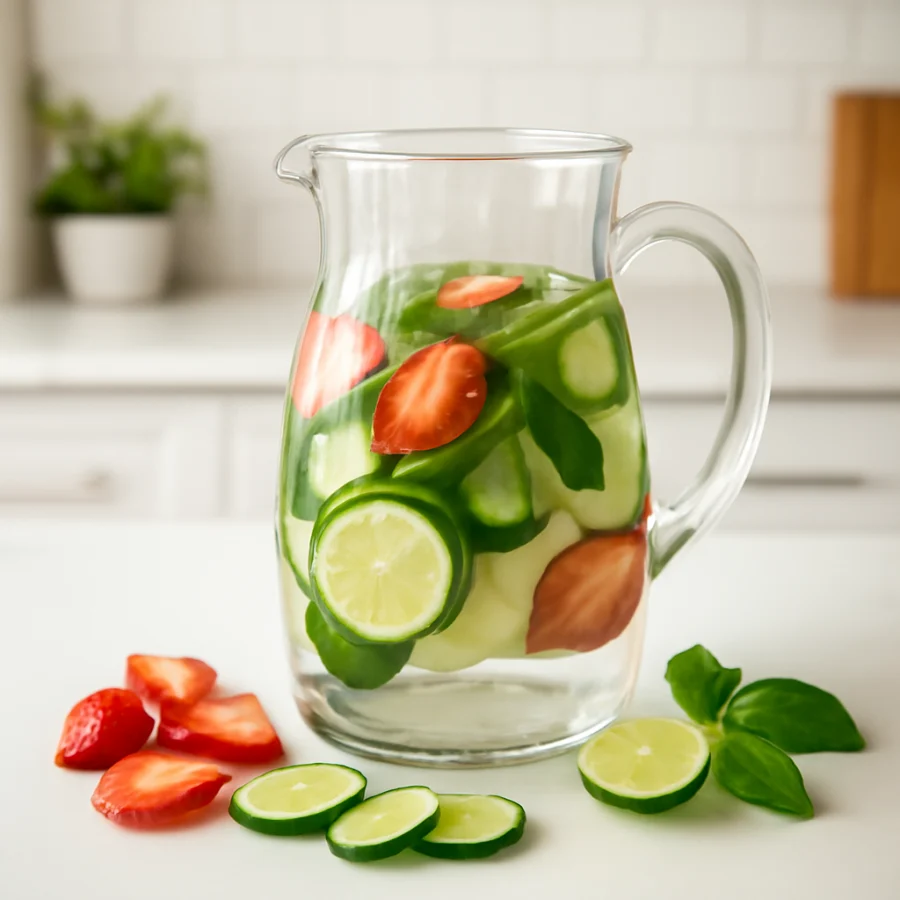
The best fruit-infused water is the one that suits your taste, so use the first batch as a starting point. If the water tastes too mild, add a few more strawberry slices or let the pitcher infuse longer in the refrigerator. If it tastes too sharp, remove some lime and add more cold water. If the fruit flavor is too strong, dilute the pitcher with additional water.
For a slightly more sparkling drink, replace 2 cups of the still water with chilled unflavored sparkling water immediately before serving. Do not add sparkling water at the beginning of a long infusion because the bubbles will fade and the flavor may become less refreshing. If you want a sweeter drink, consider adding a small amount of sweetener to an individual glass rather than sweetening the entire pitcher. This makes it easier for people to adjust their own servings.
Ingredient Alternatives
- Strawberries: Substitute raspberries, blackberries, sliced peaches, pineapple, or a few orange rounds. Softer berries may break apart more quickly.
- Cucumber: Use thin slices of honeydew melon or a small amount of celery for a different crisp note.
- Lime: Swap in lemon or a few orange slices. Lemon is brighter and more tart, while orange generally gives a softer citrus flavor.
- Basil: Try mint, rosemary, or a small sprig of thyme. Woody herbs can become strong, so use them sparingly.
- Water: Filtered, tap, or bottled water can work depending on your local water quality and personal preference. If using packaged water, check the current label and manufacturer information for product-specific details.
For additional recipe ideas, visit the site's drink recipes section. You can also find more ingredient-focused guidance in the drink and ingredient guides.
Serving Suggestions
Serve this water with breakfast, alongside lunch, or as a nonalcoholic option at a casual gathering. A clear pitcher shows off the fruit, but any clean food-safe container with a cover will work. For a party, keep the pitcher chilled and set out plain water as another choice.
Use ice in individual glasses rather than filling the pitcher with ice for several hours. As the ice melts, it can dilute the flavor, and a pitcher stored at room temperature may not remain safely chilled. If you are preparing the drink for a larger group, make smaller batches so the ingredients stay fresh and the flavor remains consistent.
Storage and Food Safety
Cover the pitcher and refrigerate it promptly after preparation. Because fresh produce is perishable, it is best to enjoy the drink within 24 hours and discard it sooner if it develops an off smell, unusual appearance, or unpleasant taste. Do not leave fruit-infused water sitting at room temperature for extended periods. When serving outdoors, keep the pitcher in a cooler or on ice and follow current food-safety guidance.
Use clean utensils, a clean pitcher, and fresh produce. Remove bruised or moldy fruit before preparation. Do not rely on soaking or infusion to make questionable produce safe. For broader handling and storage information, see these food safety and storage guides.
Frequently Asked Questions
Can I make this fruit-infused water overnight?
You can refrigerate it overnight, but the flavor may become stronger and the lime or basil may turn more noticeable. For the cleanest flavor, add the basil later or remove the lime after a few hours, then serve the water within the recommended storage window.
Do I need to add sugar?
No. The strawberries provide natural fruit flavor, and the cucumber, lime, and basil create contrast. If the fruit is not very ripe, the water may taste subtle rather than sweet. You can add a small amount of sweetener to an individual serving if you prefer, but it is not required.
Can I eat the fruit after infusing the water?
Yes, as long as the fruit has been handled properly, kept refrigerated, and still looks and smells fresh. Its texture may be softer and its flavor less pronounced after sitting in water.
Why does my infused water taste bitter?
Bitterness often comes from too much lime peel, over-muddled citrus, bruised herbs, or a long infusion. Remove some lime and basil, dilute the water, and use gentler preparation next time.
Can I use frozen fruit?
Frozen strawberries or berries can work and may help chill the water. Choose plain frozen fruit without added sugar. The fruit may soften quickly as it thaws, so strain it out if the texture becomes unpleasant.
A Simple Formula for Future Batches
Once you understand the balance, you can create other combinations using one sweet fruit, one crisp or mild ingredient, one citrus element, and one optional herb. Start with modest amounts, chill the mixture, and taste before adding more. This approach lets you build flavor without depending on strong sweeteners or an overly complicated ingredient list.
This strawberry cucumber lime water is a flexible starting point: bright enough to feel interesting, mild enough for everyday serving, and simple enough to adjust. Keep the produce fresh, chill the pitcher, and let your own taste guide the final proportions.

Comments
0No comments yet. Be the first to share a helpful note or question.
Leave a Comment
Your email address will not be published. Comments are reviewed before appearing on the site.