
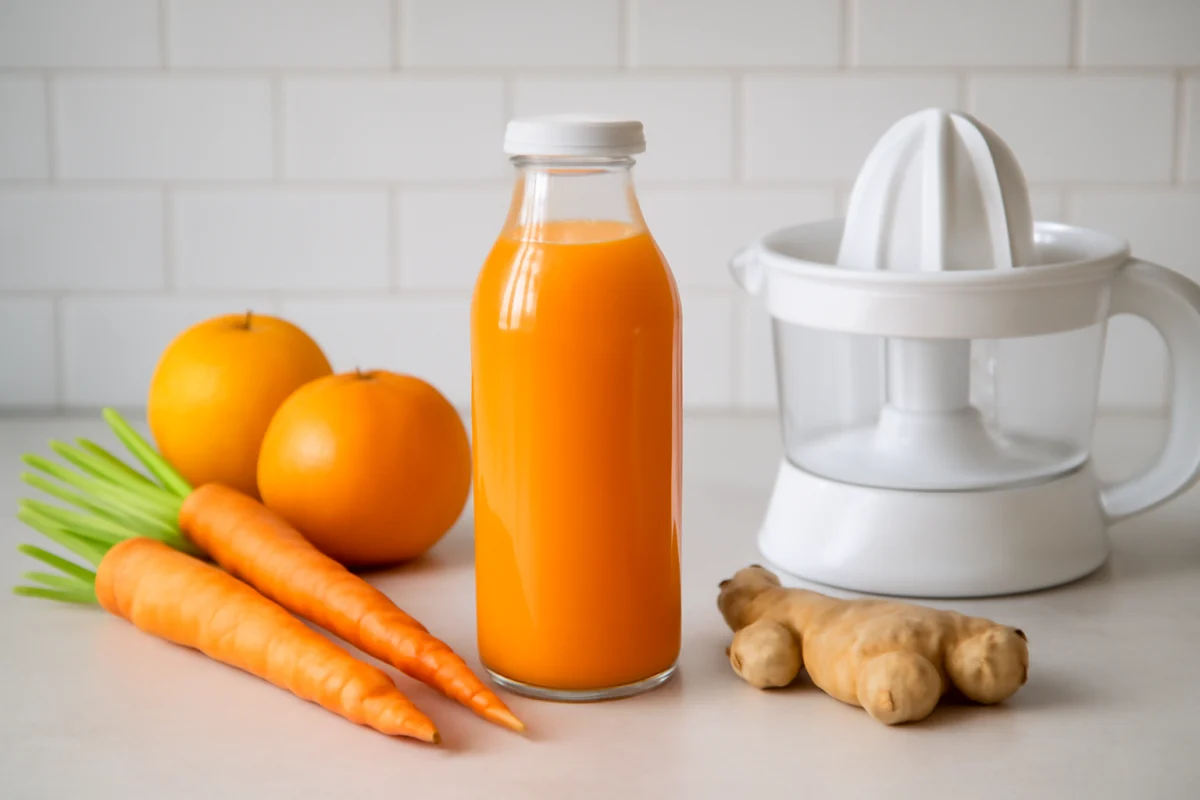
Fresh juice can usually stay in the refrigerator for up to 24 to 48 hours when it is made with clean produce, chilled promptly, and stored in a clean, airtight container. For the best flavor and quality, drink it the same day. Juice made at home does not receive the commercial heat treatment used for many packaged products, so it can spoil more quickly than shelf-stable juice. If it smells fermented, looks unusually fizzy, has mold, or tastes off, discard it rather than trying to save it. For more recipes and practical drink guidance, visit natural cleanse drinks.
This citrus-carrot juice is a practical recipe for learning how storage works. It combines sweet carrots, fresh orange, tart lemon, and a small piece of ginger for a bright, refreshing drink. It is not a substitute for a balanced meal or medical care, but it can be an enjoyable way to use fresh produce and add variety to your routine.
Fresh Citrus-Carrot Juice at a Glance
- Prep time: 15 minutes
- Total time: 20 minutes, plus optional chilling
- Servings: 2 cups
- Best quality: Same day
- Refrigerated storage: Use within 24 to 48 hours, provided it has been handled safely
- Equipment: Juicer or high-speed blender, fine-mesh strainer, clean bottle or jar, and refrigerator
Ingredients
- 4 medium carrots, scrubbed and trimmed
- 2 medium oranges, peeled and divided into segments
- 1/2 lemon, peeled and seeded
- 1 small piece fresh ginger, about 1/2 inch, peeled
- 1/2 cup cold water, only if using a blender
- Ice, for serving, optional
Choose produce that is firm, fresh, and free from mold, deep bruising, or damaged areas. Wash fruits and vegetables under running water before cutting or juicing. Washing does not make produce sterile, so clean hands, utensils, counters, and equipment still matter.
How to Make Citrus-Carrot Juice
- Prepare the produce. Wash the carrots, oranges, lemon, and ginger under running water. Scrub the carrots with a clean produce brush if needed. Trim the carrots, peel the citrus and ginger, and remove lemon seeds.
- Juice the ingredients. Feed the carrots, oranges, lemon, and ginger through a juicer according to the manufacturer’s instructions. If your juicer has a small feed chute, cut the produce into pieces that fit comfortably.
- Blend instead, if preferred. Add the prepared ingredients and the cold water to a high-speed blender. Blend until smooth, then pour the mixture through a fine-mesh strainer if you want a thinner drink. The strained pulp can be discarded or added to a smoothie, soup, or quick bread if it is still fresh and handled cleanly.
- Serve promptly. Pour the juice into chilled glasses. Add ice only if you plan to drink it immediately, since melting ice can dilute the flavor and add extra water to the container.
- Store any extra juice quickly. Pour leftovers into a clean, food-safe container with a tight-fitting lid. Leave as little empty space as practical, seal it, and refrigerate it promptly.
How Long Can Fresh Juice Stay in the Refrigerator?
For homemade raw juice, a cautious quality guideline is to use it within 24 hours. Some people keep properly chilled juice for up to 48 hours, but storage time does not improve the drink. Flavor, color, and texture often decline first, especially when the juice contains citrus or delicate produce.
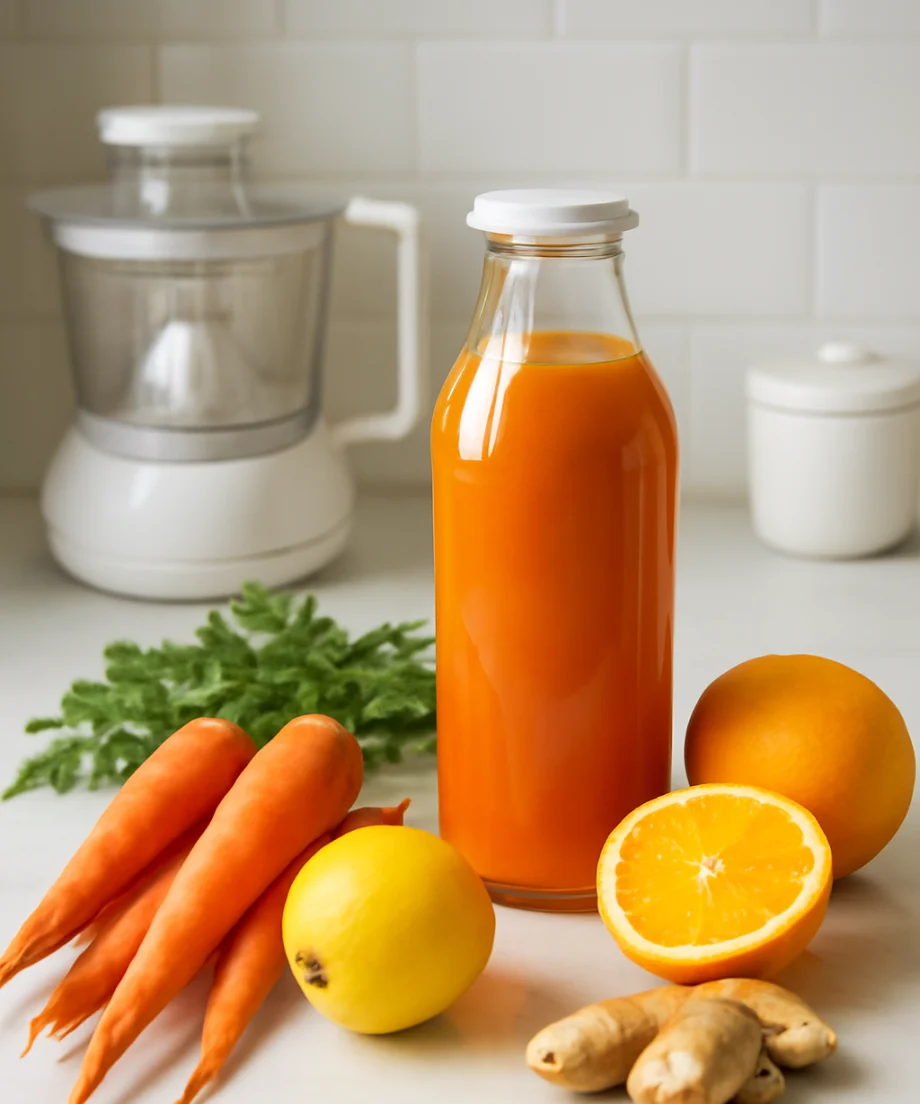
Keep the refrigerator at 40°F or below, and store the juice toward the back of the refrigerator rather than in the door, where temperatures can fluctuate more. A smaller container with a tight seal can help limit air exposure. Do not leave fresh juice at room temperature for extended periods. If it has been sitting out during a gathering or meal, discard it when you are unsure how long it has been unrefrigerated.
When in doubt, throw it out. Do not rely only on smell or appearance because harmful microorganisms are not always obvious. For more general storage guidance, visit the Food Safety & Storage section and follow current recommendations from reliable food-safety authorities.
Why This Juice Is Worth Trying
The recipe has a simple, balanced flavor profile without added sugar. Carrots bring natural sweetness, oranges add juicy acidity, lemon sharpens the flavor, and ginger contributes a warm, aromatic note. The ingredients are easy to find, and the recipe can be made with a juicer or blender.
It is also easy to adjust. If you prefer a gentler drink, reduce the lemon or ginger. If you like a tarter flavor, add more lemon after tasting. Because fresh juice contains less fiber than whole fruits and vegetables, consider enjoying it alongside a meal or snack that includes other foods. Juice can fit into a varied eating pattern, but it should not be treated as a complete replacement for balanced meals.
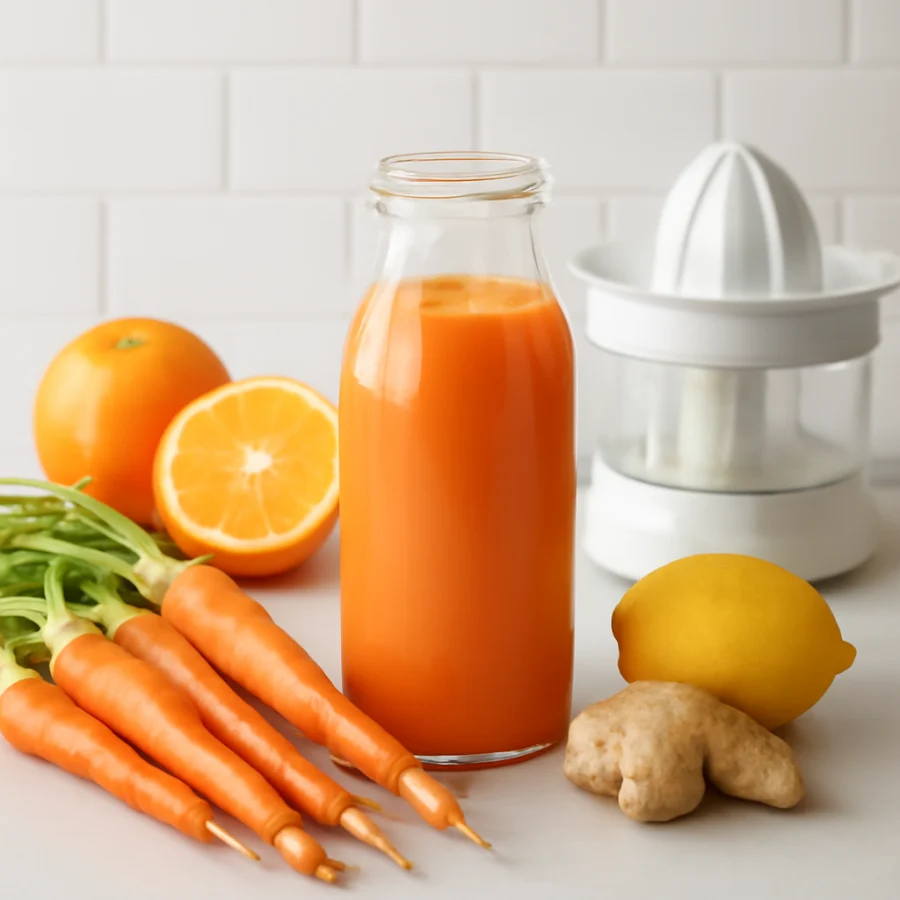
Helpful Preparation and Storage Tips
Clean equipment before and after use
Disassemble the juicer or blender according to the manufacturer’s directions. Wash removable parts with hot, soapy water and allow them to dry fully. A damp, food-covered appliance can develop unpleasant odors and support microbial growth. Clean the counter, cutting board, knife, and storage container as well.
Chill the ingredients first
Cold produce can make the finished juice more pleasant to drink and may reduce the time the juice spends in the temperature range where microorganisms can multiply more easily. Chilling the ingredients is helpful, but it does not replace prompt refrigeration after preparation.
Use a food-safe container
Glass jars and food-safe plastic bottles with tight-fitting lids are practical choices. Avoid storing juice in an unwashed container or a container that previously held strong-smelling foods. Label the container with the preparation date and time so you do not have to guess how long it has been stored.
Watch for spoilage signs
Discard the juice if you notice mold, bubbling that was not present when it was made, a swollen container, a fermented or sour odor, unusual separation that does not improve with gentle shaking, or an unpleasant taste. Never taste juice that visibly has mold or appears spoiled.
Ingredient Alternatives
- For a milder flavor: Replace half of the lemon with additional orange.
- For a less sweet drink: Use one orange and add a few cucumber pieces when juicing.
- For a different color: Replace one carrot with a small peeled beet, recognizing that the beet will strongly change the flavor and color.
- For extra freshness: Add a few washed mint leaves if your juicer or blender handles leafy herbs well.
- For a blender-only method: Add enough cold water to blend smoothly, then strain or leave the pulp in, depending on your preference.
When changing the ingredients, continue to use produce that is fresh and properly washed. If you use packaged ingredients such as bottled citrus juice, check the current label for storage instructions, pasteurization information, and the use-by date. Product details can change, so the package label and manufacturer guidance should take priority.
Serving Suggestions
Serve the juice in a small glass with a thin orange wheel or a strip of lemon peel. It pairs well with breakfast foods, a sandwich, a grain bowl, or a light snack. For a more filling option, serve it alongside foods containing protein, fiber, and healthy fats rather than treating the juice as the entire meal.
If you are preparing juice for children, older adults, pregnant people, or anyone with a weakened immune system, take extra care with washing, equipment cleaning, refrigeration, and serving time. Raw juice may carry food-safety risks, so ask a qualified health professional about appropriate choices for a specific health situation.
Frequently Asked Questions
Can I keep fresh juice for three days?
It is better not to plan on three days for homemade raw juice. The safest quality approach is to drink it the same day or within 24 hours. Some properly chilled juice may remain acceptable for up to 48 hours, but discard it if there are any spoilage signs or if storage conditions are uncertain.
Does lemon juice make fresh juice last longer?
Lemon juice adds acidity and may slow some quality changes, but it does not make homemade juice shelf-stable or eliminate food-safety risks. Citrus juice should still be refrigerated promptly and used within a short period.
Should I freeze fresh juice?
Freezing can extend storage, but it may change the flavor, color, and texture after thawing. If you freeze it, use a freezer-safe container, leave room for expansion, label it with the date, and thaw it in the refrigerator. Drink it soon after thawing, and do not refreeze juice that has fully thawed.
Why does my juice separate?
Separation is normal because juice contains water, pulp, and natural plant compounds with different densities. Gentle shaking can remix it. Separation alone does not prove that the juice is spoiled, but it should still be stored cold and checked for odor, appearance, and other warning signs.
Is bottled juice safer than homemade juice?
Commercial juice may be pasteurized or otherwise processed, which can affect its storage life. Read the current package label for handling instructions, refrigeration requirements, and the use-by date. Homemade raw juice does not automatically have the same storage life as a packaged product.
For additional ideas, browse the Drink Recipes collection or explore Juicing & Blending for more preparation tips.

Comments
0No comments yet. Be the first to share a helpful note or question.
Leave a Comment
Your email address will not be published. Comments are reviewed before appearing on the site.