
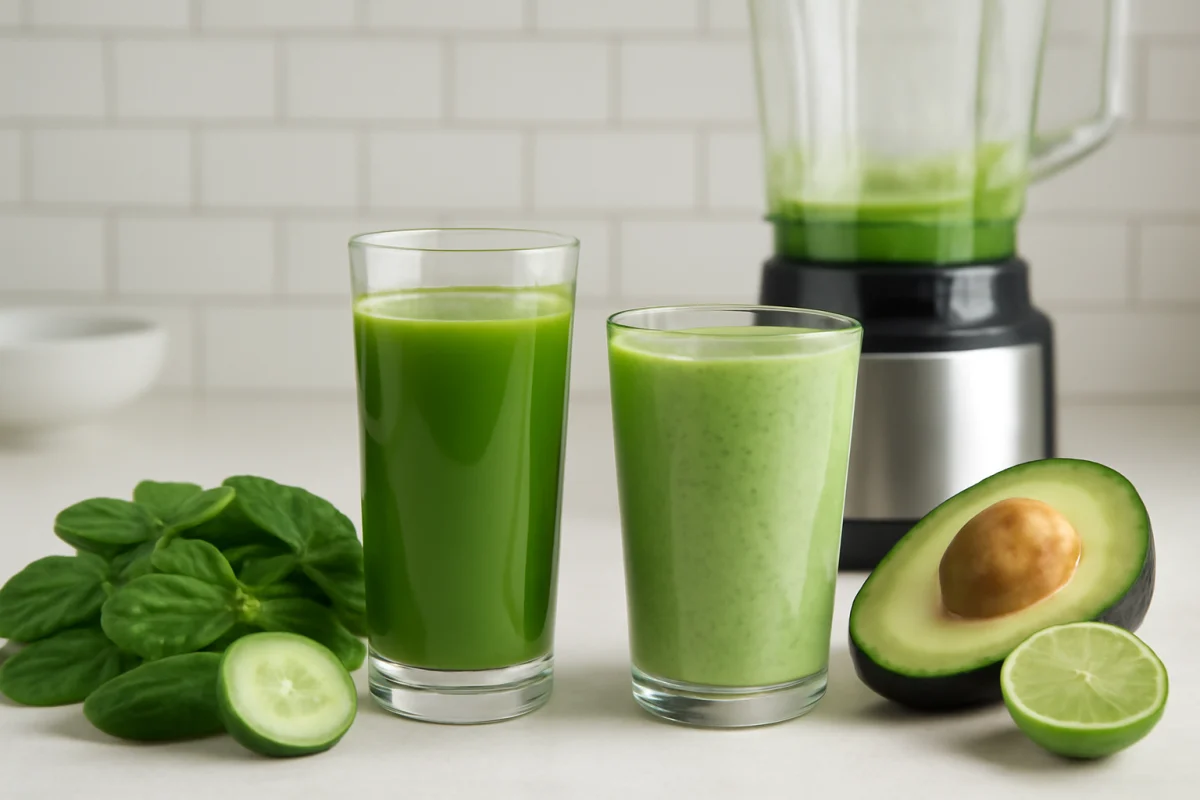
Fresh juice vs. smoothies comes down to how the ingredients are processed. A juicer separates liquid from much of the pulp, creating a thin, refreshing drink. A blender breaks whole fruits and vegetables into a thicker drink that usually retains more of the original fiber. Neither option is automatically better for everyone; the right choice depends on your texture preference, equipment, ingredients, and how you plan to serve the drink. For more recipes and practical drink guidance, visit cleanse drink guide.
This article focuses on a practical recipe you can make at home: a creamy green smoothie with spinach, cucumber, pineapple, avocado, lime, and water. It is a useful way to see why smoothies differ from fresh juice while keeping the ingredient list simple and flexible. For more preparation ideas, browse the juicing and blending guides.
Fresh Juice vs. Smoothies: The Main Differences
Texture and fiber
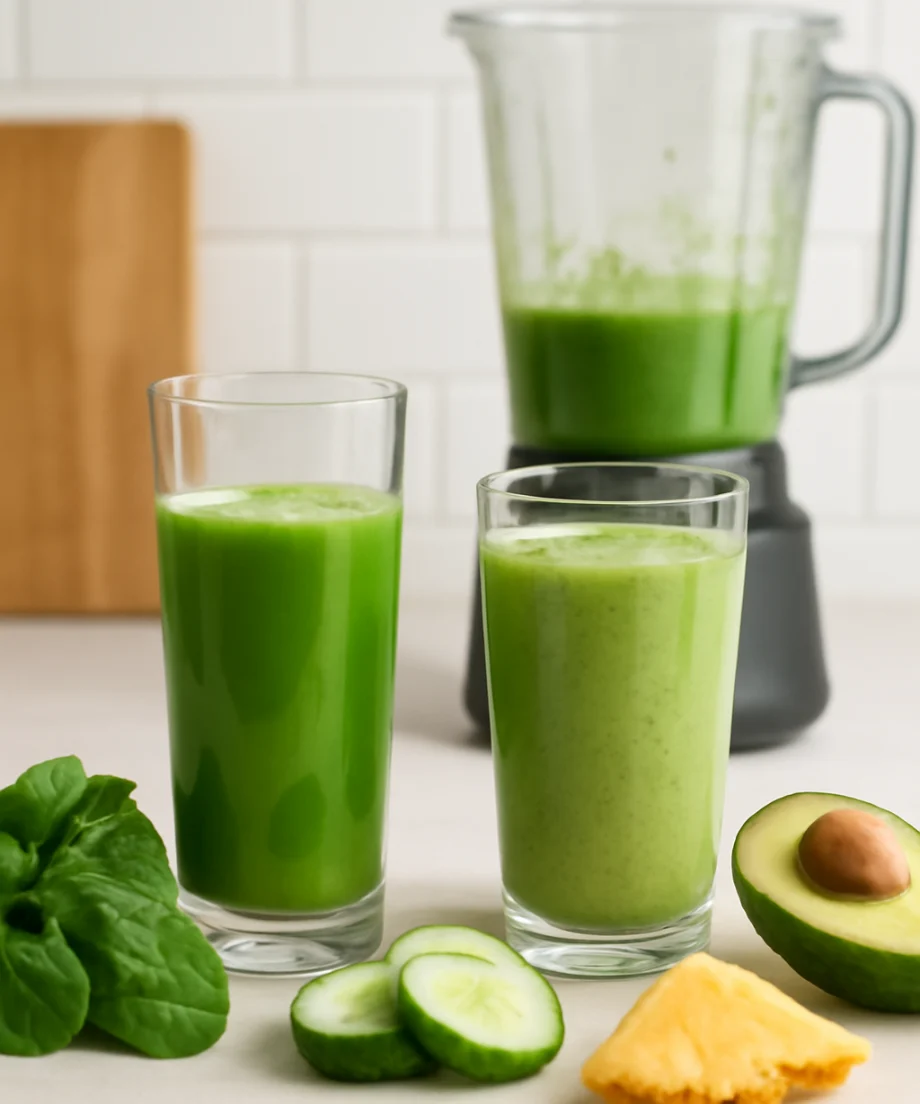
Fresh juice is made by pressing or grinding produce and then separating much of the pulp from the liquid. The result is usually light and easy to sip. A smoothie is blended from whole or mostly whole ingredients, so it is thicker and contains more of the plant material used in the recipe.
Fiber can affect texture and fullness, but the amount depends on the specific recipe. A juice made mostly from cucumbers, celery, and leafy greens will differ from a juice made with several sweet fruits. Likewise, a smoothie can be thin if it contains plenty of water or ice, or very thick if it includes oats, avocado, yogurt, or frozen fruit.
Equipment and preparation
Juicing typically requires a centrifugal or masticating juicer, while smoothies need a blender. A blender is often the simpler choice for occasional drink makers because it can also handle sauces, soups, and other kitchen tasks. Juicing may require more preparation and cleanup, especially when several firm vegetables are involved.
Ingredients and serving style
Juice recipes often rely on produce with a high water content, such as citrus, apples, cucumbers, and celery. Smoothies can use those ingredients too, but they also accommodate foods that do not work well in a juicer, including avocado, nut butter, oats, yogurt, and soft leafy greens.
Fresh juice is commonly served chilled in a small glass, while a smoothie may be poured into a larger glass or bowl. The best serving size depends on the recipe and your overall eating pattern. A drink should fit into a balanced day rather than stand in for all meals.
Green Smoothie Recipe With Pineapple, Cucumber, and Avocado
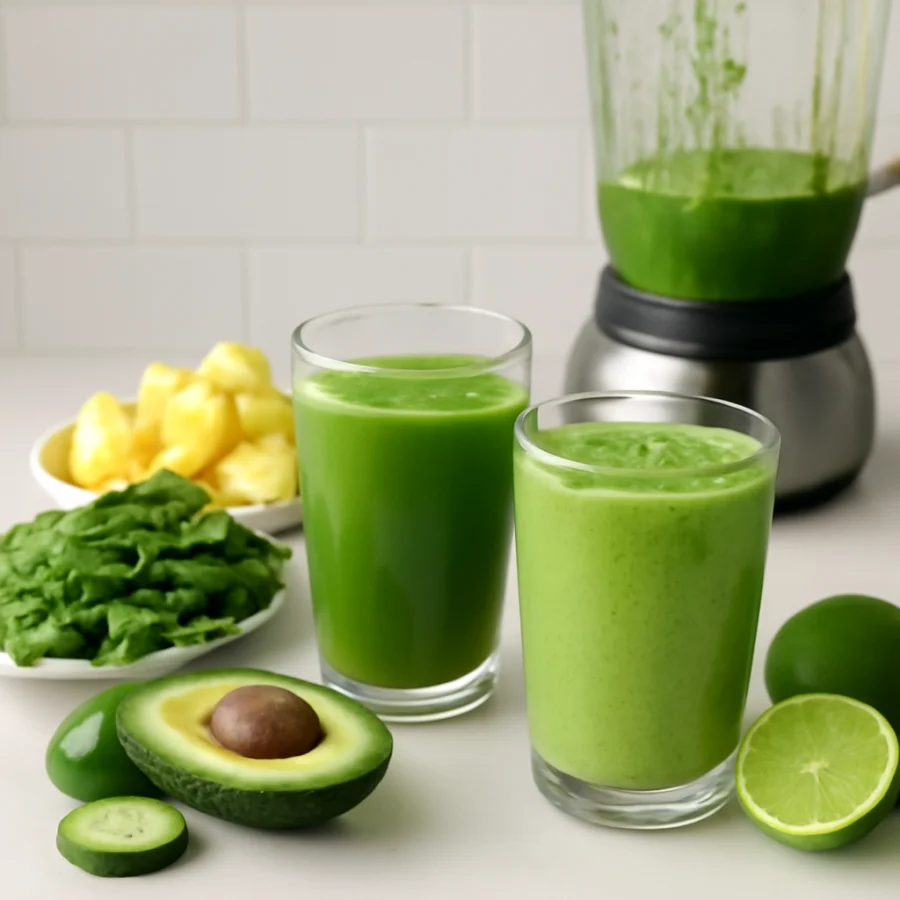
This recipe is designed as a smoothie, not a juice. It keeps the produce in the blender, which gives the drink its thicker body and more substantial texture. Pineapple contributes natural sweetness, cucumber adds freshness, avocado creates creaminess, and lime brightens the flavor.
Preparation and yield
- Prep time: 10 minutes
- Total time: 10 minutes
- Servings: 2
Ingredients
- 1 cup cold water, plus more as needed
- 2 cups fresh baby spinach, rinsed well
- 1 cup peeled cucumber, chopped
- 1 cup frozen pineapple chunks
- 1/2 medium avocado, peeled and pitted
- 1 tablespoon fresh lime juice
- 1/2 teaspoon finely grated fresh ginger, optional
- 1 cup ice, optional
Directions
- Wash and prepare the produce. Rinse the spinach and cucumber under cool running water. Peel and chop the cucumber, remove the avocado pit, and measure the remaining ingredients. Wash produce even when you plan to peel it, because cutting can transfer surface dirt or bacteria to the inside.
- Add the liquid first. Pour the water into the blender. Adding liquid before the solid ingredients can help the blades move the mixture more smoothly.
- Layer in the ingredients. Add the spinach, cucumber, frozen pineapple, avocado, lime juice, ginger, and ice. If your blender has trouble with frozen ingredients, start with half the pineapple and add the rest after the first blend.
- Blend until smooth. Start on a low setting and gradually increase the speed. Blend for about 45 to 60 seconds, stopping to scrape down the sides if needed. Add a splash of water if the smoothie is too thick.
- Taste and adjust. Add more lime for a sharper flavor, more pineapple for sweetness, or a little water for a lighter texture. Blend briefly after each adjustment.
- Serve right away. Pour into two glasses and enjoy immediately for the best color and texture.
Why This Recipe Works as a Smoothie
The ingredients are blended together rather than separated into juice and pulp. Spinach provides color and a mild vegetal flavor without making the drink overly heavy. Cucumber contributes water and a crisp taste. Frozen pineapple helps chill the smoothie while adding sweetness and body.
Avocado is especially useful in a smoothie because its soft texture blends easily. It does not produce practical juice in a typical home juicer, but it can make a blended drink feel creamy without dairy. Lime and ginger help balance the rich avocado and sweet pineapple. These ingredients are included for flavor and texture, not as a promise of detoxification, disease treatment, or guaranteed weight change.
Ingredient Alternatives
You can adjust the recipe based on what you have available:
- Spinach: Use a small amount of tender kale or romaine. Remove tough kale stems and expect a stronger flavor.
- Cucumber: Substitute zucchini for a similarly mild blended ingredient. Peel it if the skin is especially thick or bitter.
- Pineapple: Use frozen mango, peaches, or berries. The flavor and color will change, and some fruits may need additional lime.
- Avocado: Try plain yogurt for a tangy, creamy texture, or use half a banana for sweetness and thickness.
- Water: Unsweetened coconut water can add flavor, while milk or an unsweetened nondairy beverage can create a creamier smoothie.
- Ginger: Leave it out if you prefer a milder drink, or use a small pinch of ground ginger when fresh ginger is unavailable.
When using packaged ingredients, check the current label for added sugars, allergens, and storage instructions. Products and formulations can change, so the package is the most reliable source for current details.
Helpful Tips for Better Blending
- Use frozen fruit instead of relying on a large amount of ice. This usually gives the smoothie more flavor.
- Cut large pieces of produce into smaller chunks before blending, especially if your blender is compact.
- Blend leafy greens with the liquid first if your machine tends to leave visible pieces.
- Do not fill the blender beyond the manufacturer’s recommended limit.
- Pause the blender before removing the lid or using a tamper. Follow the equipment maker’s instructions for your specific model.
- If the drink separates slightly after standing, stir or shake it before serving. Natural separation is common in drinks made without stabilizers.
Fresh Juice or Smoothie: Which Should You Choose?
Choose fresh juice when you want a thin, bright drink and enjoy the flavor of strained produce. It can be a good format for ingredients such as citrus, cucumber, apples, and carrots. Choose a smoothie when you want to use soft ingredients, prefer a thicker texture, or want to keep more of the blended produce in the glass.
It is also reasonable to use both methods at different times. A cucumber-citrus juice may work well as a small, refreshing beverage, while a spinach-and-fruit smoothie may be more suitable when you want a thicker drink. Pay attention to added sweeteners and portion size, particularly when a recipe contains several servings of fruit.
Serving Suggestions
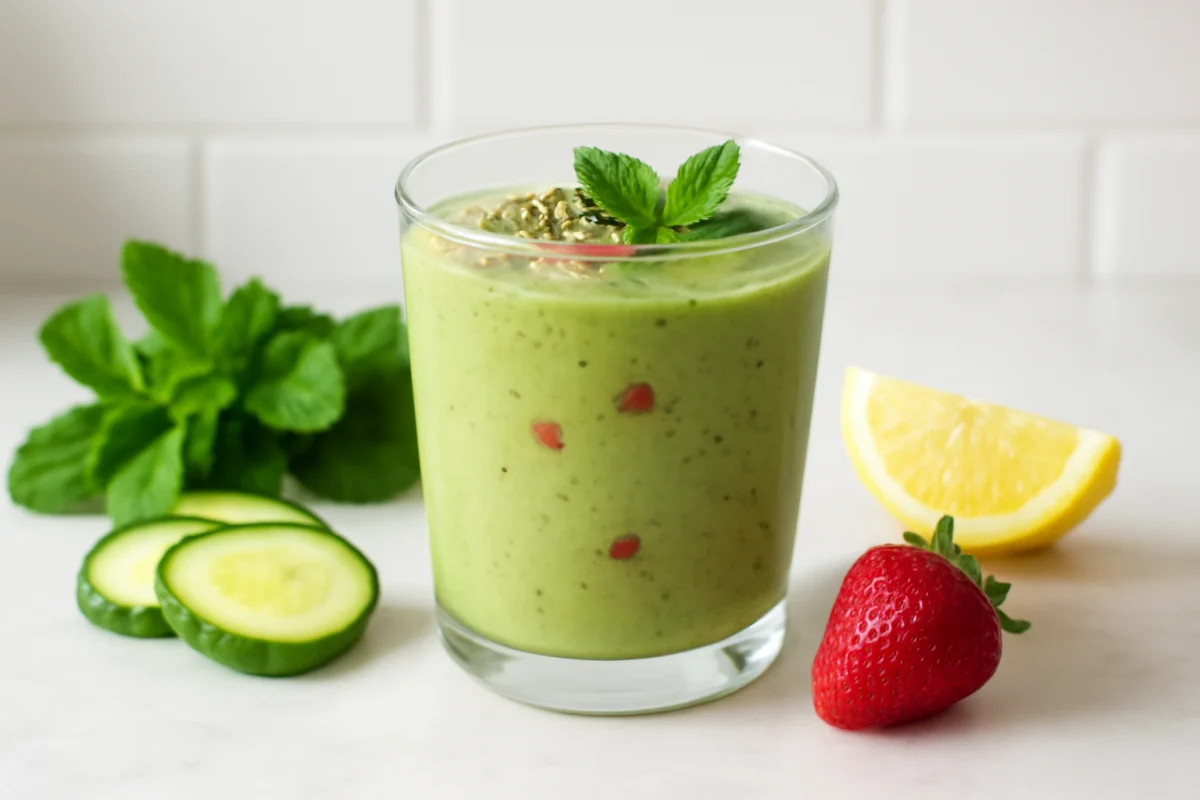
Serve this green smoothie in a chilled glass with a lime wedge. For a more filling meal component, pair it with a balanced food that contains protein and other nutrients, such as eggs, beans, tofu, yogurt, or whole-grain toast. Avoid treating a smoothie as a required replacement for regular meals.
You can also pour the mixture into a bowl and add a modest topping of oats, seeds, or sliced fruit. Add toppings just before eating so they retain their texture. If you prefer a thinner drink, stir in cold water a tablespoon at a time rather than blending in a large amount all at once.
Storage and Food Safety
Smoothies are best served immediately because the color, flavor, and texture can change as the ingredients sit. If necessary, transfer leftovers to a clean, covered container, refrigerate promptly, and use them within a short period according to reliable current food-safety guidance. Keep the container cold and discard the drink if it develops an unusual smell, appearance, or flavor.
Wash hands, cutting boards, blender parts, and produce-contact surfaces before and after preparation. Refrigerate cut produce and other perishable ingredients instead of leaving them at room temperature. For additional guidance, see the site’s food safety and storage resources.
Frequently Asked Questions
Is fresh juice healthier than a smoothie?
There is no universal winner. Juice and smoothies have different textures and preparation methods. A smoothie generally keeps more of the blended ingredients, while juice separates much of the pulp. The best choice depends on your preferences, recipe, and overall eating pattern.
Can I make this recipe with a juicer?
Not as written. Avocado does not juice well, and a juicer would separate much of the spinach and cucumber pulp. For a juice-style drink, use juicer-friendly produce such as cucumber, pineapple, lime, and a small amount of ginger, then follow your equipment’s instructions.
Can I make the smoothie without avocado?
Yes. Use plain yogurt, half a banana, or a little additional frozen fruit. Each option changes the flavor and texture, so add water gradually.
Does this smoothie replace a balanced meal?
Not necessarily. This recipe contains produce and can be part of a balanced meal or snack, but it is not designed to provide every nutrient someone may need in a meal. Pair it with other foods when appropriate.
Can I make it ahead?
You can prepare it shortly before serving and refrigerate it in a covered container, but the freshest texture and color will usually come from drinking it soon after blending. Stir before serving if separation occurs.
Fresh juice and smoothies are simply two different ways to prepare produce. Once you understand the differences, you can choose the method that matches your ingredients, equipment, and preferred texture. This green smoothie is an easy starting point because it uses common ingredients and leaves plenty of room for adjustments.

Comments
0No comments yet. Be the first to share a helpful note or question.
Leave a Comment
Your email address will not be published. Comments are reviewed before appearing on the site.