
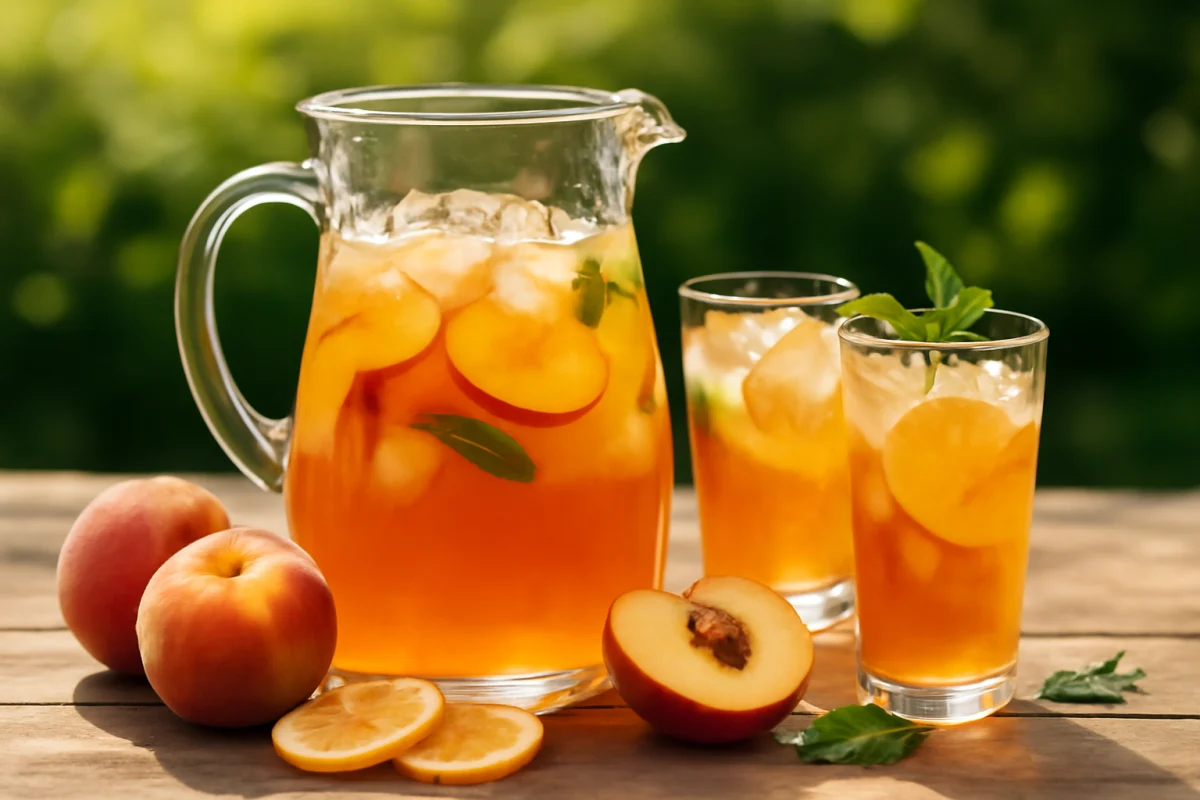
The best homemade peach iced tea for warm days starts with strong black tea, ripe peaches, fresh lemon, and enough ice to make every glass crisp and refreshing. This easy recipe creates a pitcher with noticeable peach flavor without relying on bottled tea or artificial-tasting peach syrup. You can adjust the sweetness, use fresh or frozen peaches, and prepare the tea base ahead of time for relaxed summer serving. For more recipes and practical drink guidance, visit homemade detox drinks.
Why This Peach Iced Tea Is Worth Making
Peach iced tea is a useful warm-weather drink because it can be prepared in advance and served to a group or poured by the glass throughout the day. Brewing the tea yourself lets you control the strength and sweetness, while peaches add a naturally fruity flavor and soft color. Lemon juice keeps the drink from tasting flat and adds a bright contrast to the mellow fruit.
This recipe is not intended to replace water, balanced meals, or professional care. It is simply a flavorful beverage option. If you are limiting caffeine or added sugar, choose decaffeinated tea and reduce or omit the sweetener according to your preferences.
Recipe at a Glance
- Prep time: 15 minutes
- Cook and steep time: 20 minutes
- Chill time: 1 to 2 hours
- Total time: About 1 hour 35 minutes, including chilling
- Yield: 8 servings, about 8 ounces each
Ingredients
- 8 cups cold water, divided
- 6 black tea bags, or 6 teaspoons loose-leaf black tea in a filter
- 3 medium ripe peaches, pitted and thinly sliced
- 1/2 cup granulated sugar
- 1 tablespoon fresh lemon juice, plus more to taste
- Ice, for serving
- Optional: extra peach slices, lemon wheels, or fresh mint for garnish
For a less sweet pitcher, start with 1/4 cup sugar. You can also use honey, agave syrup, or a sugar substitute, but each option changes the flavor and may dissolve differently. Honey is easiest to blend into a warm peach syrup rather than cold tea.

How to Make Homemade Peach Iced Tea
- Prepare the peaches. Rinse the peaches under cool running water, pat them dry, remove the pits, and slice the fruit. There is no need to peel them. If the skins are tough or you prefer a smoother syrup, peel the peaches before slicing.
- Make the peach syrup. Add the sliced peaches, sugar, and 1 cup of water to a medium saucepan. Warm the mixture over medium heat, stirring occasionally, until the sugar dissolves and the peaches soften. This usually takes about 8 to 10 minutes. Avoid cooking it so aggressively that the fruit scorches.
- Steep the tea. Remove the saucepan from the heat. Add the tea bags to the remaining 7 cups of water in a large heatproof pitcher or bowl. Let the tea steep according to the package directions, usually for several minutes. Do not leave the tea bags in much longer than recommended, because oversteeping can make the drink sharply bitter.
- Strain the peach mixture. Pour the warm peach syrup through a fine-mesh strainer into the brewed tea. Press the fruit gently with a spoon to extract liquid, but do not force a large amount of pulp through the strainer unless you want a cloudy, pulpy drink.
- Add lemon juice. Stir in 1 tablespoon of fresh lemon juice. Taste the mixture after it has cooled slightly and add more lemon in small amounts if you want a brighter flavor.
- Cool safely. Let the tea stop steaming, then cover it and refrigerate it promptly in a clean container. Chill for 1 to 2 hours, or until cold. Do not depend on a countertop to cool a large pitcher for an extended period.
- Serve over ice. Fill glasses with ice and pour in the chilled peach iced tea. Add peach slices, lemon wheels, or mint just before serving.
How to Get Better Peach Flavor
Choose ripe but sound peaches
Look for peaches that smell fragrant and yield slightly when pressed near the stem. Very firm peaches may not provide much flavor, while bruised or damaged fruit can give the syrup an unpleasant taste. If fresh peaches are out of season, unsweetened frozen peach slices are a practical alternative. Thaw them first if you want a faster syrup, or add them frozen and allow a few extra minutes for the mixture to warm.
Use a balanced tea base
Black tea gives this drink a familiar iced-tea foundation, but the tea should support the peach rather than overpower it. English breakfast, orange pekoe, or another plain black tea can work well. Avoid strongly flavored blends if you want the fruit to remain the main taste. Green tea can be used, but it generally needs cooler water and a shorter steep to reduce bitterness. Follow the instructions on the tea package when using a different variety.
Sweeten while the mixture is warm
Sugar dissolves more evenly in warm liquid than in cold iced tea. The peach syrup method also distributes the sweetener throughout the pitcher. Taste only after the drink has cooled enough to serve, because temperature affects how sweetness is perceived. If the finished tea is too sweet, add cold water or more unsweetened brewed tea. If it tastes too strong, dilute it gradually rather than adding a large amount of ice, which can make the flavor inconsistent as the ice melts.
Ingredient Alternatives
- Decaffeinated tea: Substitute decaffeinated black tea if you want the same general flavor with less caffeine. Check the current package label for serving and brewing information.
- White or green tea: These can create a lighter drink, but use the water temperature and steeping time recommended for the specific tea.
- Frozen peaches: Use unsweetened frozen slices when fresh fruit is unavailable. Sweetened fruit may make the finished drink much sweeter than expected.
- Other citrus: Lime juice can replace some or all of the lemon juice for a different flavor. Add it gradually because lime can be more pronounced.
- Herbs: Mint, basil, or thyme can be steeped briefly with the peaches. Start with a small amount so the herb does not hide the peach flavor.
- Sparkling variation: Pour chilled peach tea into glasses and add a splash of plain sparkling water just before serving. This works best by the glass rather than in the entire storage pitcher.
Serving Suggestions
Serve peach iced tea in tall glasses over plenty of ice with a thin peach slice and a lemon wheel. For a picnic or backyard meal, keep the tea chilled in a covered beverage dispenser or insulated container and provide garnishes separately. If you are serving a crowd, freeze small peach pieces in ice cubes so the fruit adds flavor without immediately watering down each glass.
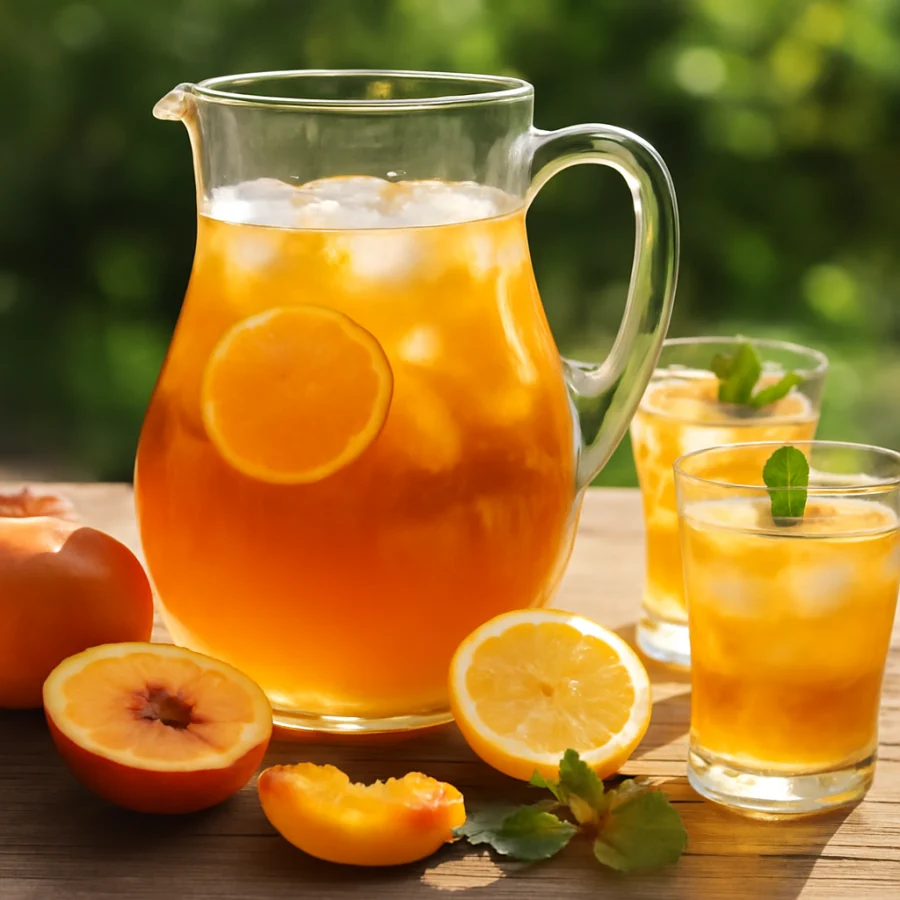
The drink pairs well with sandwiches, grilled vegetables, salads, barbecue dishes, and lightly seasoned foods. For more ideas on preparing refreshing drinks alongside everyday routines, browse the Drink Recipes category.
Storage and Food Safety
Transfer the tea to a clean, covered pitcher or food-safe container and refrigerate it promptly. As a general quality guideline, drink homemade iced tea within about 3 to 4 days, checking for changes in smell, appearance, or flavor before serving. Discard it if it develops an off odor, unusual cloudiness, mold, or other signs of spoilage.
Keep the tea cold when serving outdoors, especially on hot days. Do not leave a large pitcher at room temperature for long periods, and avoid repeatedly returning a serving pitcher to the refrigerator after it has warmed substantially. Wash peaches, lemons, utensils, hands, and work surfaces before preparation. For broader storage guidance, see the Food Safety & Storage resources.
Ice can also affect food safety and flavor. Use ice made from a safe drinking-water source, and use clean tongs or a scoop rather than bare hands. Store leftover tea separately from garnishes when possible, since fruit and herbs can shorten the drink's best-quality window.
Frequently Asked Questions
Can I make peach iced tea without sugar?
Yes. Omit the sugar and let the peach and lemon flavors stand on their own. Very ripe peaches will provide more natural sweetness, while a small amount of extra lemon can make an unsweetened version taste livelier. You can also add a sugar-free sweetener according to its package directions.
Why did my iced tea turn bitter?
Common causes include oversteeping the tea, using water that is too hot for the tea variety, or cooking the peach mixture too aggressively. Brew the tea for the recommended time, remove the tea bags promptly, and dilute the finished drink with cold water if needed.
Can I use peach nectar instead of fresh peaches?
Yes, but peach nectar usually contains added sweeteners and has a different texture from a fresh-fruit syrup. Replace part of the water with nectar, then taste before adding sugar. Check the current product label for ingredients and sweetness information, since packaged products can change.
How can I make one glass instead of a full pitcher?
Brew about 1 cup of strong tea, then stir in peach syrup to taste and chill it over ice. A small batch is easier to adjust, but the flavor may be less developed than a pitcher made with a longer peach steep.
Can I prepare the tea the night before?
Yes. Make the peach iced tea, cover it, and refrigerate it overnight. Add fresh ice and garnishes when serving. If you plan to keep it for several days, store the base tea without fruit slices or herbs in the pitcher, and add those garnishes to individual glasses.
For more ingredient-focused drink information and preparation ideas, visit the Drink & Ingredient Guides section. This peach iced tea is best enjoyed as a refreshing homemade beverage that fits easily into a warm-day meal or gathering.



Comments
0No comments yet. Be the first to share a helpful note or question.
Leave a Comment
Your email address will not be published. Comments are reviewed before appearing on the site.