
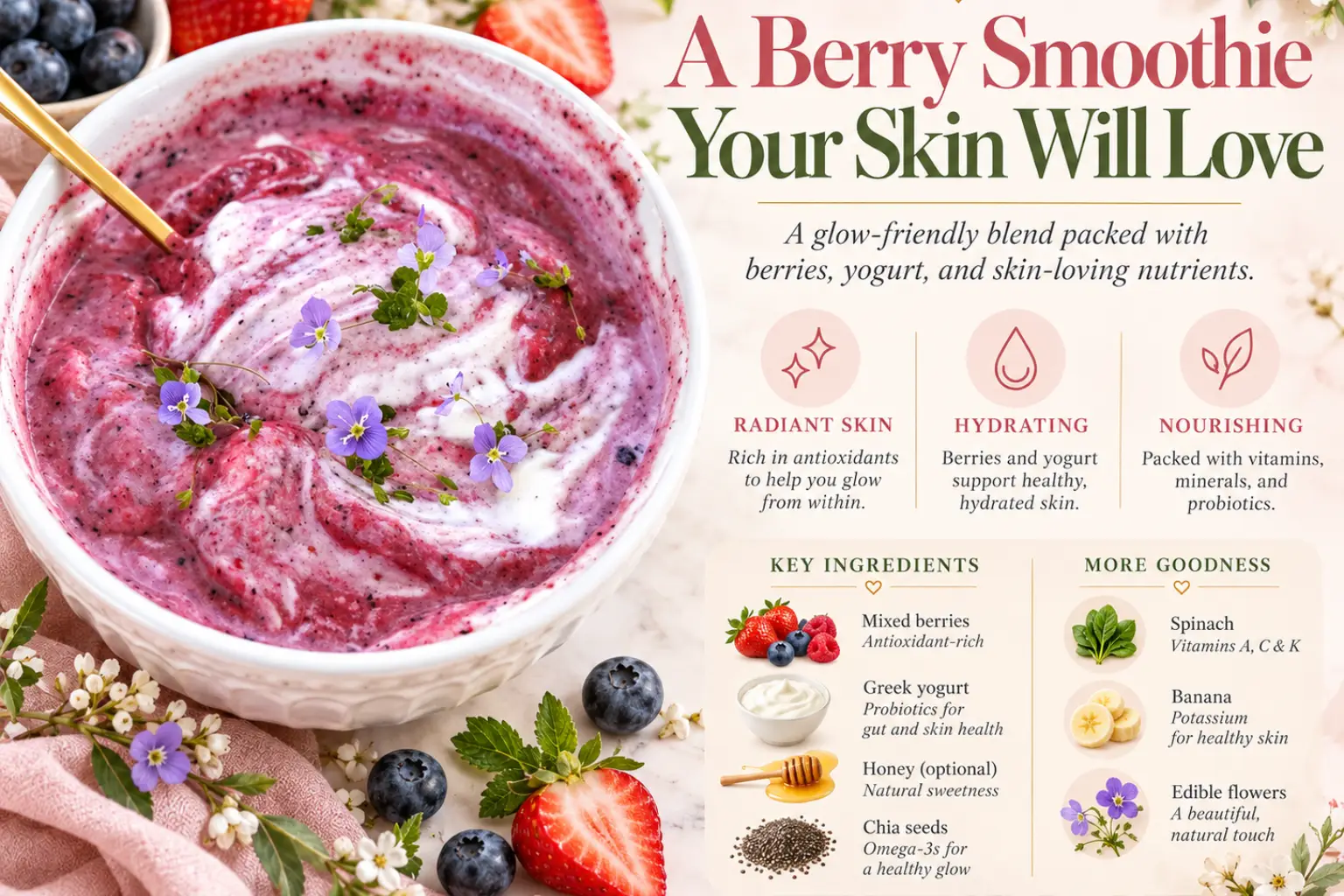
A berry antioxidant smoothie can be a flavorful way to add fruit, yogurt, seeds, and fluids to your day. While no drink can stop skin aging or replace sun protection and medical care, a balanced smoothie made with berries provides nutrients that support overall health, including normal skin function. This recipe combines strawberries, blueberries, plain Greek yogurt, chia seeds, and orange juice for a creamy, lightly tart drink that works well as breakfast or a snack. For more recipes and practical drink guidance, visit natural cleanse drinks.
Why Try This Berry Antioxidant Smoothie?
Berries are known for containing vitamin C and naturally occurring plant compounds, including anthocyanins in many dark-colored berries. Vitamin C contributes to normal collagen formation, while a varied diet that includes fruits and vegetables supplies a range of nutrients the body uses every day. These facts do not mean that a smoothie can erase wrinkles, reverse aging, or protect skin on its own.
Skin appearance is influenced by many factors, including genetics, age, sun exposure, sleep, smoking, stress, and overall nutrition. A berry smoothie is best viewed as one convenient food choice within a broader routine. Daily sunscreen use, gentle skin care, adequate hydration, and professional advice for persistent skin concerns remain important.
This recipe is also practical because it uses frozen fruit. Frozen berries can make a thick smoothie without ice, and they are easy to keep on hand. For more blending ideas, explore these juicing and blending guides.
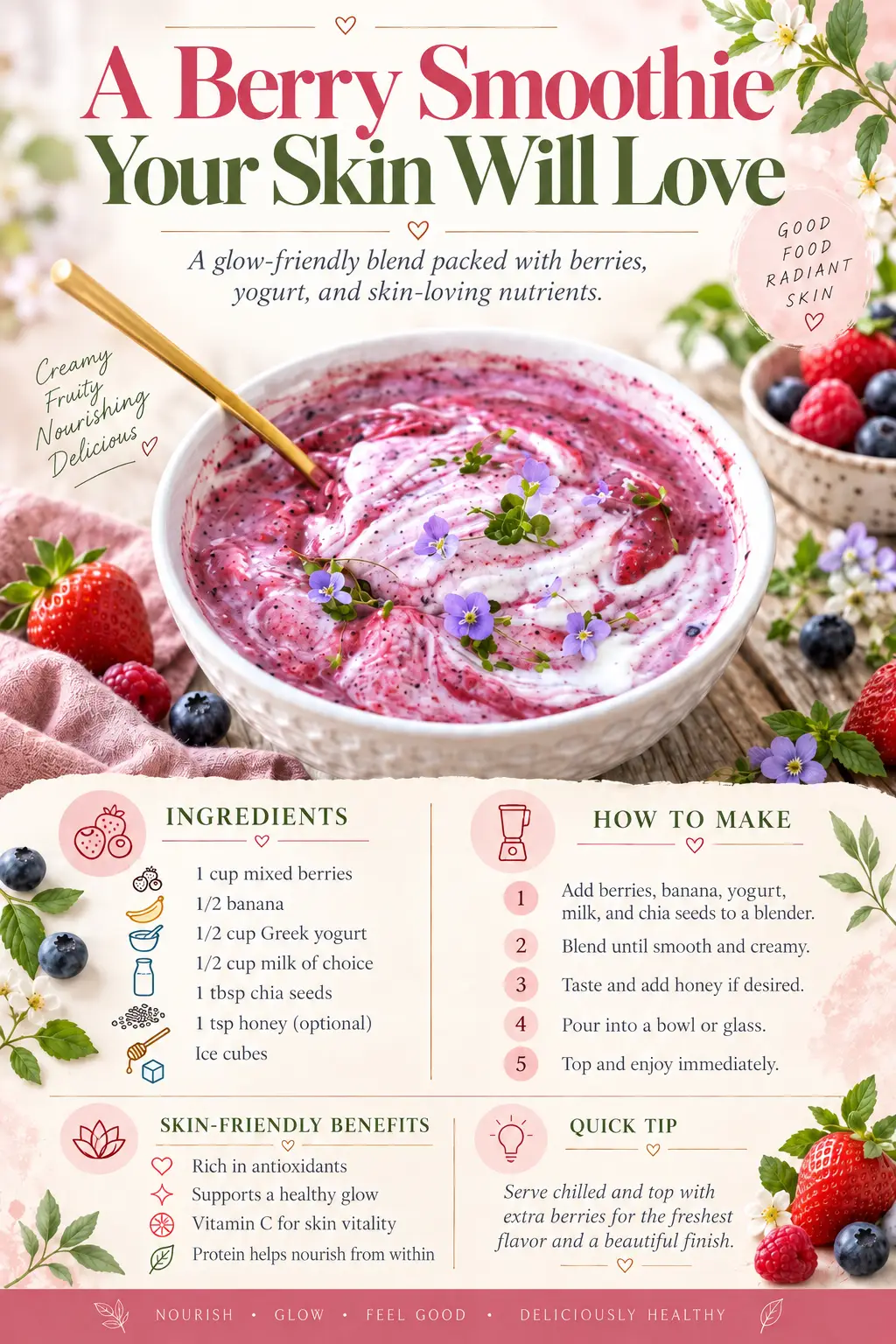
Berry Antioxidant Smoothie Recipe
Prep time: 5 minutes
Total time: 5 minutes
Servings: 2
Ingredients
- 1 cup frozen blueberries
- 1 cup frozen strawberries, hulled if using fresh berries
- 3/4 cup plain Greek yogurt
- 1/2 cup unsweetened milk or fortified nondairy milk
- 1/2 cup orange juice
- 1 tablespoon chia seeds
- 1 teaspoon fresh lemon juice
- 1/2 teaspoon finely grated fresh ginger, optional
- 1 to 2 teaspoons honey or maple syrup, optional
Instructions
- Add the milk, orange juice, Greek yogurt, lemon juice, and optional ginger to a blender. Starting with the liquids can help the blades move the ingredients more easily.
- Add the frozen blueberries, frozen strawberries, and chia seeds.
- Blend on low speed for several seconds, then increase to high. Blend until the mixture looks smooth and creamy, pausing to scrape down the sides if needed.
- Taste the smoothie. If the berries are especially tart, add a small amount of honey or maple syrup and blend again. You can also thin the drink with a splash of milk or water.
- Pour into two glasses and serve right away. If you prefer a colder, thicker texture, let the blended smoothie rest for two to three minutes so the chia seeds can absorb some liquid.
How the Ingredients Fit Into a Balanced Recipe
Berries
Blueberries and strawberries provide natural sweetness, color, fiber, and vitamin C. Using a mixture of berries gives the smoothie a more complex flavor than using one fruit alone. Fresh berries work well when they are ripe, but frozen berries are convenient and can create a thicker texture. If using packaged fruit, check the label for added sugar if that is a concern.
Greek yogurt
Plain Greek yogurt adds creaminess and protein. It also contributes a tangy flavor that balances the fruit. Choose plain yogurt rather than a highly sweetened flavored variety if you want more control over the sweetness. Dairy-free yogurt can be used, but protein and nutrient content varies widely among products, so check the current package label for details.
Chia seeds
Chia seeds add texture and fiber. They absorb liquid after blending, which can make the smoothie thicker over a few minutes. If you are new to chia seeds, begin with the suggested amount and drink the smoothie with enough fluid. People with swallowing difficulties, allergies, or dietary restrictions should choose ingredients appropriate for their needs and seek professional guidance when necessary.
Orange juice and lemon juice
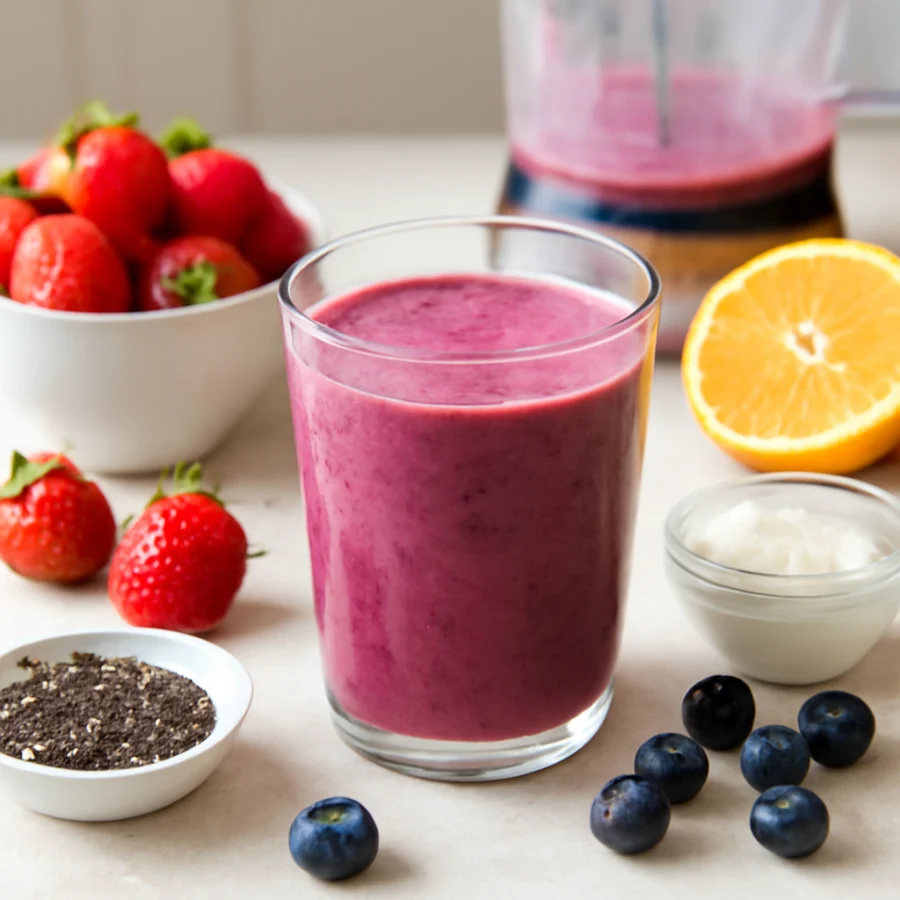
Citrus juices brighten the flavor and add acidity. Orange juice also adds sweetness, so the recipe does not require much added sweetener. For a less sweet smoothie, replace part or all of the orange juice with cold water or unsweetened milk. Freshly squeezed juice is fine, but pasteurized juice is a convenient option. If you use packaged juice, verify the current label and storage instructions.
Helpful Preparation Tips
- Build the texture gradually: Start with the liquid ingredients, then add yogurt and fruit. This can reduce the need to stop the blender repeatedly.
- Use frozen fruit for thickness: Frozen berries usually make the drink cold and spoonable without adding ice, which can dilute the flavor.
- Adjust the sweetness carefully: Taste before adding honey or maple syrup. Ripe strawberries and orange juice may provide enough sweetness.
- Do not overblend: Blend only until smooth. Extended blending can warm the drink and create unnecessary foam.
- Make a thinner version: Add one or two tablespoons of milk, water, or juice at a time until the consistency is right.
- Make a thicker bowl: Reduce the milk to 1/4 cup and serve the blended mixture in a bowl with sliced fruit or unsweetened coconut.
Ingredient Alternatives
There are several easy ways to adapt this recipe. Raspberries or blackberries can replace part of the strawberries or blueberries. Keep in mind that raspberries and blackberries contain more seeds, which may affect the texture. A ripe banana can replace some of the sweetener and make the smoothie thicker, though it will change the flavor.
For a dairy-free version, use unsweetened soy, almond, oat, or coconut yogurt along with a compatible nondairy milk. Soy milk and some soy yogurts tend to provide more protein than other options, but formulas differ. Read the current nutrition and allergen information on the package rather than relying on a general assumption.
For a less acidic drink, omit the lemon juice and replace some of the orange juice with milk. If you want extra freshness, add a few mint leaves. Spinach can also be blended into the smoothie, although it may slightly change the color and flavor.
Serving Suggestions
Serve this smoothie with a piece of whole-grain toast, oatmeal, eggs, or another food if you want a more substantial breakfast. A smoothie can contribute fruit and protein, but it does not automatically provide every nutrient needed for a complete meal. Pairing it with other foods can make your eating pattern more varied and satisfying.
For a simple presentation, pour the smoothie into chilled glasses and top each serving with a few sliced strawberries. Avoid adding decorative berries if they will sit at room temperature for a long time. If you are serving children, use cups and ingredients suitable for their age and chewing or swallowing abilities.
Storage and Food Safety
Smoothies are best immediately after blending because the texture, color, and flavor can change during storage. If necessary, transfer leftovers to a clean, covered container and refrigerate promptly. Use them within a short period according to reliable current food-safety guidance, and discard the smoothie if it has been left at room temperature for an unsafe length of time or develops an unusual smell, taste, or appearance.
Wash fresh produce under running water before preparation, even if you plan to peel it. Keep berries, yogurt, juice, and other perishable ingredients cold. Wash your hands, blender jar, lid, and utensils before use, and follow the manufacturer’s cleaning instructions for the blender. More general guidance is available in these food safety and storage resources.
If you prepare smoothie packs, freeze washed and thoroughly dried berries in measured portions. Add yogurt, juice, and milk only when you are ready to blend. Do not refreeze ingredients that have thawed under unsafe conditions.
Realistic Expectations for Skin Health
The phrase “antioxidant smoothie” describes a recipe containing foods with naturally occurring antioxidant compounds; it is not a medical treatment. Drinking this smoothie will not guarantee younger-looking skin or cancel out sun exposure. Nutrition works over time as part of an overall eating pattern, and individual results in appearance cannot be predicted from one recipe.
If you have a diagnosed health condition, food allergy, digestive concern, or medication-related dietary restriction, review the ingredients with a qualified health professional. People with diabetes or other conditions affected by carbohydrate intake may also want individualized advice about portions and ingredients.
Frequently Asked Questions
Can a berry smoothie prevent skin aging?
No. A smoothie cannot prevent the natural aging process. This recipe can provide fruit and other nutrients that fit into a balanced diet, but it should not be presented as a way to erase wrinkles or guarantee a change in skin appearance.
Are fresh or frozen berries better?
Both can work well. Fresh berries are convenient when ripe and in season, while frozen berries make the smoothie colder and thicker. Choose unsweetened frozen fruit when possible and check the package for added ingredients.
Can I make this smoothie without yogurt?
Yes. Replace the yogurt with an unsweetened dairy-free yogurt, silken tofu, or additional milk. The consistency and protein content will change, so add liquid gradually and check product labels when selecting alternatives.
How long can I keep the smoothie?
It is best served immediately. If you need to store it, refrigerate it promptly in a covered container and follow current food-safety recommendations. Shake or stir before drinking, and discard it if its quality or safety is questionable.
Is this smoothie a meal replacement?
Not necessarily. It can be part of breakfast or a snack, but nutritional needs vary. Pair it with other foods when you want a more complete meal, and avoid using smoothies as part of a restrictive cleanse or fasting routine.

Comments
0No comments yet. Be the first to share a helpful note or question.
Leave a Comment
Your email address will not be published. Comments are reviewed before appearing on the site.